What does Esther 5:3 mean?
"Then said the king unto her, What wilt thou, queen Esther? and what is thy request? it shall be even given thee to the half of the kingdom." - Esther 5:3
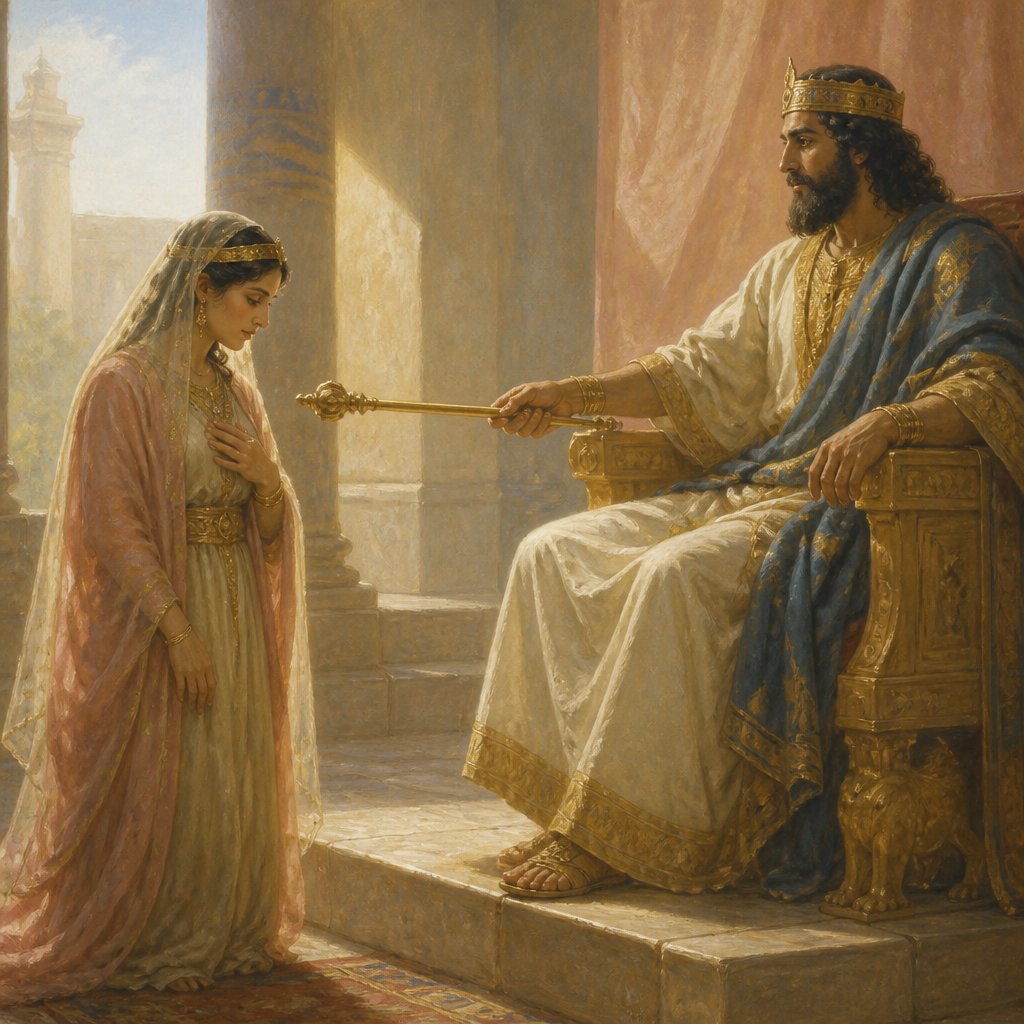
Esther 5:3 from the King James Version (KJV) of the Bible reads: "Then said the king unto her, What wilt thou, queen Esther? and what is thy request? it shall be even given thee to the half of the kingdom."
The book of Esther is a historical narrative in the Old Testament that tells the story of a Jewish woman named Esther who becomes the queen of Persia and ultimately saves her people from destruction. This particular verse comes at a critical moment in the story when Esther, risking her life, approaches the king to make a request on behalf of her people.
The context of this verse is important for understanding its significance. Esther, who was originally named Hadassah, was raised by her cousin Mordecai. After the previous queen Vashti fell out of favor with the king, a search for a new queen was conducted throughout the kingdom. Esther was chosen because of her beauty and charm, without anyone knowing she was Jewish. This becomes significant as the story unfolds.
Mordecai, who had been serving as a palace official, discovers a plot to kill King Xerxes and informs Esther, who then warns the king, saving his life. However, the villain of the story, Haman, gains power in the kingdom and seeks to exterminate the Jewish people. Mordecai urges Esther to use her position as queen to intercede with the king on behalf of her people. This is the moment that Esther finds herself in when this verse occurs.
When King Xerxes offers Esther up to half of his kingdom in response to her presence and request, it is a symbol of his love and willingness to please her. This shows the power and favor that Esther has with the king, which gives her the opportunity to make her request. This moment is both tense and pivotal because it will determine the fate of the Jewish people in Persia.
The theme of courage and faith is central to this verse and the overall story of Esther. Despite the risks and potential consequences, Esther is willing to approach the king and make her request. Her courage is unique, as approaching the king without being summoned was punishable by death unless the king extended his golden scepter as a sign of acceptance. Esther's faith in God's providence and her willingness to risk her own life for the sake of her people is a powerful testament to her character.
Another important theme in this verse and the story of Esther is God's providence and sovereignty. Throughout the book of Esther, the name of God is never mentioned, but His providential care for His people is evident. The events that unfold, including Esther becoming queen and the timing of her request to the king, all point to God's hand at work behind the scenes. This verse exemplifies this theme as Esther's bold move is providentially timed, and the king's favorable response is ultimately orchestrated by God.
Additionally, the symbolism in this verse is significant. The offering of "even given thee to the half of the kingdom" is a hyperbolic expression of King Xerxes' readiness to grant Esther's request. It underscores the magnitude of the favor she has with the king and sets the stage for the dramatic request that Esther eventually makes.
In conclusion, Esther 5:3 captures a pivotal moment in the story of Esther, showcasing her courage, faith, and the providential hand of God at work. The verse also sets the stage for the climactic moment when Esther reveals Haman's plot and intercedes for her people. It serves as a powerful example of the sovereignty of God and the bravery of those who trust in Him.
Have questions about Esther 5:3?
Dive deeper into this scripture with Bible Chat — an AI-powered tool for exploring God's Word through conversation. Ask questions, get context, and grow in your understanding of the Bible.
Get Our Apps


Esther 5:3 Artwork

Esther 5:3 - "Then said the king unto her, What wilt thou, queen Esther? and what is thy request? it shall be even given thee to the half of the kingdom."
"Then said the king unto her, What wilt thou, queen Esther? and what is thy request? it shall be even given thee to the half of the kingdom." - Esther 5:3

Esther 3:5 - "And when Haman saw that Mordecai bowed not, nor did him reverence, then was Haman full of wrath."

Esther 5:5 - "Then the king said, Cause Haman to make haste, that he may do as Esther hath said. So the king and Haman came to the banquet that Esther had prepared."

Esther 5:7 - "Then answered Esther, and said, My petition and my request is;"

Esther 5:2

Esther 5:2 - "And it was so, when the king saw Esther the queen standing in the court, that she obtained favour in his sight: and the king held out to Esther the golden sceptre that was in his hand. So Esther drew near, and touched the top of the sceptre."

Esther 5:2

Esther 5:2
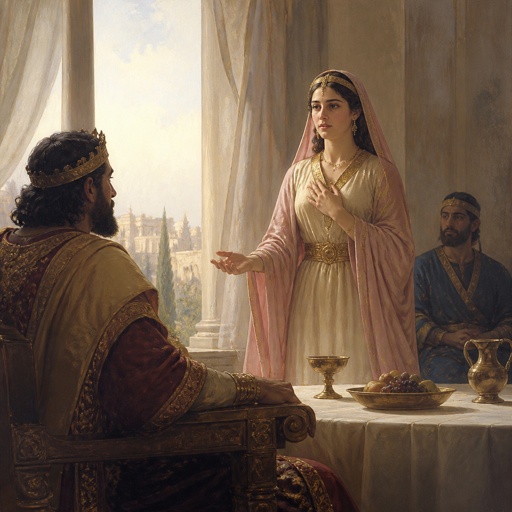
"Then answered Esther, and said, My petition and my request is;" - Esther 5:7

Esther 5:4 - "And Esther answered, If it seem good unto the king, let the king and Haman come this day unto the banquet that I have prepared for him."

Esther 7:5 - "¶ Then the king Ahasuerus answered and said unto Esther the queen, Who is he, and where is he, that durst presume in his heart to do so?"
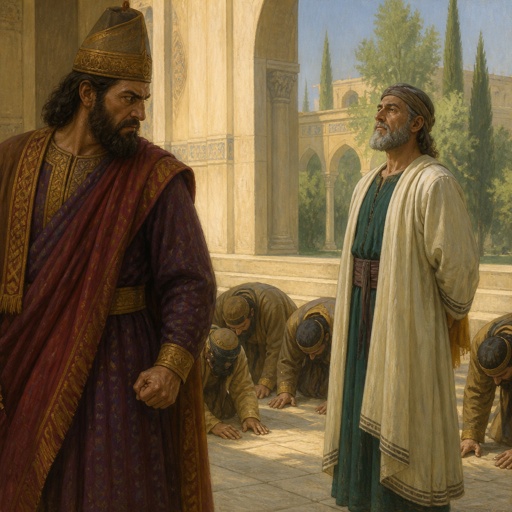
"And when Haman saw that Mordecai bowed not, nor did him reverence, then was Haman full of wrath." - Esther 3:5

Esther 5:2 - "And it was so, when the king saw Esther the queen standing in the court, that she obtained favour in his sight: and the king held out to Esther the golden sceptre that was in his hand. So Esther drew near, and touched the top of the sceptre."
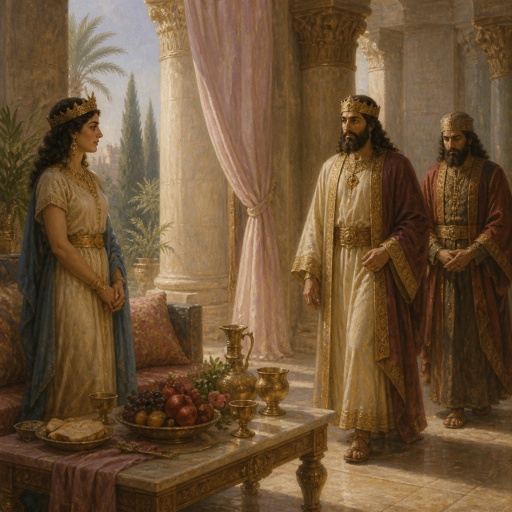
"Then the king said, Cause Haman to make haste, that he may do as Esther hath said. So the king and Haman came to the banquet that Esther had prepared." - Esther 5:5

Esther 4:5 - "Then called Esther for Hatach, one of the king's chamberlains, whom he had appointed to attend upon her, and gave him a commandment to Mordecai, to know what it was, and why it was."

Esther 5:6 - "¶ And the king said unto Esther at the banquet of wine, What is thy petition? and it shall be granted thee: and what is thy request? even to the half of the kingdom it shall be performed."
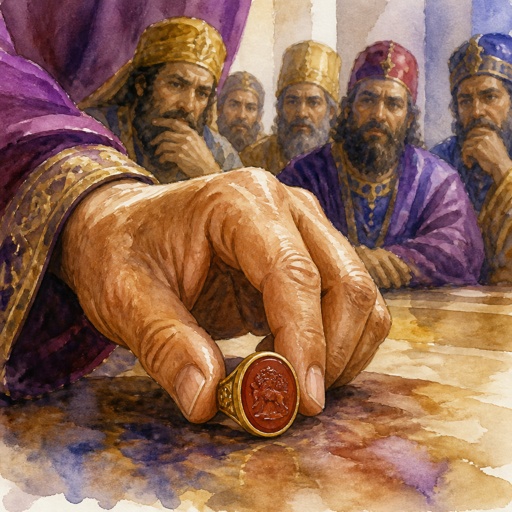
Esther 3:10 focus on ring

Est 3:5 ESV (5) And when Haman saw that Mordecai did not bow down or pay homage to him, Haman was filled with fury.

Esther 3:3 - "Then the king's servants, which were in the king's gate, said unto Mordecai, Why transgressest thou the king's commandment?"

Esther 5:12 - "Haman said moreover, Yea, Esther the queen did let no man come in with the king unto the banquet that she had prepared but myself; and to morrow am I invited unto her also with the king."

Esther 8:3 - "¶ And Esther spake yet again before the king, and fell down at his feet, and besought him with tears to put away the mischief of Haman the Agagite, and his device that he had devised against the Jews."

Esther 7:3 - "Then Esther the queen answered and said, If I have found favour in thy sight, O king, and if it please the king, let my life be given me at my petition, and my people at my request:"

Esther 5:1 - "Now it came to pass on the third day, that Esther put on her royal apparel, and stood in the inner court of the king's house, over against the king's house: and the king sat upon his royal throne in the royal house, over against the gate of the house."
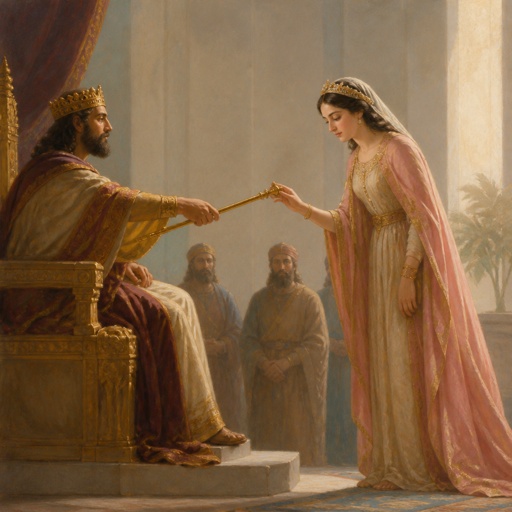
"And it was so, when the king saw Esther the queen standing in the court, that she obtained favour in his sight: and the king held out to Esther the golden sceptre that was in his hand. So Esther drew near, and touched the top of the sceptre." - Esther 5:2

Esther 6:5 - "And the king's servants said unto him, Behold, Haman standeth in the court. And the king said, Let him come in."

Esther 5:13 - "Yet all this availeth me nothing, so long as I see Mordecai the Jew sitting at the king's gate."

Esther 2:5 - "¶ Now in Shushan the palace there was a certain Jew, whose name was Mordecai, the son of Jair, the son of Shimei, the son of Kish, a Benjamite;"

Esther 5:10 - "Nevertheless Haman refrained himself: and when he came home, he sent and called for his friends, and Zeresh his wife."
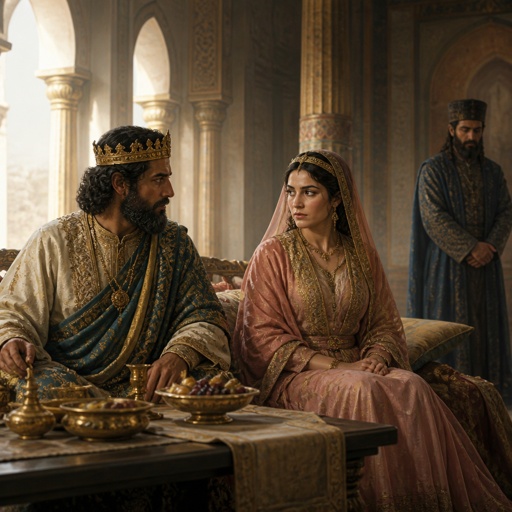
"¶ Then the king Ahasuerus answered and said unto Esther the queen, Who is he, and where is he, that durst presume in his heart to do so?" - Esther 7:5