What does Esther 5:12 mean?
"Haman said moreover, Yea, Esther the queen did let no man come in with the king unto the banquet that she had prepared but myself; and to morrow am I invited unto her also with the king." - Esther 5:12
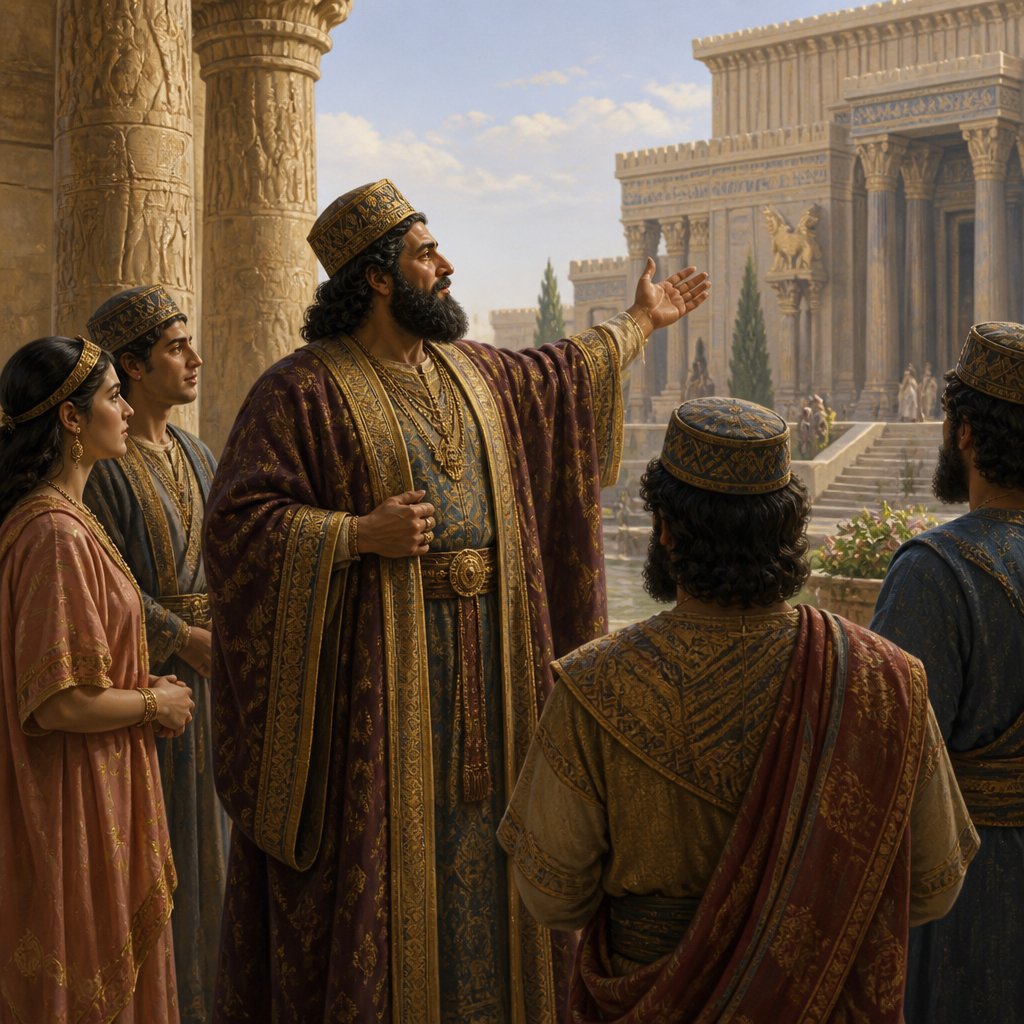
Esther 5:12 in the King James Version of the Bible reads, "Haman said moreover, Yea, Esther the queen did let no man come in with the king unto the banquet that she had prepared but myself; and tomorrow am I invited unto her also with the king."
This verse is part of the story of Esther, which is found in the Old Testament. The book of Esther is set in the Persian Empire and tells the story of a Jewish woman named Esther who becomes queen and ultimately saves her people from a plot to exterminate them. The verse comes at a pivotal moment in the story, as the wicked Haman is boasting about his power and privilege in the court of King Xerxes (Ahasuerus).
The context of this verse is important for understanding its significance. Throughout the book of Esther, there is a tension between power and privilege, and between the powerful and the oppressed. Haman, as the chief adviser to the king, wields significant power and influence in the kingdom. However, his arrogance and pride ultimately lead to his downfall. In this verse, he is boasting about how he is the only one who has been invited to the queen's banquet with the king, and he anticipates an invitation to another banquet the next day. This display of self-importance and entitlement is a key aspect of Haman's character and sets the stage for his eventual demise.
The themes present in this verse include pride, arrogance, and the abuse of power. Haman's boastful attitude reflects the corrupt nature of his character and his desire for recognition and honor. His pride leads him to behave in a way that demonstrates his disregard for others and his belief in his own superiority. This theme of pride and arrogance is a recurring motif throughout the book of Esther, and it serves as a cautionary tale about the dangers of placing too much importance on one's own status and accomplishments.
Another important aspect of this verse is the symbolism of the banquet. In ancient Persia, banquets were social and political events of great significance. The fact that Haman is boasting about being the only one invited to the queen's banquet with the king highlights the exclusivity and grandeur of the occasion. This symbolism underscores Haman's desire for recognition and validation, and it serves as a backdrop for the unfolding drama of the story.
From a broader theological perspective, Esther 5:12 can also be seen as a reflection of the biblical theme of justice and the ultimate triumph of good over evil. Haman's pride and arrogance ultimately lead to his downfall, as his plot to destroy the Jewish people is thwarted and he is ultimately put to death. This serves as a powerful reminder of the consequences of sin and the eventual vindication of the righteous.
In conclusion, Esther 5:12 in the King James Version of the Bible is a verse that highlights the themes of pride, arrogance, and the abuse of power. It serves as a cautionary tale about the dangers of placing too much importance on one's own status and accomplishments, and it provides a backdrop for the unfolding drama of the story of Esther. From a broader theological perspective, it also reflects the biblical theme of justice and the ultimate triumph of good over evil. Overall, this verse is a powerful and thought-provoking reminder of the timeless truths found in the pages of the Old Testament.
Have questions about Esther 5:12?
Dive deeper into this scripture with Bible Chat — an AI-powered tool for exploring God's Word through conversation. Ask questions, get context, and grow in your understanding of the Bible.
Get Our Apps


Esther 5:12 Artwork

Esther 5:12 - "Haman said moreover, Yea, Esther the queen did let no man come in with the king unto the banquet that she had prepared but myself; and to morrow am I invited unto her also with the king."
"Haman said moreover, Yea, Esther the queen did let no man come in with the king unto the banquet that she had prepared but myself; and to morrow am I invited unto her also with the king." - Esther 5:12

Esther 5:5 - "Then the king said, Cause Haman to make haste, that he may do as Esther hath said. So the king and Haman came to the banquet that Esther had prepared."

Esther 5:7 - "Then answered Esther, and said, My petition and my request is;"

Esther 4:12 - "And they told to Mordecai Esther's words."

Esther 5:2

Esther 5:2 - "And it was so, when the king saw Esther the queen standing in the court, that she obtained favour in his sight: and the king held out to Esther the golden sceptre that was in his hand. So Esther drew near, and touched the top of the sceptre."

Esther 5:2

Esther 5:2
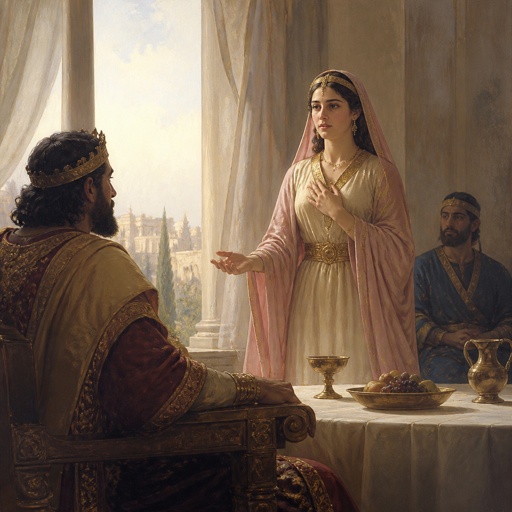
"Then answered Esther, and said, My petition and my request is;" - Esther 5:7

Esther 5:4 - "And Esther answered, If it seem good unto the king, let the king and Haman come this day unto the banquet that I have prepared for him."

Esther 7:5 - "¶ Then the king Ahasuerus answered and said unto Esther the queen, Who is he, and where is he, that durst presume in his heart to do so?"

Esther 5:3 - "Then said the king unto her, What wilt thou, queen Esther? and what is thy request? it shall be even given thee to the half of the kingdom."

Esther 5:2 - "And it was so, when the king saw Esther the queen standing in the court, that she obtained favour in his sight: and the king held out to Esther the golden sceptre that was in his hand. So Esther drew near, and touched the top of the sceptre."
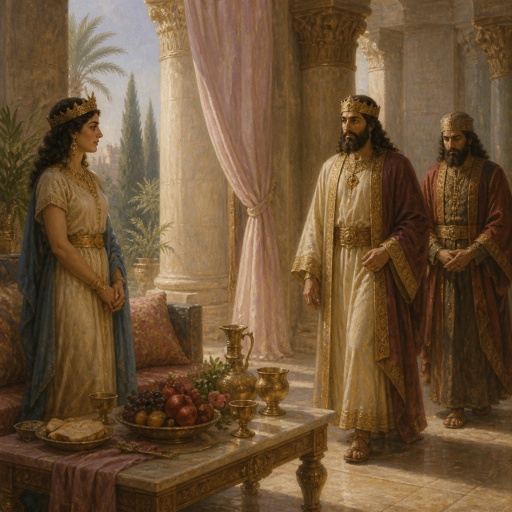
"Then the king said, Cause Haman to make haste, that he may do as Esther hath said. So the king and Haman came to the banquet that Esther had prepared." - Esther 5:5

Esther 4:5 - "Then called Esther for Hatach, one of the king's chamberlains, whom he had appointed to attend upon her, and gave him a commandment to Mordecai, to know what it was, and why it was."

Esther 5:6 - "¶ And the king said unto Esther at the banquet of wine, What is thy petition? and it shall be granted thee: and what is thy request? even to the half of the kingdom it shall be performed."
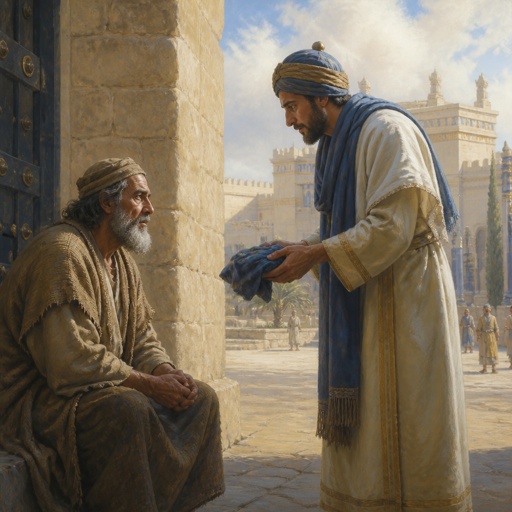
"And they told to Mordecai Esther's words." - Esther 4:12

Esther 3:5 - "And when Haman saw that Mordecai bowed not, nor did him reverence, then was Haman full of wrath."

Esther 5:1 - "Now it came to pass on the third day, that Esther put on her royal apparel, and stood in the inner court of the king's house, over against the king's house: and the king sat upon his royal throne in the royal house, over against the gate of the house."

Esther 6:12 - "¶ And Mordecai came again to the king's gate. But Haman hasted to his house mourning, and having his head covered."
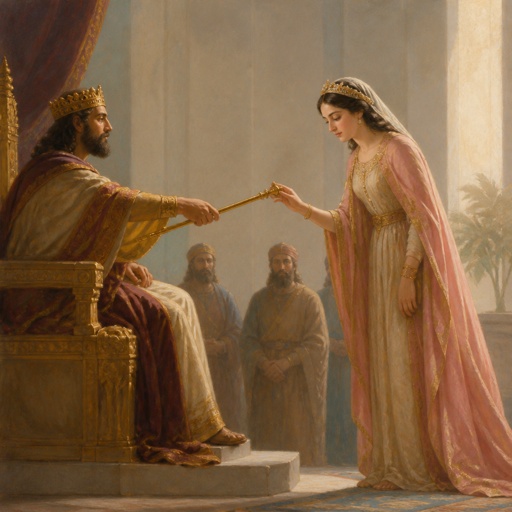
"And it was so, when the king saw Esther the queen standing in the court, that she obtained favour in his sight: and the king held out to Esther the golden sceptre that was in his hand. So Esther drew near, and touched the top of the sceptre." - Esther 5:2

Esther 6:5 - "And the king's servants said unto him, Behold, Haman standeth in the court. And the king said, Let him come in."

Esther 5:13 - "Yet all this availeth me nothing, so long as I see Mordecai the Jew sitting at the king's gate."

Esther 9:12 - "¶ And the king said unto Esther the queen, The Jews have slain and destroyed five hundred men in Shushan the palace, and the ten sons of Haman; what have they done in the rest of the king's provinces? now what is thy petition? and it shall be granted thee: or what is thy request further? and it shall be done."

Esther 2:5 - "¶ Now in Shushan the palace there was a certain Jew, whose name was Mordecai, the son of Jair, the son of Shimei, the son of Kish, a Benjamite;"

Esther 8:12 - "Upon one day in all the provinces of king Ahasuerus, namely, upon the thirteenth day of the twelfth month, which is the month Adar."

Esther 1:12 - "But the queen Vashti refused to come at the king's commandment by his chamberlains: therefore was the king very wroth, and his anger burned in him."

Esther 5:10 - "Nevertheless Haman refrained himself: and when he came home, he sent and called for his friends, and Zeresh his wife."
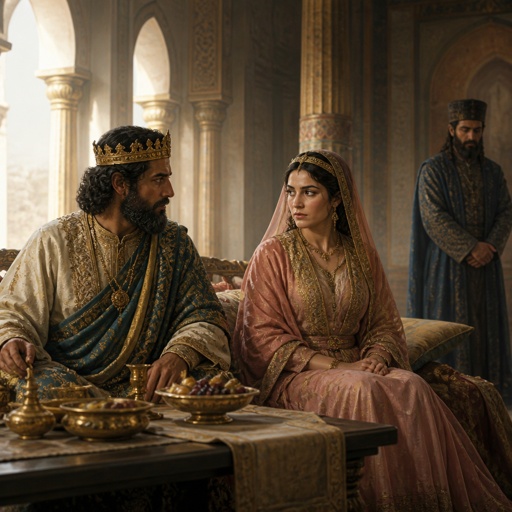
"¶ Then the king Ahasuerus answered and said unto Esther the queen, Who is he, and where is he, that durst presume in his heart to do so?" - Esther 7:5