What does Esther 4:2 mean?
"And came even before the king's gate: for none might enter into the king's gate clothed with sackcloth." - Esther 4:2
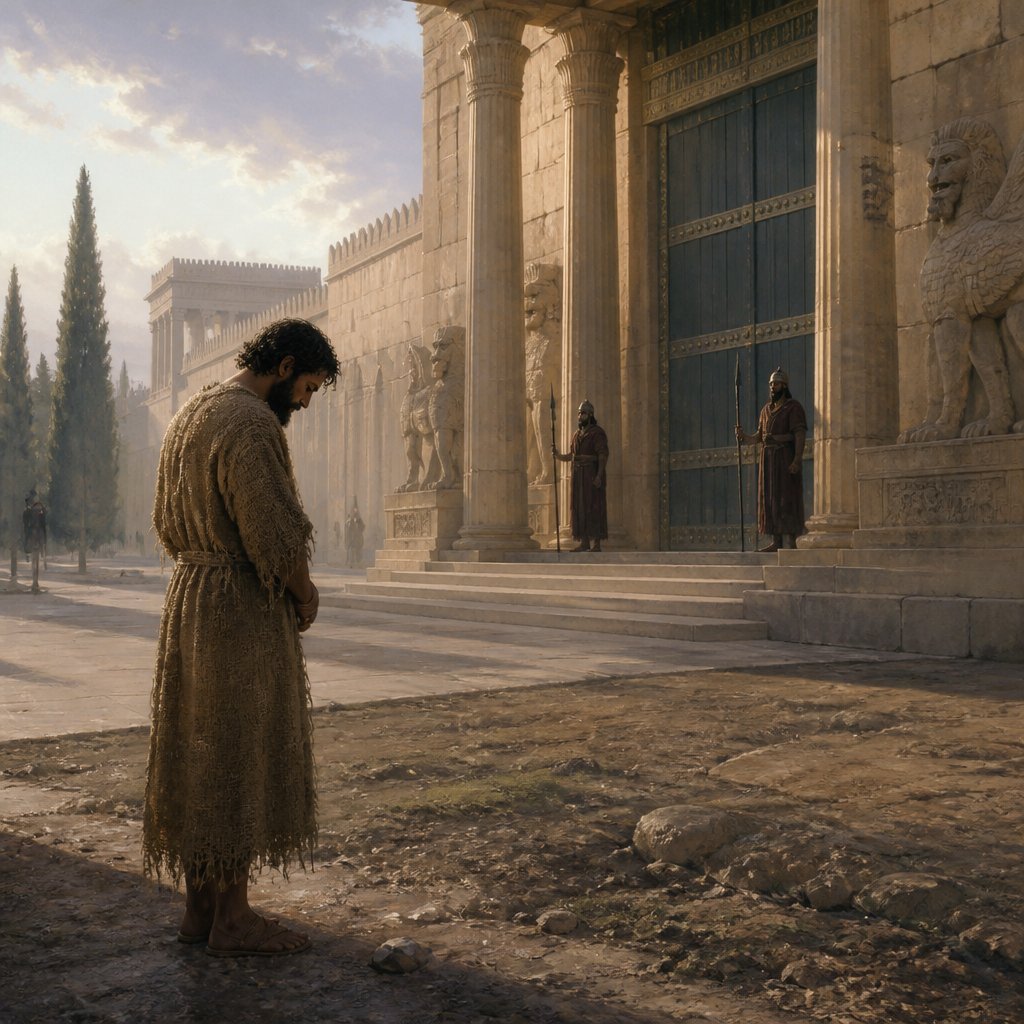
Esther 4:2 in the King James Version of the Bible reads, "And came even before the king's gate: for none might enter into the king's gate clothed with sackcloth."
In order to fully understand the meaning and significance of this verse, it is important to have some context. The book of Esther is a part of the Old Testament and is set during the time when the Jewish people were in exile in Persia. The story revolves around a young Jewish woman named Esther who becomes queen of Persia and ultimately saves her people from a plot to destroy them.
In this particular verse, the reference to sackcloth is significant. Sackcloth was a coarse, dark-colored fabric often worn by individuals as a sign of mourning, repentance, or distress. The fact that none were allowed to enter the king's gate while wearing sackcloth indicates that there was a strict protocol or code of conduct in place. The king's gate was a place where important matters were discussed and decisions were made, so the prohibition against wearing sackcloth likely symbolized a need for order, decorum, and composure in the presence of the king.
The broader theme of this verse is the tension between personal grief and the demands of duty and protocol. Mordecai, a Jewish man and Esther's cousin, is in deep mourning after learning of Haman's plan to destroy the Jewish people. He expresses his grief by wearing sackcloth and ashes, but his actions also have significant public and political implications. As a result, Mordecai's actions are in conflict with the strict rules and expectations of the Persian court.
This verse also highlights the precarious position of the Jewish people in the Persian empire. While they were subjects of the king, they were also a distinct and often marginalized minority with their own traditions and customs. Mordecai’s mourning in sackcloth is a visible reminder of this tension, as it sets him apart from the court and challenges the established norms of the Persian society.
The theme of sacrifice is also present in this verse. By choosing to wear sackcloth and express his grief openly, Mordecai is making a personal sacrifice for the greater good of his people. His actions are a demonstration of his commitment to his faith and his willingness to endure hardship for the sake of his community. This theme of selflessness and devotion to others is a central aspect of the book of Esther as a whole, as both Mordecai and Esther are called upon to make significant sacrifices in order to protect their people.
Symbolically, the sackcloth can be seen as a representation of the suffering and oppression that the Jewish people experienced in exile. By forbidding the wearing of sackcloth in the king's gate, the verse may also be subtly pointing to the tension between the Jewish identity and the demands of assimilating into Persian culture. It is a reminder that the Jewish people were not free to openly express their faith and mourning in the Persian court, reflecting the broader sociopolitical context of marginalization and persecution.
In conclusion, Esther 4:2 is a verse that captures the complex layers of personal and political significance in the book of Esther. It serves as a reminder of the themes of sacrifice, selflessness, and the tension between personal expression and societal expectations. The verse also reflects the broader context of the Jewish people's experience in exile and their struggle to maintain their identity in a foreign land.
Have questions about Esther 4:2?
Dive deeper into this scripture with Bible Chat — an AI-powered tool for exploring God's Word through conversation. Ask questions, get context, and grow in your understanding of the Bible.
Get Our Apps


Esther 4:2 Artwork

Esther 4:2 - "And came even before the king's gate: for none might enter into the king's gate clothed with sackcloth."
"And came even before the king's gate: for none might enter into the king's gate clothed with sackcloth." - Esther 4:2

Esther 8:4 - "Then the king held out the golden sceptre toward Esther. So Esther arose, and stood before the king,"

Esther 4:15 - "¶ Then Esther bade them return Mordecai this answer,"

Esther 4:9 - "And Hatach came and told Esther the words of Mordecai."

Esther 2:4 - "And let the maiden which pleaseth the king be queen instead of Vashti. And the thing pleased the king; and he did so."

Esther 4:10 - "¶ Again Esther spake unto Hatach, and gave him commandment unto Mordecai;"

Esther 4:17 - "So Mordecai went his way, and did according to all that Esther had commanded him."
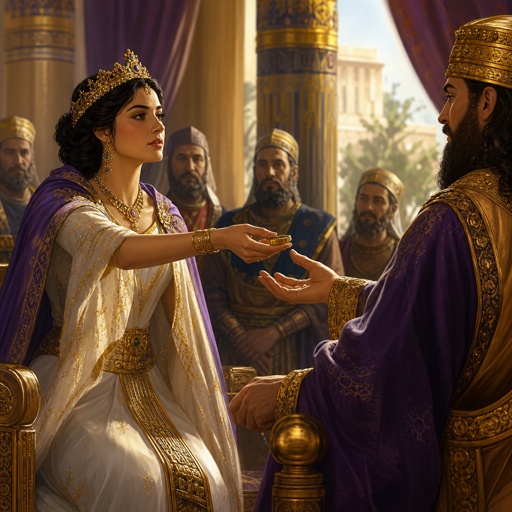
Esther 8:4

Esther 2:22 - "And the thing was known to Mordecai, who told it unto Esther the queen; and Esther certified the king thereof in Mordecai's name."

Esther 4:12 - "And they told to Mordecai Esther's words."

"And Hatach came and told Esther the words of Mordecai." - Esther 4:9

"¶ Then Esther bade them return Mordecai this answer," - Esther 4:15

Esther 4:13 - "Then Mordecai commanded to answer Esther, Think not with thyself that thou shalt escape in the king's house, more than all the Jews."

Esther 5:4 - "And Esther answered, If it seem good unto the king, let the king and Haman come this day unto the banquet that I have prepared for him."

Esther 5:2 - "And it was so, when the king saw Esther the queen standing in the court, that she obtained favour in his sight: and the king held out to Esther the golden sceptre that was in his hand. So Esther drew near, and touched the top of the sceptre."

"Then the king held out the golden sceptre toward Esther. So Esther arose, and stood before the king," - Esther 8:4

Esther 4:5 - "Then called Esther for Hatach, one of the king's chamberlains, whom he had appointed to attend upon her, and gave him a commandment to Mordecai, to know what it was, and why it was."

Esther 2:20 - "Esther had not yet shewed her kindred nor her people; as Mordecai had charged her: for Esther did the commandment of Mordecai, like as when she was brought up with him."

Esther 7:2 - "And the king said again unto Esther on the second day at the banquet of wine, What is thy petition, queen Esther? and it shall be granted thee: and what is thy request? and it shall be performed, even to the half of the kingdom."

Esther 5:2
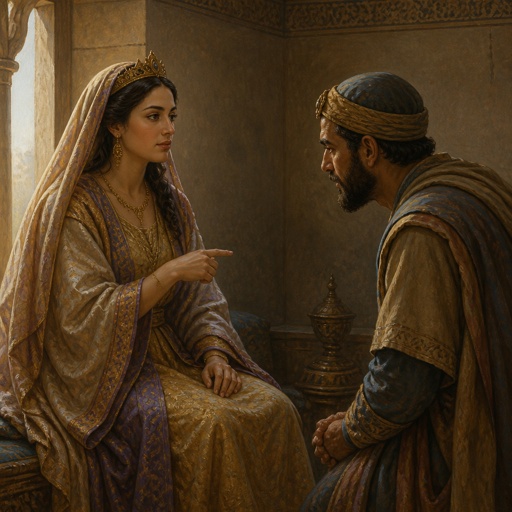
"¶ Again Esther spake unto Hatach, and gave him commandment unto Mordecai;" - Esther 4:10
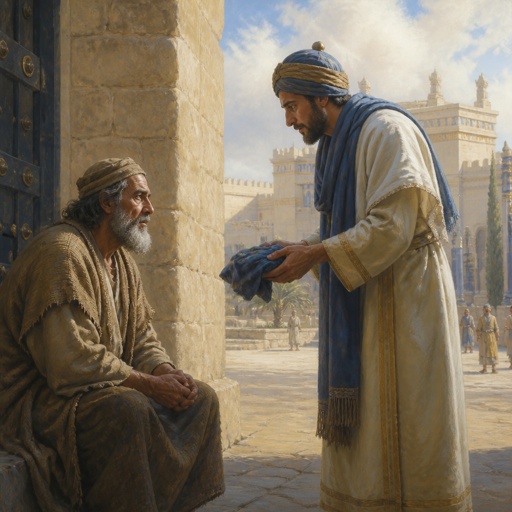
"And they told to Mordecai Esther's words." - Esther 4:12

Esther 5:2

Esther 5:2

Esther 2:11 - "And Mordecai walked every day before the court of the women's house, to know how Esther did, and what should become of her."

Esther 2:10 - "Esther had not shewed her people nor her kindred: for Mordecai had charged her that she should not shew it."

Esther 5:2 - "And it was so, when the king saw Esther the queen standing in the court, that she obtained favour in his sight: and the king held out to Esther the golden sceptre that was in his hand. So Esther drew near, and touched the top of the sceptre."

"And the thing was known to Mordecai, who told it unto Esther the queen; and Esther certified the king thereof in Mordecai's name." - Esther 2:22

Esther 2:16 - "So Esther was taken unto king Ahasuerus into his house royal in the tenth month, which is the month Tebeth, in the seventh year of his reign."