What does Esther 4:12 mean?
"And they told to Mordecai Esther's words." - Esther 4:12
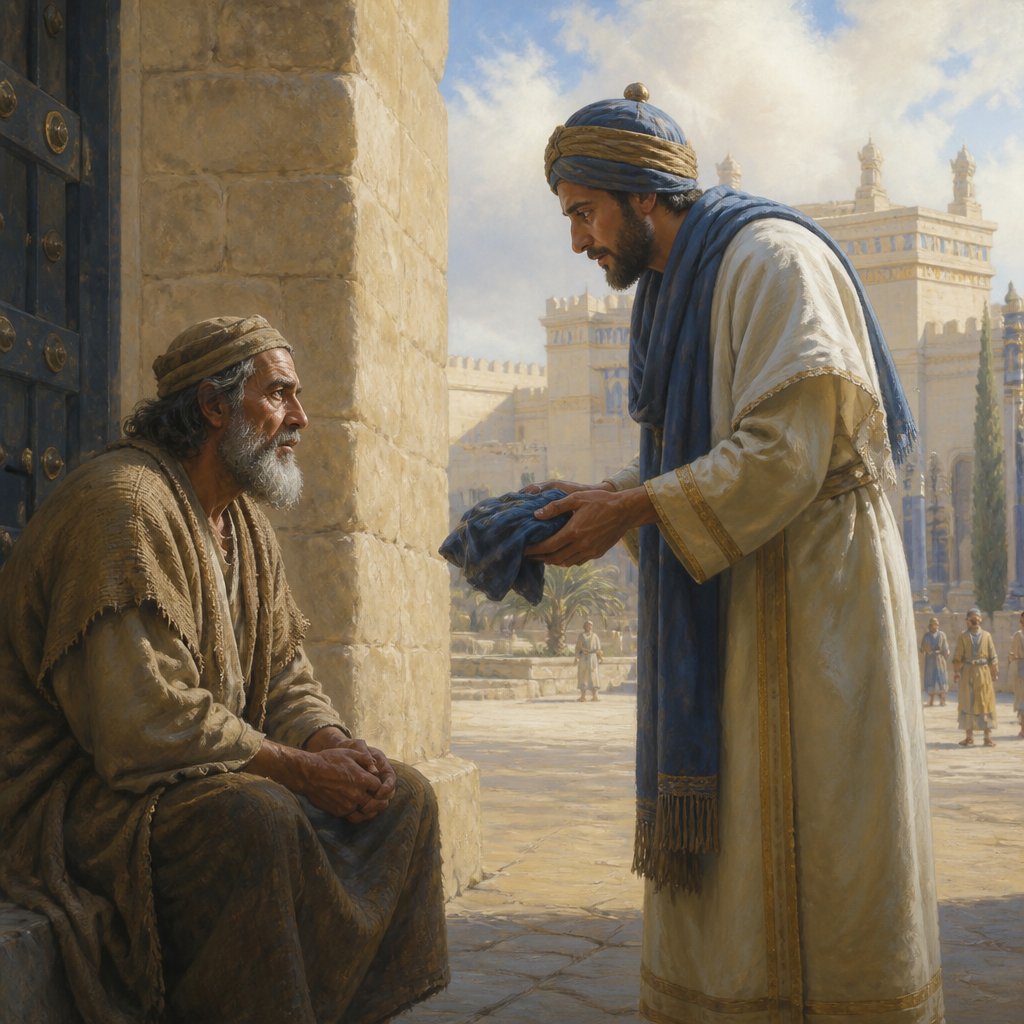
The verse Esther 4:12 in the King James Version (KJV) of the Bible states, "And they told to Mordecai Esther's words." This verse is found in the Old Testament book of Esther, and it is part of a significant moment in the narrative of the Jewish people.
The book of Esther tells the story of a Jewish girl named Esther who becomes the queen of Persia. The main antagonist in the story is a man named Haman, who plots to exterminate the Jewish people. Esther's cousin Mordecai urges her to intercede on behalf of her people with the king, and Esther initially hesitates due to the potential danger to herself.
In Esther 4:12, we see Mordecai's response to Esther's initial reluctance. The verse comes at a pivotal moment in the story and is significant for several reasons. First, it illustrates the tension and fear that the Jewish people were experiencing at the prospect of annihilation. Mordecai's urgent message to Esther underscores the gravity of the situation and the need for immediate action.
Additionally, the verse highlights the theme of courage and loyalty. Despite Esther's initial hesitation, Mordecai's message ultimately spurs her to take action and risk her own safety for the sake of her people. This demonstrates the importance of standing up for what is right and being willing to make sacrifices for the well-being of others.
Furthermore, Esther 4:12 showcases the power of communication and the impact of words. Mordecai's message to Esther sets off a chain of events that ultimately leads to the salvation of the Jewish people. This serves as a reminder of the influence that our words can have and the importance of using them wisely and purposefully.
In a larger context, the book of Esther is a story of divine providence and the faithfulness of God. Although the name of God is not explicitly mentioned in the book, His presence is evident throughout the narrative. The deliverance of the Jewish people from the threat of annihilation is a testament to God's protection and sovereignty.
The verse Esther 4:12 also carries symbolic significance. Mordecai's role as a messenger to Esther can be seen as a parallel to the role of prophets in delivering God's word to His people. Mordecai's urgency in communicating with Esther mirrors the urgency of God's message to His people, calling them to repentance and faithfulness.
In conclusion, Esther 4:12 from the King James Version of the Bible is a verse that holds significant meaning within the larger narrative of the book of Esther. It emphasizes themes of courage, loyalty, and the power of words, while also serving as a reminder of God's providence and faithfulness. The verse continues to offer valuable lessons and inspiration for readers, reminding us of the importance of standing up for what is right and the impact that our words can have.
Have questions about Esther 4:12?
Dive deeper into this scripture with Bible Chat — an AI-powered tool for exploring God's Word through conversation. Ask questions, get context, and grow in your understanding of the Bible.
Get Our Apps


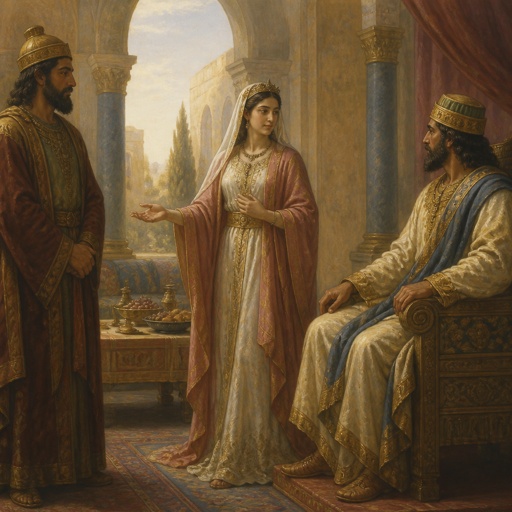
Esther 4:12 Artwork

Esther 4:12 - "And they told to Mordecai Esther's words."
"And they told to Mordecai Esther's words." - Esther 4:12

Esther 8:4 - "Then the king held out the golden sceptre toward Esther. So Esther arose, and stood before the king,"

Esther 4:15 - "¶ Then Esther bade them return Mordecai this answer,"

Esther 4:9 - "And Hatach came and told Esther the words of Mordecai."

Esther 4:10 - "¶ Again Esther spake unto Hatach, and gave him commandment unto Mordecai;"

Esther 4:17 - "So Mordecai went his way, and did according to all that Esther had commanded him."

Esther 8:4

"And Hatach came and told Esther the words of Mordecai." - Esther 4:9

"¶ Then Esther bade them return Mordecai this answer," - Esther 4:15

Esther 4:13 - "Then Mordecai commanded to answer Esther, Think not with thyself that thou shalt escape in the king's house, more than all the Jews."

Esther 5:4 - "And Esther answered, If it seem good unto the king, let the king and Haman come this day unto the banquet that I have prepared for him."

"Then the king held out the golden sceptre toward Esther. So Esther arose, and stood before the king," - Esther 8:4

Esther 4:5 - "Then called Esther for Hatach, one of the king's chamberlains, whom he had appointed to attend upon her, and gave him a commandment to Mordecai, to know what it was, and why it was."

"¶ Again Esther spake unto Hatach, and gave him commandment unto Mordecai;" - Esther 4:10

Esther 5:12 - "Haman said moreover, Yea, Esther the queen did let no man come in with the king unto the banquet that she had prepared but myself; and to morrow am I invited unto her also with the king."

"So Mordecai went his way, and did according to all that Esther had commanded him." - Esther 4:17

Esther 6:12 - "¶ And Mordecai came again to the king's gate. But Haman hasted to his house mourning, and having his head covered."
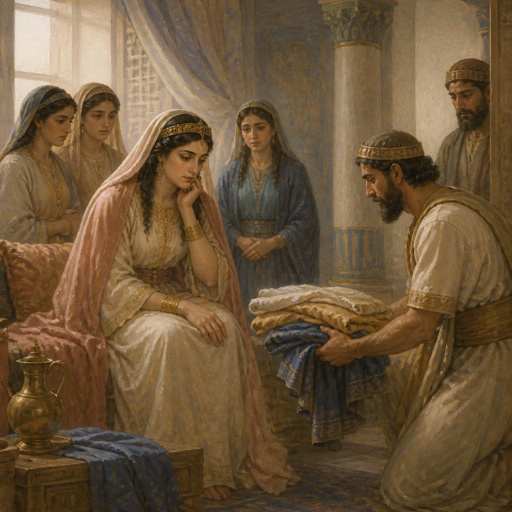
"¶ So Esther's maids and her chamberlains came and told it her. Then was the queen exceedingly grieved; and she sent raiment to clothe Mordecai, and to take away his sackcloth from him: but he received it not." - Esther 4:4

Esther 4:6 - "So Hatach went forth to Mordecai unto the street of the city, which was before the king's gate."

Esther 4:4 - "¶ So Esther's maids and her chamberlains came and told it her. Then was the queen exceedingly grieved; and she sent raiment to clothe Mordecai, and to take away his sackcloth from him: but he received it not."

Esther 9:12 - "¶ And the king said unto Esther the queen, The Jews have slain and destroyed five hundred men in Shushan the palace, and the ten sons of Haman; what have they done in the rest of the king's provinces? now what is thy petition? and it shall be granted thee: or what is thy request further? and it shall be done."

Esther 4:2 - "And came even before the king's gate: for none might enter into the king's gate clothed with sackcloth."

Esther 4:8 - "Also he gave him the copy of the writing of the decree that was given at Shushan to destroy them, to shew it unto Esther, and to declare it unto her, and to charge her that she should go in unto the king, to make supplication unto him, and to make request before him for her people."

Esther 8:12 - "Upon one day in all the provinces of king Ahasuerus, namely, upon the thirteenth day of the twelfth month, which is the month Adar."

Esther 1:12 - "But the queen Vashti refused to come at the king's commandment by his chamberlains: therefore was the king very wroth, and his anger burned in him."
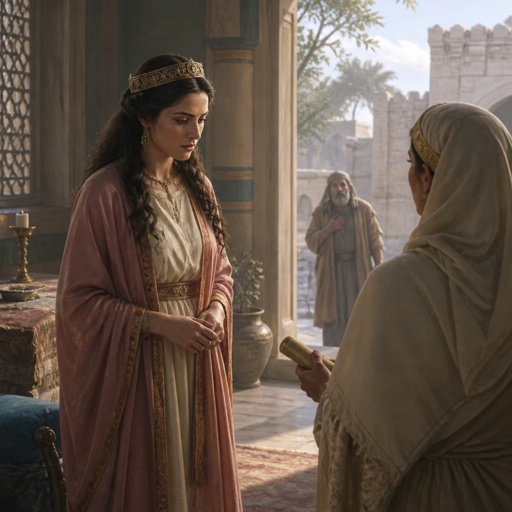
"Then Mordecai commanded to answer Esther, Think not with thyself that thou shalt escape in the king's house, more than all the Jews." - Esther 4:13

Esther 2:4 - "And let the maiden which pleaseth the king be queen instead of Vashti. And the thing pleased the king; and he did so."

Esther 9:4 - "For Mordecai was great in the king's house, and his fame went out throughout all the provinces: for this man Mordecai waxed greater and greater."
"And Esther answered, If it seem good unto the king, let the king and Haman come this day unto the banquet that I have prepared for him." - Esther 5:4