What does Esther 3:3 mean?
"Then the king's servants, which were in the king's gate, said unto Mordecai, Why transgressest thou the king's commandment?" - Esther 3:3
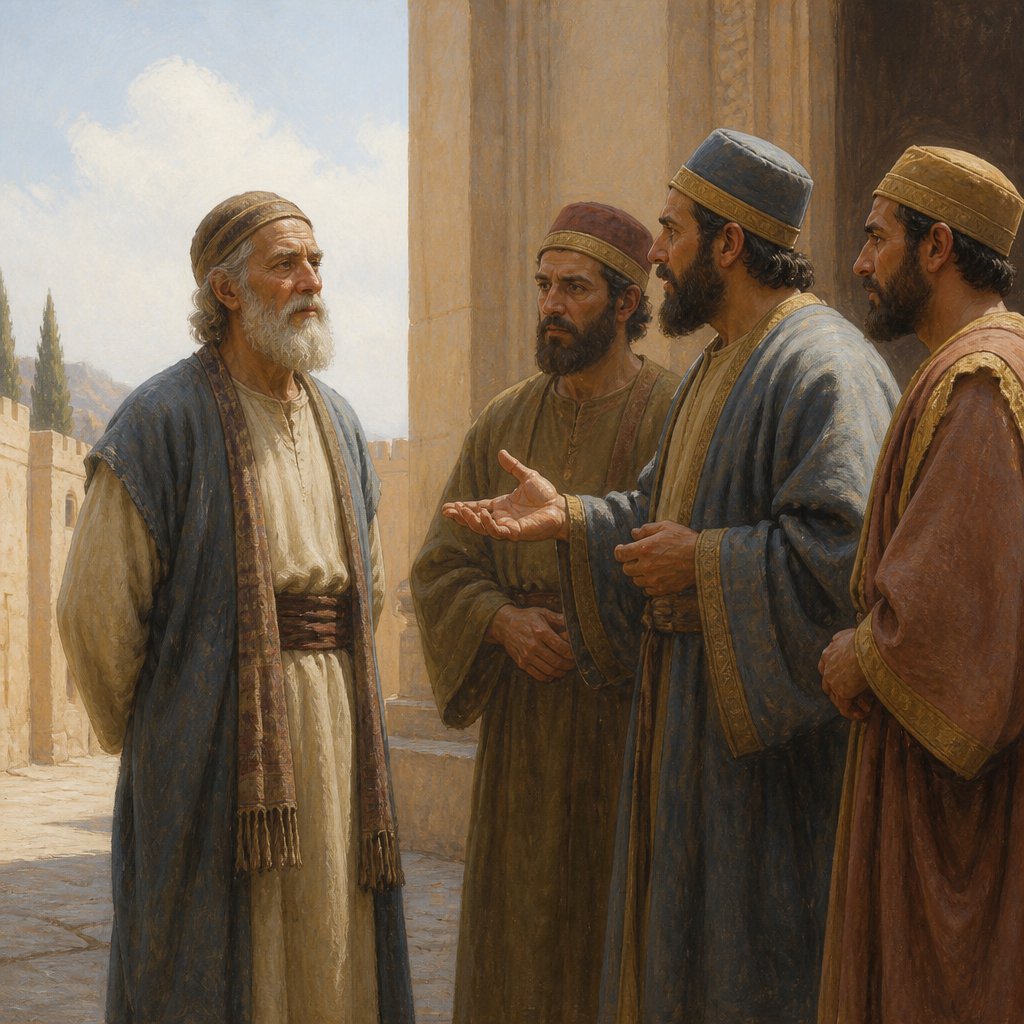
The Bible verse Esther 3:3 from the King James Version (KJV) states, "Then the king's servants, which were in the king's gate, said unto Mordecai, Why transgressest thou the king's commandment?" This verse is part of the story of Esther, which takes place during the reign of King Ahasuerus in the Persian Empire. The verse captures a pivotal moment in the narrative and sets the stage for the events that unfold.
The book of Esther is filled with political intrigue, power struggles, and the ultimate triumph of good over evil. The story revolves around Esther, a Jewish woman who becomes queen and uses her position to thwart a plot to exterminate the Jewish people. The verse in question occurs at a crucial juncture in the plot, when Mordecai, Esther's cousin, refuses to bow down to Haman, a high-ranking official in the king's court. This act of defiance triggers a chain of events that will ultimately lead to a showdown between Mordecai, representing the Jewish people, and Haman, the antagonist of the story.
The verse sheds light on several important themes that permeate the book of Esther. One of the key themes is the conflict between obedience to earthly authorities and loyalty to God. Mordecai's refusal to bow down to Haman is interpreted as an act of loyalty to his faith and a refusal to compromise his beliefs for the sake of political expediency. This theme of staying true to one's religious convictions in the face of adversity resonates with many readers, as it speaks to the timeless struggle between adhering to societal norms and upholding spiritual principles.
The verse also underscores the theme of divine providence and the hidden hand of God in human affairs. Despite the seeming chaos and unpredictability of events, the book of Esther highlights how God is at work behind the scenes, orchestrating events in such a way as to bring about His purposes. Mordecai's refusal to bow down to Haman sets in motion a chain of events that will ultimately lead to the deliverance of the Jewish people from destruction. This serves as a powerful reminder that God can bring about redemption and victory even in the most dire circumstances.
Another theme that emerges from this verse is the tension between pride and humility. Haman's demand for obeisance highlights his pride and sense of entitlement, while Mordecai's refusal to comply reflects his humility and unwavering commitment to his beliefs. This theme is further developed throughout the story, as Haman's arrogance and ambition ultimately lead to his downfall, while Esther and Mordecai's humility and reliance on God's guidance result in their triumph.
Symbolism also plays a significant role in this verse and the broader narrative of Esther. The refusal to bow down carries symbolic weight, representing the clash between good and evil, righteousness and wickedness. Haman's demand for obeisance is interpreted as an act of spiritual warfare, and Mordecai's steadfastness represents the unwavering commitment to faith in the face of adversity.
In conclusion, Esther 3:3 encapsulates several crucial themes and motifs that are central to the book of Esther. Through this verse, readers are prompted to reflect on the complex interplay between earthly authorities and divine sovereignty, the struggle between pride and humility, and the enduring power of faith in the face of adversity. The verse sets the stage for the dramatic events that will follow and sets the tone for the overarching message of deliverance and redemption that permeates the entire narrative.
Have questions about Esther 3:3?
Dive deeper into this scripture with Bible Chat — an AI-powered tool for exploring God's Word through conversation. Ask questions, get context, and grow in your understanding of the Bible.
Get Our Apps


Esther 3:3 Artwork

Esther 3:3 - "Then the king's servants, which were in the king's gate, said unto Mordecai, Why transgressest thou the king's commandment?"
"Then the king's servants, which were in the king's gate, said unto Mordecai, Why transgressest thou the king's commandment?" - Esther 3:3
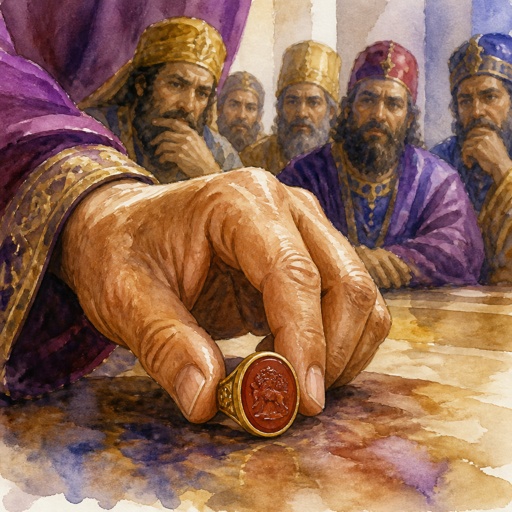
Esther 3:10 focus on ring

Esther 5:3 - "Then said the king unto her, What wilt thou, queen Esther? and what is thy request? it shall be even given thee to the half of the kingdom."

Esther 8:3 - "¶ And Esther spake yet again before the king, and fell down at his feet, and besought him with tears to put away the mischief of Haman the Agagite, and his device that he had devised against the Jews."

Esther 3:5 - "And when Haman saw that Mordecai bowed not, nor did him reverence, then was Haman full of wrath."

Esther 7:3 - "Then Esther the queen answered and said, If I have found favour in thy sight, O king, and if it please the king, let my life be given me at my petition, and my people at my request:"

Esther 3:14 - "The copy of the writing for a commandment to be given in every province was published unto all people, that they should be ready against that day."

Esther 3:11 - "And the king said unto Haman, The silver is given to thee, the people also, to do with them as it seemeth good to thee."

Esther 9:3 - "And all the rulers of the provinces, and the lieutenants, and the deputies, and officers of the king, helped the Jews; because the fear of Mordecai fell upon them."

Esther 3:10 - "And the king took his ring from his hand, and gave it unto Haman the son of Hammedatha the Agagite, the Jews' enemy."

Esther 6:3 - "And the king said, What honour and dignity hath been done to Mordecai for this? Then said the king's servants that ministered unto him, There is nothing done for him."

Esther 3:15 - "The posts went out, being hastened by the king's commandment, and the decree was given in Shushan the palace. And the king and Haman sat down to drink; but the city Shushan was perplexed."

Esther 4:3 - "And in every province, whithersoever the king's commandment and his decree came, there was great mourning among the Jews, and fasting, and weeping, and wailing; and many lay in sackcloth and ashes."

Esther 3:1 - "After these things did king Ahasuerus promote Haman the son of Hammedatha the Agagite, and advanced him, and set his seat above all the princes that were with him."
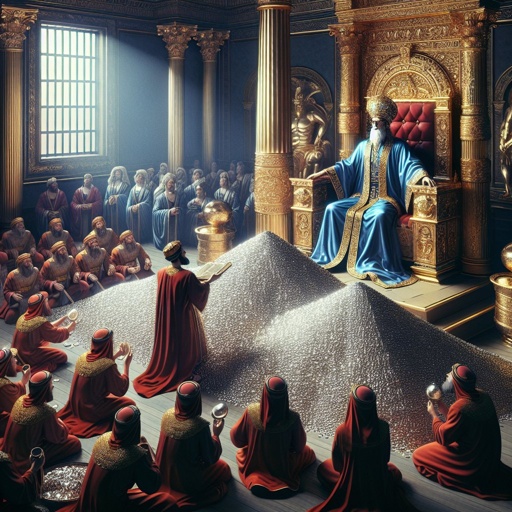
Esther 3:9 - "If it please the king, let it be written that they may be destroyed: and I will pay ten thousand talents of silver to the hands of those that have the charge of the business, to bring it into the king's treasuries."

Esther 10:3 - "For Mordecai the Jew was next unto king Ahasuerus, and great among the Jews, and accepted of the multitude of his brethren, seeking the wealth of his people, and speaking peace to all his seed."

Esther 3:2 - "And all the king's servants, that were in the king's gate, bowed, and reverenced Haman: for the king had so commanded concerning him. But Mordecai bowed not, nor did him reverence."
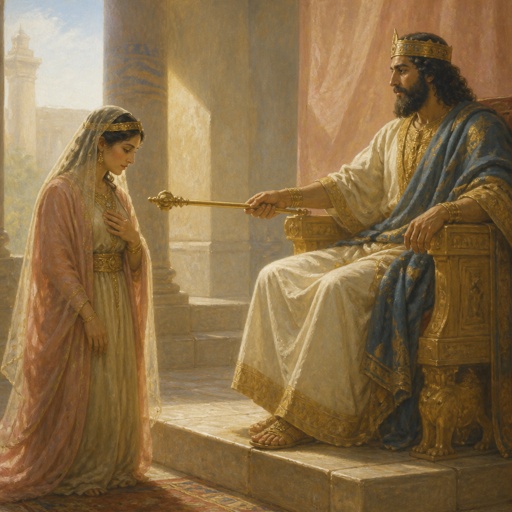
"Then said the king unto her, What wilt thou, queen Esther? and what is thy request? it shall be even given thee to the half of the kingdom." - Esther 5:3

Esther 3:7 - "¶ In the first month, that is, the month Nisan, in the twelfth year of king Ahasuerus, they cast Pur, that is, the lot, before Haman from day to day, and from month to month, to the twelfth month, that is, the month Adar."

Esther 1:3 - "In the third year of his reign, he made a feast unto all his princes and his servants; the power of Persia and Media, the nobles and princes of the provinces, being before him:"

Esther 3:4 - "Now it came to pass, when they spake daily unto him, and he hearkened not unto them, that they told Haman, to see whether Mordecai's matters would stand: for he had told them that he was a Jew."
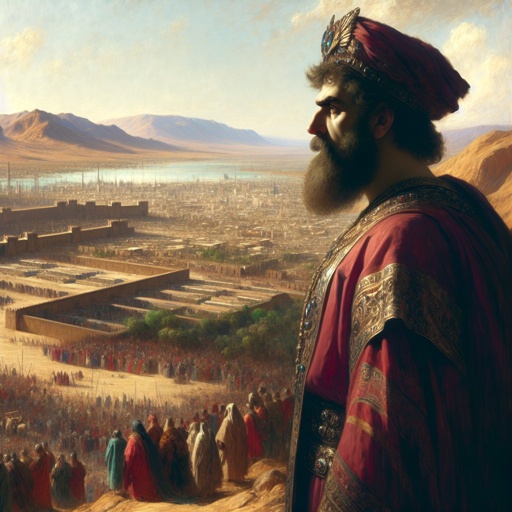
Esther 3:6 - "And he thought scorn to lay hands on Mordecai alone; for they had shewed him the people of Mordecai: wherefore Haman sought to destroy all the Jews that were throughout the whole kingdom of Ahasuerus, even the people of Mordecai."
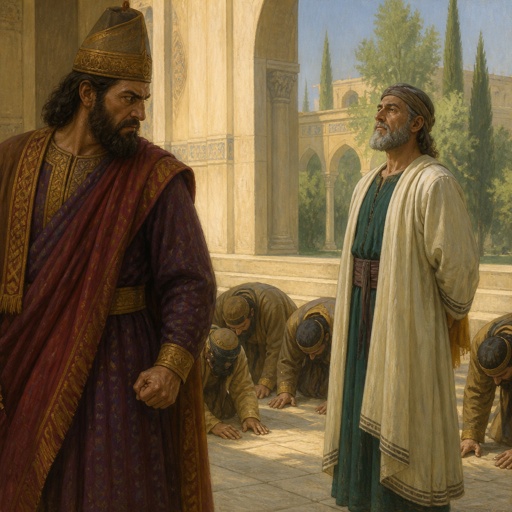
"And when Haman saw that Mordecai bowed not, nor did him reverence, then was Haman full of wrath." - Esther 3:5
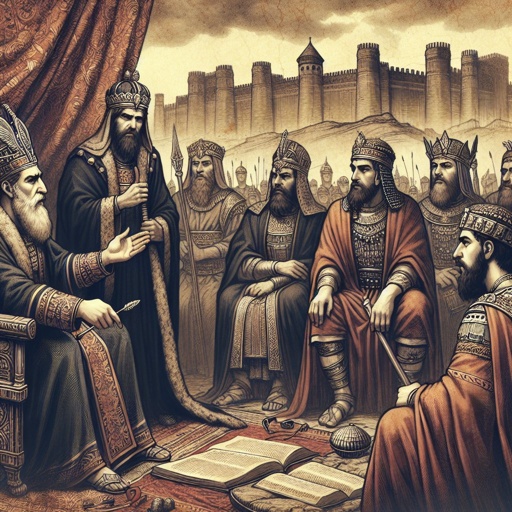
Esther 3:8 - "¶ And Haman said unto king Ahasuerus, There is a certain people scattered abroad and dispersed among the people in all the provinces of thy kingdom; and their laws are diverse from all people; neither keep they the king's laws: therefore it is not for the king's profit to suffer them."

Esther 2:3 - "And let the king appoint officers in all the provinces of his kingdom, that they may gather together all the fair young virgins unto Shushan the palace, to the house of the women, unto the custody of Hege the king's chamberlain, keeper of the women; and let their things for purification be given them:"
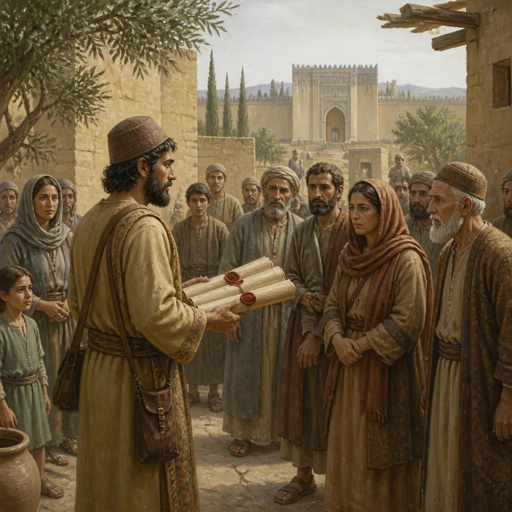
"The copy of the writing for a commandment to be given in every province was published unto all people, that they should be ready against that day." - Esther 3:14
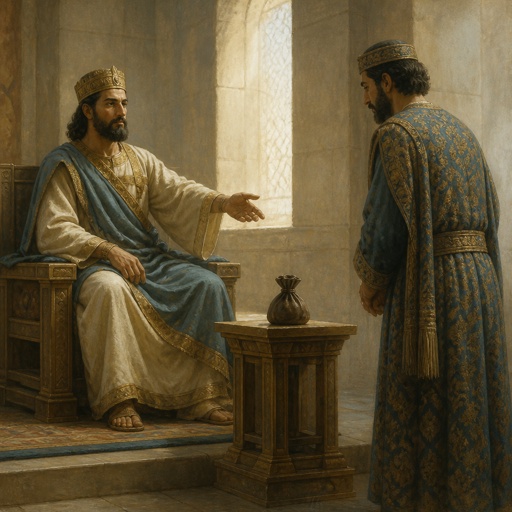
"And the king said unto Haman, The silver is given to thee, the people also, to do with them as it seemeth good to thee." - Esther 3:11
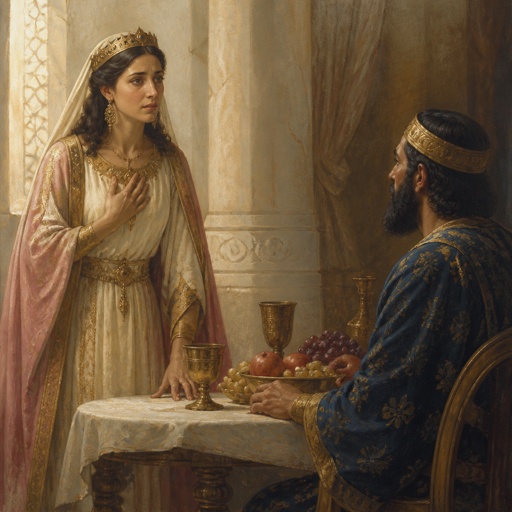
"Then Esther the queen answered and said, If I have found favour in thy sight, O king, and if it please the king, let my life be given me at my petition, and my people at my request:" - Esther 7:3
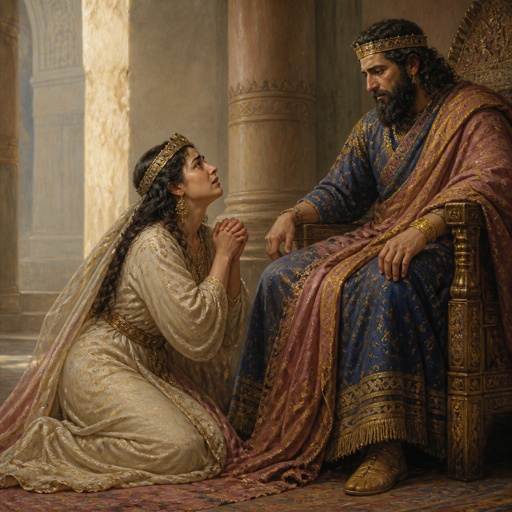
"¶ And Esther spake yet again before the king, and fell down at his feet, and besought him with tears to put away the mischief of Haman the Agagite, and his device that he had devised against the Jews." - Esther 8:3