What does Esther 3:15 mean?
"The posts went out, being hastened by the king's commandment, and the decree was given in Shushan the palace. And the king and Haman sat down to drink; but the city Shushan was perplexed." - Esther 3:15
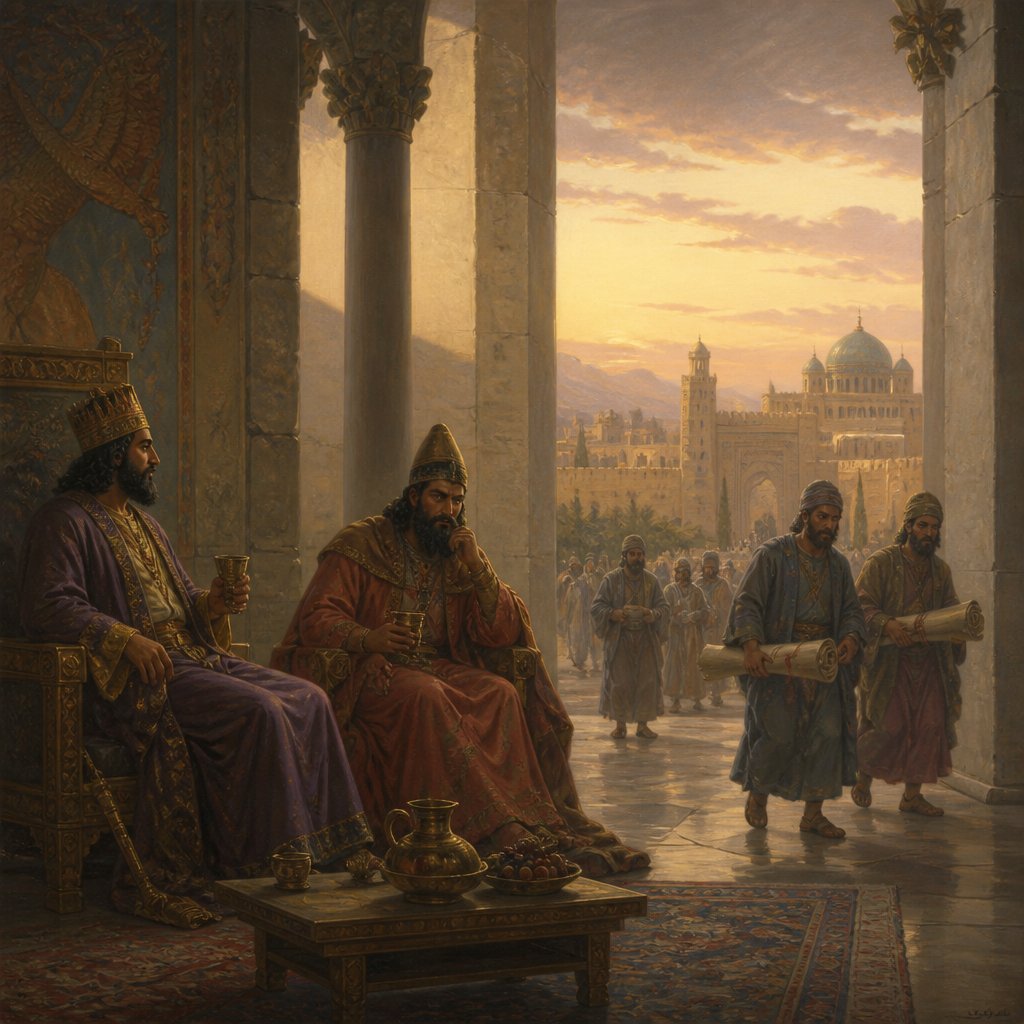
The Bible verse Esther 3:15 from the King James Version (KJV) reads:
"The posts went out, being hastened by the king's commandment, and the decree was given in Shushan the palace. And the king and Haman sat down to drink; but the city Shushan was perplexed."
This verse comes from the Book of Esther, which tells the story of a Jewish woman who becomes Queen of Persia and saves her people from a genocide planned by the king's advisor, Haman. The verse occurs at a pivotal moment in the story, after Haman successfully convinces King Ahasuerus to issue a decree authorizing the extermination of all Jews in the Persian Empire. The "posts" referred to in this verse are messengers, sent out to every province with the king's decree, and the city of Shushan, the capital, is depicted as being in a state of confusion and turmoil.
This verse is significant for several reasons, as it encapsulates the themes of power, manipulation, and the ultimate triumph of good over evil. The verse also provides important context for understanding the broader message of the Book of Esther, which is a celebration of the Jewish festival of Purim and a reminder of the providence and protection of God.
One of the central themes of Esther 3:15 is the abuse of power and the consequences of unchecked authority. Haman, as the king's advisor, wields considerable influence and uses it to further his own agenda of hatred and violence towards the Jewish people. The speed with which the king's decree is sent out, as well as the casualness with which he and Haman "sat down to drink" immediately afterwards, underscores the callousness and indifference of those in power to the suffering of others. This theme is particularly relevant in today's world, where we continue to witness the harmful effects of leaders who prioritize their own interests over the well-being of their citizens.
The verse also serves as a reminder of the manipulative tactics used by those in authority to achieve their goals. Haman's cunning ability to exploit the king's vanity and his own position of influence highlights the lengths to which individuals will go to maintain and expand their power. This is a timeless lesson about the dangers of unchecked ambition and the ways in which it can be used to harm others.
The city of Shushan's reaction to the decree - being "perplexed" - reflects the broader context of fear and uncertainty experienced by the Jewish people throughout the Persian Empire. The decree, which would have resulted in the total annihilation of the Jewish population, creates a sense of impending doom and desperation. This sense of impending doom and desperation is a universal experience, one that reflects the struggles of people throughout history who have faced persecution and violence.
Beyond its immediate narrative significance, Esther 3:15 can also be understood as a symbol of hope and resilience in the face of adversity. Despite the decree and the apparent hopelessness of the situation, the eventual triumph of Queen Esther and her people serves as a testament to the power of faith and the belief in the ultimate victory of good over evil.
In conclusion, Esther 3:15 from the King James Version of the Bible offers a rich and complex commentary on power, manipulation, and the triumph of good over evil. Its themes and context have enduring relevance and provide valuable lessons about the dangers of unchecked authority and the importance of resilience and hope in the face of adversity. This verse serves as a powerful reminder of the timeless truths and moral lessons that continue to resonate with readers today.
Have questions about Esther 3:15?
Dive deeper into this scripture with Bible Chat — an AI-powered tool for exploring God's Word through conversation. Ask questions, get context, and grow in your understanding of the Bible.
Get Our Apps


Esther 3:15 Artwork

Esther 3:15 - "The posts went out, being hastened by the king's commandment, and the decree was given in Shushan the palace. And the king and Haman sat down to drink; but the city Shushan was perplexed."
"The posts went out, being hastened by the king's commandment, and the decree was given in Shushan the palace. And the king and Haman sat down to drink; but the city Shushan was perplexed." - Esther 3:15

Esther 4:15 - "¶ Then Esther bade them return Mordecai this answer,"

"¶ Then Esther bade them return Mordecai this answer," - Esther 4:15

Esther 5:3 - "Then said the king unto her, What wilt thou, queen Esther? and what is thy request? it shall be even given thee to the half of the kingdom."

Esther 2:15 - "¶ Now when the turn of Esther, the daughter of Abihail the uncle of Mordecai, who had taken her for his daughter, was come to go in unto the king, she required nothing but what Hegai the king's chamberlain, the keeper of the women, appointed. And Esther obtained favour in the sight of all them that looked upon her."
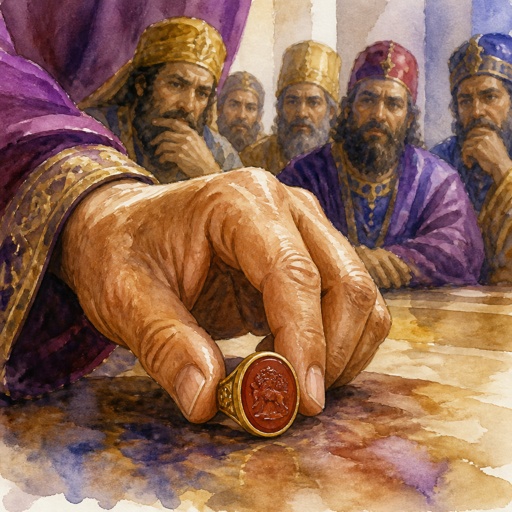
Esther 3:10 focus on ring

Esther 3:3 - "Then the king's servants, which were in the king's gate, said unto Mordecai, Why transgressest thou the king's commandment?"

Esther 8:3 - "¶ And Esther spake yet again before the king, and fell down at his feet, and besought him with tears to put away the mischief of Haman the Agagite, and his device that he had devised against the Jews."

Esther 7:3 - "Then Esther the queen answered and said, If I have found favour in thy sight, O king, and if it please the king, let my life be given me at my petition, and my people at my request:"

Esther 3:5 - "And when Haman saw that Mordecai bowed not, nor did him reverence, then was Haman full of wrath."

Esther 1:15 - "What shall we do unto the queen Vashti according to law, because she hath not performed the commandment of the king Ahasuerus by the chamberlains?"

Esther 9:3 - "And all the rulers of the provinces, and the lieutenants, and the deputies, and officers of the king, helped the Jews; because the fear of Mordecai fell upon them."

Esther 3:14 - "The copy of the writing for a commandment to be given in every province was published unto all people, that they should be ready against that day."

Esther 3:11 - "And the king said unto Haman, The silver is given to thee, the people also, to do with them as it seemeth good to thee."

Esther 9:15 - "For the Jews that were in Shushan gathered themselves together on the fourteenth day also of the month Adar, and slew three hundred men at Shushan; but on the prey they laid not their hand."

Esther 3:10 - "And the king took his ring from his hand, and gave it unto Haman the son of Hammedatha the Agagite, the Jews' enemy."

Esther 8:15 - "¶ And Mordecai went out from the presence of the king in royal apparel of blue and white, and with a great crown of gold, and with a garment of fine linen and purple: and the city of Shushan rejoiced and was glad."
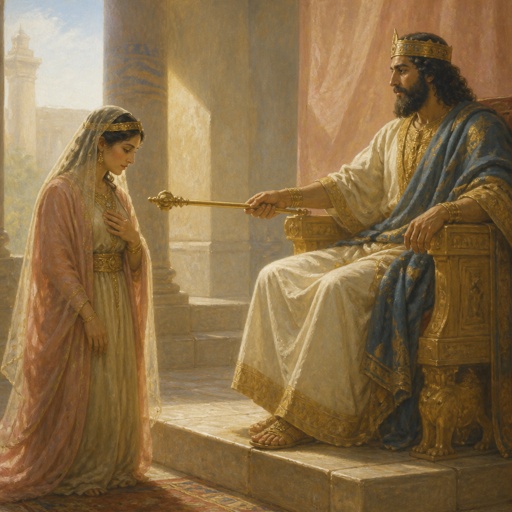
"Then said the king unto her, What wilt thou, queen Esther? and what is thy request? it shall be even given thee to the half of the kingdom." - Esther 5:3

Esther 6:3 - "And the king said, What honour and dignity hath been done to Mordecai for this? Then said the king's servants that ministered unto him, There is nothing done for him."

Esther 3:1 - "After these things did king Ahasuerus promote Haman the son of Hammedatha the Agagite, and advanced him, and set his seat above all the princes that were with him."

Esther 4:3 - "And in every province, whithersoever the king's commandment and his decree came, there was great mourning among the Jews, and fasting, and weeping, and wailing; and many lay in sackcloth and ashes."
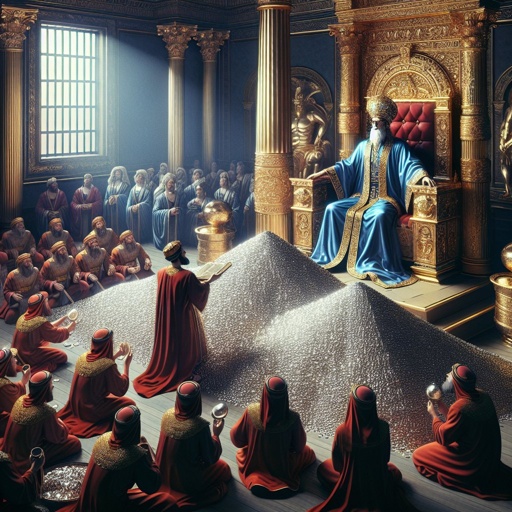
Esther 3:9 - "If it please the king, let it be written that they may be destroyed: and I will pay ten thousand talents of silver to the hands of those that have the charge of the business, to bring it into the king's treasuries."
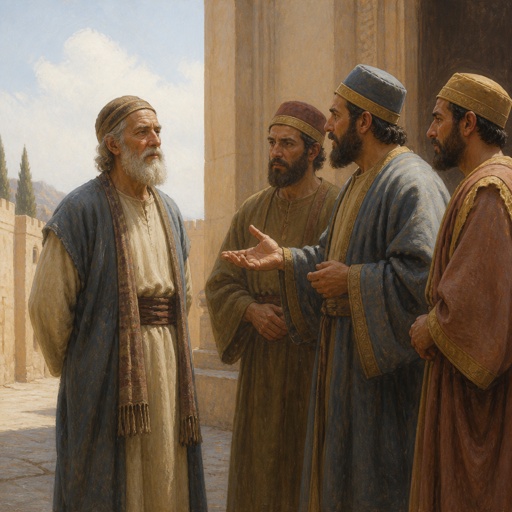
"Then the king's servants, which were in the king's gate, said unto Mordecai, Why transgressest thou the king's commandment?" - Esther 3:3

Esther 10:3 - "For Mordecai the Jew was next unto king Ahasuerus, and great among the Jews, and accepted of the multitude of his brethren, seeking the wealth of his people, and speaking peace to all his seed."

Esther 3:2 - "And all the king's servants, that were in the king's gate, bowed, and reverenced Haman: for the king had so commanded concerning him. But Mordecai bowed not, nor did him reverence."

Esther 3:7 - "¶ In the first month, that is, the month Nisan, in the twelfth year of king Ahasuerus, they cast Pur, that is, the lot, before Haman from day to day, and from month to month, to the twelfth month, that is, the month Adar."

Esther 1:3 - "In the third year of his reign, he made a feast unto all his princes and his servants; the power of Persia and Media, the nobles and princes of the provinces, being before him:"
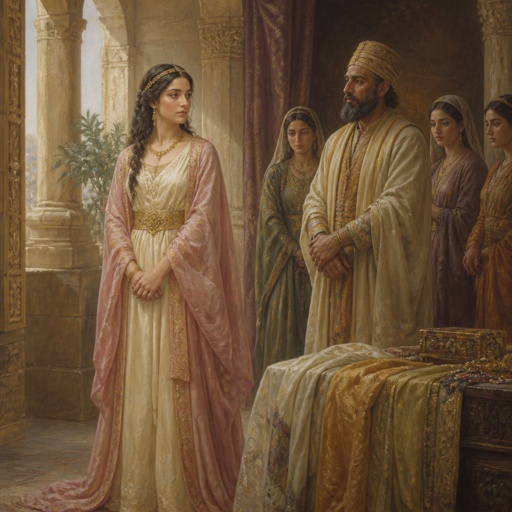
"¶ Now when the turn of Esther, the daughter of Abihail the uncle of Mordecai, who had taken her for his daughter, was come to go in unto the king, she required nothing but what Hegai the king's chamberlain, the keeper of the women, appointed. And Esther obtained favour in the sight of all them that looked upon her." - Esther 2:15

Esther 3:4 - "Now it came to pass, when they spake daily unto him, and he hearkened not unto them, that they told Haman, to see whether Mordecai's matters would stand: for he had told them that he was a Jew."