What does Esther 2:3 mean?
"And let the king appoint officers in all the provinces of his kingdom, that they may gather together all the fair young virgins unto Shushan the palace, to the house of the women, unto the custody of Hege the king's chamberlain, keeper of the women; and let their things for purification be given them:" - Esther 2:3
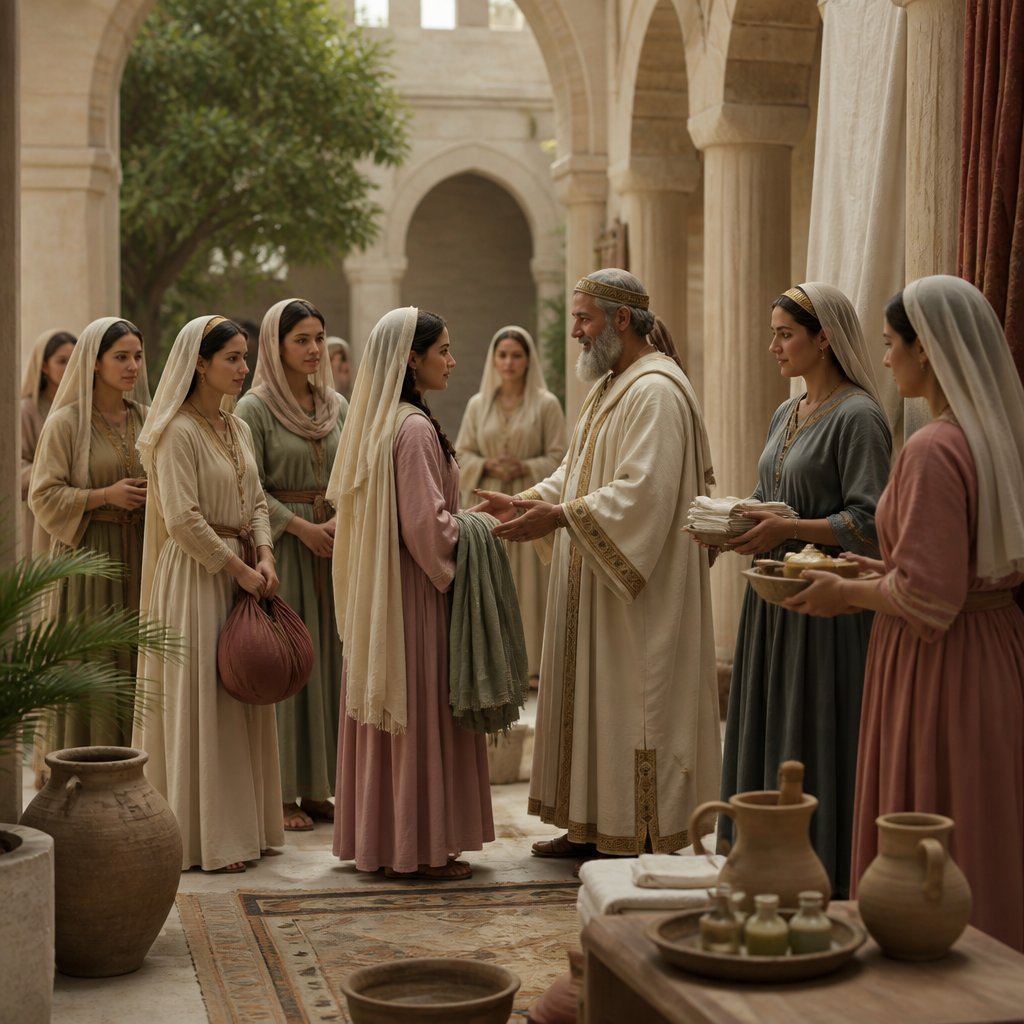
The verse Esther 2:3 from the King James Version (KJV) of the Bible reads, "And let the king appoint officers in all the provinces of his kingdom, that they may gather together all the fair young virgins unto Shushan the palace, to the house of the women, unto the custody of Hege the king's chamberlain, keeper of the women; and let their things for purification be given them."
This verse is part of the Book of Esther, which tells the story of a Jewish girl named Esther who becomes the queen of Persia. The verse comes at a pivotal moment in the narrative, as it describes the selection and preparation of the young women who will be presented to King Ahasuerus for his consideration as a potential queen.
The context of this verse is important for understanding its meaning and significance. In the preceding chapters, we learn that Queen Vashti has been deposed for disobeying the king's command, and a royal decree has been issued to find a new queen. Beautiful young virgins from all over the kingdom are to be brought to the palace for a year of beauty treatments and preparation before being presented to the king.
One of the key themes in this verse is the treatment and status of women in ancient Persia. The fact that the king can summon young virgins from all over his kingdom to be groomed for his pleasure speaks to the power dynamics and treatment of women in this society. The women have little say in their fate and are essentially at the mercy of the king and his appointed officials. This verse serves as a reminder of the patriarchal structures and objectification of women that were prevalent in ancient times.
Another theme in this verse is the concept of beauty and purification. The young women are to undergo a process of purification before being presented to the king. This underscores the importance placed on physical appearance and external beauty in this society. It also highlights the ritualistic and ceremonial nature of the selection process, as the women are subject to a prescribed regimen of beauty treatments and preparations.
The symbolism in this verse is multifaceted. On one level, it symbolizes the precarious position of women in a male-dominated society, where they are treated as objects to be selected and groomed for the pleasure of men. It also symbolizes the superficiality and shallowness of the standards of beauty and worth that are applied to women. The emphasis on physical appearance and the need for purification conveys a sense of women being judged and valued primarily for their outward appearance.
From a literary perspective, this verse serves to set the stage for the events that will unfold in the rest of the book. It foreshadows the central role that Esther will play in the narrative, as she is one of the young women who will be brought to the palace. Her eventual rise to become queen and her brave actions to save her people from persecution make her a figure of strength and resilience in the face of adversity.
In conclusion, Esther 2:3 from the King James Version of the Bible conveys important themes of patriarchy, beauty, and status of women in ancient Persia. It also contains symbolism that speaks to the objectification and superficiality of women's worth in this society. The verse sets the stage for the larger narrative of Esther's rise to power and her courageous actions to protect her people.
Have questions about Esther 2:3?
Dive deeper into this scripture with Bible Chat — an AI-powered tool for exploring God's Word through conversation. Ask questions, get context, and grow in your understanding of the Bible.
Get Our Apps


Esther 2:3 Artwork

Esther 2:3 - "And let the king appoint officers in all the provinces of his kingdom, that they may gather together all the fair young virgins unto Shushan the palace, to the house of the women, unto the custody of Hege the king's chamberlain, keeper of the women; and let their things for purification be given them:"
"And let the king appoint officers in all the provinces of his kingdom, that they may gather together all the fair young virgins unto Shushan the palace, to the house of the women, unto the custody of Hege the king's chamberlain, keeper of the women; and let their things for purification be given them:" - Esther 2:3

Esther 2:22 - "And the thing was known to Mordecai, who told it unto Esther the queen; and Esther certified the king thereof in Mordecai's name."

Esther 5:3 - "Then said the king unto her, What wilt thou, queen Esther? and what is thy request? it shall be even given thee to the half of the kingdom."

Esther 3:2 - "And all the king's servants, that were in the king's gate, bowed, and reverenced Haman: for the king had so commanded concerning him. But Mordecai bowed not, nor did him reverence."

Esther 5:2 - "And it was so, when the king saw Esther the queen standing in the court, that she obtained favour in his sight: and the king held out to Esther the golden sceptre that was in his hand. So Esther drew near, and touched the top of the sceptre."
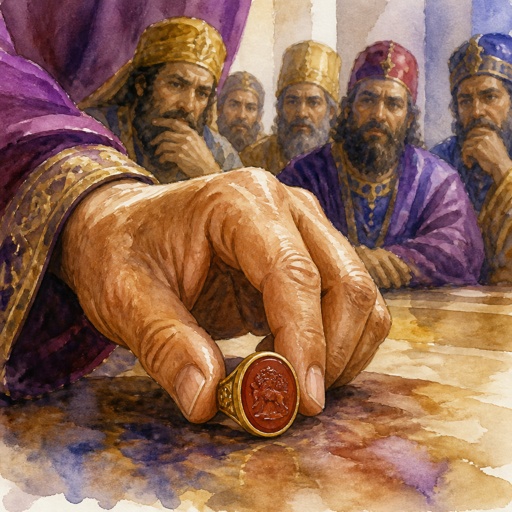
Esther 3:10 focus on ring

Esther 2:20 - "Esther had not yet shewed her kindred nor her people; as Mordecai had charged her: for Esther did the commandment of Mordecai, like as when she was brought up with him."

Esther 7:2 - "And the king said again unto Esther on the second day at the banquet of wine, What is thy petition, queen Esther? and it shall be granted thee: and what is thy request? and it shall be performed, even to the half of the kingdom."

Esther 5:2

Esther 5:2

Esther 5:2

Esther 2:11 - "And Mordecai walked every day before the court of the women's house, to know how Esther did, and what should become of her."

Esther 3:3 - "Then the king's servants, which were in the king's gate, said unto Mordecai, Why transgressest thou the king's commandment?"

Esther 2:10 - "Esther had not shewed her people nor her kindred: for Mordecai had charged her that she should not shew it."

Esther 8:3 - "¶ And Esther spake yet again before the king, and fell down at his feet, and besought him with tears to put away the mischief of Haman the Agagite, and his device that he had devised against the Jews."

Esther 5:2 - "And it was so, when the king saw Esther the queen standing in the court, that she obtained favour in his sight: and the king held out to Esther the golden sceptre that was in his hand. So Esther drew near, and touched the top of the sceptre."

"And the thing was known to Mordecai, who told it unto Esther the queen; and Esther certified the king thereof in Mordecai's name." - Esther 2:22

Esther 7:3 - "Then Esther the queen answered and said, If I have found favour in thy sight, O king, and if it please the king, let my life be given me at my petition, and my people at my request:"

Esther 2:16 - "So Esther was taken unto king Ahasuerus into his house royal in the tenth month, which is the month Tebeth, in the seventh year of his reign."

Esther 8:2 - "And the king took off his ring, which he had taken from Haman, and gave it unto Mordecai. And Esther set Mordecai over the house of Haman."
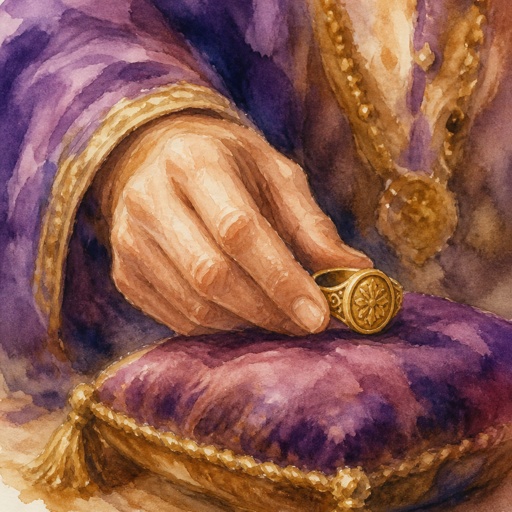
Esther 8:2 focus on the ring

Esther 3:5 - "And when Haman saw that Mordecai bowed not, nor did him reverence, then was Haman full of wrath."

Esther 2:15 - "¶ Now when the turn of Esther, the daughter of Abihail the uncle of Mordecai, who had taken her for his daughter, was come to go in unto the king, she required nothing but what Hegai the king's chamberlain, the keeper of the women, appointed. And Esther obtained favour in the sight of all them that looked upon her."

Esther 2:2 - "Then said the king's servants that ministered unto him, Let there be fair young virgins sought for the king:"

Esther 9:3 - "And all the rulers of the provinces, and the lieutenants, and the deputies, and officers of the king, helped the Jews; because the fear of Mordecai fell upon them."

Esther 3:14 - "The copy of the writing for a commandment to be given in every province was published unto all people, that they should be ready against that day."

Esther 3:11 - "And the king said unto Haman, The silver is given to thee, the people also, to do with them as it seemeth good to thee."

Esther 3:10 - "And the king took his ring from his hand, and gave it unto Haman the son of Hammedatha the Agagite, the Jews' enemy."

Esther 2:17 - "And the king loved Esther above all the women, and she obtained grace and favour in his sight more than all the virgins; so that he set the royal crown upon her head, and made her queen instead of Vashti."