What does Esther 2:19 mean?
"And when the virgins were gathered together the second time, then Mordecai sat in the king's gate." - Esther 2:19
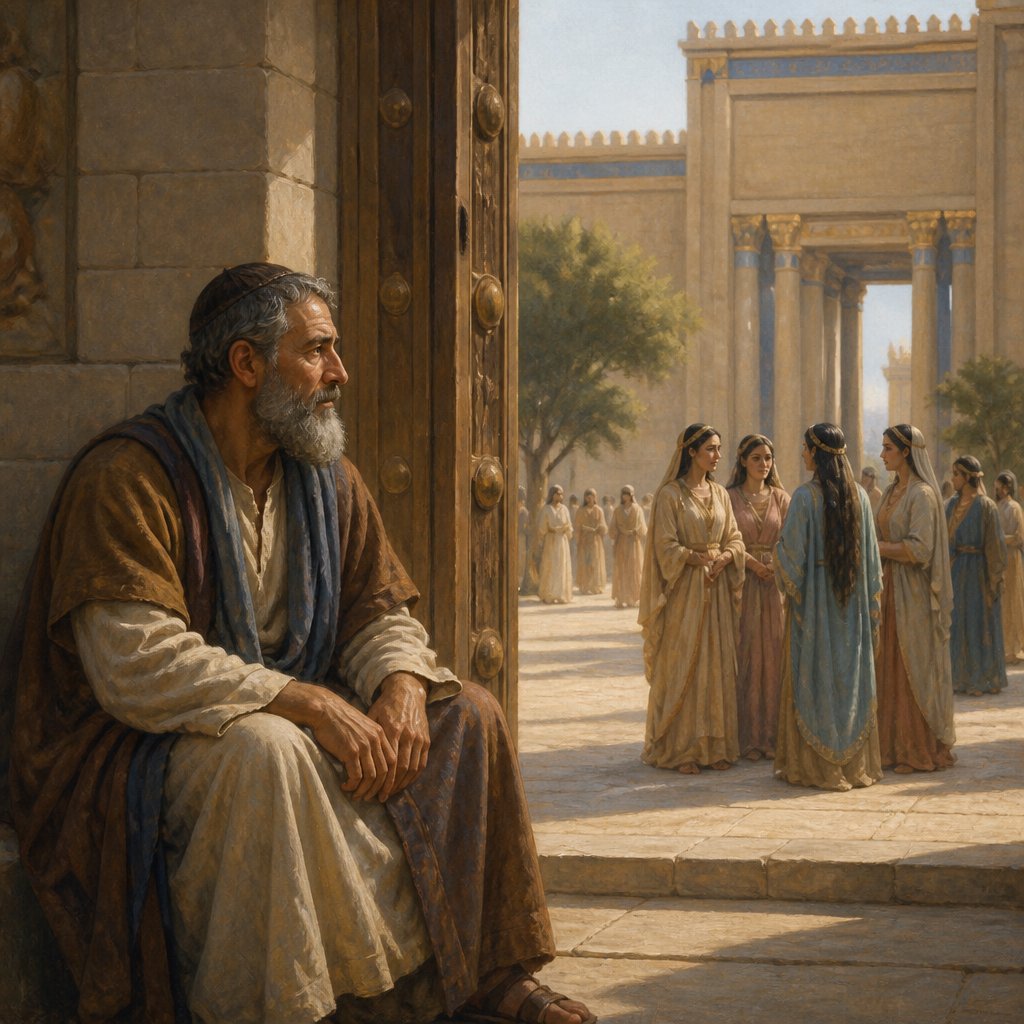
Esther 2:19 in the King James Version says, "And when the virgins were gathered together the second time, then Mordecai sat in the king's gate."
The book of Esther is a unique and intriguing book in the Bible. It is one of the only books in the Bible where the name of God is not directly mentioned. Despite this, the book of Esther is filled with important themes such as faith, courage, divine providence, and the power of standing up for what is right.
The verse Esther 2:19 occurs in the context of King Ahasuerus' search for a new queen. After Queen Vashti disobeyed the king's orders, she was deposed, and the king sought a new queen from the virgins of the kingdom. Esther, a Jewish woman, was among those chosen to be presented to the king. In verse 15, we see that Esther found favor in the eyes of all who saw her and was chosen to be the new queen.
The verse Esther 2:19 takes place after Esther has been crowned queen. The gathering of the virgins mentioned in this verse is for the second time, which indicates that this is not a one-time event, but a repeated process. In the midst of all this, we read that Mordecai, Esther's cousin and guardian, "sat in the king's gate."
The "king's gate" was a place of great significance in the ancient Near East. It served as a location for important gatherings, legal proceedings, and governmental activities. By sitting at the king's gate, Mordecai was positioning himself in a place of influence and power. This action signifies Mordecai's commitment to looking out for Esther and his willingness to be involved in her life, despite the potential risks.
This verse reflects the theme of providence and the subtle ways in which God works behind the scenes. Mordecai's presence at the king's gate would unknowingly play a pivotal role in the events that unfold later in the book. His position at the gate would allow him to overhear a plot to assassinate the king, which he would later bring to Esther's attention, ultimately saving the king's life. This seemingly small action of Mordecai sitting at the king's gate becomes a significant factor in the salvation of the Jewish people.
Furthermore, Mordecai's presence at the king's gate can also be seen as a symbol of the importance of being proactive in one's faith. The book of Esther emphasizes the significance of taking action and standing up for what is right, even when the odds seem insurmountable. Mordecai's decision to position himself in a place of influence reflects his desire to protect and guide Esther, as well as his commitment to fulfilling his duty as a guardian and a member of the Jewish community.
Overall, Esther 2:19 offers a glimpse into the intricate and interconnected web of events that contribute to the unfolding of God's providential plan. It serves as a reminder of the importance of being diligent and faithful in all circumstances, as well as the profound impact that seemingly small actions can have. Throughout the book of Esther, we see the hand of God at work, guiding and orchestrating events in ways that ultimately bring about deliverance and redemption for His people.
Have questions about Esther 2:19?
Dive deeper into this scripture with Bible Chat — an AI-powered tool for exploring God's Word through conversation. Ask questions, get context, and grow in your understanding of the Bible.
Get Our Apps


Esther 2:19 Artwork

Esther 2:19 - "And when the virgins were gathered together the second time, then Mordecai sat in the king's gate."
"And when the virgins were gathered together the second time, then Mordecai sat in the king's gate." - Esther 2:19

Esther 2:22 - "And the thing was known to Mordecai, who told it unto Esther the queen; and Esther certified the king thereof in Mordecai's name."

Esther 5:2 - "And it was so, when the king saw Esther the queen standing in the court, that she obtained favour in his sight: and the king held out to Esther the golden sceptre that was in his hand. So Esther drew near, and touched the top of the sceptre."

Esther 2:20 - "Esther had not yet shewed her kindred nor her people; as Mordecai had charged her: for Esther did the commandment of Mordecai, like as when she was brought up with him."

Esther 7:2 - "And the king said again unto Esther on the second day at the banquet of wine, What is thy petition, queen Esther? and it shall be granted thee: and what is thy request? and it shall be performed, even to the half of the kingdom."

Esther 5:2

Esther 5:2

Esther 5:2

Esther 2:11 - "And Mordecai walked every day before the court of the women's house, to know how Esther did, and what should become of her."

Esther 2:10 - "Esther had not shewed her people nor her kindred: for Mordecai had charged her that she should not shew it."

Esther 5:2 - "And it was so, when the king saw Esther the queen standing in the court, that she obtained favour in his sight: and the king held out to Esther the golden sceptre that was in his hand. So Esther drew near, and touched the top of the sceptre."

"And the thing was known to Mordecai, who told it unto Esther the queen; and Esther certified the king thereof in Mordecai's name." - Esther 2:22

Esther 2:16 - "So Esther was taken unto king Ahasuerus into his house royal in the tenth month, which is the month Tebeth, in the seventh year of his reign."

Esther 8:2 - "And the king took off his ring, which he had taken from Haman, and gave it unto Mordecai. And Esther set Mordecai over the house of Haman."
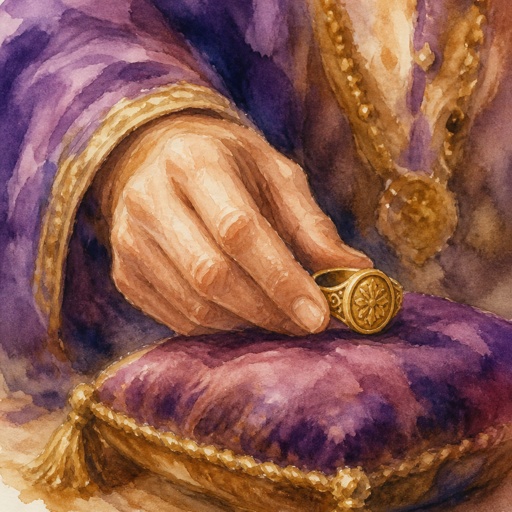
Esther 8:2 focus on the ring

Esther 2:15 - "¶ Now when the turn of Esther, the daughter of Abihail the uncle of Mordecai, who had taken her for his daughter, was come to go in unto the king, she required nothing but what Hegai the king's chamberlain, the keeper of the women, appointed. And Esther obtained favour in the sight of all them that looked upon her."

Esther 2:2 - "Then said the king's servants that ministered unto him, Let there be fair young virgins sought for the king:"

Esther 9:19 - "Therefore the Jews of the villages, that dwelt in the unwalled towns, made the fourteenth day of the month Adar a day of gladness and feasting, and a good day, and of sending portions one to another."

Esther 2:17 - "And the king loved Esther above all the women, and she obtained grace and favour in his sight more than all the virgins; so that he set the royal crown upon her head, and made her queen instead of Vashti."

Esther 2:7 - "And he brought up Hadassah, that is, Esther, his uncle's daughter: for she had neither father nor mother, and the maid was fair and beautiful; whom Mordecai, when her father and mother were dead, took for his own daughter."
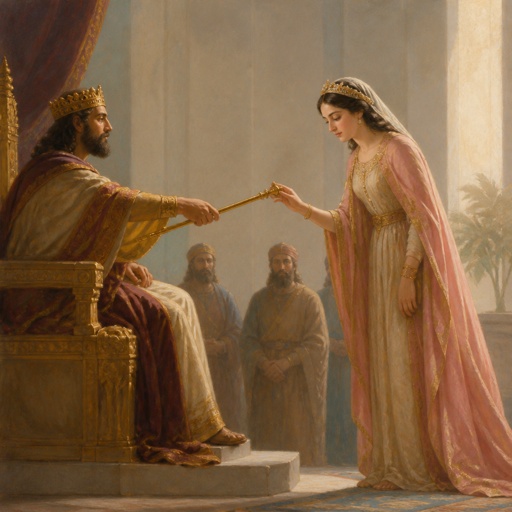
"And it was so, when the king saw Esther the queen standing in the court, that she obtained favour in his sight: and the king held out to Esther the golden sceptre that was in his hand. So Esther drew near, and touched the top of the sceptre." - Esther 5:2

Esther 2:8 - "¶ So it came to pass, when the king's commandment and his decree was heard, and when many maidens were gathered together unto Shushan the palace, to the custody of Hegai, that Esther was brought also unto the king's house, to the custody of Hegai, keeper of the women."

Esther 1:2 - "That in those days, when the king Ahasuerus sat on the throne of his kingdom, which was in Shushan the palace,"
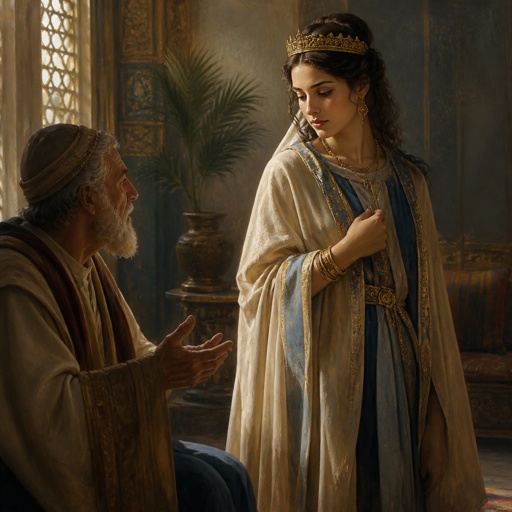
"Esther had not yet shewed her kindred nor her people; as Mordecai had charged her: for Esther did the commandment of Mordecai, like as when she was brought up with him." - Esther 2:20

Esther 4:2 - "And came even before the king's gate: for none might enter into the king's gate clothed with sackcloth."
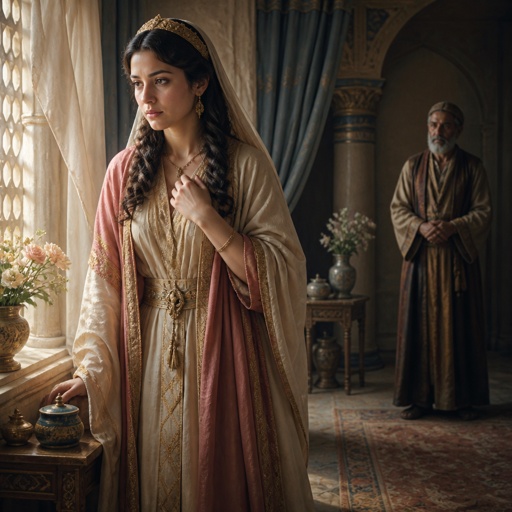
"Esther had not shewed her people nor her kindred: for Mordecai had charged her that she should not shew it." - Esther 2:10
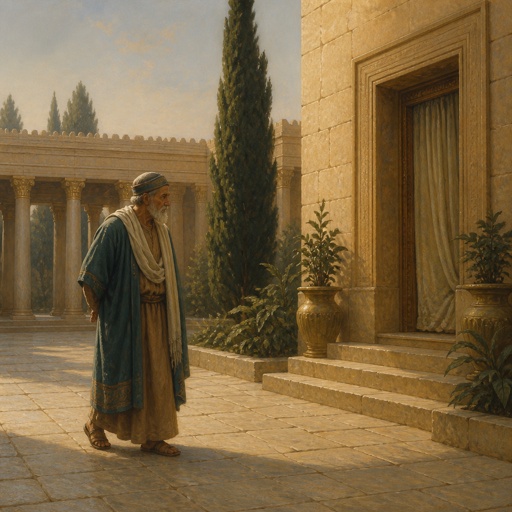
"And Mordecai walked every day before the court of the women's house, to know how Esther did, and what should become of her." - Esther 2:11
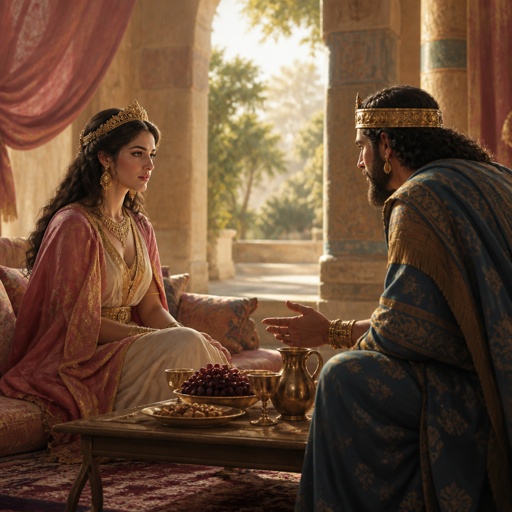
"And the king said again unto Esther on the second day at the banquet of wine, What is thy petition, queen Esther? and it shall be granted thee: and what is thy request? and it shall be performed, even to the half of the kingdom." - Esther 7:2

Esther 2:4 - "And let the maiden which pleaseth the king be queen instead of Vashti. And the thing pleased the king; and he did so."