What does Esther 2:17 mean?
"And the king loved Esther above all the women, and she obtained grace and favour in his sight more than all the virgins; so that he set the royal crown upon her head, and made her queen instead of Vashti." - Esther 2:17
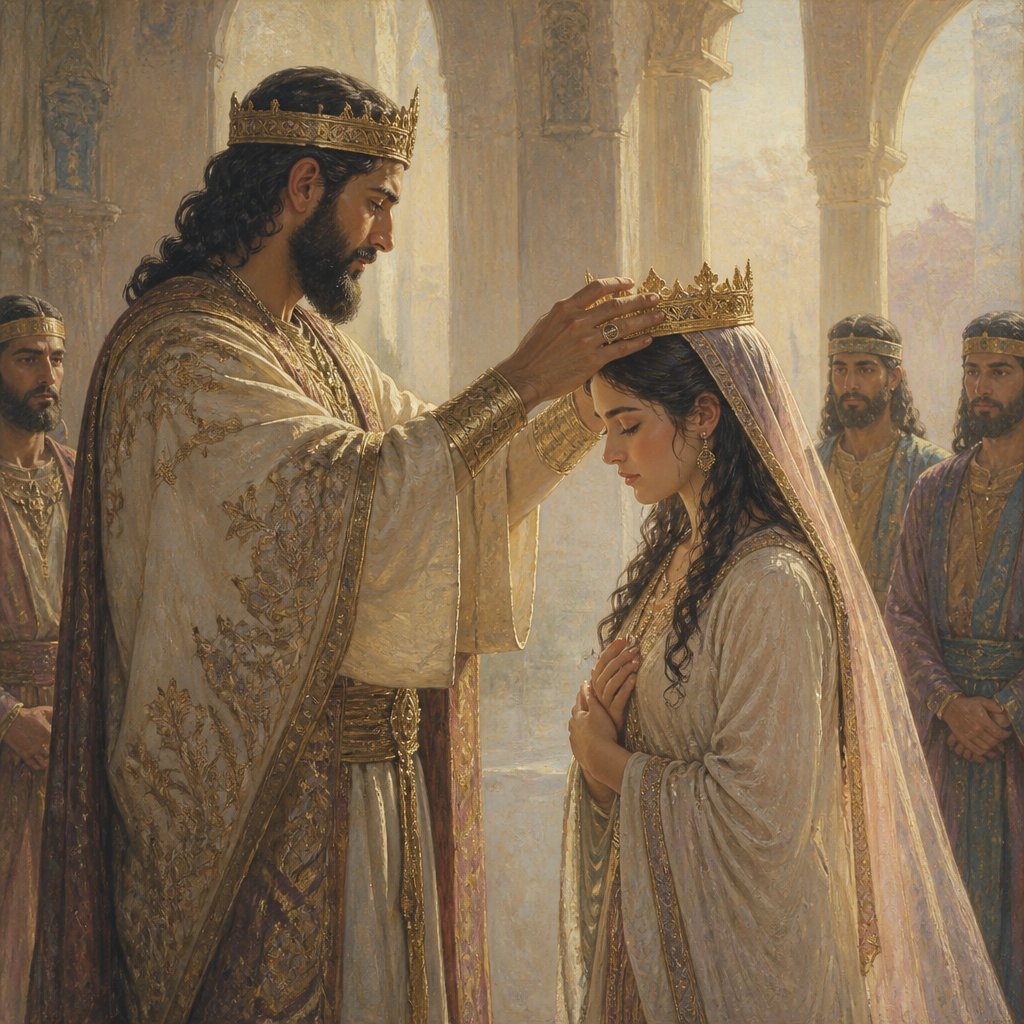
Esther 2:17 in the King James Version of the Bible reads: "And the king loved Esther above all the women, and she obtained grace and favour in his sight more than all the virgins; so that he set the royal crown upon her head, and made her queen instead of Vashti."
The book of Esther is a unique and compelling story within the Bible, set during the time of the Persian Empire. The verse quoted comes from a key moment in the narrative, where Esther, a Jewish orphan girl, is chosen to be the new queen of King Ahasuerus after his previous queen, Vashti, is banished. This verse is significant as it marks the beginning of Esther's journey from an unknown orphan to a woman of influence and power in the Persian court.
One of the central themes of the book of Esther is the providence of God. Even though the name of God is not explicitly mentioned in the book, His hand is evident throughout the story. The rise of Esther to become queen and later her actions to save her people from a genocidal plot are examples of God working behind the scenes to accomplish His purpose. This verse, in particular, demonstrates how God's favor was upon Esther, as she found grace and favor in the eyes of the king, ultimately leading to her becoming queen.
The verse also touches on the theme of divine favor and providence. Esther's beauty and character captivated the king, leading him to show her favor above all the other women brought to the palace. This favor from the king is a reflection of God's favor upon Esther. It is a reminder that God has the power to elevate individuals from obscurity to positions of influence and honor.
Additionally, the verse speaks to the themes of power and authority. The act of the king placing the royal crown on Esther's head and making her queen symbolizes the transfer of authority and power. Esther's rise to become queen signified a shift in her status from a marginalized orphan to a position of considerable influence and authority in the Persian Empire. This sets the stage for the pivotal role she will later play in saving her people from destruction.
The story of Esther also carries the theme of female empowerment. In a time and culture where women had little agency, Esther's rise to power and her courage to speak up for her people serves as an inspiring example of female strength and resilience. The verse exemplifies Esther's exceptional qualities that set her apart, leading the king to choose her as queen.
Esther's story is also often seen as a symbol of faith and courage in the face of adversity. Despite the risks involved, Esther ultimately takes a bold stand to save her people, risking her own life to plead for their deliverance. This verse is the beginning of Esther's journey and sets the stage for the pivotal role she will play in the events to come.
In conclusion, Esther 2:17 in the King James Version of the Bible is a significant verse in the larger narrative of the book of Esther. It touches on themes of divine favor, providence, power, authority, and female empowerment. It sets the stage for the remarkable journey of Esther from a humble orphan to a woman of influence and courage, and serves as a reminder of God's ability to elevate and empower individuals for His purpose.
Have questions about Esther 2:17?
Dive deeper into this scripture with Bible Chat — an AI-powered tool for exploring God's Word through conversation. Ask questions, get context, and grow in your understanding of the Bible.
Get Our Apps


Esther 2:17 Artwork

Esther 2:17 - "And the king loved Esther above all the women, and she obtained grace and favour in his sight more than all the virgins; so that he set the royal crown upon her head, and made her queen instead of Vashti."
"And the king loved Esther above all the women, and she obtained grace and favour in his sight more than all the virgins; so that he set the royal crown upon her head, and made her queen instead of Vashti." - Esther 2:17

Esther 1:17

Esther 4:17 - "So Mordecai went his way, and did according to all that Esther had commanded him."

Esther 2:22 - "And the thing was known to Mordecai, who told it unto Esther the queen; and Esther certified the king thereof in Mordecai's name."

Esther 5:2 - "And it was so, when the king saw Esther the queen standing in the court, that she obtained favour in his sight: and the king held out to Esther the golden sceptre that was in his hand. So Esther drew near, and touched the top of the sceptre."

Esther 2:20 - "Esther had not yet shewed her kindred nor her people; as Mordecai had charged her: for Esther did the commandment of Mordecai, like as when she was brought up with him."
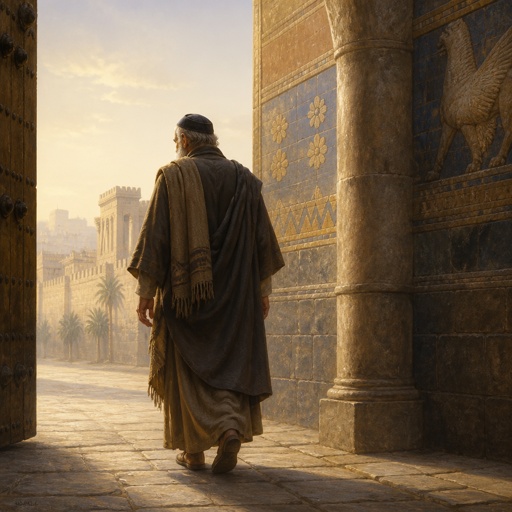
"So Mordecai went his way, and did according to all that Esther had commanded him." - Esther 4:17

Esther 7:2 - "And the king said again unto Esther on the second day at the banquet of wine, What is thy petition, queen Esther? and it shall be granted thee: and what is thy request? and it shall be performed, even to the half of the kingdom."

Esther 9:17 - "On the thirteenth day of the month Adar; and on the fourteenth day of the same rested they, and made it a day of feasting and gladness."

Esther 5:2

Esther 5:2

Esther 5:2

Esther 2:11 - "And Mordecai walked every day before the court of the women's house, to know how Esther did, and what should become of her."

Esther 2:10 - "Esther had not shewed her people nor her kindred: for Mordecai had charged her that she should not shew it."

Esther 5:2 - "And it was so, when the king saw Esther the queen standing in the court, that she obtained favour in his sight: and the king held out to Esther the golden sceptre that was in his hand. So Esther drew near, and touched the top of the sceptre."

"And the thing was known to Mordecai, who told it unto Esther the queen; and Esther certified the king thereof in Mordecai's name." - Esther 2:22

Esther 2:16 - "So Esther was taken unto king Ahasuerus into his house royal in the tenth month, which is the month Tebeth, in the seventh year of his reign."

Esther 8:2 - "And the king took off his ring, which he had taken from Haman, and gave it unto Mordecai. And Esther set Mordecai over the house of Haman."
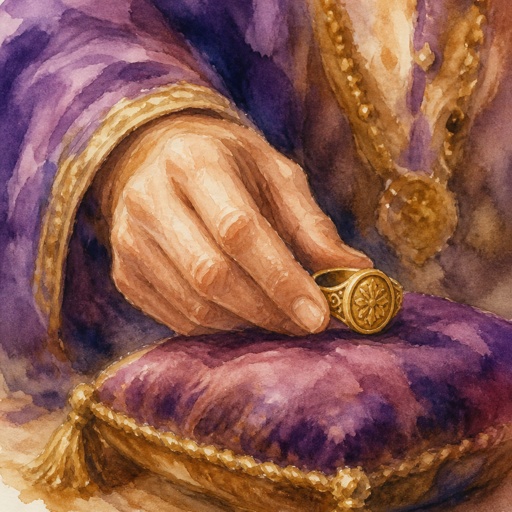
Esther 8:2 focus on the ring

Esther 2:15 - "¶ Now when the turn of Esther, the daughter of Abihail the uncle of Mordecai, who had taken her for his daughter, was come to go in unto the king, she required nothing but what Hegai the king's chamberlain, the keeper of the women, appointed. And Esther obtained favour in the sight of all them that looked upon her."

Esther 2:2 - "Then said the king's servants that ministered unto him, Let there be fair young virgins sought for the king:"

Esther 2:7 - "And he brought up Hadassah, that is, Esther, his uncle's daughter: for she had neither father nor mother, and the maid was fair and beautiful; whom Mordecai, when her father and mother were dead, took for his own daughter."
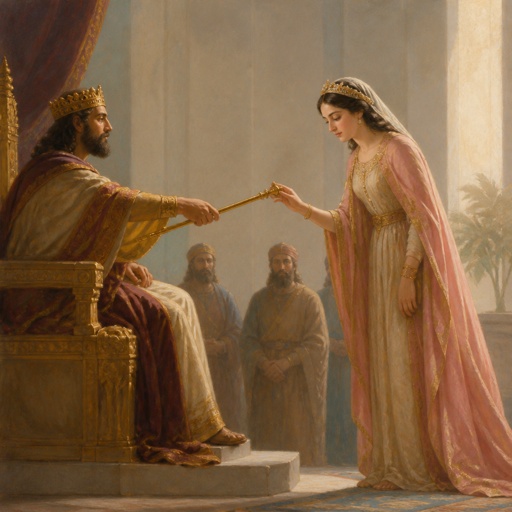
"And it was so, when the king saw Esther the queen standing in the court, that she obtained favour in his sight: and the king held out to Esther the golden sceptre that was in his hand. So Esther drew near, and touched the top of the sceptre." - Esther 5:2

Esther 2:8 - "¶ So it came to pass, when the king's commandment and his decree was heard, and when many maidens were gathered together unto Shushan the palace, to the custody of Hegai, that Esther was brought also unto the king's house, to the custody of Hegai, keeper of the women."

Esther 2:19 - "And when the virgins were gathered together the second time, then Mordecai sat in the king's gate."

Esther 1:2 - "That in those days, when the king Ahasuerus sat on the throne of his kingdom, which was in Shushan the palace,"
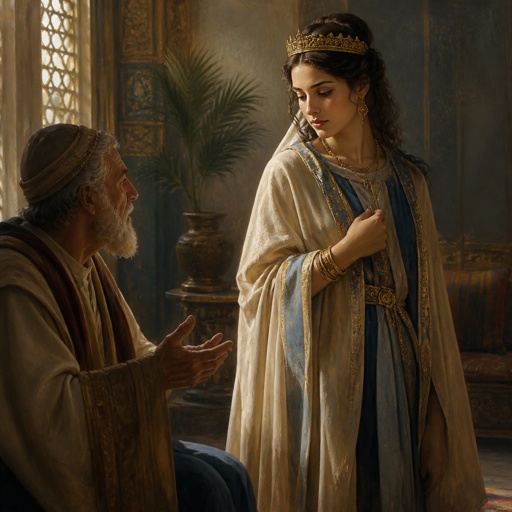
"Esther had not yet shewed her kindred nor her people; as Mordecai had charged her: for Esther did the commandment of Mordecai, like as when she was brought up with him." - Esther 2:20

Esther 4:2 - "And came even before the king's gate: for none might enter into the king's gate clothed with sackcloth."
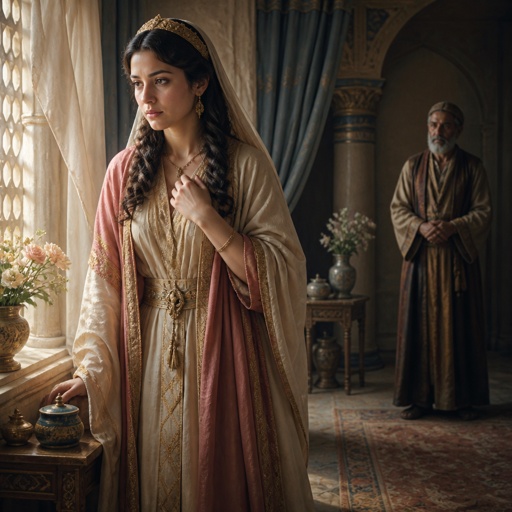
"Esther had not shewed her people nor her kindred: for Mordecai had charged her that she should not shew it." - Esther 2:10