What does Esther 1:9 mean?
"Also Vashti the queen made a feast for the women in the royal house which belonged to king Ahasuerus." - Esther 1:9
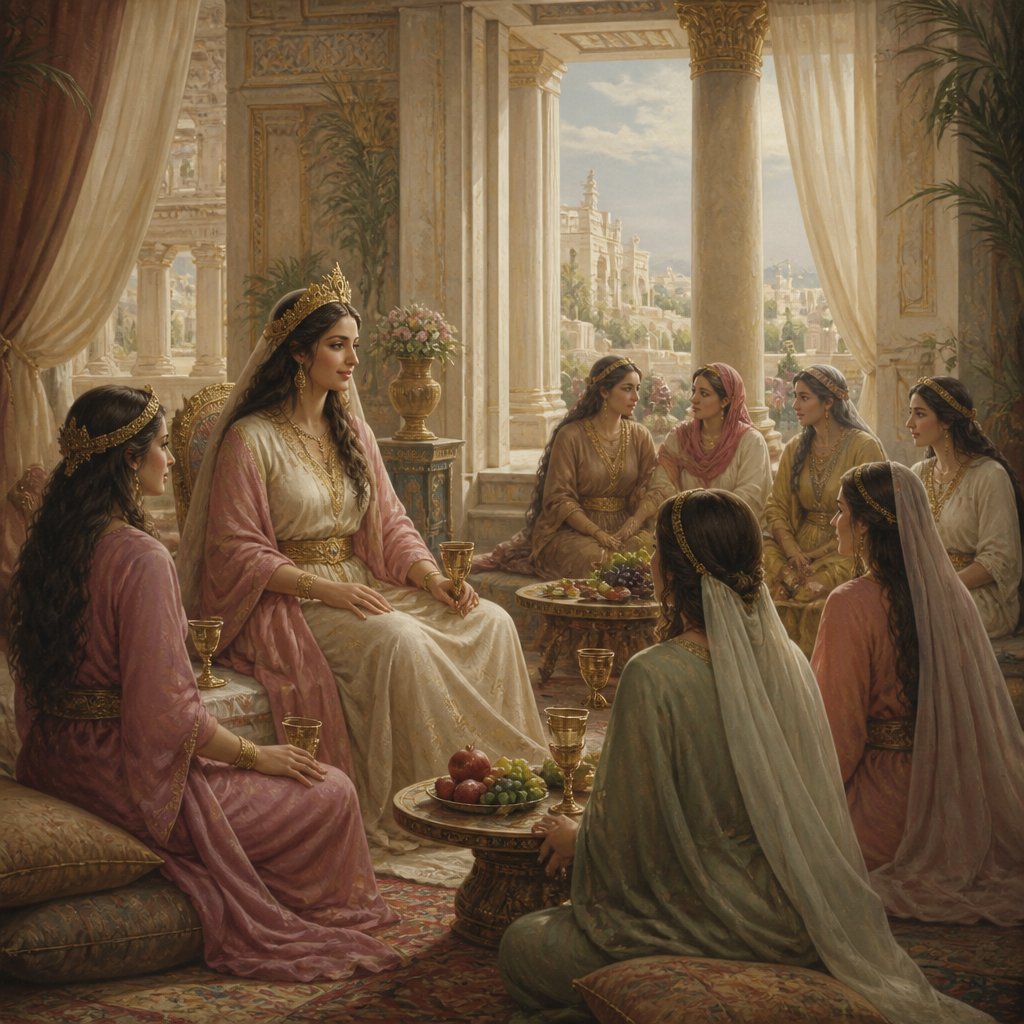
Esther 1:9 in the King James Version of the Bible reads, "Also Vashti the queen made a feast for the women in the royal house which belonged to king Ahasuerus." This verse is from the Book of Esther, which is a part of the Old Testament. It is important to understand the historical and cultural context in order to fully grasp the implications and significance of this verse.
The Book of Esther is set during the reign of King Ahasuerus, also known as King Xerxes I, who ruled over the Persian Empire from 486-465 BC. The story of Esther takes place in the city of Susa, the winter capital of the Persian Empire. The verse specifically mentions Queen Vashti hosting a feast for the women in the royal house, which is a significant event in the narrative.
It is important to note that the feast hosted by Queen Vashti had a specific audience, as it was for the women in the royal house. The fact that it was exclusively for women in the royal household demonstrates the significance of this gathering within the social and cultural context of the time. It also highlights the status and influence of Queen Vashti as a leader among the women of the court.
The themes present in this verse include power dynamics, gender roles, and the roles of women in society. In the ancient Persian Empire, women were often confined to traditional roles within the royal court, and their actions were subject to scrutiny and judgment. Queen Vashti's decision to host a feast for the women in the royal house reflects her authority and position of influence among the women of the court.
Furthermore, the verse serves as a prelude to the events that unfold in the subsequent chapters of the Book of Esther. After Queen Vashti defied King Ahasuerus' command, she was subsequently removed from her position as queen, leading to the search for a new queen, ultimately resulting in Esther's rise to power. This verse sets the stage for the conflict and power struggles that are central to the plot of the Book of Esther.
Symbolically, Queen Vashti's feast for the women in the royal house can be seen as a demonstration of women's autonomy and agency within a patriarchal society. Her decision to host the feast and gather the women of the court together likely provided a sense of community and solidarity among the women, offering them a space to socialize and interact outside of the male-dominated spheres of influence.
Additionally, the verse also serves to introduce Queen Vashti as a strong and independent woman, setting the stage for her eventual defiance of King Ahasuerus' command. Her refusal to appear before the king when summoned serves as a pivotal moment in the narrative, leading to the unraveling of events that ultimately result in Esther becoming queen.
In conclusion, Esther 1:9 presents a nuanced portrayal of gender dynamics and power structures within the Persian court, highlighting the significance of Queen Vashti's actions and the impact of her defiance. The verse serves as an important precursor to the events that unfold in the Book of Esther, shedding light on the roles and agency of women in a male-dominated society. It also provides insight into the social and cultural context of the time, underscoring the complexities of power and influence within the ancient Persian Empire.
Have questions about Esther 1:9?
Dive deeper into this scripture with Bible Chat — an AI-powered tool for exploring God's Word through conversation. Ask questions, get context, and grow in your understanding of the Bible.
Get Our Apps


Esther 1:9 Artwork

Esther 1:9 - "Also Vashti the queen made a feast for the women in the royal house which belonged to king Ahasuerus."
"Also Vashti the queen made a feast for the women in the royal house which belonged to king Ahasuerus." - Esther 1:9

Esther 4:9 - "And Hatach came and told Esther the words of Mordecai."

Esther 9:32 - "And the decree of Esther confirmed these matters of Purim; and it was written in the book."

Esther 9:9 - "And Parmashta, and Arisai, and Aridai, and Vajezatha,"

Esther 9:29 - "Then Esther the queen, the daughter of Abihail, and Mordecai the Jew, wrote with all authority, to confirm this second letter of Purim."

"And Hatach came and told Esther the words of Mordecai." - Esther 4:9

Esther 9:8 - "And Poratha, and Adalia, and Aridatha,"

Esther 9:7 - "And Parshandatha, and Dalphon, and Aspatha,"

"And the decree of Esther confirmed these matters of Purim; and it was written in the book." - Esther 9:32
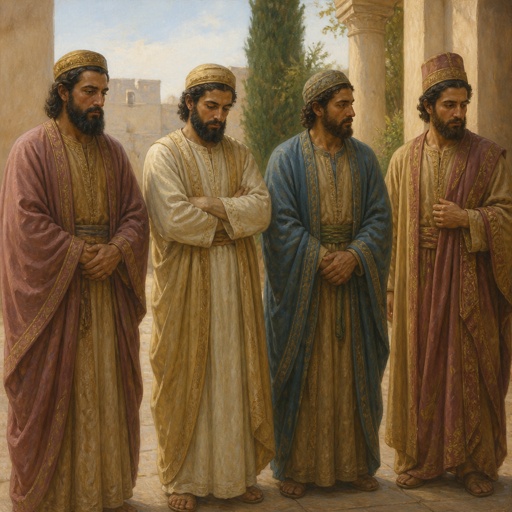
"And Parmashta, and Arisai, and Aridai, and Vajezatha," - Esther 9:9

Esther 7:1 - "So the king and Haman came to banquet with Esther the queen."

Esther 9:31 - "To confirm these days of Purim in their times appointed, according as Mordecai the Jew and Esther the queen had enjoined them, and as they had decreed for themselves and for their seed, the matters of the fastings and their cry."

Esther 9:13 - "Then said Esther, If it please the king, let it be granted to the Jews which are in Shushan to do to morrow also according unto this day's decree, and let Haman's ten sons be hanged upon the gallows."
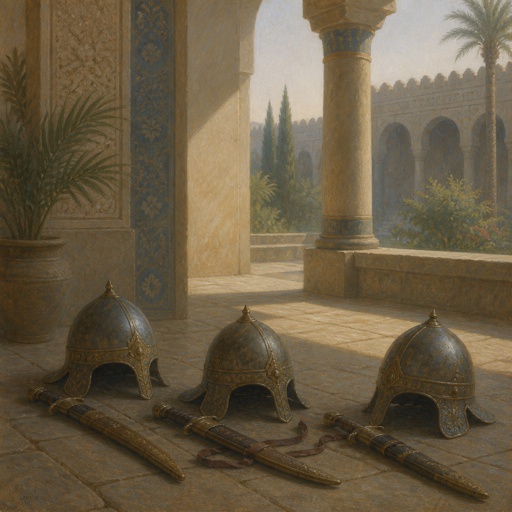
"And Parshandatha, and Dalphon, and Aspatha," - Esther 9:7
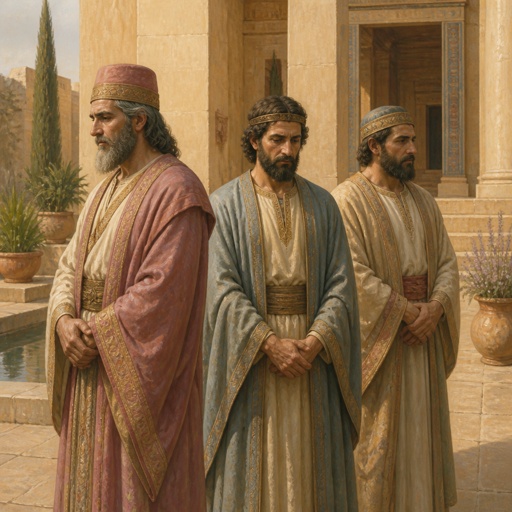
"And Poratha, and Adalia, and Aridatha," - Esther 9:8

Esther 1:17

Esther 9:6 - "And in Shushan the palace the Jews slew and destroyed five hundred men."

Esther 8:1 - "On that day did the king Ahasuerus give the house of Haman the Jews' enemy unto Esther the queen. And Mordecai came before the king; for Esther had told what he was unto her."

Esther 9:25 - "But when Esther came before the king, he commanded by letters that his wicked device, which he devised against the Jews, should return upon his own head, and that he and his sons should be hanged on the gallows."

Esther 9:11 - "On that day the number of those that were slain in Shushan the palace was brought before the king."

Esther 9:23 - "And the Jews undertook to do as they had begun, and as Mordecai had written unto them;"

Esther 9:10 - "The ten sons of Haman the son of Hammedatha, the enemy of the Jews, slew they; but on the spoil laid they not their hand."
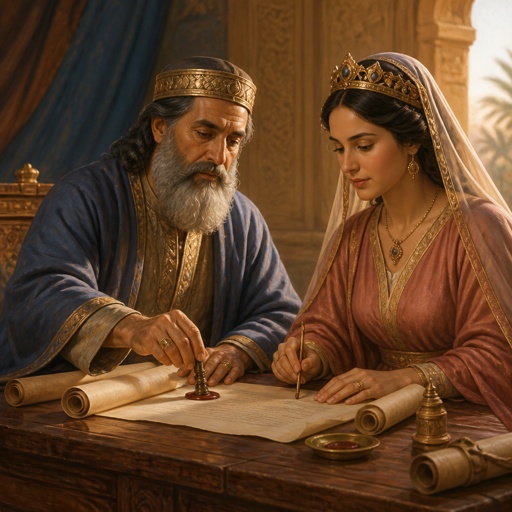
"Then Esther the queen, the daughter of Abihail, and Mordecai the Jew, wrote with all authority, to confirm this second letter of Purim." - Esther 9:29

Esther 1:6

Esther, the courageous queen

"So the king and Haman came to banquet with Esther the queen." - Esther 7:1

Esther 9:17 - "On the thirteenth day of the month Adar; and on the fourteenth day of the same rested they, and made it a day of feasting and gladness."

Esther 9:14 - "And the king commanded it so to be done: and the decree was given at Shushan; and they hanged Haman's ten sons."

Esther 9:21 - "To stablish this among them, that they should keep the fourteenth day of the month Adar, and the fifteenth day of the same, yearly,"