What does Esther 1:20 mean?
"And when the king's decree which he shall make shall be published throughout all his empire, (for it is great,) all the wives shall give to their husbands honour, both to great and small." - Esther 1:20

Esther 1:20 in the King James Version reads, "And when the king's decree which he shall make shall be published throughout all his empire, (for it is great,) all the wives shall give to their husbands honour, both to great and small."
The book of Esther in the Bible tells the story of a Jewish maiden who becomes queen of Persia and saves her people from destruction. Esther 1:20 is part of a passage that details the decree King Ahasuerus makes after Queen Vashti defies him. The king decides to send a message to all the provinces of his empire, commanding that every man should be the ruler in his own house, effectively asserting his authority. The verse specifically addresses the conduct of wives and their duty to honor their husbands.
One of the key themes in this passage is the concept of submission and honor within marriage. In ancient Persian society, as in many ancient cultures, women were expected to be obedient to their husbands. The king's decree reaffirms and enforces this expectation, reinforcing the patriarchal structure of the society. The language used in the verse emphasizes the hierarchical nature of the marital relationship, where the husband is positioned as the ultimate authority figure.
The language of the verse also conveys the societal standards of the time regarding hierarchy and honor. The mention of "great and small" highlights the expectation that regardless of a husband's status or position, his wife should show him honor and respect. This reflects the broader cultural value placed on maintaining social order and respecting authority.
The verse also underscores the power dynamics between men and women in the ancient world. It reflects the subjugation of women and their limited agency, as their behavior is dictated by male decree. It is important to note that the Bible was written in a different cultural context, and this verse reflects the societal norms of the time. Modern readers may approach this passage with an awareness of historical and cultural differences, recognizing the advancements in gender equality and women's rights that have occurred since the biblical era.
In addition to the themes of submission and honor, the verse also carries symbolic significance. The decree and its widespread dissemination serve as a manifestation of the king's power and authority. By commanding the obedience of all wives in the empire, the king exercises his dominion and demands conformity. This reinforces the pervasive control and influence of the ruling authority over the lives of the people under his rule.
Furthermore, the verse can be interpreted as a commentary on the importance of maintaining order and stability within a society. The king's decree seeks to uphold the established social structure and preserve traditional roles and responsibilities. From a historical standpoint, this can be seen as a means of ensuring cohesion and adherence to cultural norms within the empire.
In contemporary times, Esther 1:20 can prompt reflection and discussion on the evolution of gender roles and dynamics within marriage. It provides an opportunity to consider how societal expectations and norms have shifted, and how individuals navigate the balance of power and authority within relationships.
Ultimately, Esther 1:20 offers valuable insight into the cultural and historical context of the biblical narrative, shedding light on the dynamics of power, submission, and honor within ancient societies. It serves as a reminder of the importance of critically engaging with biblical texts, understanding their historical background, and examining their relevance within the contemporary world.
Have questions about Esther 1:20?
Dive deeper into this scripture with Bible Chat — an AI-powered tool for exploring God's Word through conversation. Ask questions, get context, and grow in your understanding of the Bible.
Get Our Apps


Esther 1:20 Artwork

Esther 1:20 - "And when the king's decree which he shall make shall be published throughout all his empire, (for it is great,) all the wives shall give to their husbands honour, both to great and small."

"And when the king's decree which he shall make shall be published throughout all his empire, (for it is great,) all the wives shall give to their husbands honour, both to great and small." - Esther 1:20

Esther 2:20 - "Esther had not yet shewed her kindred nor her people; as Mordecai had charged her: for Esther did the commandment of Mordecai, like as when she was brought up with him."

Esther 7:1 - "So the king and Haman came to banquet with Esther the queen."

Esther 1:17

Esther 8:1 - "On that day did the king Ahasuerus give the house of Haman the Jews' enemy unto Esther the queen. And Mordecai came before the king; for Esther had told what he was unto her."

Esther 1:6

Esther, the courageous queen

"So the king and Haman came to banquet with Esther the queen." - Esther 7:1
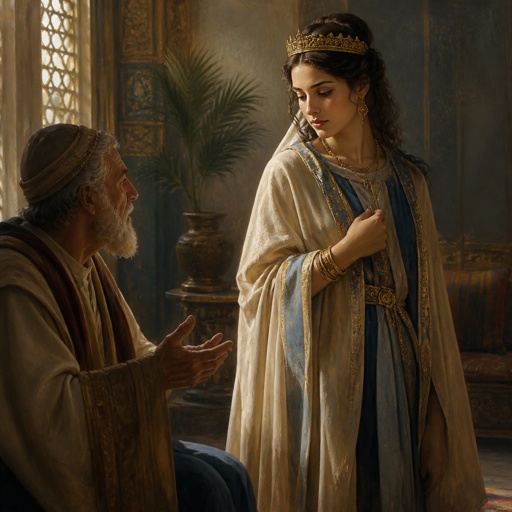
"Esther had not yet shewed her kindred nor her people; as Mordecai had charged her: for Esther did the commandment of Mordecai, like as when she was brought up with him." - Esther 2:20

Esther 9:20 - "¶ And Mordecai wrote these things, and sent letters unto all the Jews that were in all the provinces of the king Ahasuerus, both nigh and far,"

Esther 10:1 - "And the king Ahasuerus laid a tribute upon the land, and upon the isles of the sea."

Esther 1:21 - "And the saying pleased the king and the princes; and the king did according to the word of Memucan:"

"On that day did the king Ahasuerus give the house of Haman the Jews' enemy unto Esther the queen. And Mordecai came before the king; for Esther had told what he was unto her." - Esther 8:1

Esther 5:1 - "Now it came to pass on the third day, that Esther put on her royal apparel, and stood in the inner court of the king's house, over against the king's house: and the king sat upon his royal throne in the royal house, over against the gate of the house."

Esther 1:2 - "That in those days, when the king Ahasuerus sat on the throne of his kingdom, which was in Shushan the palace,"

Esther 1:9 - "Also Vashti the queen made a feast for the women in the royal house which belonged to king Ahasuerus."

Esther 1:1 - "Now it came to pass in the days of Ahasuerus, (this is Ahasuerus which reigned, from India even unto Ethiopia, over an hundred and seven and twenty provinces:)"

Esther 6:1 - "On that night could not the king sleep, and he commanded to bring the book of records of the chronicles; and they were read before the king."

Esther 1:11 - "To bring Vashti the queen before the king with the crown royal, to shew the people and the princes her beauty: for she was fair to look on."
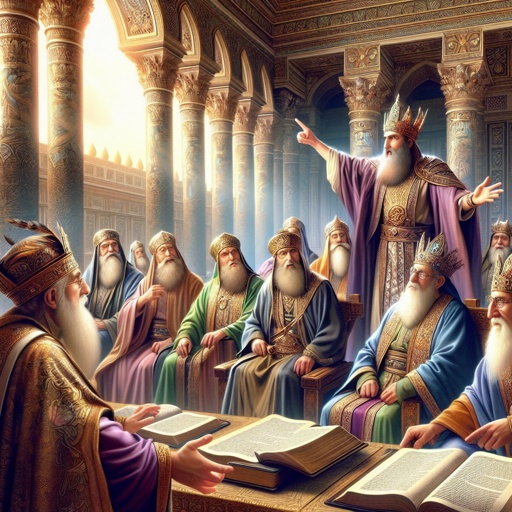
Esther 1:13 - "¶ Then the king said to the wise men, which knew the times, (for so was the king's manner toward all that knew law and judgment:"

Esther 1:7 - "And they gave them drink in vessels of gold, (the vessels being diverse one from another,) and royal wine in abundance, according to the state of the king."

Esther 1:4 - "When he shewed the riches of his glorious kingdom and the honour of his excellent majesty many days, even an hundred and fourscore days."

Esther 1:12 - "But the queen Vashti refused to come at the king's commandment by his chamberlains: therefore was the king very wroth, and his anger burned in him."

Esther 2:1 - "After these things, when the wrath of king Ahasuerus was appeased, he remembered Vashti, and what she had done, and what was decreed against her."

Esther 1:15 - "What shall we do unto the queen Vashti according to law, because she hath not performed the commandment of the king Ahasuerus by the chamberlains?"
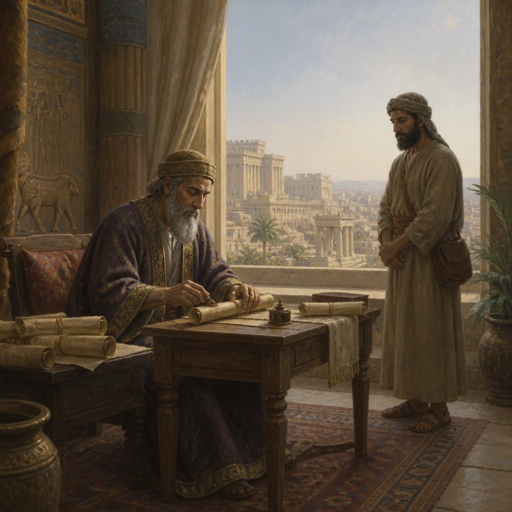
"¶ And Mordecai wrote these things, and sent letters unto all the Jews that were in all the provinces of the king Ahasuerus, both nigh and far," - Esther 9:20

Esther 1:8 - "And the drinking was according to the law; none did compel: for so the king had appointed to all the officers of his house, that they should do according to every man's pleasure."

Esther 4:1 - "When Mordecai perceived all that was done, Mordecai rent his clothes, and put on sackcloth with ashes, and went out into the midst of the city, and cried with a loud and a bitter cry;"

Esther 3:1 - "After these things did king Ahasuerus promote Haman the son of Hammedatha the Agagite, and advanced him, and set his seat above all the princes that were with him."