What does Esther 1:2 mean?
"That in those days, when the king Ahasuerus sat on the throne of his kingdom, which was in Shushan the palace," - Esther 1:2
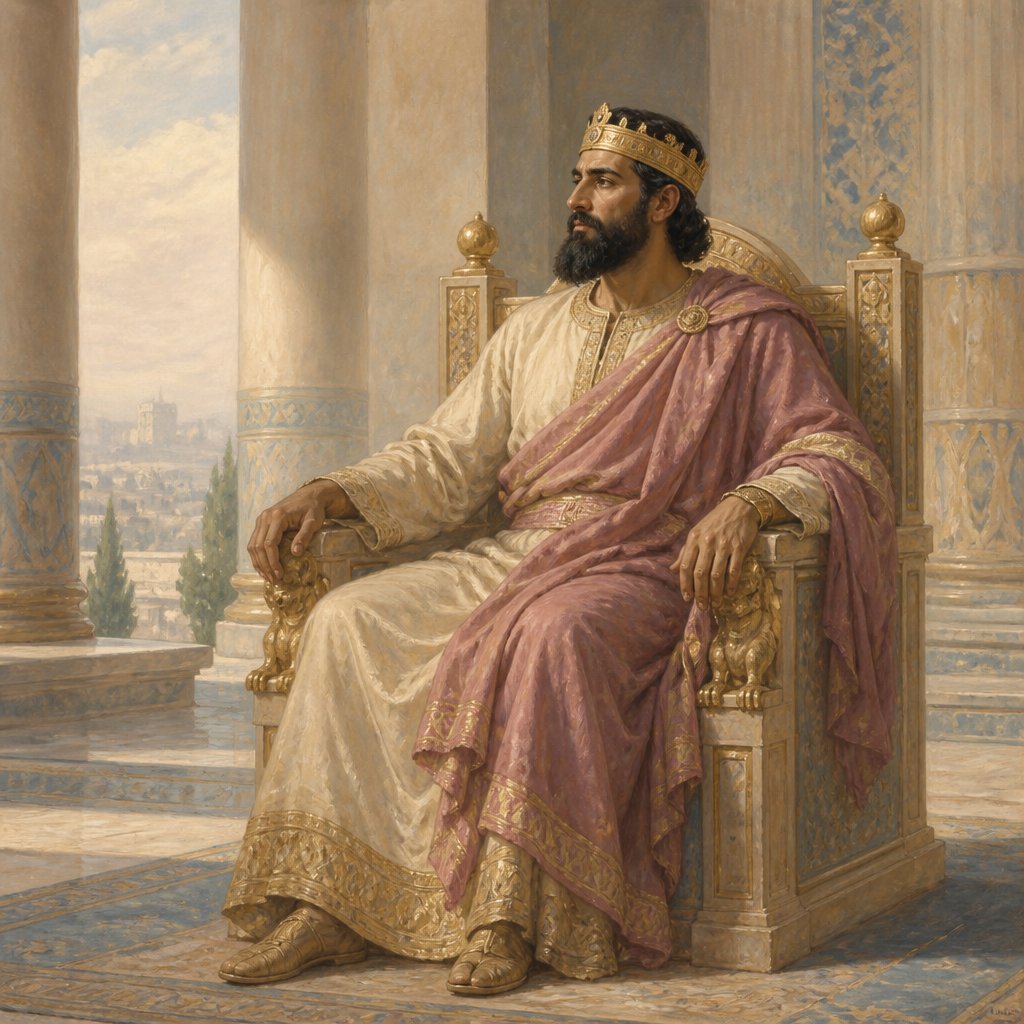
Esther 1:2 (KJV) reads: "That in those days, when the king Ahasuerus sat on the throne of his kingdom, which was in Shushan the palace."
The book of Esther is part of the Hebrew Bible and the Christian Old Testament. It tells the story of a Jewish girl named Esther who becomes queen of Persia and, with the help of her cousin Mordecai, saves the Jewish people from a genocidal plot hatched by the king's advisor, Haman.
In Esther 1:2, we are introduced to the setting and the time period in which the story takes place. The verse tells us that it was in the days when King Ahasuerus, also known as Xerxes I, ruled over the Persian Empire from his palace in Shushan. This sets the stage for the historical and political context of the events that are about to unfold in the book of Esther.
The choice of setting in Shushan is significant. Shushan, also known as Susa, was one of the main cities of the Persian Empire and was known for its opulence and grandeur. The use of Shushan as the location for the story emphasizes the wealth and power of the Persian Empire and the extravagance of the king's court. This plays a crucial role in setting the scene for the events that take place later in the story, as it highlights the stark contrast between the luxury of the ruling class and the struggles of the captive Jewish people.
The verse also introduces us to King Ahasuerus, who is depicted as a powerful ruler sitting on the throne of his kingdom. This emphasis on the king's position of authority and dominion over his kingdom foreshadows the pivotal role he will play in the unfolding narrative, as his decisions and actions will have far-reaching consequences for the Jewish people.
Furthermore, the mention of the throne is symbolic of the king's absolute power and authority. In ancient Near Eastern cultures, the throne was a symbol of the king's sovereignty and divine right to rule. By mentioning the king sitting on his throne, the verse underscores the king's status as the supreme authority in the empire and sets the stage for the power dynamics that will shape the plot of the story.
In addition, the use of the phrase "in those days" serves to situate the narrative within a specific historical period. This time frame is crucial as it helps to place the events of the book of Esther within a broader historical context, allowing readers to understand the political and cultural dynamics of the Persian Empire during the reign of King Ahasuerus.
Overall, Esther 1:2 serves as an introduction to the historical context and power dynamics that will shape the events of the book of Esther. It sets the stage for the opulence and luxury of the Persian Empire, introduces the figure of King Ahasuerus as a powerful ruler sitting on his throne, and establishes the time period in which the story takes place. These details serve to provide readers with a foundation for understanding the complex political and social dynamics that underpin the narrative of Esther, ultimately setting the stage for the dramatic and redemptive events that will unfold in the following chapters.
Have questions about Esther 1:2?
Dive deeper into this scripture with Bible Chat — an AI-powered tool for exploring God's Word through conversation. Ask questions, get context, and grow in your understanding of the Bible.
Get Our Apps


Esther 1:2 Artwork

Esther 1:2 - "That in those days, when the king Ahasuerus sat on the throne of his kingdom, which was in Shushan the palace,"
"That in those days, when the king Ahasuerus sat on the throne of his kingdom, which was in Shushan the palace," - Esther 1:2

Esther 2:22 - "And the thing was known to Mordecai, who told it unto Esther the queen; and Esther certified the king thereof in Mordecai's name."

Esther 7:1 - "So the king and Haman came to banquet with Esther the queen."

Esther 5:2 - "And it was so, when the king saw Esther the queen standing in the court, that she obtained favour in his sight: and the king held out to Esther the golden sceptre that was in his hand. So Esther drew near, and touched the top of the sceptre."

Esther 2:20 - "Esther had not yet shewed her kindred nor her people; as Mordecai had charged her: for Esther did the commandment of Mordecai, like as when she was brought up with him."

Esther 7:2 - "And the king said again unto Esther on the second day at the banquet of wine, What is thy petition, queen Esther? and it shall be granted thee: and what is thy request? and it shall be performed, even to the half of the kingdom."

Esther 5:2

Esther 1:17

Esther 8:1 - "On that day did the king Ahasuerus give the house of Haman the Jews' enemy unto Esther the queen. And Mordecai came before the king; for Esther had told what he was unto her."

Esther 5:2

Esther 5:2

Esther 2:1 - "After these things, when the wrath of king Ahasuerus was appeased, he remembered Vashti, and what she had done, and what was decreed against her."

Esther 2:11 - "And Mordecai walked every day before the court of the women's house, to know how Esther did, and what should become of her."

Esther 2:10 - "Esther had not shewed her people nor her kindred: for Mordecai had charged her that she should not shew it."

Esther 5:2 - "And it was so, when the king saw Esther the queen standing in the court, that she obtained favour in his sight: and the king held out to Esther the golden sceptre that was in his hand. So Esther drew near, and touched the top of the sceptre."

Esther 1:6

"And the thing was known to Mordecai, who told it unto Esther the queen; and Esther certified the king thereof in Mordecai's name." - Esther 2:22

Esther, the courageous queen

"So the king and Haman came to banquet with Esther the queen." - Esther 7:1

Esther 2:16 - "So Esther was taken unto king Ahasuerus into his house royal in the tenth month, which is the month Tebeth, in the seventh year of his reign."

Esther 8:2 - "And the king took off his ring, which he had taken from Haman, and gave it unto Mordecai. And Esther set Mordecai over the house of Haman."
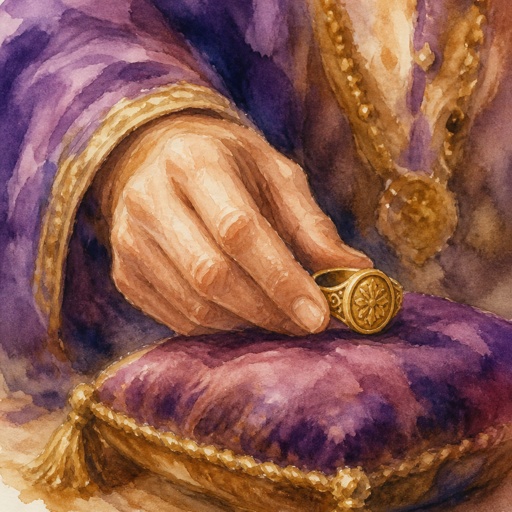
Esther 8:2 focus on the ring

Esther 2:15 - "¶ Now when the turn of Esther, the daughter of Abihail the uncle of Mordecai, who had taken her for his daughter, was come to go in unto the king, she required nothing but what Hegai the king's chamberlain, the keeper of the women, appointed. And Esther obtained favour in the sight of all them that looked upon her."

Esther 2:2 - "Then said the king's servants that ministered unto him, Let there be fair young virgins sought for the king:"

Esther 2:17 - "And the king loved Esther above all the women, and she obtained grace and favour in his sight more than all the virgins; so that he set the royal crown upon her head, and made her queen instead of Vashti."

Esther 2:7 - "And he brought up Hadassah, that is, Esther, his uncle's daughter: for she had neither father nor mother, and the maid was fair and beautiful; whom Mordecai, when her father and mother were dead, took for his own daughter."
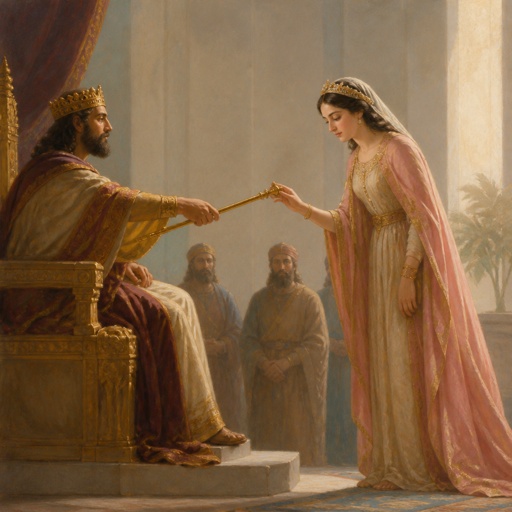
"And it was so, when the king saw Esther the queen standing in the court, that she obtained favour in his sight: and the king held out to Esther the golden sceptre that was in his hand. So Esther drew near, and touched the top of the sceptre." - Esther 5:2

Esther 10:1 - "And the king Ahasuerus laid a tribute upon the land, and upon the isles of the sea."

Esther 2:8 - "¶ So it came to pass, when the king's commandment and his decree was heard, and when many maidens were gathered together unto Shushan the palace, to the custody of Hegai, that Esther was brought also unto the king's house, to the custody of Hegai, keeper of the women."