What does Esther 1:14 mean?
"And the next unto him was Carshena, Shethar, Admatha, Tarshish, Meres, Marsena, and Memucan, the seven princes of Persia and Media, which saw the king's face, and which sat the first in the kingdom;)" - Esther 1:14
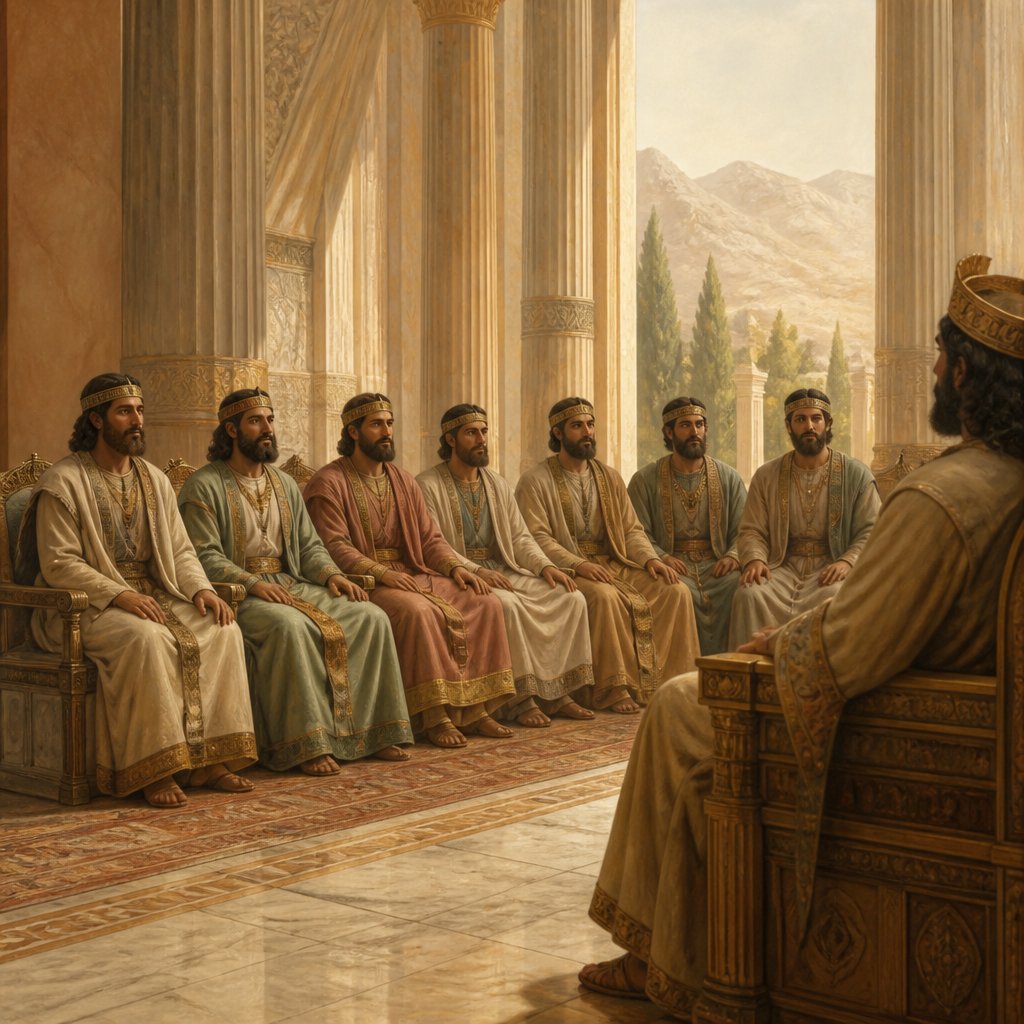
The book of Esther is a unique book within the Bible, as it is one of only two books that do not once mention God by his name. The story of Esther is set in the Persian Empire and tells the tale of a Jewish girl named Esther who becomes queen and ultimately saves the Jewish people from destruction. The verse Esther 1:14 in the King James Version of the Bible states, "And the next unto him was Carshena, Shethar, Admatha, Tarshish, Meres, Marsena, and Memucan, the seven princes of Persia and Media, which saw the king's face, and which sat the first in the kingdom."
This verse comes within the context of a grand banquet hosted by King Ahasuerus. The gathering is one of opulence and indulgence, lasting for 180 days, where the king showcases his wealth and power. During this extravagant event, Queen Vashti refuses to obey the king's command to display herself before the banquet guests, leading to her banishment. The verse in question introduces the seven princes of Persia and Media, who were in a position of power and influence within the kingdom.
The mention of these seven princes signifies the elaborate structure of the Persian Empire's government. The fact that they "saw the king's face" and "sat the first in the kingdom" highlights their close proximity to the king and their authority within the empire. The king relied on their counsel and advice, and their presence at the banquet underscores the significance of the event.
Furthermore, the detailed listing of each prince's name in the verse could be symbolic of the meticulous record-keeping and attention to detail within the Persian Empire. It also serves to emphasize the prestige and importance of these individuals in the eyes of the king and the broader society. By including their names, the verse provides a comprehensive insight into the inner workings of the Persian government and the personalities who held influential positions.
In terms of themes, this verse contributes to the overall theme of power and authority within the book of Esther. The Persian Empire was known for its elaborate and hierarchical structure, which is depicted through the presence of the seven princes. Their proximity to the king and their influential roles reflect the pervasive nature of power dynamics within the empire. Additionally, the verse sets the stage for the political and social dynamics that play a crucial role in the unfolding of the narrative.
The context of this verse within the larger story of Esther is significant. The verse occurs at the beginning of the book, within the backdrop of the lavish banquet hosted by King Ahasuerus. This banquet sets the stage for the events that will follow, including the rebellion of Queen Vashti and the rise of Esther as queen. By introducing the seven princes at this juncture, the verse lays the groundwork for the complex political landscape that will come to bear on the fate of the Jewish people.
The verse can also be seen as a symbol of the broader theme of providence and divine intervention within the book of Esther. Despite the absence of direct mention of God, the intricate details and circumstances within the story are orchestrated in such a way that Esther, through her position as queen, is able to ultimately save her people from destruction. The presence of the seven princes and the unfolding events at the banquet serve as a backdrop against which the divine plan will be played out.
In conclusion, Esther 1:14 in the King James Version of the Bible is a verse that holds significant thematic, contextual, and symbolic weight within the larger narrative of the book of Esther. It introduces the influential figures of the seven princes of Persia and Media and sets the stage for the unfolding drama that will ultimately lead to the saving of the Jewish people. The verse underscores the theme of power and authority within the Persian Empire and serves as a symbol of the providential working of God in the midst of complex political and social dynamics.
Have questions about Esther 1:14?
Dive deeper into this scripture with Bible Chat — an AI-powered tool for exploring God's Word through conversation. Ask questions, get context, and grow in your understanding of the Bible.
Get Our Apps


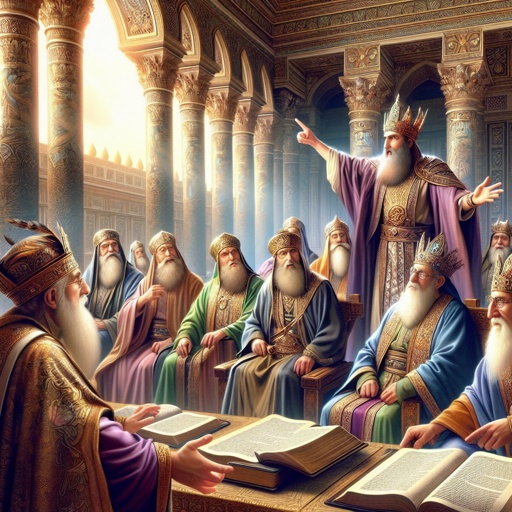
Esther 1:14 Artwork

Esther 1:14 - "And the next unto him was Carshena, Shethar, Admatha, Tarshish, Meres, Marsena, and Memucan, the seven princes of Persia and Media, which saw the king's face, and which sat the first in the kingdom;)"
"And the next unto him was Carshena, Shethar, Admatha, Tarshish, Meres, Marsena, and Memucan, the seven princes of Persia and Media, which saw the king's face, and which sat the first in the kingdom;)" - Esther 1:14

Esther 6:14 - "And while they were yet talking with him, came the king's chamberlains, and hasted to bring Haman unto the banquet that Esther had prepared."

Esther 7:1 - "So the king and Haman came to banquet with Esther the queen."

Esther 1:4 - "When he shewed the riches of his glorious kingdom and the honour of his excellent majesty many days, even an hundred and fourscore days."

Esther 1:17

Esther 8:1 - "On that day did the king Ahasuerus give the house of Haman the Jews' enemy unto Esther the queen. And Mordecai came before the king; for Esther had told what he was unto her."

Esther 9:14 - "And the king commanded it so to be done: and the decree was given at Shushan; and they hanged Haman's ten sons."

Esther 1:6

Esther, the courageous queen

"So the king and Haman came to banquet with Esther the queen." - Esther 7:1

Esther 3:14 - "The copy of the writing for a commandment to be given in every province was published unto all people, that they should be ready against that day."

"And while they were yet talking with him, came the king's chamberlains, and hasted to bring Haman unto the banquet that Esther had prepared." - Esther 6:14

Esther 8:14 - "So the posts that rode upon mules and camels went out, being hastened and pressed on by the king's commandment. And the decree was given at Shushan the palace."
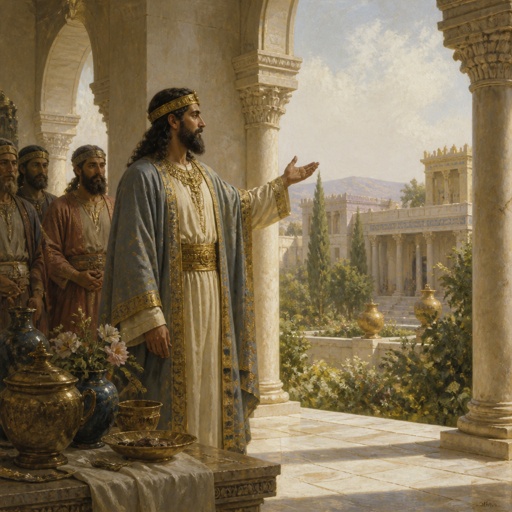
"When he shewed the riches of his glorious kingdom and the honour of his excellent majesty many days, even an hundred and fourscore days." - Esther 1:4

Esther 10:1 - "And the king Ahasuerus laid a tribute upon the land, and upon the isles of the sea."

Esther 1:21 - "And the saying pleased the king and the princes; and the king did according to the word of Memucan:"

"On that day did the king Ahasuerus give the house of Haman the Jews' enemy unto Esther the queen. And Mordecai came before the king; for Esther had told what he was unto her." - Esther 8:1

Esther 5:1 - "Now it came to pass on the third day, that Esther put on her royal apparel, and stood in the inner court of the king's house, over against the king's house: and the king sat upon his royal throne in the royal house, over against the gate of the house."

Esther 1:2 - "That in those days, when the king Ahasuerus sat on the throne of his kingdom, which was in Shushan the palace,"

Esther 1:9 - "Also Vashti the queen made a feast for the women in the royal house which belonged to king Ahasuerus."
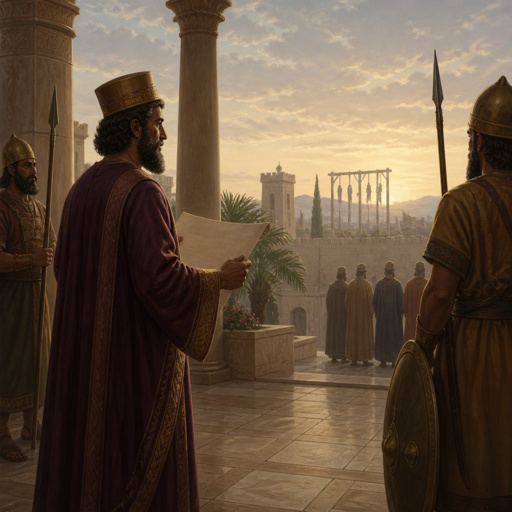
"And the king commanded it so to be done: and the decree was given at Shushan; and they hanged Haman's ten sons." - Esther 9:14

Esther 1:1 - "Now it came to pass in the days of Ahasuerus, (this is Ahasuerus which reigned, from India even unto Ethiopia, over an hundred and seven and twenty provinces:)"

Esther 6:1 - "On that night could not the king sleep, and he commanded to bring the book of records of the chronicles; and they were read before the king."

Esther 1:11 - "To bring Vashti the queen before the king with the crown royal, to shew the people and the princes her beauty: for she was fair to look on."

Esther 4:14 - "For if thou altogether holdest thy peace at this time, then shall there enlargement and deliverance arise to the Jews from another place; but thou and thy father's house shall be destroyed: and who knoweth whether thou art come to the kingdom for such a time as this?"
Esther 1:13 - "¶ Then the king said to the wise men, which knew the times, (for so was the king's manner toward all that knew law and judgment:"

Esther 2:14 - "In the evening she went, and on the morrow she returned into the second house of the women, to the custody of Shaashgaz, the king's chamberlain, which kept the concubines: she came in unto the king no more, except the king delighted in her, and that she were called by name."

Esther 1:7 - "And they gave them drink in vessels of gold, (the vessels being diverse one from another,) and royal wine in abundance, according to the state of the king."

Esther 1:12 - "But the queen Vashti refused to come at the king's commandment by his chamberlains: therefore was the king very wroth, and his anger burned in him."