What does Esther 1:13 mean?
"¶ Then the king said to the wise men, which knew the times, (for so was the king's manner toward all that knew law and judgment:" - Esther 1:13
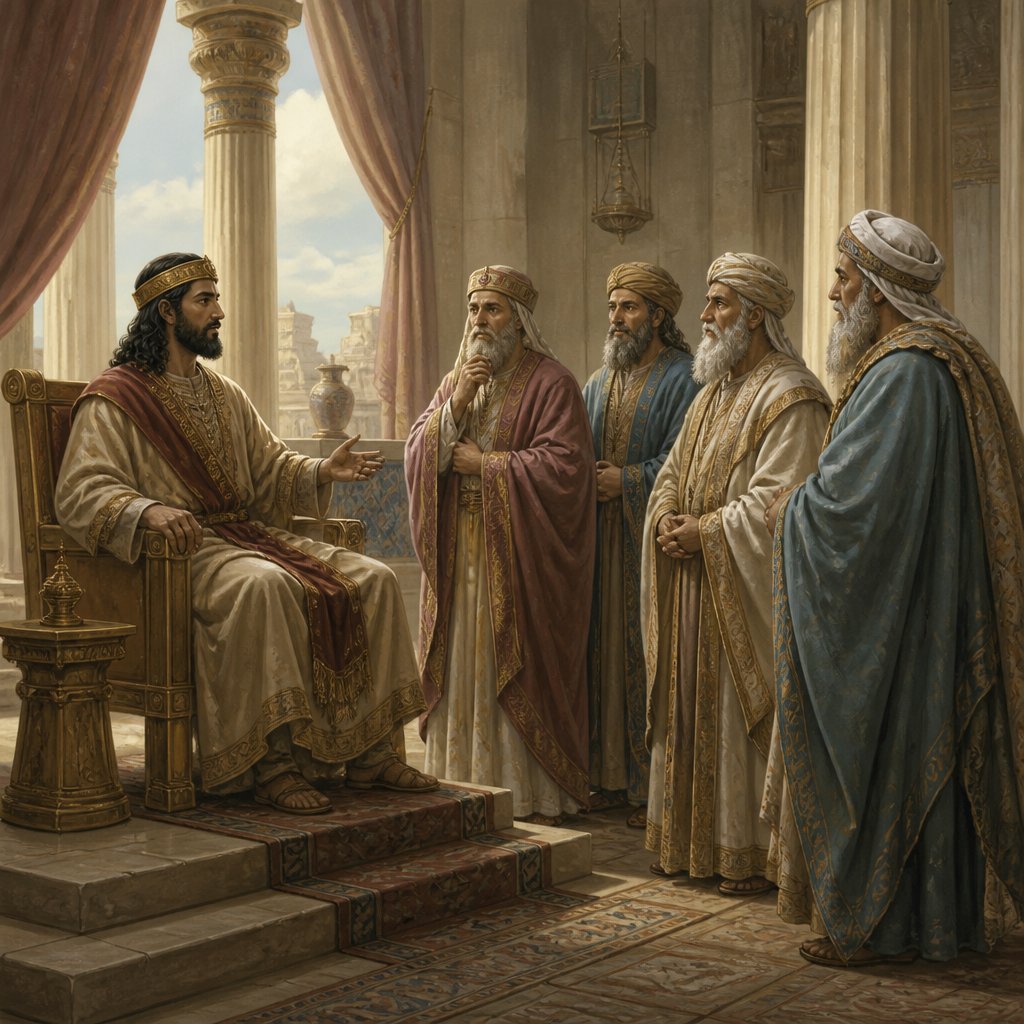
The book of Esther is a historical narrative that tells the story of a young Jewish woman, Esther, who becomes the queen of Persia and uses her position to save her people from genocide. The verse Esther 1:13 in the King James Version (KJV) reads: "Then the king said to the wise men, which knew the times, (for so was the king's manner toward all that knew law and judgment." This verse comes from the first chapter of the book of Esther, which sets the stage for the events that will unfold throughout the rest of the story.
In this verse, King Ahasuerus (also known as Xerxes) is consulting with his wise men, seeking their advice and counsel. The king's reliance on his wise men demonstrates his respect for their knowledge and wisdom, as well as his commitment to making just and informed decisions. This respect for wisdom and the pursuit of justice is a recurring theme throughout the book of Esther, as well as in the broader context of the Bible.
One of the key themes of the book of Esther is the providence of God. Although the name of God is not mentioned explicitly in the book, His hand is clearly at work behind the scenes. The events that unfold, the way in which Esther is chosen as queen, and the timing of key moments in the story all point to God's sovereign control over the affairs of human beings. This verse, in which the king consults his wise men, is a subtle reminder of God's wisdom and justice, which ultimately prevail throughout the narrative.
Furthermore, the use of "the king's manner toward all that knew law and judgment" in this verse illustrates the importance of law and justice in the governance of the Persian empire. The book of Esther highlights the contrast between the corrupt and self-serving officials in the king's court, such as Haman, and those who seek justice and righteousness, such as Mordecai and Esther. This theme of justice and righteousness is central to the book of Esther, and it underscores the importance of upholding God's moral law in all aspects of life.
In addition to its broader thematic context, this verse also holds specific symbolism within the narrative of Esther. The king's reliance on his wise men foreshadows the role that Esther will play in the story, as she ultimately becomes the one who provides wise counsel and guidance to the king. Esther's wisdom and bravery are instrumental in saving her people from destruction, and this verse sets the stage for her eventual rise to power and influence.
Overall, Esther 1:13 in the KJV provides a glimpse into the complex themes and narrative structure of the book of Esther. It highlights the importance of wisdom, justice, and providence, while also foreshadowing the central role that Esther will play in the story. Through its careful attention to detail and its subtle use of symbolism, this verse contributes to the rich and multi-layered tapestry of the book of Esther, inviting readers to reflect on the deeper meanings and implications of the events that unfold.
Have questions about Esther 1:13?
Dive deeper into this scripture with Bible Chat — an AI-powered tool for exploring God's Word through conversation. Ask questions, get context, and grow in your understanding of the Bible.
Get Our Apps


Esther 1:13 Artwork
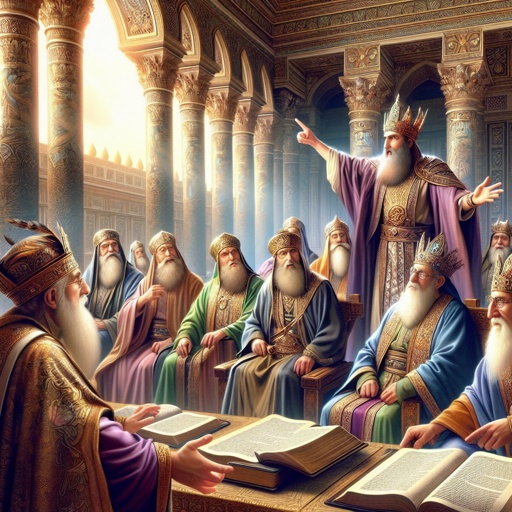
Esther 1:13 - "¶ Then the king said to the wise men, which knew the times, (for so was the king's manner toward all that knew law and judgment:"
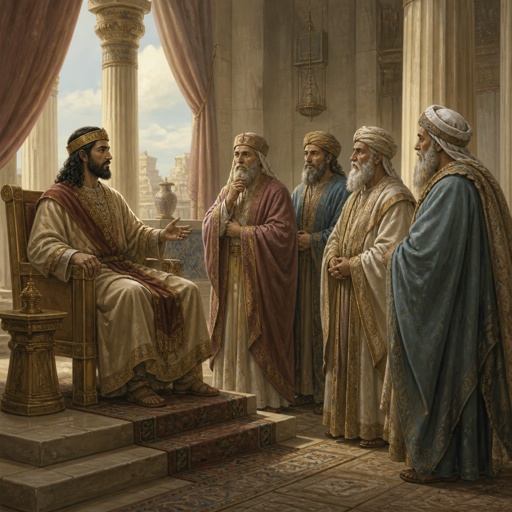
"¶ Then the king said to the wise men, which knew the times, (for so was the king's manner toward all that knew law and judgment:" - Esther 1:13

Esther 4:13 - "Then Mordecai commanded to answer Esther, Think not with thyself that thou shalt escape in the king's house, more than all the Jews."

Esther 9:13 - "Then said Esther, If it please the king, let it be granted to the Jews which are in Shushan to do to morrow also according unto this day's decree, and let Haman's ten sons be hanged upon the gallows."

Esther 7:1 - "So the king and Haman came to banquet with Esther the queen."

Esther 1:17

Esther 8:1 - "On that day did the king Ahasuerus give the house of Haman the Jews' enemy unto Esther the queen. And Mordecai came before the king; for Esther had told what he was unto her."

Esther 1:6

Esther, the courageous queen

"So the king and Haman came to banquet with Esther the queen." - Esther 7:1

Esther 1:3 - "In the third year of his reign, he made a feast unto all his princes and his servants; the power of Persia and Media, the nobles and princes of the provinces, being before him:"

Esther 5:13 - "Yet all this availeth me nothing, so long as I see Mordecai the Jew sitting at the king's gate."
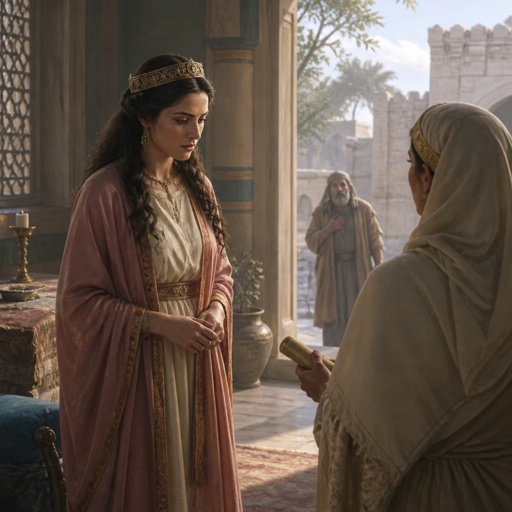
"Then Mordecai commanded to answer Esther, Think not with thyself that thou shalt escape in the king's house, more than all the Jews." - Esther 4:13

Esther 8:13 - "The copy of the writing for a commandment to be given in every province was published unto all people, and that the Jews should be ready against that day to avenge themselves on their enemies."

Esther 2:13 - "Then thus came every maiden unto the king; whatsoever she desired was given her to go with her out of the house of the women unto the king's house."

Esther 10:1 - "And the king Ahasuerus laid a tribute upon the land, and upon the isles of the sea."

Esther 1:21 - "And the saying pleased the king and the princes; and the king did according to the word of Memucan:"

"On that day did the king Ahasuerus give the house of Haman the Jews' enemy unto Esther the queen. And Mordecai came before the king; for Esther had told what he was unto her." - Esther 8:1

Esther 5:1 - "Now it came to pass on the third day, that Esther put on her royal apparel, and stood in the inner court of the king's house, over against the king's house: and the king sat upon his royal throne in the royal house, over against the gate of the house."

Esther 1:2 - "That in those days, when the king Ahasuerus sat on the throne of his kingdom, which was in Shushan the palace,"

Esther 1:9 - "Also Vashti the queen made a feast for the women in the royal house which belonged to king Ahasuerus."
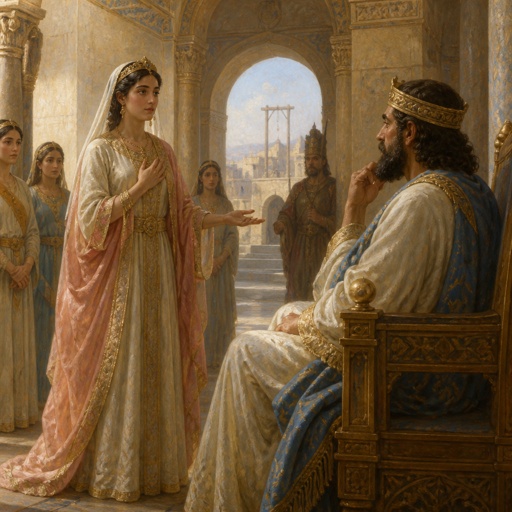
"Then said Esther, If it please the king, let it be granted to the Jews which are in Shushan to do to morrow also according unto this day's decree, and let Haman's ten sons be hanged upon the gallows." - Esther 9:13

Esther 1:1 - "Now it came to pass in the days of Ahasuerus, (this is Ahasuerus which reigned, from India even unto Ethiopia, over an hundred and seven and twenty provinces:)"

Esther 5:9-13 - "Esther 5:9-13: Then Haman went out that day joyful and with a glad heart; but when Haman saw Mordecai in the king’s gate, and that he did not stand or tremble before him, he was filled with indignation against Mordecai. Nevertheless Haman restrained himself and went home, and he sent and called for his friends and his wife Zeresh. Then Haman told them of his great riches, the multitude of his children, everything in which the king had promoted him, and how he had advanced him above the officials and servants of the king. Moreover Haman said, “Besides, Queen Esther invited no one but me to come in with the king to the banquet that she prepared; and tomorrow I am again invited by her, along with the king. Yet all this avails me nothing, so long as I see Mordecai the Jew sitting at the king’s gate.”"

Esther 6:1 - "On that night could not the king sleep, and he commanded to bring the book of records of the chronicles; and they were read before the king."
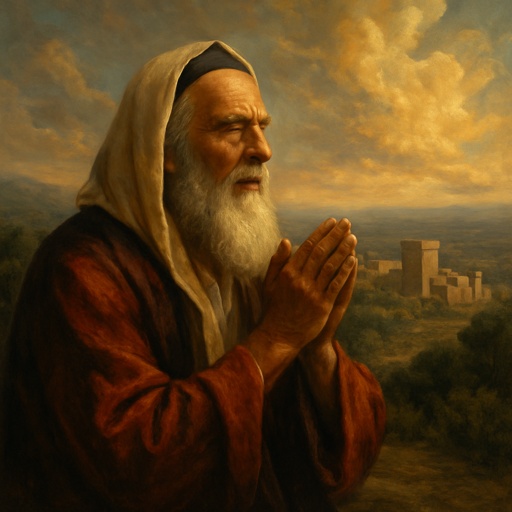
Esther 13:8-9 KJVA Then Mardocheus thought upon all the works of the Lord, and made his prayer unto him, (9) Saying, O Lord, Lord, the King Almighty: for the whole world is in thy power, and if thou hast appointed to save Israel, there is no man that can gainsay thee:

Esther 1:11 - "To bring Vashti the queen before the king with the crown royal, to shew the people and the princes her beauty: for she was fair to look on."

Esther 1:7 - "And they gave them drink in vessels of gold, (the vessels being diverse one from another,) and royal wine in abundance, according to the state of the king."

Esther 1:4 - "When he shewed the riches of his glorious kingdom and the honour of his excellent majesty many days, even an hundred and fourscore days."

Esther 1:12 - "But the queen Vashti refused to come at the king's commandment by his chamberlains: therefore was the king very wroth, and his anger burned in him."