What does Ephesians 6:10 mean?
"Finally, my brethren, be strong in the Lord, and in the power of his might." - Ephesians 6:10

“Finally, my brethren, be strong in the Lord, and in the power of his might.” In the KJV, Ephesians 6:10 stands as Paul’s closing charge to the church at Ephesus, gathering up everything he has been teaching and pressing it into a single, bracing exhortation. The verse begins with “Finally,” not merely as a signal that the letter is nearing its end, but as a deliberate turning point: after laying out what God has done in Christ, who believers are by grace, and how that new life is to be lived in the home and in daily relationships, Paul brings his readers to the decisive question of endurance. If the Christian life is to be continued faithfully, it will require strength, and that strength must be sought in the right place.
The address “my brethren” sets the tone of family and shared identity. Paul is not giving detached instruction; he is speaking as one who belongs with them under the same Lord. The command that follows, “be strong,” is more than a call to personal resolve or natural toughness. In the way it is framed, the verse refuses the idea that spiritual steadfastness can be generated out of human willpower alone. The strength Paul commands is defined immediately by its source: “in the Lord.” The sphere and supply of the believer’s strength is the Lord himself. This is one of the verse’s central themes: Christian strength is not independence but dependence. To be “strong in the Lord” is to draw courage, stability, and perseverance from union and fellowship with him rather than from one’s own resources.
The second phrase deepens the first: “and in the power of his might.” The repetition is purposeful. It is not poetic excess, but an intensifying clarification. “Power” and “might” in the KJV wording convey the idea of effective strength, force that actually accomplishes what it intends. By adding “his,” the verse keeps the focus where Paul wants it: the believer’s strength is located not merely in a general religious optimism, but in God’s own active, prevailing power. This has a humbling effect, because it strips away boasting, and it also has a comforting effect, because it places the burden of victory on the Lord’s ability rather than the believer’s frailty.
The immediate context of Ephesians 6 shows why this emphasis matters. Ephesians moves from the riches of grace and the mystery of Christ’s body to the practical outworking of faith in a world that resists holiness. As Paul prepares to speak of conflict and resistance, he begins not with strategy but with the true foundation of all spiritual engagement: divine strength. Ephesians 6:10 is the threshold verse that introduces the famous passage that follows about taking up what God provides for battle. The significance is that the believer is not first called to fight, but first to be strengthened. The order is theological and pastoral: God supplies power before God calls for steadfastness.
Symbolically, this verse functions like a trumpet call that gathers God’s people into readiness. Yet it is a trumpet that directs them away from self-reliance. The words “in the Lord” are the spiritual “place” where the believer stands, as if Paul is saying that safety and strength are found by remaining within the Lord’s protection and authority. “The power of his might” evokes the image of overwhelming capability, suggesting that what is required for the Christian life is not a slight improvement of human strength but the access to a greater strength altogether. The verse therefore carries an implicit contrast: human strength is limited, fluctuating, and easily exhausted; the Lord’s might is sufficient, steady, and victorious.
In the larger theology of Ephesians, this strength is bound up with what God has already done in Christ. The letter presents salvation as an act of God’s initiative and power, bringing the dead to life and raising believers into a new standing. Ephesians 6:10 draws the practical conclusion: the same God who saves by power also sustains by power. To “be strong in the Lord” is to live in line with that reality, returning again and again to God as the source of endurance, courage in temptation, patience in suffering, and firmness in truth.
Ephesians 6:10, then, is significant because it frames the entire struggle of faith as a matter of divine enablement rather than human heroism. It calls believers to a strength that is received, not manufactured; to a confidence that rests not in temperament, circumstance, or personal discipline alone, but “in the Lord,” and specifically “in the power of his might.” It is a closing summons that is also an opening: it opens the reader to the awareness that to live faithfully requires more than good intentions, and it invites them to lean fully upon the might of God as the only sufficient power for the life Paul has been describing.
Have questions about Ephesians 6:10?
Dive deeper into this scripture with Bible Chat — an AI-powered tool for exploring God's Word through conversation. Ask questions, get context, and grow in your understanding of the Bible.
Get Our Apps


Ephesians 6:10 Artwork

Ephesians 6:10 - "Finally, my brethren, be strong in the Lord, and in the power of his might."

Matthew 21:21 Philippians 4:6-7 Ephesians 6:10-18 Put the words on the photo

Matthew 21:21 Philippians 4:6-7 Ephesians 6:10-18

Ephesians 6:10 - "Finally, my brethren, be strong in the Lord, and in the power of his might."

Ephesians 6:10 - "Finally, my brethren, be strong in the Lord, and in the power of his might."

Ephesians 6:10 - "Finally, my brethren, be strong in the Lord, and in the power of his might."

Ephesians 6:10-11 - "Finally, be strong in the Lord and in his mighty power. Put on the full armor of God, so that you can take your stand against the devil’s schemes."

Create a digital art representation of a scene inspired by the scripture quote from the biblical book of Ephesians 6:10-11

Efesios 6:10

"Finally, my brethren, be strong in the Lord, and in the power of his might." - Ephesians 6:10

Efesios 6:10
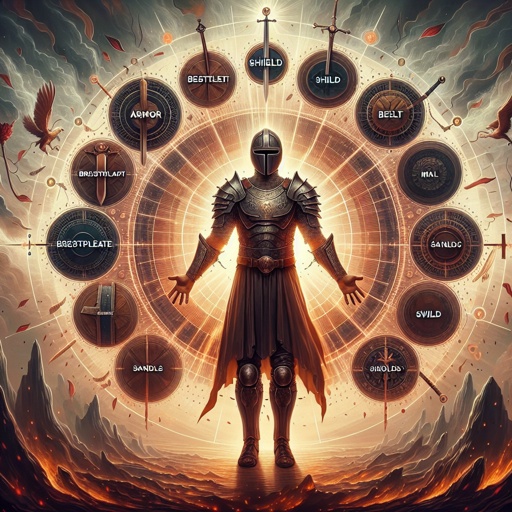
Ephesians 6:10-11 - "Finally, be strong in the Lord and in his mighty power. Put on the full armor of God, so that you can take your stand against the devil’s schemes."

Efesios 6:10

"Finally, be strong in the Lord and in his mighty power. Put on the full armor of God, so that you can take your stand against the devil’s schemes." - Ephesians 6:10-11

Ephesians 6:13

Ephesians 6:13

Ephesians 2:10

Ephesians 2:10

Ephesians 2-10

Ephesians 2:10

Ephesians 2:10

ephesians 6:13,
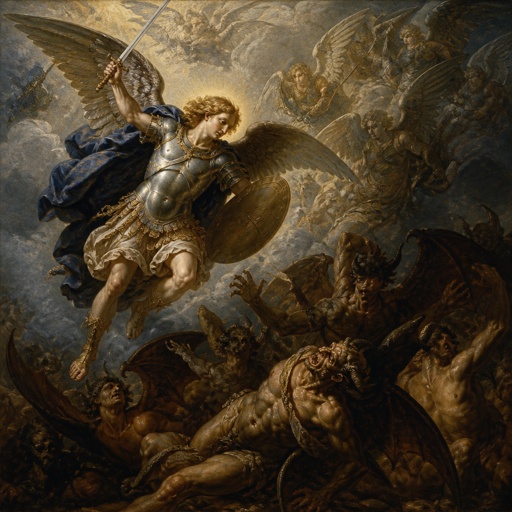
Ephesians 6:12

Ephesians 6:6 - "Not with eyeservice, as menpleasers; but as the servants of Christ, doing the will of God from the heart;"

Ephesians 4:4-6

Ephesians 4:4-6

Ephesians 4:4-6

Ephesians 4:4-6

Ephesians 4:4-6

Ephesians 5:10 - "Proving what is acceptable unto the Lord."