What does Ephesians 4:32 mean?
"And be ye kind one to another, tenderhearted, forgiving one another, even as God for Christ's sake hath forgiven you." - Ephesians 4:32
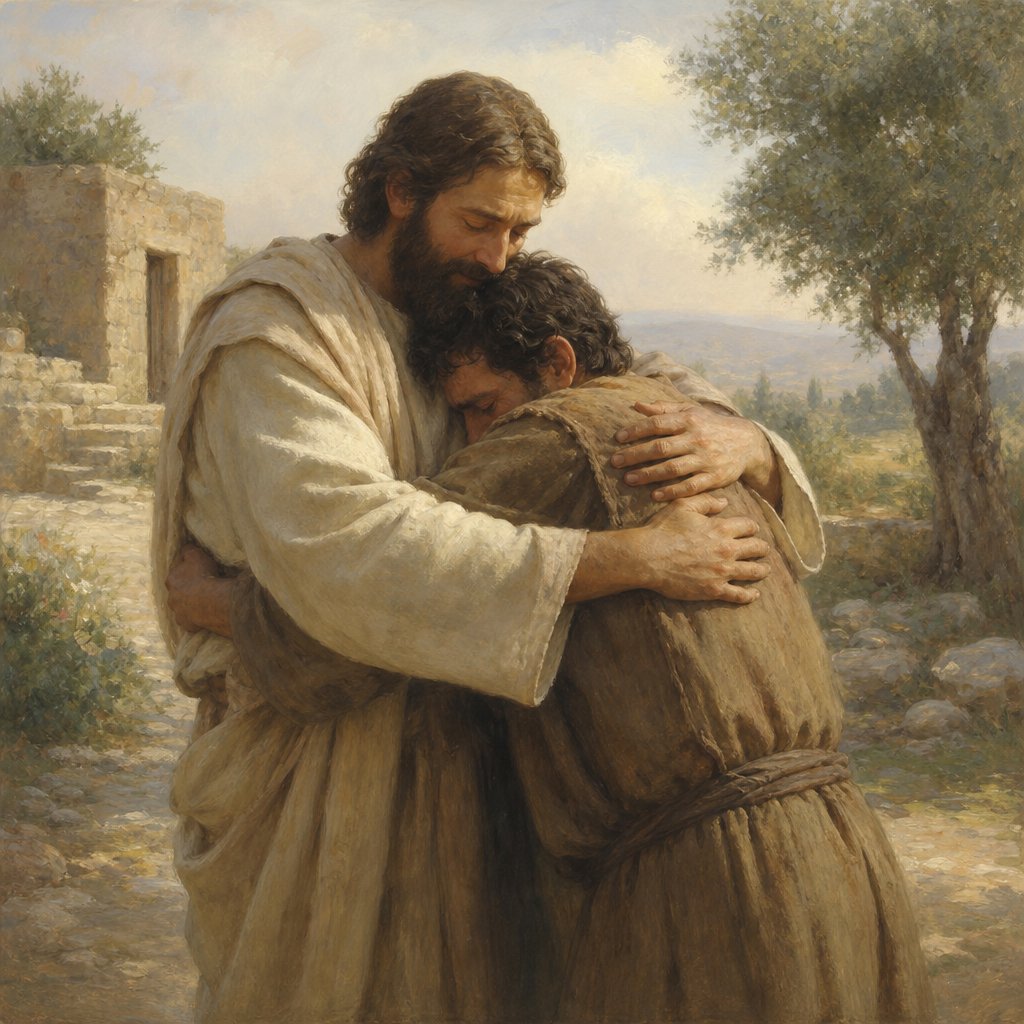
“Ephesians 4:32” in the King James Version reads, “And be ye kind one to another, tenderhearted, forgiving one another, even as God for Christ’s sake hath forgiven you.” In one sentence Paul gathers up what the new life in Christ is meant to sound like, look like, and feel like in ordinary human relationships. It is not presented as an abstract virtue list but as a closing chord to a long, practical appeal: if believers have been made new by God, then the newness must take visible form in the way they treat each other, especially when wrong has been done.
The immediate context is Paul’s call for Christians to “walk worthy of the vocation wherewith ye are called” and to “put off” the old manner of life and “put on the new man.” In Ephesians 4 he contrasts the corrupt patterns that flow from a hardened heart with the changed patterns that flow from being “taught by” Christ. Just before verse 32, he addresses sins that fracture community and poison speech: falsehood, uncontrolled anger, theft, corrupt communication, bitterness, wrath, anger, clamour, evil speaking, and malice. The verse functions as a climactic replacement: in place of the old, corrosive posture toward others, there is to be kindness; in place of the inner callousness that fuels harshness, there is tenderheartedness; in place of holding wrongs, there is forgiveness. Paul is not merely aiming for civility. He is describing a transformed moral atmosphere, the kind of relational “air” that belongs to people who have been renewed.
The themes are both ethical and theological. Ethically, “be ye kind one to another” speaks to active benevolence rather than mere avoidance of harm. Kindness in this verse is not weakness; it is strength expressed as generosity of spirit, a disposition that seeks the good of the other person even when it costs pride, time, or comfort. “Tenderhearted” goes deeper than outward courtesy. The heart in Scripture is the seat of will, affection, and moral intention. To be tenderhearted is to be inwardly responsive rather than hardened, capable of compassion instead of reflexive contempt, willing to feel another’s burdens rather than dismiss them. Paul’s earlier warnings about being past feeling and having the understanding darkened form a dark backdrop; tenderheartedness is part of the light of the new man.
The command “forgiving one another” is the most pointed, because it assumes injury. The Christian community Paul addresses is not idealized as free from conflict; instead, it is instructed on what to do when sin, offense, and real wounds occur. Forgiveness here is not described as denial, nor as calling evil good. It is the deliberate release of the debt, the refusal to seek repayment through resentment, retaliation, or perpetual accusation. It also implies a willingness to restore, as far as truth and wisdom allow, rather than to keep others forever imprisoned by their worst moment. In Paul’s flow of thought, forgiveness is the cure for the cluster of vices he has just listed: bitterness and malice thrive when forgiveness is withheld, and they die where forgiveness is practiced.
The most significant phrase is the ground and measure of this forgiveness: “even as God for Christ’s sake hath forgiven you.” Paul anchors the horizontal command in a vertical reality. The believer’s forgiveness toward others is not rooted in the offender’s deserving but in God’s prior action. The phrase “for Christ’s sake” is densely symbolic and theological. It points to Christ as the Mediator and the reason forgiveness can be granted without God compromising righteousness. The word “for” signals cause or basis: God forgives because of what Christ has done, not because sin is small. The cross stands behind this verse even though it is not named; it is the unseen altar where mercy and justice meet. To forgive “even as” God forgave is to let God’s pattern shape ours: forgiveness is offered from grace, not extracted by merit, and it is tied to Christ’s reconciling work rather than to fluctuating feelings.
There is also a communal symbolism running through the verse. Ephesians repeatedly speaks of the church as one body, joined and built together. In a body, bitterness is like poison in the bloodstream, spreading through everything; kindness and forgiveness are like healing, restoring circulation and strength. The verse therefore has significance beyond private spirituality. It protects unity, preserves peace, and makes the church’s witness credible. The earlier instruction not to “grieve the holy Spirit of God” sits nearby in the passage, and it frames the verse with a sacred seriousness: how believers treat one another is not merely interpersonal; it is spiritual, connected to the Spirit’s presence among them.
Ephesians 4:32 also carries a quiet realism about human nature and a high calling for Christian identity. It does not say, “Feel kind,” or “Pretend nothing happened.” It says, “Be,” calling for a settled character shaped by the gospel. The order matters: the standard is not invented by the community; it is received from God’s own mercy. The verse implies gratitude and humility. If God “hath forgiven you,” then the believer stands as a forgiven person before God, which undermines self-righteousness and fuels patience toward others. The past tense “hath forgiven” points to a completed act with ongoing significance: believers live in the continuing benefit of forgiveness, and that continuing benefit is meant to spill outward.
Taken as a whole, the meaning of Ephesians 4:32 is that the daily life of Christians is to be a living echo of God’s forgiveness in Christ. Kindness is the outward posture, tenderheartedness is the inward disposition, and forgiveness is the decisive act that breaks cycles of resentment. The significance of the verse is that it ties the health of relationships directly to the heart of the gospel: those who have been forgiven “for Christ’s sake” are called to forgive in the same spirit, making the grace they have received visible in the way they speak, feel, and respond to one another.
Have questions about Ephesians 4:32?
Dive deeper into this scripture with Bible Chat — an AI-powered tool for exploring God's Word through conversation. Ask questions, get context, and grow in your understanding of the Bible.
Get Our Apps


Ephesians 4:32 Artwork

Ephesians 4:32 - "And be ye kind one to another, tenderhearted, forgiving one another, even as God for Christ's sake hath forgiven you."

"And be ye kind one to another, tenderhearted, forgiving one another, even as God for Christ's sake hath forgiven you." - Ephesians 4:32
"And be ye kind one to another, tenderhearted, forgiving one another, even as God for Christ's sake hath forgiven you." - Ephesians 4:32

Ephesians 4:31-32 - "Get rid of all bitterness, rage and anger, brawling and slander, along with every form of malice. Be kind and compassionate to one another, forgiving each other, just as in Christ God forgave you."

Ephesians 5:32 - "This is a great mystery: but I speak concerning Christ and the church."

Ephesians 4:4

Ephesians 4:4

Ephesians 4:4

Ephesians 4:4

Ephesians 4:4

Ephesians 4:4

Ephesians 4:4

Ephesians 4:4

Ephesians 4:4

Ephesians 4:4-6

Ephesians 4:4-6

Ephesians 4:4-6

Ephesians 4:4-6

Ephesians 4:4-5

Ephesians 4:4-6

Ephesians 4:1

Ephesians 4:1

ephesians 1:4

Ephesians 4:13

Ephesians 1:4

Ephesians 4:1

Ephesians 4:1

Ephesians 4:7

Ephesians 1:4

Ephesians 4:1