What does Ecclesiastes 9:1 mean?
"For all this I considered in my heart even to declare all this, that the righteous, and the wise, and their works, are in the hand of God: no man knoweth either love or hatred by all that is before them." - Ecclesiastes 9:1
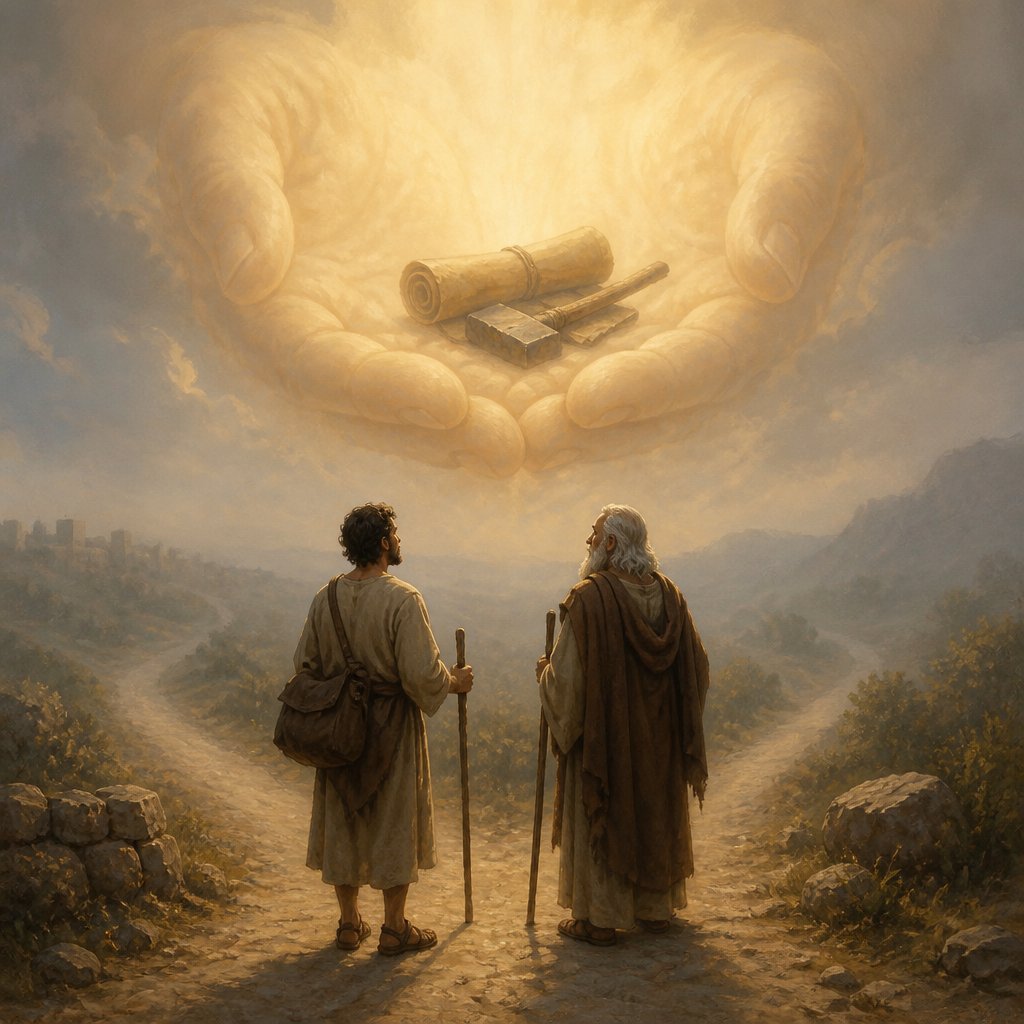
Ecclesiastes 9:1 in the King James Version states, "For all this I considered in my heart even to declare all this, that the righteous, and the wise, and their works, are in the hand of God: no man knoweth either love or hatred by all that is before them."
This verse comes from the book of Ecclesiastes, which is a wisdom book in the Old Testament. It was written by King Solomon, who is considered one of the wisest men in history. In this particular verse, Solomon reflects on the mystery of life and the fact that ultimately, the fate of the righteous and the wise is in the hands of God.
The verse begins with "For all this I considered in my heart even to declare all this," indicating that Solomon has deeply contemplated and meditated on the realities of life. He has taken the time to ponder and consider the complexities and mysteries of human existence. This sets the tone for the rest of the verse, as it is clear that Solomon is speaking from a place of deep introspection and contemplation.
Solomon then declares that the righteous and the wise, along with their works, are in the hand of God. This statement is profound and carries significant weight. It suggests that even the most virtuous and intelligent individuals are ultimately subject to the will and providence of God. No matter how righteous or wise a person may be, they are still under the control and guidance of a higher power. This idea can be both comforting and unsettling, as it speaks to the notion of surrendering to the divine and acknowledging that there are forces beyond our control.
The verse continues with the assertion that "no man knoweth either love or hatred by all that is before them." This further underscores the unpredictability and inscrutability of life. Despite our best efforts to understand and navigate the world around us, there are aspects of human experience that remain unknowable. Love and hatred are powerful and enigmatic emotions, and Solomon is acknowledging that humans cannot fully grasp or comprehend the reasons behind them. This is a humbling realization, as it highlights the limitations of human understanding and the need for humility in the face of life's mysteries.
In the grander context of the book of Ecclesiastes, this verse is reflective of the broader themes that permeate the text. Throughout the book, Solomon grapples with the complexities of human existence and the pursuit of meaning and fulfillment. He delves into the futility of worldly pursuits and the fleeting nature of human life. This verse fits into this larger framework by emphasizing the sovereignty of God and the limitations of human understanding. It serves as a reminder that despite our best efforts to make sense of the world, there are certain aspects of life that remain beyond our comprehension.
Symbolically, this verse represents a surrender to divine providence and a recognition of the unknowable aspects of human experience. It speaks to the need for faith and trust in God, even in the face of life's uncertainties. It also underscores the importance of humility and reflection, as Solomon's introspective musings lay the groundwork for deeper spiritual contemplation.
In conclusion, Ecclesiastes 9:1 is a profound and thought-provoking verse that encapsulates the broader themes of the book of Ecclesiastes. It serves as a reminder of the limitations of human understanding and the importance of surrendering to the will of God. This verse encourages humility, introspection, and faith, and invites readers to consider the deeper mysteries of life.
Have questions about Ecclesiastes 9:1?
Dive deeper into this scripture with Bible Chat — an AI-powered tool for exploring God's Word through conversation. Ask questions, get context, and grow in your understanding of the Bible.
Get Our Apps


Ecclesiastes 9:1 Artwork

Ecclesiastes 9:1 - "For all this I considered in my heart even to declare all this, that the righteous, and the wise, and their works, are in the hand of God: no man knoweth either love or hatred by all that is before them."
"For all this I considered in my heart even to declare all this, that the righteous, and the wise, and their works, are in the hand of God: no man knoweth either love or hatred by all that is before them." - Ecclesiastes 9:1

Ecclesiastes 1:9 - "The thing that hath been, it is that which shall be; and that which is done is that which shall be done: and there is no new thing under the sun."

Ecclesiastes 3:9 - "What profit hath he that worketh in that wherein he laboureth?"

Ecclesiastes 7:9 - "Be not hasty in thy spirit to be angry: for anger resteth in the bosom of fools."

Ecclesiastes 5:9 - "¶ Moreover the profit of the earth is for all: the king himself is served by the field."

Ecclesiastes 6:9 - "¶ Better is the sight of the eyes than the wandering of the desire: this is also vanity and vexation of spirit."

Ecclesiastes 4:9 - "¶ Two are better than one; because they have a good reward for their labour."

Ecclesiastes 9:4 - "¶ For to him that is joined to all the living there is hope: for a living dog is better than a dead lion."

Ecclesiastes 9:8 - "Let thy garments be always white; and let thy head lack no ointment."

Ecclesiastes 9:18 - "Wisdom is better than weapons of war: but one sinner destroyeth much good."

ecclesiastes 12:1

ecclesiastes 12:1

Ecclesiastes 9:13 - "¶ This wisdom have I seen also under the sun, and it seemed great unto me:"

Ecclesiastes 1:11

ecclesiastes 12:1

Ecclesiastes 3:1

"The thing that hath been, it is that which shall be; and that which is done is that which shall be done: and there is no new thing under the sun." - Ecclesiastes 1:9

Ecclesiastes 10:9 - "Whoso removeth stones shall be hurt therewith; and he that cleaveth wood shall be endangered thereby."

Ecclesiastes 9:17 - "The words of wise men are heard in quiet more than the cry of him that ruleth among fools."

Ecclesiastes 1:1 - "The words of the Preacher, the son of David, king in Jerusalem."

ecclesiastes 12:1-8

Ecclesiastes 9:14 - "There was a little city, and few men within it; and there came a great king against it, and besieged it, and built great bulwarks against it:"

Ecclesiastes 9:16 - "Then said I, Wisdom is better than strength: nevertheless the poor man's wisdom is despised, and his words are not heard."

ecclesiastes 12:1-8

ecclesiastes 12:1-8

ecclesiastes 12:1-8

ecclesiastes 12:1-8

Ecclesiastes 9:15 - "Now there was found in it a poor wise man, and he by his wisdom delivered the city; yet no man remembered that same poor man."

Ecclesiastes 2:9 - "So I was great, and increased more than all that were before me in Jerusalem: also my wisdom remained with me."