What does Ecclesiastes 8:8 mean?
"There is no man that hath power over the spirit to retain the spirit; neither hath he power in the day of death: and there is no discharge in that war; neither shall wickedness deliver those that are given to it." - Ecclesiastes 8:8
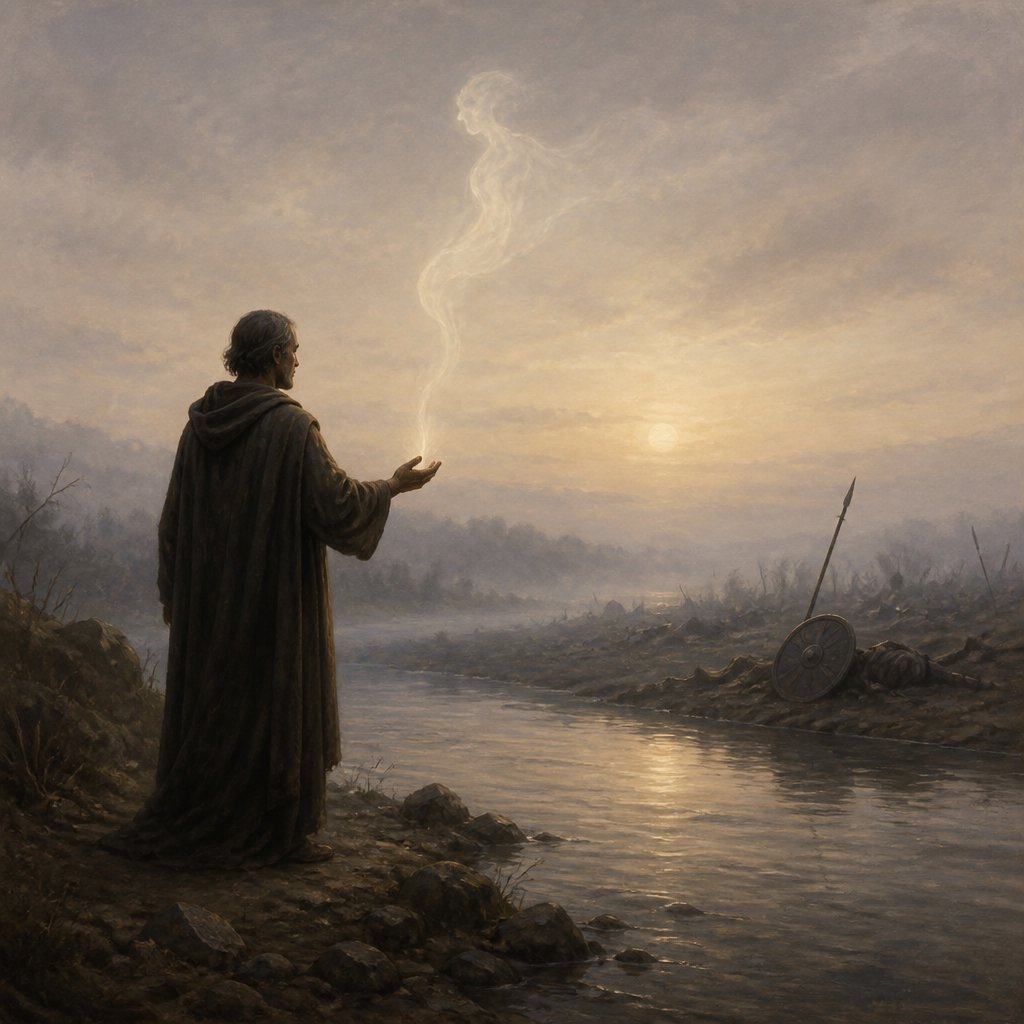
Ecclesiastes 8:8 from the King James Version of the Bible states, "There is no man that hath power over the spirit to retain the spirit; neither hath he power in the day of death: and there is no discharge in that war; neither shall wickedness deliver those that are given to it." This verse is part of the book of Ecclesiastes, which is traditionally attributed to King Solomon.
The book of Ecclesiastes is a unique part of the Bible, as it is a philosophical reflection on the meaning of life, rather than a collection of historical narratives or laws. It is known for its melancholic and existential tone, as the author (often presumed to be Solomon) reflects on the futility and fleeting nature of human existence. The verse in question, Ecclesiastes 8:8, touches on the theme of human powerlessness in the face of death and the consequences of wickedness.
The verse begins with the declaration that no one has power over the spirit to retain it. This speaks to the fundamental lack of control that humans have over their own lives and destinies. Despite our advanced knowledge and technological achievements, we are ultimately subject to the forces of nature and the inevitable cycle of life and death. This acknowledgment of human limitation is a recurring theme in Ecclesiastes, serving as a reminder of the humility and dependence that should characterize human existence.
The verse also emphasizes the lack of power in the day of death. Death is an event that transcends human authority and defies our attempts to evade or control it. This acknowledgment of the finality of death serves to highlight the temporary nature of human life and the need to prioritize more enduring spiritual values over earthly pursuits.
The verse then employs a vivid metaphor, likening the approach of death to a war from which there is no discharge. This imagery portrays the inevitability and intensity of the struggle against death, emphasizing its universality and the impossibility of avoiding its impact. In a broader sense, this metaphor may also be interpreted as an allusion to the perennial human struggle against the forces of evil and suffering, which frequently manifest themselves in the context of mortality.
The concluding part of the verse introduces the theme of wickedness and its inability to deliver those who are given to it. This serves as a sobering reminder of the consequences of moral corruption and the futility of seeking refuge in immoral pursuits. The verse suggests that, despite the illusions of power and invincibility that wickedness may offer, it ultimately fails to provide genuine protection or salvation in the face of death.
Symbolically, Ecclesiastes 8:8 serves as a poignant reflection on the human condition and the inevitability of mortality. It urges readers to confront the limitations of human power and the transience of earthly pursuits, while emphasizing the importance of cultivating virtues and values that transcend the temporal realm. The verse invites contemplation on the nature of human existence, the dynamics of power and morality, and the ultimate significance of our choices and actions in the face of our mortality.
In conclusion, Ecclesiastes 8:8 offers a profound meditation on the fundamental vulnerability and limitations of human existence, as well as the consequences of moral choices in the context of mortality. It prompts readers to consider the transitory nature of earthly power and the imperative of seeking spiritual and moral fulfillment in the face of mortality. This verse remains a timeless and thought-provoking reflection on the human condition, offering wisdom and insight that resonate across cultures and generations.
Have questions about Ecclesiastes 8:8?
Dive deeper into this scripture with Bible Chat — an AI-powered tool for exploring God's Word through conversation. Ask questions, get context, and grow in your understanding of the Bible.
Get Our Apps


Ecclesiastes 8:8 Artwork

Ecclesiastes 8:8 - "There is no man that hath power over the spirit to retain the spirit; neither hath he power in the day of death: and there is no discharge in that war; neither shall wickedness deliver those that are given to it."
"There is no man that hath power over the spirit to retain the spirit; neither hath he power in the day of death: and there is no discharge in that war; neither shall wickedness deliver those that are given to it." - Ecclesiastes 8:8

ecclesiastes 12:1-8

ecclesiastes 12:1-8

ecclesiastes 12:1-8

ecclesiastes 12:1-8

Ecclesiastes 3:7-8

ecclesiastes 12:1-8

Ecclesiastes 12:8 - "¶ Vanity of vanities, saith the preacher; all is vanity."

Ecclesiastes 3:8 - "A time to love, and a time to hate; a time of war, and a time of peace."

Ecclesiastes 8:2 - "I counsel thee to keep the king's commandment, and that in regard of the oath of God."

Ecclesiastes 8:7 - "For he knoweth not that which shall be: for who can tell him when it shall be?"

Ecclesiastes 8:6 - "¶ Because to every purpose there is time and judgment, therefore the misery of man is great upon him."

Ecclesiastes 9:8 - "Let thy garments be always white; and let thy head lack no ointment."

Ecclesiastes 8:4 - "Where the word of a king is, there is power: and who may say unto him, What doest thou?"

Ecclesiastes 7:8 - "Better is the end of a thing than the beginning thereof: and the patient in spirit is better than the proud in spirit."

Ecclesiastes 10:8 - "He that diggeth a pit shall fall into it; and whoso breaketh an hedge, a serpent shall bite him."

Ecclesiastes 1:8 - "All things are full of labour; man cannot utter it: the eye is not satisfied with seeing, nor the ear filled with hearing."

Ecclesiastes 8:5 - "Whoso keepeth the commandment shall feel no evil thing: and a wise man's heart discerneth both time and judgment."

Ecclesiastes 8:3 - "Be not hasty to go out of his sight: stand not in an evil thing; for he doeth whatsoever pleaseth him."

Ecclesiastes 6:8 - "For what hath the wise more than the fool? what hath the poor, that knoweth to walk before the living?"

"¶ Vanity of vanities, saith the preacher; all is vanity." - Ecclesiastes 12:8

Ecclesiastes 8:13 - "But it shall not be well with the wicked, neither shall he prolong his days, which are as a shadow; because he feareth not before God."

Ecclesiastes 8:11 - "Because sentence against an evil work is not executed speedily, therefore the heart of the sons of men is fully set in them to do evil."
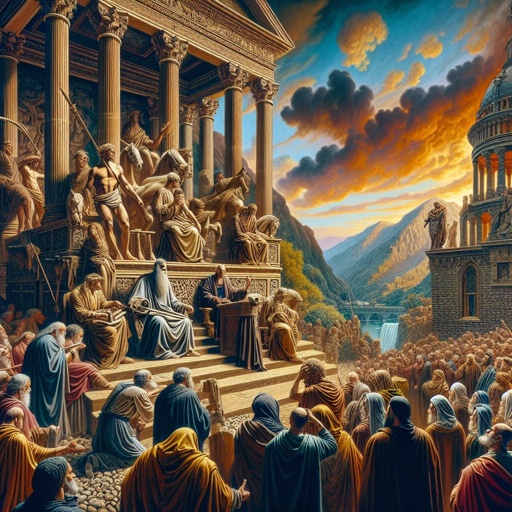
Ecclesiastes 5:8 - "¶ If thou seest the oppression of the poor, and violent perverting of judgment and justice in a province, marvel not at the matter: for he that is higher than the highest regardeth; and there be higher than they."

Ecclesiastes 8:1 - "Who is as the wise man? and who knoweth the interpretation of a thing? a man's wisdom maketh his face to shine, and the boldness of his face shall be changed."

Ecclesiastes 11:8 - "But if a man live many years, and rejoice in them all; yet let him remember the days of darkness; for they shall be many. All that cometh is vanity."

"A time to love, and a time to hate; a time of war, and a time of peace." - Ecclesiastes 3:8

"I counsel thee to keep the king's commandment, and that in regard of the oath of God." - Ecclesiastes 8:2

Ecclesiastes 8:12 - "¶ Though a sinner do evil an hundred times, and his days be prolonged, yet surely I know that it shall be well with them that fear God, which fear before him:"