What does Ecclesiastes 7:2 mean?
"¶ It is better to go to the house of mourning, than to go to the house of feasting: for that is the end of all men; and the living will lay it to his heart." - Ecclesiastes 7:2
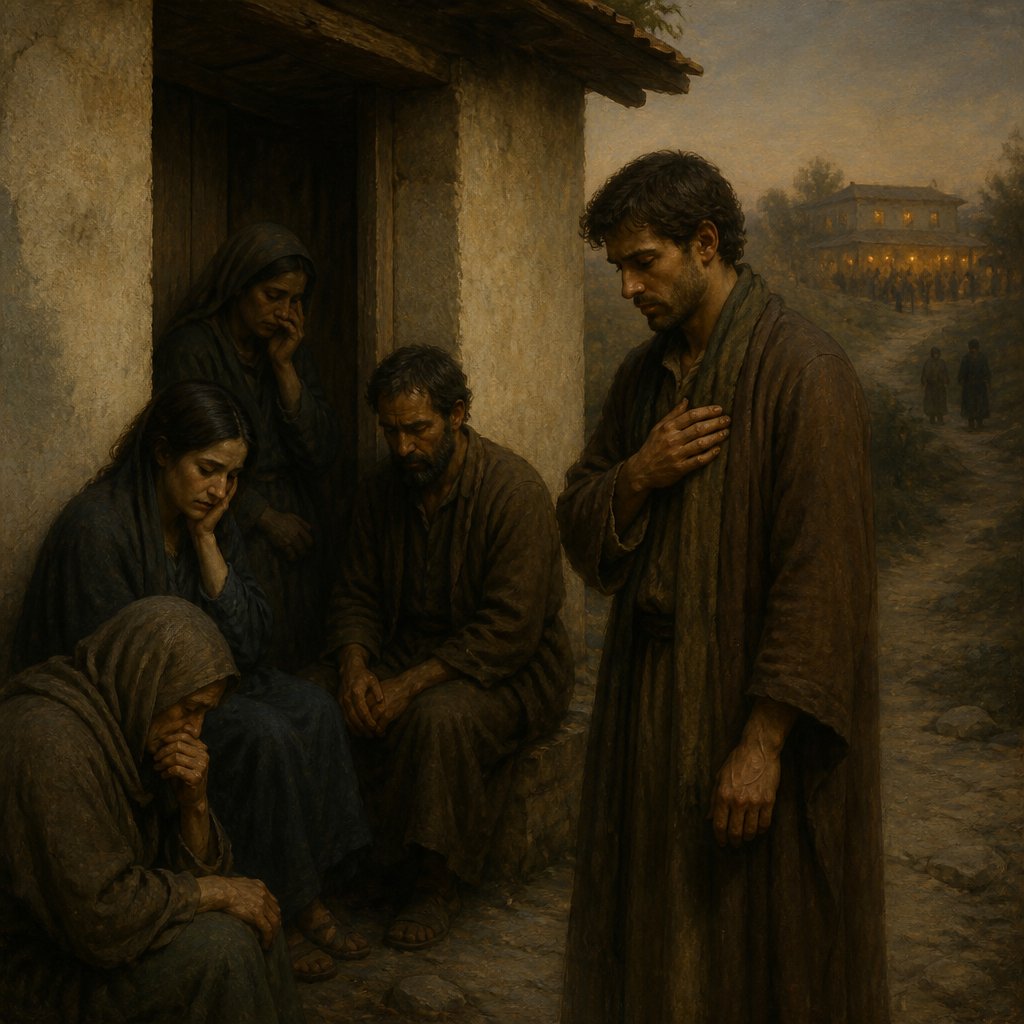
Ecclesiastes 7:2 in the King James Version of the Bible reads: "It is better to go to the house of mourning, than to go to the house of feasting: for that is the end of all men; and the living will lay it to his heart."
This verse comes from the book of Ecclesiastes, which is a part of the Old Testament and is traditionally attributed to King Solomon. The book of Ecclesiastes is known for its profound reflections on the meaning of life, the pursuit of wisdom, and the inevitable reality of death. This particular verse speaks to the human experience of sorrow and the importance of reflecting on one's mortality.
The verse begins with the statement, "It is better to go to the house of mourning, than to go to the house of feasting." This statement is somewhat counterintuitive, as one may initially think that it is better to celebrate and enjoy life rather than dwell on sorrow and mourning. However, the verse goes on to explain the reasoning behind this statement: "for that is the end of all men; and the living will lay it to his heart."
In this context, the "house of mourning" represents a place of sorrow, grief, and contemplation of mortality, while the "house of feasting" represents a place of celebration, pleasure, and worldly distractions. The verse suggests that it is more beneficial for individuals to confront and acknowledge the reality of death and the fleeting nature of life, rather than being consumed by earthly pleasures and distractions.
The verse continues with the assertion that "that is the end of all men; and the living will lay it to his heart." This statement emphasizes the universality of death and the significance of acknowledging and internalizing this truth. The living are encouraged to contemplate the temporary nature of life and to seek wisdom and understanding in the face of mortality.
One of the key themes of Ecclesiastes 7:2 is the contrast between the transitory nature of life and the enduring value of wisdom and contemplation. The verse suggests that engaging with sorrow and mourning can lead to a deeper understanding of life and a more meaningful existence. Rather than avoiding or suppressing feelings of grief and sadness, individuals are urged to confront these emotions and derive wisdom from them.
The verse also carries a message about the importance of perspective and discernment. It challenges the reader to consider what truly matters in life and to prioritize inner reflection and spiritual growth over external pursuits and worldly pleasures. By acknowledging the inevitability of death and the brevity of life, individuals are called to approach their existence with a sense of purpose, humility, and reverence.
In addition to its thematic significance, Ecclesiastes 7:2 also contains symbolic and metaphorical elements. The "house of mourning" can be understood as a symbol of introspection, spiritual contemplation, and the recognition of human frailty. It represents a space for profound reflection and the pursuit of wisdom. Conversely, the "house of feasting" symbolizes worldly indulgence, distraction, and a superficial approach to life. The juxtaposition of these two symbolic spaces serves to underscore the contrast between the temporal and the eternal, the material and the spiritual.
In conclusion, Ecclesiastes 7:2 offers a profound examination of the human experience of sorrow, mortality, and the pursuit of wisdom. It challenges readers to consider the value of introspection and the importance of acknowledging the temporary nature of life. Through its thematic depth and symbolic richness, this verse continues to resonate as a timeless and thought-provoking reflection on the human condition.
Have questions about Ecclesiastes 7:2?
Dive deeper into this scripture with Bible Chat — an AI-powered tool for exploring God's Word through conversation. Ask questions, get context, and grow in your understanding of the Bible.
Get Our Apps


Ecclesiastes 7:2 Artwork

Ecclesiastes 7:2 - "¶ It is better to go to the house of mourning, than to go to the house of feasting: for that is the end of all men; and the living will lay it to his heart."
"¶ It is better to go to the house of mourning, than to go to the house of feasting: for that is the end of all men; and the living will lay it to his heart." - Ecclesiastes 7:2

Ecclesiastes 7:7 - "¶ Surely oppression maketh a wise man mad; and a gift destroyeth the heart."

Ecclesiastes 3:7-8
Ecclesiastes 2:7 - "I got me servants and maidens, and had servants born in my house; also I had great possessions of great and small cattle above all that were in Jerusalem before me:"

Ecclesiastes 7:11 - "¶ Wisdom is good with an inheritance: and by it there is profit to them that see the sun."

Ecclesiastes 4:7 - "Then I returned, and I saw vanity under the sun."

Ecclesiastes 7:9 - "Be not hasty in thy spirit to be angry: for anger resteth in the bosom of fools."

Ecclesiastes 6:7 - "All the labour of man is for his mouth, and yet the appetite is not filled."

Ecclesiastes 7:20 - "For there is not a just man upon earth, that doeth good, and sinneth not."

Ecclesiastes 7:3 - "Sorrow is better than laughter: for by the sadness of the countenance the heart is made better."

Ecclesiastes 11:7 - "¶ Truly the light is sweet, and a pleasant thing it is for the eyes to behold the sun:"

Ecclesiastes 7:4 - "The heart of the wise is in the house of mourning; but the heart of fools is in the house of mirth."

Ecclesiastes 8:7 - "For he knoweth not that which shall be: for who can tell him when it shall be?"

Ecclesiastes 5:7 - "For in the multitude of dreams and many words there are also divers vanities: but fear thou God."

Ecclesiastes 7:19 - "Wisdom strengtheneth the wise more than ten mighty men which are in the city."

Ecclesiastes 3:7 - "A time to rend, and a time to sew; a time to keep silence, and a time to speak;"

Ecclesiastes 7:24 - "That which is far off, and exceeding deep, who can find it out?"

Ecclesiastes 7:6 - "For as the crackling of thorns under a pot, so is the laughter of the fool: this also is vanity."

Ecclesiastes 7:5 - "It is better to hear the rebuke of the wise, than for a man to hear the song of fools."

Ecclesiastes 12:7 - "Then shall the dust return to the earth as it was: and the spirit shall return unto God who gave it."

Ecclesiastes 2:2 - "I said of laughter, It is mad: and of mirth, What doeth it?"

ecclesiastes 12:2-6

Ecclesiastes 7:23 - "¶ All this have I proved by wisdom: I said, I will be wise; but it was far from me."

Ecclesiastes 7:13 - "Consider the work of God: for who can make that straight, which he hath made crooked?"

Ecclesiastes 7:8 - "Better is the end of a thing than the beginning thereof: and the patient in spirit is better than the proud in spirit."

Ecclesiastes 7:1 - "A good name is better than precious ointment; and the day of death than the day of one's birth."

Ecclesiastes 10:7 - "I have seen servants upon horses, and princes walking as servants upon the earth."

Ecclesiastes 7:12 - "For wisdom is a defence, and money is a defence: but the excellency of knowledge is, that wisdom giveth life to them that have it."

"¶ Surely oppression maketh a wise man mad; and a gift destroyeth the heart." - Ecclesiastes 7:7