What does Ecclesiastes 4:9-10 mean?
"Two are better than one,because they have a good reward for their labour. For if they fall, the one will lift up his fellow: but woe to him that is alone when he falleth; for he hath not another to help him up." - Ecclesiastes 4:9-10

Ecclesiastes 4:9–10 in the KJV reads, “Two are better than one; because they have a good reward for their labour. For if they fall, the one will lift up his fellow: but woe to him that is alone when he falleth; for he hath not another to help him up.” In the plain sense of the words, the Preacher is saying that companionship is not merely pleasant but practically and morally advantageous. Two people working, traveling, building, or bearing life’s weight together gain a “good reward” precisely because shared effort multiplies strength, steadies resolve, and increases the fruit of labour. The statement is not romanticized; it is realistic, grounded in what happens when a person stumbles and must be restored. The “reward” is not only greater productivity, but also the preservation, protection, and perseverance that come from having another near enough to see the fall and strong enough to help.
The immediate context of Ecclesiastes makes this point sharper. The book repeatedly surveys life “under the sun,” observing how toil can be drained of joy by vanity, rivalry, oppression, and the lonely hoarding of wealth. Just before these verses, Ecclesiastes speaks of oppression and the lack of a “comforter,” then of labour fueled by envy, and then of the solitary man who toils without end, yet has “neither child nor brother,” and still is not satisfied (Ecclesiastes 4:1–8, KJV). That is the loneliness Ecclesiastes has in view: a life of isolated striving where work becomes its own cruel master and success does not translate into rest or meaning. In that setting, “Two are better than one” is not a generic proverb about teamwork; it is a corrective to the vanity of self-contained living. It answers the picture of the man who has no one, yet keeps gathering, with the truth that human life is designed for shared burdens and shared gains, and that isolation is a form of poverty even when one is rich.
The themes in these two verses include the dignity of labour, the limits of individual strength, and the mercy of mutual support. “Labour” in Ecclesiastes is one of the book’s central words, often heavy with the sense of toil and weariness. Here, however, labour is not condemned; it is reframed. Work done in companionship yields a “good reward,” suggesting that shared labour can be more than grinding survival; it can become fruitful and sustaining. There is also a theme of providential help: the help in view is ordinary and human, yet it is still real deliverance. The Preacher does not deny that God helps; he highlights that one of God’s common means of help is another person within reach.
The imagery of falling and lifting is both literal and symbolic. Literally, in ancient travel and field labour, a fall could mean injury, exposure, or danger, and a companion could be the difference between recovery and ruin. Symbolically, “fall” can represent any collapse: moral failure, loss, grief, discouragement, sickness, or the sudden reversals Ecclesiastes repeatedly notes. The act of lifting up “his fellow” carries the sense of restoration and re-strengthening, not merely physical assistance but renewal of capacity to continue. The verse’s “woe” is therefore not melodrama; it is a sober pronouncement. “Woe to him that is alone when he falleth” points to the vulnerability that comes from self-sufficiency and social severance. It also implies a kind of spiritual warning: isolation intensifies the consequences of weakness, because when the moment of crisis comes, the solitary person has fewer means of being pulled back from the edge.
There is symbolism as well in the number itself. “Two” stands for partnership and witness. In Scripture broadly, two can signify confirmation and strength, but Ecclesiastes uses it here in a practical wisdom sense: shared life is sturdier than solitary life. The phrase “his fellow” signals more than mere proximity; it implies covenant-like loyalty in ordinary relationships, the kind of dependable neighborliness that refuses to leave someone down. The verse does not claim that all companionship is good—Ecclesiastes is too honest for that—but it does insist that life’s heaviness becomes more bearable when another person is truly present.
Within the larger passage, these verses begin a chain of related sayings that continue to emphasize resilience through unity: warmth in the cold and strength against an enemy are easier with another than alone (Ecclesiastes 4:11–12, KJV). Taken together, the section argues that companionship is a kind of shelter against the world’s harshness “under the sun.” Yet Ecclesiastes keeps the focus on lived reality rather than idealism: people fall, people grow cold, people are opposed, and therefore people need one another. The significance of Ecclesiastes 4:9–10 is that it exposes loneliness as both a tragedy and a danger, and it commends shared labour and shared recovery as a wise answer to the vanity and fragility of life. It teaches that one of the most tangible “rewards” in this world is not simply what our hands produce, but the presence of someone who will help us stand when we cannot lift ourselves.
Have questions about Ecclesiastes 4:9-10?
Dive deeper into this scripture with Bible Chat — an AI-powered tool for exploring God's Word through conversation. Ask questions, get context, and grow in your understanding of the Bible.
Get Our Apps


Ecclesiastes 4:9-10 Artwork

"Two are better than one, because they have a good return for their labor: If either of them falls down, one can help the other up. But pity anyone who falls and has no one to help them up." - Ecclesiastes 4:9-10

Ecclesiastes 4:9-10 - "Two are better than one, because they have a good return for their labor: If either of them falls down, one can help the other up. But pity anyone who falls and has no one to help them up."

"Two are better than one, because they have a good return for their labor: If either of them falls down, one can help the other up. But pity anyone who falls and has no one to help them up." - Ecclesiastes 4:9-10

Ecclesiastes 4:9 - "¶ Two are better than one; because they have a good reward for their labour."

Ecclesiastes 9:4 - "¶ For to him that is joined to all the living there is hope: for a living dog is better than a dead lion."

Ecclesiastes 10:9 - "Whoso removeth stones shall be hurt therewith; and he that cleaveth wood shall be endangered thereby."

Ecclesiastes 10:4 - "If the spirit of the ruler rise up against thee, leave not thy place; for yielding pacifieth great offences."

"¶ Two are better than one; because they have a good reward for their labour." - Ecclesiastes 4:9

Ecclesiastes 9:10 - "Whatsoever thy hand findeth to do, do it with thy might; for there is no work, nor device, nor knowledge, nor wisdom, in the grave, whither thou goest."

Ecclesiastes 4:10 - "For if they fall, the one will lift up his fellow: but woe to him that is alone when he falleth; for he hath not another to help him up."

Ecclesiastes 9:4 But he who is joined with all the living has hope, for a living dog is better than a dead lion.

Ecclesiastes 9:4 But he who is joined with all the living has hope, for a living dog is better than a dead lion.

"Whoso removeth stones shall be hurt therewith; and he that cleaveth wood shall be endangered thereby." - Ecclesiastes 10:9

"¶ For to him that is joined to all the living there is hope: for a living dog is better than a dead lion." - Ecclesiastes 9:4
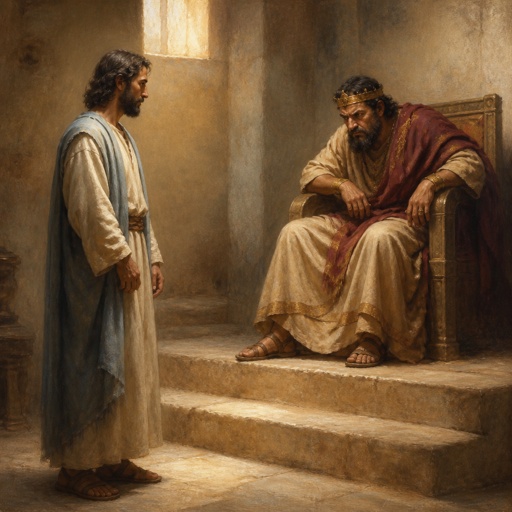
"If the spirit of the ruler rise up against thee, leave not thy place; for yielding pacifieth great offences." - Ecclesiastes 10:4

Ecclesiastes 10:10 - "If the iron be blunt, and he do not whet the edge, then must he put to more strength: but wisdom is profitable to direct."

Ecclesiastes 3:9 - "What profit hath he that worketh in that wherein he laboureth?"

Ecclesiastes 7:9 - "Be not hasty in thy spirit to be angry: for anger resteth in the bosom of fools."

Ecclesiastes 10:6 - "Folly is set in great dignity, and the rich sit in low place."

Ecclesiastes 10:11 - "Surely the serpent will bite without enchantment; and a babbler is no better."

Ecclesiastes 5:9 - "¶ Moreover the profit of the earth is for all: the king himself is served by the field."

Ecclesiastes 4:7 - "Then I returned, and I saw vanity under the sun."

Ecclesiastes 6:9 - "¶ Better is the sight of the eyes than the wandering of the desire: this is also vanity and vexation of spirit."

Ecclesiastes 10:18 - "¶ By much slothfulness the building decayeth; and through idleness of the hands the house droppeth through."

Ecclesiastes 10:19 - "¶ A feast is made for laughter, and wine maketh merry: but money answereth all things."

Ecclesiastes 3:4 - "A time to weep, and a time to laugh; a time to mourn, and a time to dance;"

Ecclesiastes 9:8 - "Let thy garments be always white; and let thy head lack no ointment."

Ecclesiastes 9:18 - "Wisdom is better than weapons of war: but one sinner destroyeth much good."

Ecclesiastes 4:4 - "¶ Again, I considered all travail, and every right work, that for this a man is envied of his neighbour. This is also vanity and vexation of spirit."

Ecclesiastes 10:12 - "The words of a wise man's mouth are gracious; but the lips of a fool will swallow up himself."