What does Ecclesiastes 4:8 mean?
"There is one alone, and there is not a second; yea, he hath neither child nor brother: yet is there no end of all his labour; neither is his eye satisfied with riches; neither saith he, For whom do I labour, and bereave my soul of good? This is also vanity, yea, it is a sore travail." - Ecclesiastes 4:8
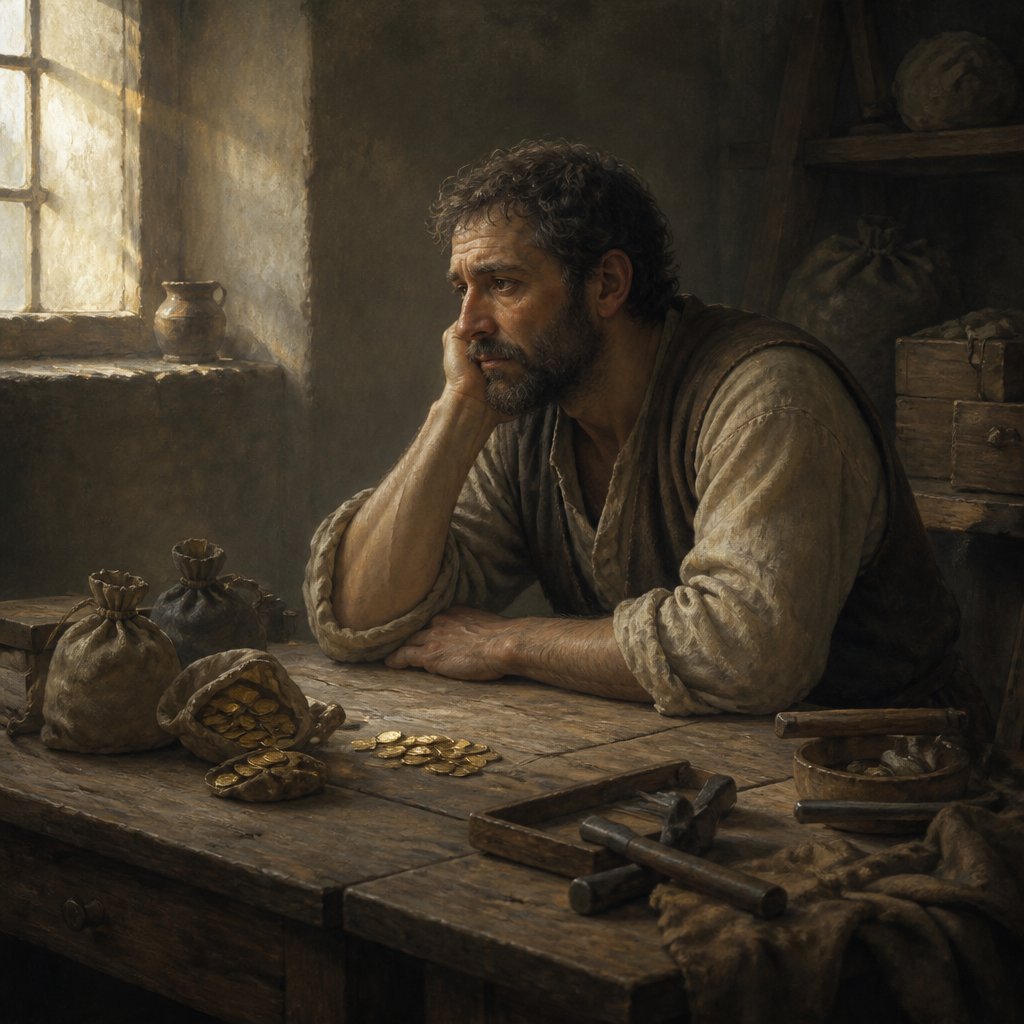
Ecclesiastes 4:8 in the King James Version of the Bible reads, "There is one alone, and there is not a second; yea, he hath neither child nor brother: yet is there no end of all his labour; neither is his eye satisfied with riches; neither saith he, For whom do I labour, and bereave my soul of good? This is also vanity, yea, it is a sore travail."
This verse is part of the book of Ecclesiastes, which is traditionally attributed to King Solomon. The book is known for its philosophical and reflective nature, and it often contemplates the meaning of life, the existence of God, and the nature of human wisdom and folly. Ecclesiastes 4:8 falls within a section of the book where the author examines the futility and emptiness of human labor and the pursuit of wealth without a higher purpose or meaning.
The verse begins by describing a person who is alone, without a second, and without any family to inherit his labor. This individual may be dedicated to toiling and striving for success, yet he finds no satisfaction in his labor. Even though he may amass wealth and possessions, his eye is never satisfied with riches. This person is portrayed as empty and unfulfilled, constantly seeking more without finding contentment. The verse concludes by stating that all of this labor and pursuit of riches is ultimately futile and leads to a "sore travail" or suffering.
One of the central themes of this verse is the vanity of human pursuits and the emptiness of material wealth without a spiritual or moral foundation. The book of Ecclesiastes repeatedly emphasizes the fleeting nature of life and the ultimate meaninglessness of earthly endeavors when they are not grounded in a relationship with God. The author's reflections on the struggles and futility of human existence serve as a critique of the pursuit of worldly success and material gain.
The portrayal of the individual in Ecclesiastes 4:8 also speaks to the universal human experience of longing for meaning and purpose. The verse presents a stark image of a person who is entirely focused on work and acquiring wealth, yet remains unfulfilled and questioning the purpose of their efforts. This existential angst and dissatisfaction with the pursuit of material goods is a reflection of the human condition, which often grapples with questions of purpose, identity, and fulfillment.
The language of the verse itself conveys a sense of weariness and disillusionment. The repetition of "neither...neither" emphasizes the unending cycle of striving and dissatisfaction that the individual experiences. The phrase "This is also vanity, yea, it is a sore travail" further underscores the emptiness and toil of a life devoid of deeper meaning or spiritual fulfillment.
In addition to its philosophical and existential themes, Ecclesiastes 4:8 also contains elements of biblical wisdom literature. The concept of laboring in vain and pursuing riches without a higher purpose is a recurring motif in the Old Testament. The verse serves as a cautionary reminder of the dangers of placing excessive emphasis on material wealth and neglecting the pursuit of wisdom, righteousness, and a relationship with God.
In conclusion, Ecclesiastes 4:8 offers a sobering reflection on the pursuit of material wealth and the emptiness of human endeavors without a spiritual foundation. The verse contributes to the broader themes of the book of Ecclesiastes, which contemplates the fleeting nature of life and the meaningless of human pursuits apart from a relationship with God. It serves as a timeless reminder of the importance of seeking spiritual fulfillment and purpose in a world that often prioritizes material success and accumulation.
Have questions about Ecclesiastes 4:8?
Dive deeper into this scripture with Bible Chat — an AI-powered tool for exploring God's Word through conversation. Ask questions, get context, and grow in your understanding of the Bible.
Get Our Apps


Ecclesiastes 4:8 Artwork

Ecclesiastes 4:8 - "There is one alone, and there is not a second; yea, he hath neither child nor brother: yet is there no end of all his labour; neither is his eye satisfied with riches; neither saith he, For whom do I labour, and bereave my soul of good? This is also vanity, yea, it is a sore travail."

Ecclesiastes 4:8-10 - "There is one alone, and there is not a second; yea, he hath neither child nor brother: yet is there no end of all his labour; neither is his eye satisfied with riches; neither saith he, For whom do I labour, and bereave my soul of good? This is also vanity, yea, it is a sore travail. Two are better than one; because they have a good reward for their labour. For if they fall, the one will lift up his fellow: but woe to him that is alone when he falleth; for he hath not another to help him up."
"There is one alone, and there is not a second; yea, he hath neither child nor brother: yet is there no end of all his labour; neither is his eye satisfied with riches; neither saith he, For whom do I labour, and bereave my soul of good? This is also vanity, yea, it is a sore travail." - Ecclesiastes 4:8
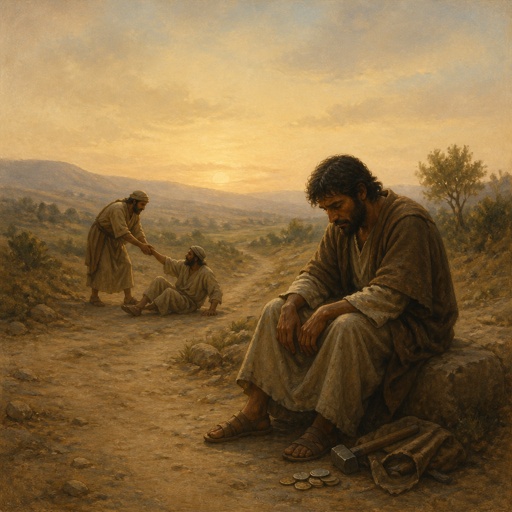
"There is one alone, and there is not a second; yea, he hath neither child nor brother: yet is there no end of all his labour; neither is his eye satisfied with riches; neither saith he, For whom do I labour, and bereave my soul of good? This is also vanity, yea, it is a sore travail. Two are better than one; because they have a good reward for their labour. For if they fall, the one will lift up his fellow: but woe to him that is alone when he falleth; for he hath not another to help him up." - Ecclesiastes 4:8-10

Ecclesiastes 8:4 - "Where the word of a king is, there is power: and who may say unto him, What doest thou?"

ecclesiastes 12:1-8

"Where the word of a king is, there is power: and who may say unto him, What doest thou?" - Ecclesiastes 8:4

ecclesiastes 12:1-8

ecclesiastes 12:1-8

ecclesiastes 12:1-8

Ecclesiastes 3:7-8

ecclesiastes 12:1-8

Ecclesiastes 12:8 - "¶ Vanity of vanities, saith the preacher; all is vanity."

Ecclesiastes 3:8 - "A time to love, and a time to hate; a time of war, and a time of peace."

Ecclesiastes 8:2 - "I counsel thee to keep the king's commandment, and that in regard of the oath of God."

Ecclesiastes 4:7 - "Then I returned, and I saw vanity under the sun."

Ecclesiastes 8:7 - "For he knoweth not that which shall be: for who can tell him when it shall be?"

Ecclesiastes 3:4 - "A time to weep, and a time to laugh; a time to mourn, and a time to dance;"

Ecclesiastes 8:6 - "¶ Because to every purpose there is time and judgment, therefore the misery of man is great upon him."

Ecclesiastes 4:4 - "¶ Again, I considered all travail, and every right work, that for this a man is envied of his neighbour. This is also vanity and vexation of spirit."

Ecclesiastes 7:4 - "The heart of the wise is in the house of mourning; but the heart of fools is in the house of mirth."

Ecclesiastes 9:8 - "Let thy garments be always white; and let thy head lack no ointment."

Ecclesiastes 4:5 - "The fool foldeth his hands together, and eateth his own flesh."

Ecclesiastes 7:8 - "Better is the end of a thing than the beginning thereof: and the patient in spirit is better than the proud in spirit."

Ecclesiastes 4:9 - "¶ Two are better than one; because they have a good reward for their labour."

Ecclesiastes 6:4 - "For he cometh in with vanity, and departeth in darkness, and his name shall be covered with darkness."

Ecclesiastes 1:4 - "One generation passeth away, and another generation cometh: but the earth abideth for ever."

Ecclesiastes 10:8 - "He that diggeth a pit shall fall into it; and whoso breaketh an hedge, a serpent shall bite him."

"1 There is a time for everything, and a season for every activity under the heavens: 2 a time to be born and a time to die, a time to plant and a time to uproot, 3 a time to kill and a time to heal, a time to tear down and a time to build, 4 a time to weep and a time to laugh, a time to mourn and a time to dance, 5 a time to scatter stones and a time to gather them, a time to embrace and a time to refrain from embracing, 6 a time to search and a time to give up, a time to keep and a time to throw away, 7 a time to tear and a time to mend, a time to be silent and a time to speak, 8 a time to love and a time to hate, a time for war and a time for peace." - Ecclesiastes 3:1-8

Ecclesiastes 4:6 - "Better is an handful with quietness, than both the hands full with travail and vexation of spirit."