What does Ecclesiastes 4:14 mean?
"For out of prison he cometh to reign; whereas also he that is born in his kingdom becometh poor." - Ecclesiastes 4:14
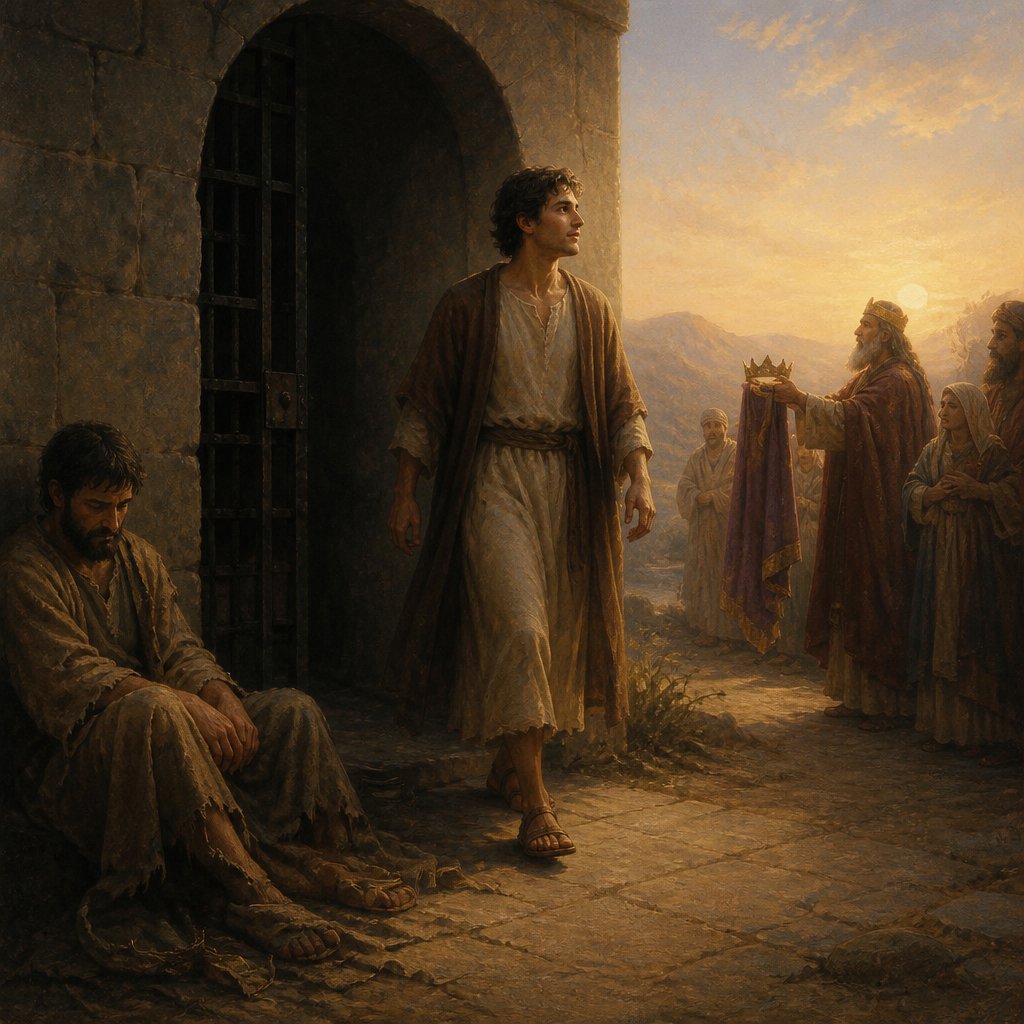
Ecclesiastes 4:14 (KJV): For out of prison he cometh to reign; whereas also he that is born in his kingdom becometh poor.
In this verse from the book of Ecclesiastes, the Preacher reflects on the futility of human ambition and the unpredictability of fate. The Preacher, thought to be King Solomon, uses evocative imagery to illustrate the often arbitrary and unjust distribution of power and wealth in the world. The verse speaks to the overarching theme of Ecclesiastes, which is the fleeting nature of human life and the ultimate meaninglessness of earthly pursuits without God.
The first part of the verse, "For out of prison he cometh to reign," describes the ascent to power of one who has been imprisoned. This can be seen as a metaphor for any kind of adversity or hardship from which one emerges victorious. The "prison" could represent literal imprisonment, or it could symbolize any challenging circumstance that one overcomes in their rise to power and authority.
The second part of the verse, "whereas also he that is born in his kingdom becometh poor," presents a contrasting scenario. This part of the verse seems to suggest the idea that those who are born into privilege and power may ultimately lose their wealth and status. This is a recurring theme in the book of Ecclesiastes – the idea that worldly success and prosperity are ultimately fleeting and do not provide lasting fulfillment.
Overall, this verse highlights the paradoxes and contradictions that are inherent in human life. The rise and fall of individuals from different circumstances illustrate the unpredictability and transience of power and wealth. It serves as a reminder that earthly achievements and possessions are ultimately superficial and temporary.
In the broader context of the book of Ecclesiastes, this verse is part of a larger meditation on the search for meaning and purpose in life. The Preacher explores various aspects of human existence, including the pursuit of wisdom, pleasure, and wealth, only to conclude that all of these things are ultimately meaningless without a proper relationship with God. This verse serves as another example of the Preacher's observations about the unpredictability and impermanence of worldly success, reinforcing the overarching message of the book.
Symbolically, the "prison" can be seen as not only a literal place of confinement, but also a metaphor for the struggles and challenges that individuals face in life. The "reign" represents the attainment of power and authority, while the contrast of being born in a kingdom and becoming poor symbolizes the potential for downfall and loss despite one's privileged position.
In a theological sense, this verse can also be interpreted as a reminder of the importance of humility and trust in God. It serves as a caution against relying too heavily on earthly wealth and power, as these things are ultimately temporary and can easily be lost. It emphasizes the idea that true fulfillment and security come from a relationship with God, rather than from material or worldly success.
In conclusion, Ecclesiastes 4:14 offers a thought-provoking commentary on the unpredictable and transient nature of human existence. It highlights the inability of worldly achievements and possessions to provide lasting fulfillment, and encourages a focus on spiritual values and a relationship with God. The verse serves as a reminder of the limitations of human effort and the ultimate futility of pursuing earthly success without considering the eternal perspective.
Have questions about Ecclesiastes 4:14?
Dive deeper into this scripture with Bible Chat — an AI-powered tool for exploring God's Word through conversation. Ask questions, get context, and grow in your understanding of the Bible.
Get Our Apps


Ecclesiastes 4:14 Artwork

Ecclesiastes 4:14 - "For out of prison he cometh to reign; whereas also he that is born in his kingdom becometh poor."
"For out of prison he cometh to reign; whereas also he that is born in his kingdom becometh poor." - Ecclesiastes 4:14

Ecclesiastes 4:7 - "Then I returned, and I saw vanity under the sun."

Ecclesiastes 3:4 - "A time to weep, and a time to laugh; a time to mourn, and a time to dance;"

Ecclesiastes 5:14 - "But those riches perish by evil travail: and he begetteth a son, and there is nothing in his hand."

Ecclesiastes 4:4 - "¶ Again, I considered all travail, and every right work, that for this a man is envied of his neighbour. This is also vanity and vexation of spirit."

Ecclesiastes 7:4 - "The heart of the wise is in the house of mourning; but the heart of fools is in the house of mirth."

Ecclesiastes 4:5 - "The fool foldeth his hands together, and eateth his own flesh."

Ecclesiastes 1:14 - "I have seen all the works that are done under the sun; and, behold, all is vanity and vexation of spirit."

Ecclesiastes 4:9 - "¶ Two are better than one; because they have a good reward for their labour."

Ecclesiastes 6:4 - "For he cometh in with vanity, and departeth in darkness, and his name shall be covered with darkness."

Ecclesiastes 1:4 - "One generation passeth away, and another generation cometh: but the earth abideth for ever."

Ecclesiastes 12:14 - "For God shall bring every work into judgment, with every secret thing, whether it be good, or whether it be evil."

Ecclesiastes 4:6 - "Better is an handful with quietness, than both the hands full with travail and vexation of spirit."

Ecclesiastes 11:4 - "He that observeth the wind shall not sow; and he that regardeth the clouds shall not reap."

Ecclesiastes 9:4 - "¶ For to him that is joined to all the living there is hope: for a living dog is better than a dead lion."

Ecclesiastes 9:14 - "There was a little city, and few men within it; and there came a great king against it, and besieged it, and built great bulwarks against it:"

Ecclesiastes 4:13 - "¶ Better is a poor and a wise child than an old and foolish king, who will no more be admonished."

Ecclesiastes 4:11 - "Again, if two lie together, then they have heat: but how can one be warm alone?"

Ecclesiastes 8:4 - "Where the word of a king is, there is power: and who may say unto him, What doest thou?"

Ecclesiastes 4:12 - "And if one prevail against him, two shall withstand him; and a threefold cord is not quickly broken."

Ecclesiastes 2:14 - "The wise man's eyes are in his head; but the fool walketh in darkness: and I myself perceived also that one event happeneth to them all."

Ecclesiastes 2:4 - "I made me great works; I builded me houses; I planted me vineyards:"

Ecclesiastes 4:2 - "Wherefore I praised the dead which are already dead more than the living which are yet alive."

Ecclesiastes 10:4 - "If the spirit of the ruler rise up against thee, leave not thy place; for yielding pacifieth great offences."

Ecclesiastes 10:14 - "A fool also is full of words: a man cannot tell what shall be; and what shall be after him, who can tell him?"

Ecclesiastes 4:15 - "I considered all the living which walk under the sun, with the second child that shall stand up in his stead."

Ecclesiastes 7:14 - "In the day of prosperity be joyful, but in the day of adversity consider: God also hath set the one over against the other, to the end that man should find nothing after him."

Ecclesiastes 4:3 - "Yea, better is he than both they, which hath not yet been, who hath not seen the evil work that is done under the sun."

"Then I returned, and I saw vanity under the sun." - Ecclesiastes 4:7