What does Ecclesiastes 4:13 mean?
"¶ Better is a poor and a wise child than an old and foolish king, who will no more be admonished." - Ecclesiastes 4:13
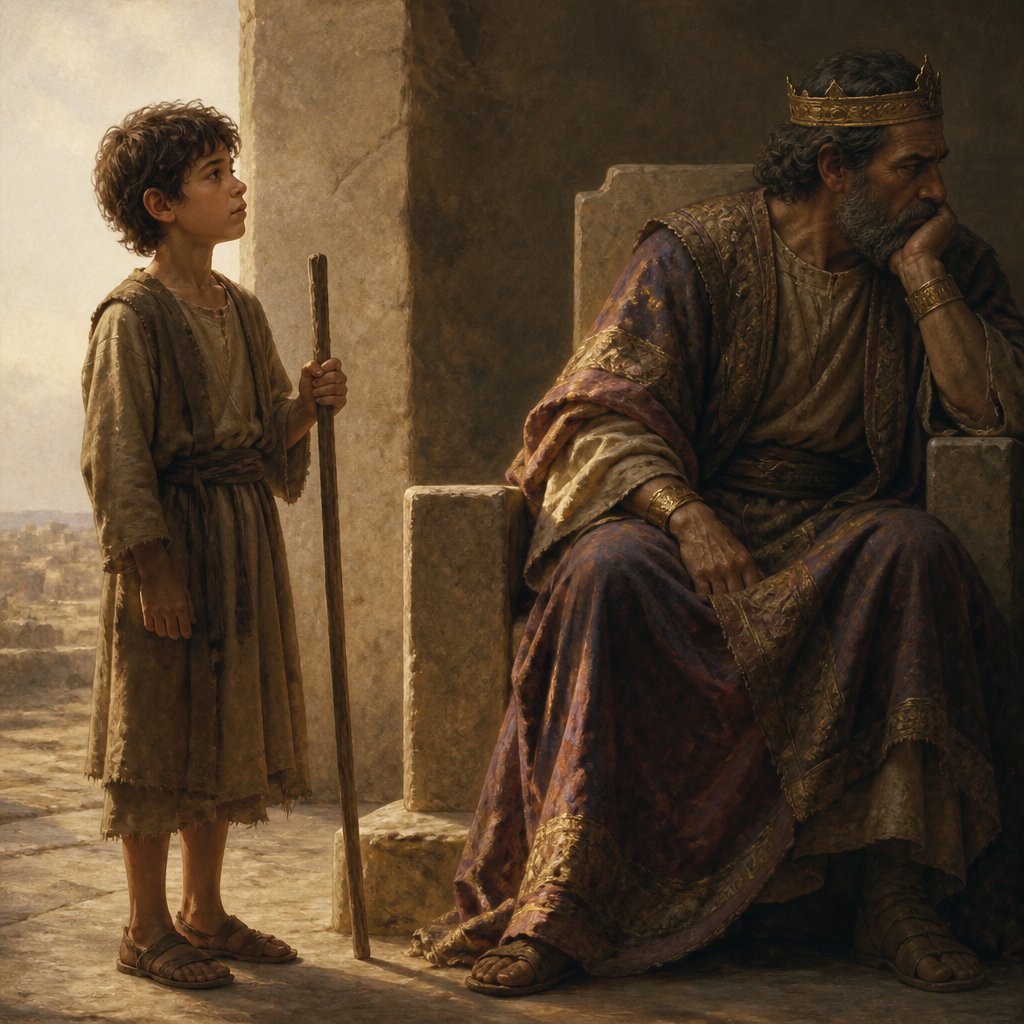
Ecclesiastes 4:13 - "Better is a poor and a wise child than an old and foolish king, who will no more be admonished."
The book of Ecclesiastes is a philosophical and reflective book in the Old Testament credited to King Solomon, who was renowned for his wisdom. This particular verse captures the essence of Solomon's deep reflections on the meaning of life and the pursuit of wisdom.
The verse begins by making a stark comparison between a poor and wise child and an old and foolish king. In this context, "poor" does not necessarily refer to financial poverty, but rather a lack of worldly power and prestige. On the other hand, "wise" implies possessing the insight and understanding that comes from seeking and embracing knowledge and understanding.
The juxtaposition of the "poor and wise child" with the "old and foolish king" is deliberate and thought-provoking. The child represents humility, teachability, and the potential for growth. Despite their lack of worldly experience and status, their wisdom makes them valuable and commendable. This highlights the idea that wisdom is not dependent on age or social status, but rather on the willingness to learn and grow.
In contrast, the old and foolish king symbolizes a person who has had a lifetime to acquire knowledge and experience, yet has failed to do so. The mention of the king's age and foolishness serves as a reminder that even those in positions of authority and power can be lacking in wisdom. This challenges the notion that age and position automatically equate to wisdom and understanding.
The verse goes on to emphasize that the old and foolish king "will no more be admonished." This implies that the king is resistant to correction or guidance, perhaps due to arrogance or a false sense of self-importance. This highlights the danger of pride and the refusal to accept counsel or learn from others.
One of the key themes in this verse is the value of wisdom and the folly of pride. It challenges conventional notions of power and status, asserting that true wisdom holds more merit than worldly wealth or authority. This aligns with the overarching theme of Ecclesiastes, which is the fleeting nature of worldly pursuits and the ultimate importance of seeking wisdom and understanding.
The verse also speaks to the universal human experience of seeking meaning and purpose. It prompts the reader to consider the true markers of a meaningful and fulfilling life, emphasizing the pursuit of wisdom as a vital aspect of human existence.
In a broader context, this verse can be seen as a commentary on leadership and the responsibility that comes with authority. It warns against the dangers of being unteachable and refusing to heed wise counsel. It also challenges the notion that age and position automatically equate to wisdom, reminding readers that true wisdom is not bound by external markers.
Symbolically, the "poor and wise child" can be seen as representative of the humble and open-hearted seeker of truth, while the "old and foolish king" symbolizes the prideful and closed-minded individual who refuses to grow and learn. The contrast between the two figures serves as a powerful illustration of the value of humility and wisdom.
In conclusion, Ecclesiastes 4:13 offers a profound meditation on the nature of wisdom and the pitfalls of pride. It challenges conventional ideas about power and authority, urging readers to prioritize the pursuit of wisdom and humility. This verse continues to resonate with readers across time and cultures, offering timeless insights into the human condition and the pursuit of meaning and understanding.
Have questions about Ecclesiastes 4:13?
Dive deeper into this scripture with Bible Chat — an AI-powered tool for exploring God's Word through conversation. Ask questions, get context, and grow in your understanding of the Bible.
Get Our Apps


Ecclesiastes 4:13 Artwork

Ecclesiastes 4:13 - "¶ Better is a poor and a wise child than an old and foolish king, who will no more be admonished."
"¶ Better is a poor and a wise child than an old and foolish king, who will no more be admonished." - Ecclesiastes 4:13

Ecclesiastes 2:13 - "Then I saw that wisdom excelleth folly, as far as light excelleth darkness."

Ecclesiastes 4:7 - "Then I returned, and I saw vanity under the sun."

Ecclesiastes 10:13 - "The beginning of the words of his mouth is foolishness: and the end of his talk is mischievous madness."

Ecclesiastes 3:4 - "A time to weep, and a time to laugh; a time to mourn, and a time to dance;"

Ecclesiastes 9:13 - "¶ This wisdom have I seen also under the sun, and it seemed great unto me:"

Ecclesiastes 7:13 - "Consider the work of God: for who can make that straight, which he hath made crooked?"

Ecclesiastes 4:4 - "¶ Again, I considered all travail, and every right work, that for this a man is envied of his neighbour. This is also vanity and vexation of spirit."

Ecclesiastes 7:4 - "The heart of the wise is in the house of mourning; but the heart of fools is in the house of mirth."

Ecclesiastes 4:5 - "The fool foldeth his hands together, and eateth his own flesh."

Ecclesiastes 3:13 - "And also that every man should eat and drink, and enjoy the good of all his labour, it is the gift of God."

Ecclesiastes 4:9 - "¶ Two are better than one; because they have a good reward for their labour."

Ecclesiastes 6:4 - "For he cometh in with vanity, and departeth in darkness, and his name shall be covered with darkness."

Ecclesiastes 1:4 - "One generation passeth away, and another generation cometh: but the earth abideth for ever."

Ecclesiastes 5:13 - "There is a sore evil which I have seen under the sun, namely, riches kept for the owners thereof to their hurt."

Ecclesiastes 12:13 - "Let us hear the conclusion of the whole matter: Fear God, and keep his commandments: for this is the whole duty of man."

Ecclesiastes 4:6 - "Better is an handful with quietness, than both the hands full with travail and vexation of spirit."

Ecclesiastes 11:4 - "He that observeth the wind shall not sow; and he that regardeth the clouds shall not reap."

Ecclesiastes 9:4 - "¶ For to him that is joined to all the living there is hope: for a living dog is better than a dead lion."

Ecclesiastes 4:11 - "Again, if two lie together, then they have heat: but how can one be warm alone?"

Ecclesiastes 8:4 - "Where the word of a king is, there is power: and who may say unto him, What doest thou?"

Ecclesiastes 4:12 - "And if one prevail against him, two shall withstand him; and a threefold cord is not quickly broken."

Ecclesiastes 8:13 - "But it shall not be well with the wicked, neither shall he prolong his days, which are as a shadow; because he feareth not before God."

Ecclesiastes 2:4 - "I made me great works; I builded me houses; I planted me vineyards:"

Ecclesiastes 4:14 - "For out of prison he cometh to reign; whereas also he that is born in his kingdom becometh poor."

Ecclesiastes 4:2 - "Wherefore I praised the dead which are already dead more than the living which are yet alive."

Ecclesiastes 10:4 - "If the spirit of the ruler rise up against thee, leave not thy place; for yielding pacifieth great offences."

Ecclesiastes 4:15 - "I considered all the living which walk under the sun, with the second child that shall stand up in his stead."

Ecclesiastes 4:3 - "Yea, better is he than both they, which hath not yet been, who hath not seen the evil work that is done under the sun."