What does Ecclesiastes 2:3 mean?
"I sought in mine heart to give myself unto wine, yet acquainting mine heart with wisdom; and to lay hold on folly, till I might see what was that good for the sons of men, which they should do under the heaven all the days of their life." - Ecclesiastes 2:3
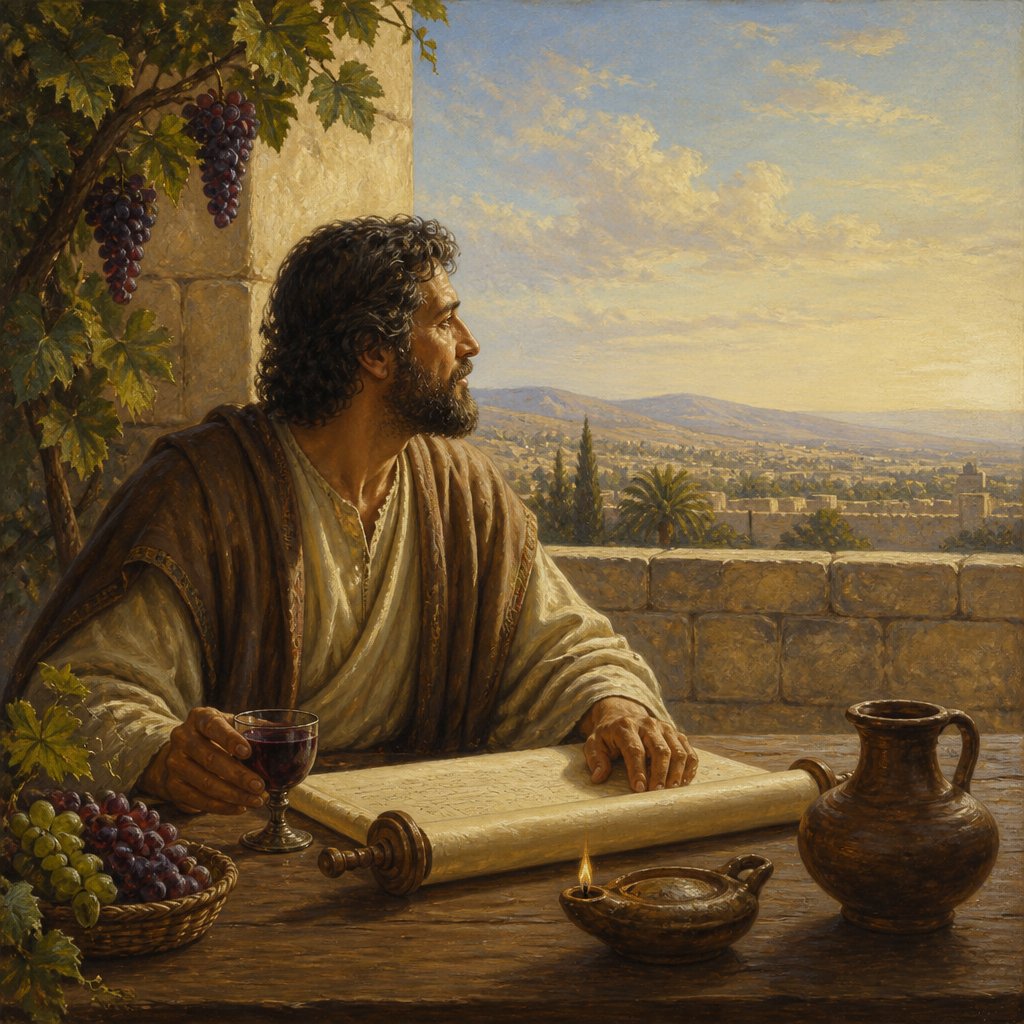
Ecclesiastes 2:3 (KJV) states, "I sought in mine heart to give myself unto wine, yet acquainting mine heart with wisdom; and to lay hold on folly, till I might see what was that good for the sons of men, which they should do under the heaven all the days of their life."
In this verse, the Preacher (believed to be King Solomon) reflects on his pursuit of pleasure, particularly through indulging in wine. The Preacher's quest for pleasure and wisdom is a central theme in the book of Ecclesiastes, as he grapples with the fleeting nature of earthly pursuits and the ultimate meaning of life.
The verse begins with the Preacher's internal motivation, "I sought in mine heart," indicating a personal and deliberate decision to seek fulfillment through wine and wisdom. This pursuit can be understood in the context of the hedonistic lifestyle often associated with the pursuit of pleasure and sensual gratification. The Preacher's desire to give himself unto wine suggests an attempt to find pleasure and escape from the realities and hardships of life. However, it is important to note that the Preacher also seeks to acquaint his heart with wisdom, suggesting a simultaneous pursuit of discernment and understanding.
The verse then continues with the Preacher's intention "to lay hold on folly," indicating a deliberate embrace of foolishness and irrational behavior. This pursuit of folly can be seen as an experiment or exploration into the extremes of human experience, as the Preacher seeks to understand the limits of pleasure and folly. His desire to "see what was that good for the sons of men" reflects a curiosity about the ultimate purpose and value of human existence, and the various paths that individuals may choose to pursue in their lives.
The verse concludes with the Preacher's contemplation of the human experience "under the heaven all the days of their life," highlighting the overarching question of how to navigate life in a world filled with both pleasure and folly. The Preacher's pursuit of pleasure, wisdom, and folly speaks to the universal human quest for meaning and fulfillment, as individuals grapple with the complexities and contradictions of life.
In this verse, the symbolism of wine represents pleasure and indulgence, while wisdom symbolizes discernment and understanding. The juxtaposition of these two concepts reflects the tension between worldly pursuits and spiritual enlightenment. The Preacher's experimentation with folly and his contemplation of human existence underscore the complexities of the human experience and the constant search for meaning and purpose.
The broader context of Ecclesiastes further illuminates the themes and implications of this verse. Throughout the book, the Preacher explores the transience of life and the futility of worldly pursuits, ultimately pointing to the supremacy of fearing God and keeping His commandments as the true purpose of life. The pursuit of pleasure, wisdom, and folly serves as a backdrop for the Preacher's overarching message about the vanity of human endeavors apart from a proper reverence for God.
In conclusion, Ecclesiastes 2:3 offers a profound reflection on the human quest for fulfillment, wisdom, and purpose. The Preacher's exploration of pleasure, wisdom, and folly speaks to the universal experience of grappling with the complexities of life and the ultimate search for meaning. Through its rich symbolism and introspective commentary, this verse invites readers to contemplate the true nature of human existence and the pursuit of a meaningful and purposeful life.
Have questions about Ecclesiastes 2:3?
Dive deeper into this scripture with Bible Chat — an AI-powered tool for exploring God's Word through conversation. Ask questions, get context, and grow in your understanding of the Bible.
Get Our Apps


Ecclesiastes 2:3 Artwork

Ecclesiastes 2:3 - "I sought in mine heart to give myself unto wine, yet acquainting mine heart with wisdom; and to lay hold on folly, till I might see what was that good for the sons of men, which they should do under the heaven all the days of their life."
"I sought in mine heart to give myself unto wine, yet acquainting mine heart with wisdom; and to lay hold on folly, till I might see what was that good for the sons of men, which they should do under the heaven all the days of their life." - Ecclesiastes 2:3

Ecclesiastes 3:2 - "A time to be born, and a time to die; a time to plant, and a time to pluck up that which is planted;"

Ecclesiastes 3:1

Ecclesiastes 3:3 - "A time to kill, and a time to heal; a time to break down, and a time to build up;"

Ecclesiastes 3:7-8

Ecclesiastes 3:1 – "There is a time for everything, and a season for every activity under the heavens."

"A time to be born, and a time to die; a time to plant, and a time to pluck up that which is planted;" - Ecclesiastes 3:2

Ecclesiastes 3:9 - "What profit hath he that worketh in that wherein he laboureth?"

Ecclesiastes 3:1 - "To every thing there is a season, and a time to every purpose under the heaven:"

Ecclesiastes 3:4 - "A time to weep, and a time to laugh; a time to mourn, and a time to dance;"

Ecclesiastes 3:8 - "A time to love, and a time to hate; a time of war, and a time of peace."

Ecclesiastes 3:6 - "A time to get, and a time to lose; a time to keep, and a time to cast away;"

Ecclesiastes 7:3 - "Sorrow is better than laughter: for by the sadness of the countenance the heart is made better."

Ecclesiastes 2:2 - "I said of laughter, It is mad: and of mirth, What doeth it?"

Ecclesiastes 3:7 - "A time to rend, and a time to sew; a time to keep silence, and a time to speak;"

ecclesiastes 12:2-6

Ecclesiastes 3:21 - "Who knoweth the spirit of man that goeth upward, and the spirit of the beast that goeth downward to the earth?"

Ecclesiastes 3:16 - "¶ And moreover I saw under the sun the place of judgment, that wickedness was there; and the place of righteousness, that iniquity was there."

Ecclesiastes 3:20 - "All go unto one place; all are of the dust, and all turn to dust again."

Ecclesiastes 3:12 - "I know that there is no good in them, but for a man to rejoice, and to do good in his life."

Ecclesiastes 5:3 - "For a dream cometh through the multitude of business; and a fool's voice is known by multitude of words."

Ecclesiastes 1:3 - "What profit hath a man of all his labour which he taketh under the sun?"

Ecclesiastes 3:15 - "That which hath been is now; and that which is to be hath already been; and God requireth that which is past."

Ecclesiastes 3:10 - "I have seen the travail, which God hath given to the sons of men to be exercised in it."

Ecclesiastes 3:13 - "And also that every man should eat and drink, and enjoy the good of all his labour, it is the gift of God."

Ecclesiastes 3:1 – "There is a time for everything, and a season for every activity under the heavens." r

Ecclesiastes 3:17 - "I said in mine heart, God shall judge the righteous and the wicked: for there is a time there for every purpose and for every work."

Ecclesiastes 3:5 - "A time to cast away stones, and a time to gather stones together; a time to embrace, and a time to refrain from embracing;"

Ecclesiastes 8:3 - "Be not hasty to go out of his sight: stand not in an evil thing; for he doeth whatsoever pleaseth him."