What does Ecclesiastes 11:8 mean?
"But if a man live many years, and rejoice in them all; yet let him remember the days of darkness; for they shall be many. All that cometh is vanity." - Ecclesiastes 11:8
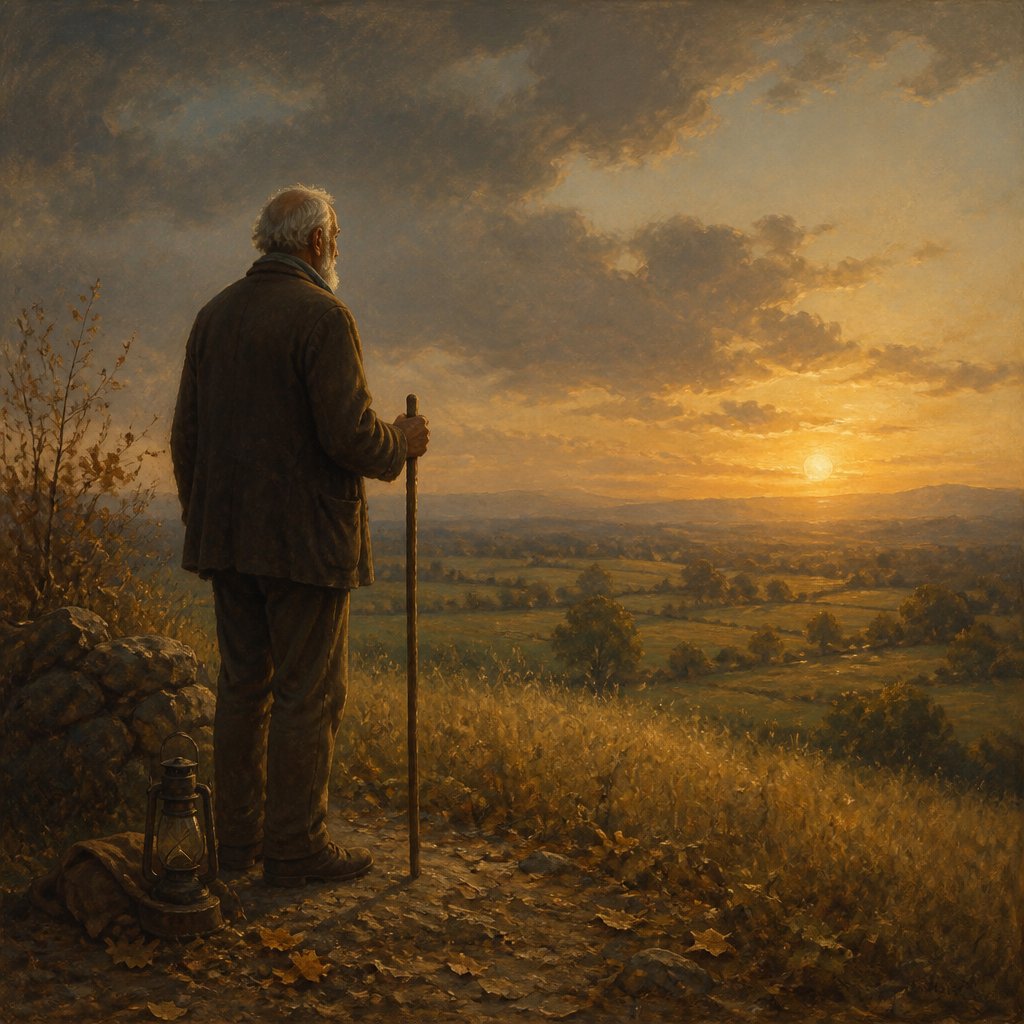
"Ecclesiastes 11:8" from the King James Version of the Bible reads: "But if a man live many years, and rejoice in them all; yet let him remember the days of darkness; for they shall be many. All that cometh is vanity."
The Book of Ecclesiastes, traditionally attributed to King Solomon, delves into the theme of the meaninglessness or vanity of human life. The verse 11:8 is a poignant reminder of the fleeting nature of life and the inevitability of darkness that is present in everyone's journey.
The verse begins by acknowledging the possibility of a person living many years and experiencing joy throughout their life. This seems to suggest that the accumulation of years and the pursuit of happiness are not condemned in themselves. However, the tone of the verse shifts as it draws attention to "the days of darkness" and the inevitability of their presence in the future.
The days of darkness in this context can be interpreted as times of hardship, suffering, and adversity that inevitably come with human existence. These periods of darkness can take many forms, including illness, loss, failure, and emotional pain. The verse serves as a sobering reminder that even in a life filled with many years and moments of joy, one cannot escape the reality of dark and difficult times.
The verse concludes with the phrase "All that cometh is vanity," which reinforces the overarching theme of the book. The word "vanity" in Ecclesiastes is often used to describe the fleeting and ultimately unsatisfying nature of human pursuits and achievements. Here, it serves as a reminder that regardless of the joys and successes experienced in life, the inevitability of darkness and the ultimate emptiness of human endeavor cannot be overlooked.
The verse 11:8 echoes the broader message of Ecclesiastes, which is a reflection on the complexities and perplexities of human existence. It reminds the reader of the transience of life and the futility of placing too much importance on temporary pleasures or accomplishments. Instead, the passage encourages a sober and realistic outlook on life, one that acknowledges the presence of darkness alongside moments of happiness and fulfillment.
In its broader context, Ecclesiastes explores the theme of the human condition and the search for meaning in a world that often appears chaotic and unjust. The author reflects on the fleeting nature of pleasure, the inevitability of suffering, and the limitations of human wisdom and understanding. This reflection leads to a sense of existential despair but also serves as a call to embrace humility, enjoy life's simple pleasures, and acknowledge the ultimate sovereignty of God.
The verse can also be seen as a commentary on the pursuit of worldly success and happiness. It warns against placing too much emphasis on the transient joys and prosperity of life, as they ultimately hold no lasting significance in the face of inevitable hardship and the ultimate vanity of all human accomplishments. This can be seen as a challenge to re-evaluate one's priorities and seek a deeper, more enduring source of fulfillment and purpose.
Symbolically, the concept of "darkness" in the verse can represent not only the hardships and trials of life but also the spiritual darkness of a life lived without God. The darkness can be seen as a metaphor for the lack of meaning and purpose that can arise when one's focus is solely on material successes and pleasures. In contrast, the call to "rejoice in them all" can be interpreted as an encouragement to find joy and contentment in the midst of life's challenges, rooted in a deeper understanding of the divine and an acceptance of the limitations of human understanding.
In conclusion, Ecclesiastes 11:8 offers a sobering reflection on the fleeting nature of human existence and the inevitability of darkness in life. It emphasizes the futility of placing too much importance on temporary pleasures and accomplishments and calls for a deeper, more enduring source of meaning and fulfillment. It serves as a reminder to approach life with humility, gratitude, and an acknowledgment of the ultimate sovereignty of God.
Have questions about Ecclesiastes 11:8?
Dive deeper into this scripture with Bible Chat — an AI-powered tool for exploring God's Word through conversation. Ask questions, get context, and grow in your understanding of the Bible.
Get Our Apps


Ecclesiastes 11:8 Artwork

Ecclesiastes 11:8 - "But if a man live many years, and rejoice in them all; yet let him remember the days of darkness; for they shall be many. All that cometh is vanity."
"But if a man live many years, and rejoice in them all; yet let him remember the days of darkness; for they shall be many. All that cometh is vanity." - Ecclesiastes 11:8

Ecclesiastes 8:11 - "Because sentence against an evil work is not executed speedily, therefore the heart of the sons of men is fully set in them to do evil."

Ecclesiastes 1:11

ecclesiastes 12:1-8

ecclesiastes 12:1-8

ecclesiastes 12:1-8

ecclesiastes 12:1-8

Ecclesiastes 3:7-8

ecclesiastes 12:1-8

Ecclesiastes 12:8 - "¶ Vanity of vanities, saith the preacher; all is vanity."

Ecclesiastes 7:11 - "¶ Wisdom is good with an inheritance: and by it there is profit to them that see the sun."

Ecclesiastes 10:11 - "Surely the serpent will bite without enchantment; and a babbler is no better."

Ecclesiastes 3:8 - "A time to love, and a time to hate; a time of war, and a time of peace."

Ecclesiastes 11:7 - "¶ Truly the light is sweet, and a pleasant thing it is for the eyes to behold the sun:"

Ecclesiastes 6:11 - "¶ Seeing there be many things that increase vanity, what is man the better?"

Ecclesiastes 8:2 - "I counsel thee to keep the king's commandment, and that in regard of the oath of God."
"Because sentence against an evil work is not executed speedily, therefore the heart of the sons of men is fully set in them to do evil." - Ecclesiastes 8:11

Ecclesiastes 8:7 - "For he knoweth not that which shall be: for who can tell him when it shall be?"

Ecclesiastes 11:1 - "Cast thy bread upon the waters: for thou shalt find it after many days."

Ecclesiastes 11:4 - "He that observeth the wind shall not sow; and he that regardeth the clouds shall not reap."

Ecclesiastes 8:6 - "¶ Because to every purpose there is time and judgment, therefore the misery of man is great upon him."

Ecclesiastes 9:8 - "Let thy garments be always white; and let thy head lack no ointment."

Ecclesiastes 12:11 - "The words of the wise are as goads, and as nails fastened by the masters of assemblies, which are given from one shepherd."

Ecclesiastes 4:11 - "Again, if two lie together, then they have heat: but how can one be warm alone?"

Ecclesiastes 8:4 - "Where the word of a king is, there is power: and who may say unto him, What doest thou?"

Ecclesiastes 7:8 - "Better is the end of a thing than the beginning thereof: and the patient in spirit is better than the proud in spirit."

Ecclesiastes 11:2 - "Give a portion to seven, and also to eight; for thou knowest not what evil shall be upon the earth."

Ecclesiastes 10:8 - "He that diggeth a pit shall fall into it; and whoso breaketh an hedge, a serpent shall bite him."

Ecclesiastes 5:11 - "When goods increase, they are increased that eat them: and what good is there to the owners thereof, saving the beholding of them with their eyes?"