What does Deuteronomy 8:2 mean?
"And thou shalt remember all the way which the LORD thy God led thee these forty years in the wilderness, to humble thee, and to prove thee, to know what was in thine heart, whether thou wouldest keep his commandments, or no." - Deuteronomy 8:2
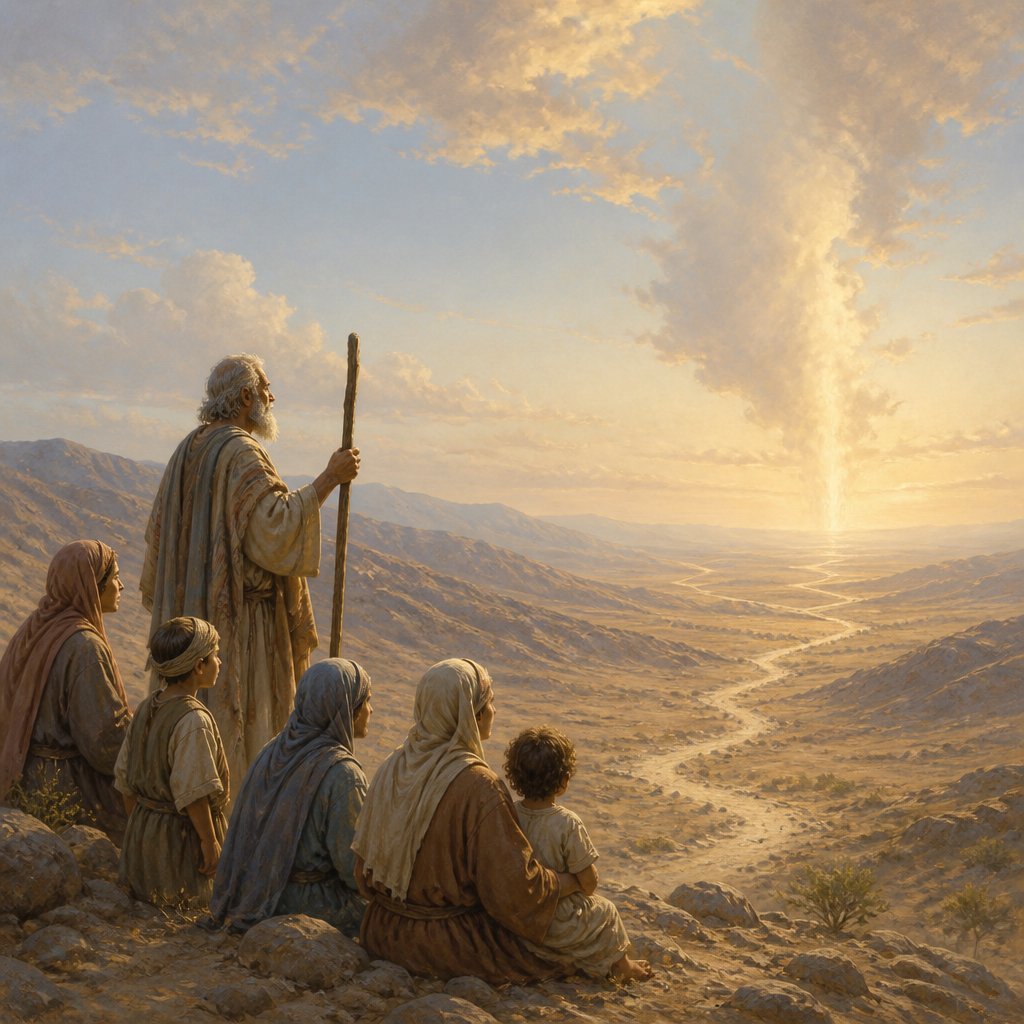
Deuteronomy 8:2 (KJV) states: "And thou shalt remember all the way which the Lord thy God led thee these forty years in the wilderness, to humble thee, and to prove thee, to know what was in thine heart, whether thou wouldest keep his commandments, or no."
This verse holds significant meaning within the larger context of the Book of Deuteronomy, as well as within the broader scope of the Bible as a whole. In order to fully understand the depth and importance of this verse, it is essential to consider the historical and cultural context, the themes it embodies, and the symbolic implications it carries.
The Book of Deuteronomy is essentially a farewell speech given by Moses to the Israelites before they enter the Promised Land. In this farewell address, Moses recounts the journey of the Israelites from their slavery in Egypt, through the wilderness, and their experiences with God along the way. The verse in question comes at a crucial point in this narrative, as it emphasizes the significance of the wilderness experience and the purpose behind it.
First and foremost, the verse speaks to the idea of remembrance. The Israelites are exhorted to remember the entire journey through the wilderness, during which the Lord led them. This remembrance serves as a reminder of God's faithfulness, provision, and guidance throughout their trials and tribulations. It is a call to reflect on the past and acknowledge the divine intervention that sustained them during their time in the wilderness.
Furthermore, the verse highlights the purpose behind the wilderness experience – to humble and prove the Israelites. The wilderness was a time of testing, refining, and character building for the nation of Israel. It served as a period of purification, during which their faith, obedience, and loyalty to God were put to the test. The verse emphasizes God's desire to know what was in their hearts and whether they would keep His commandments or not. This testing was a means of spiritual development and preparation for the challenges that lay ahead as they entered the Promised Land.
The theme of testing and refinement is a consistent motif throughout the Bible. In the New Testament, James 1:2-4 echoes a similar sentiment, stating that trials produce perseverance and maturity. The wilderness experience serves as a metaphor for the spiritual journey of believers, who must undergo trials and testing to grow in their faith and relationship with God. It is a reminder that difficulties and challenges are not arbitrary, but serve a larger purpose in shaping character and deepening dependence on God.
Moreover, the verse underscores the importance of obedience to God's commandments. The purpose of the testing in the wilderness was to reveal whether the Israelites would remain faithful and obedient to God's laws. This concept of obedience to divine command is a central theme throughout the Bible, emphasizing the covenantal relationship between God and His people. The wilderness experience was a pivotal moment in solidifying this covenant, as it tested the Israelites' fidelity to God's word.
Symbolically, the wilderness can be interpreted as a place of spiritual desolation and barrenness. It represents a state of emptiness, deprivation, and dependency. However, it is also a place of divine encounter, where God's presence and provision are manifest in unexpected ways. The wilderness becomes a metaphor for the spiritual journey of believers, who must confront their own weaknesses and inadequacies, and ultimately rely on God's grace and sustenance.
In conclusion, Deuteronomy 8:2 encapsulates the profound themes of remembrance, testing, obedience, and spiritual growth. It serves as a poignant reminder of God's faithfulness, the purpose behind trials and challenges, and the necessity of obedience to His commandments. This verse holds timeless significance, providing insight into the nature of the relationship between God and His people, and the transformative power of the wilderness experience. It calls upon believers to reflect on their own spiritual journey, to remember God's faithfulness in times of testing, and to remain steadfast in obedience to His word.
Have questions about Deuteronomy 8:2?
Dive deeper into this scripture with Bible Chat — an AI-powered tool for exploring God's Word through conversation. Ask questions, get context, and grow in your understanding of the Bible.
Get Our Apps


Deuteronomy 8:2 Artwork

Deuteronomy 8:2 - "And thou shalt remember all the way which the LORD thy God led thee these forty years in the wilderness, to humble thee, and to prove thee, to know what was in thine heart, whether thou wouldest keep his commandments, or no."
![Deuteronomy 8:2-3, 6-7, 9-15, 17 NLT
[2] Remember how the Lord your God led you through the wilderness for these forty years, humbling you and testing you to prove your character, and to find out whether or not you would obey his commands. [3] Yes, he humbled you by letting you go hungry and then feeding you with manna, a food previously unknown to you and your ancestors. He did it to teach you that people do not live by bread alone; rather, we live by every word that comes from the mouth of the Lord.
[6] “So obey the commands of the Lord your God by walking in his ways and fearing him. [7] For the Lord your God is bringing you into a good land of flowing streams and pools of water, with fountains and springs that gush out in the valleys and hills.
[9] It is a land where food is plentiful and nothing is lacking. It is a land where iron is as common as stone, and copper is abundant in the hills. [10] When you have eaten your fill, be sure to praise the Lord your God for the good land he has given you. [11] “But that is the time to be careful! Beware that in your plenty you do not forget the Lord your God and disobey his commands, regulations, and decrees that I am giving you today. [12] For when you have become full and prosperous and have built fine homes to live in, [13] and when your flocks and herds have become very large and your silver and gold have multiplied along with everything else, be careful! [14] Do not become proud at that time and forget the Lord your God, who rescued you from slavery in the land of Egypt. [15] Do not forget that he led you through the great and terrifying wilderness with its poisonous snakes and scorpions, where it was so hot and dry. He gave you water from the rock!
[17] He did all this so you would never say to yourself, ‘I have achieved this wealth with my own strength and energy.’](https://media.bible.art/cd603a8a-8a11-4e48-98c7-dfd91b579340-thumbnail.jpg)
Deuteronomy 8:2-3, 6-7, 9-15, 17 NLT [2] Remember how the Lord your God led you through the wilderness for these forty years, humbling you and testing you to prove your character, and to find out whether or not you would obey his commands. [3] Yes, he humbled you by letting you go hungry and then feeding you with manna, a food previously unknown to you and your ancestors. He did it to teach you that people do not live by bread alone; rather, we live by every word that comes from the mouth of the Lord. [6] “So obey the commands of the Lord your God by walking in his ways and fearing him. [7] For the Lord your God is bringing you into a good land of flowing streams and pools of water, with fountains and springs that gush out in the valleys and hills. [9] It is a land where food is plentiful and nothing is lacking. It is a land where iron is as common as stone, and copper is abundant in the hills. [10] When you have eaten your fill, be sure to praise the Lord your God for the good land he has given you. [11] “But that is the time to be careful! Beware that in your plenty you do not forget the Lord your God and disobey his commands, regulations, and decrees that I am giving you today. [12] For when you have become full and prosperous and have built fine homes to live in, [13] and when your flocks and herds have become very large and your silver and gold have multiplied along with everything else, be careful! [14] Do not become proud at that time and forget the Lord your God, who rescued you from slavery in the land of Egypt. [15] Do not forget that he led you through the great and terrifying wilderness with its poisonous snakes and scorpions, where it was so hot and dry. He gave you water from the rock! [17] He did all this so you would never say to yourself, ‘I have achieved this wealth with my own strength and energy.’
"And thou shalt remember all the way which the LORD thy God led thee these forty years in the wilderness, to humble thee, and to prove thee, to know what was in thine heart, whether thou wouldest keep his commandments, or no." - Deuteronomy 8:2

deuteronomy 31 8

Deuteronomy 31:8

Deuteronomy 8:8 - "A land of wheat, and barley, and vines, and fig trees, and pomegranates; a land of oil olive, and honey;"

Deuteronomy 2:8 - "And when we passed by from our brethren the children of Esau, which dwelt in Seir, through the way of the plain from Elath, and from Ezion-gaber, we turned and passed by the way of the wilderness of Moab."

Deuteronomy 23:8 - "The children that are begotten of them shall enter into the congregation of the LORD in their third generation."

Deuteronomy 2:2 - "And the LORD spake unto me, saying,"

Deuteronomy 27:8 - "And thou shalt write upon the stones all the words of this law very plainly."

Deuteronomy 18:8 - "They shall have like portions to eat, beside that which cometh of the sale of his patrimony."

Deuteronomy 29:8 - "And we took their land, and gave it for an inheritance unto the Reubenites, and to the Gadites, and to the half tribe of Manasseh."

Deuteronomy 8:12 - "Lest when thou hast eaten and art full, and hast built goodly houses, and dwelt therein;"

Deuteronomy 8:6 - "Therefore thou shalt keep the commandments of the LORD thy God, to walk in his ways, and to fear him."

Deuteronomy 8:4 - "Thy raiment waxed not old upon thee, neither did thy foot swell, these forty years."

Deuteronomy 9:8 - "Also in Horeb ye provoked the LORD to wrath, so that the LORD was angry with you to have destroyed you."

Deuteronomy 8:17 - "And thou say in thine heart, My power and the might of mine hand hath gotten me this wealth."

Deuteronomy 6:8 - "And thou shalt bind them for a sign upon thine hand, and they shall be as frontlets between thine eyes."

Deuteronomy 26:8 - "And the LORD brought us forth out of Egypt with a mighty hand, and with an outstretched arm, and with great terribleness, and with signs, and with wonders:"

"A land of wheat, and barley, and vines, and fig trees, and pomegranates; a land of oil olive, and honey;" - Deuteronomy 8:8

Deuteronomy 2:17 - "That the LORD spake unto me, saying,"

Deuteronomy 30:8 - "And thou shalt return and obey the voice of the LORD, and do all his commandments which I command thee this day."

Deuteronomy 8:13 - "And when thy herds and thy flocks multiply, and thy silver and thy gold is multiplied, and all that thou hast is multiplied;"

Deuteronomy 34:8 - "¶ And the children of Israel wept for Moses in the plains of Moab thirty days: so the days of weeping and mourning for Moses were ended."

Deuteronomy 25:8 - "Then the elders of his city shall call him, and speak unto him: and if he stand to it, and say, I like not to take her;"

Deuteronomy 8:7 - "For the LORD thy God bringeth thee into a good land, a land of brooks of water, of fountains and depths that spring out of valleys and hills;"

Deuteronomy 8:5 - "Thou shalt also consider in thine heart, that, as a man chasteneth his son, so the LORD thy God chasteneth thee."

Deuteronomy 3:8 - "And we took at that time out of the hand of the two kings of the Amorites the land that was on this side Jordan, from the river of Arnon unto mount Hermon;"

Deuteronomy 12:8 - "Ye shall not do after all the things that we do here this day, every man whatsoever is right in his own eyes."

"And the LORD spake unto me, saying," - Deuteronomy 2:2