What does Deuteronomy 7:3 mean?
"Neither shalt thou make marriages with them; thy daughter thou shalt not give unto his son, nor his daughter shalt thou take unto thy son." - Deuteronomy 7:3
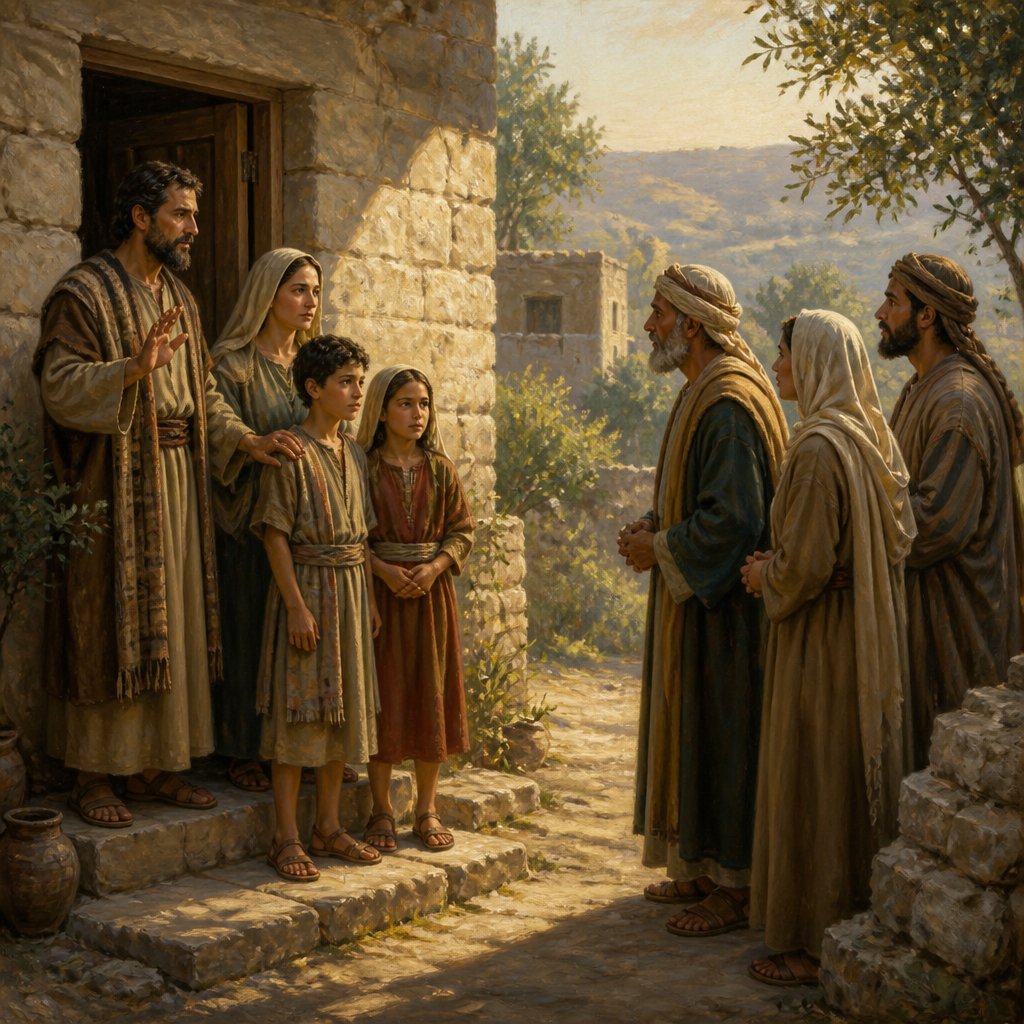
Deuteronomy 7:3 in the King James Version of the Bible reads, "Neither shalt thou make marriages with them; thy daughter thou shalt not give unto his son, nor his daughter shalt thou take unto thy son."
This verse is part of a larger passage in the book of Deuteronomy where Moses is giving the Israelites instructions and commandments from God as they prepare to enter the Promised Land. In this particular verse, God is instructing the Israelites not to intermarry with the surrounding pagan nations. This commandment was given to protect the spiritual integrity of the Israelites and to ensure that they remained faithful to God and did not adopt the pagan practices and beliefs of the surrounding nations.
The theme of this verse is the importance of maintaining spiritual purity and obedience to God. Throughout the Old Testament, the Israelites are repeatedly warned against intermarrying with the pagan nations, as this would lead them astray from God and His commandments. God's desire for His people to remain pure and faithful to Him is a central theme in the Bible, and this verse is a demonstration of that desire.
The context of this verse is important for understanding its significance. At the time when these commandments were given, the Israelites were in the process of conquering the Promised Land, and they were surrounded by pagan nations who worshipped false gods and practiced immoral and idolatrous rituals. God understood the corrupting influence that these pagan nations could have on the Israelites, and therefore, He prohibited intermarriage as a means of protection for His chosen people.
The symbolism in this verse is multi-layered. On a literal level, the prohibition against intermarriage with pagan nations served as a practical means of preserving the religious and cultural identity of the Israelites. Symbolically, it represents the larger spiritual principle of separation from the world and its corrupting influences. The Israelites were called to be a holy and set-apart people, dedicated to the worship of the one true God, and intermarriage with the pagan nations would have compromised that calling.
Furthermore, the prohibition against intermarriage carries symbolic significance in the larger biblical narrative. In the New Testament, the concept of spiritual purity and separation is emphasized in the context of believers being called out of the world and being made a part of the body of Christ. The apostle Paul, in his letters to the Corinthian and Ephesian churches, echoes the same sentiment of separation from the world and its influences.
In conclusion, Deuteronomy 7:3 carries deep spiritual significance in its commandment against intermarriage with pagan nations. It serves as a symbolic representation of God's desire for His people to remain pure and faithful to Him, and it emphasizes the importance of spiritual separation from the corrupting influences of the world. As believers, we are called to heed this principle and to remain dedicated to serving and worshipping the one true God, just as the Israelites were called to do so in the Old Testament.
Have questions about Deuteronomy 7:3?
Dive deeper into this scripture with Bible Chat — an AI-powered tool for exploring God's Word through conversation. Ask questions, get context, and grow in your understanding of the Bible.
Get Our Apps


Deuteronomy 7:3 Artwork

Deuteronomy 7:3 - "Neither shalt thou make marriages with them; thy daughter thou shalt not give unto his son, nor his daughter shalt thou take unto thy son."
"Neither shalt thou make marriages with them; thy daughter thou shalt not give unto his son, nor his daughter shalt thou take unto thy son." - Deuteronomy 7:3

Deuteronomy 3:7 - "But all the cattle, and the spoil of the cities, we took for a prey to ourselves."

"But all the cattle, and the spoil of the cities, we took for a prey to ourselves." - Deuteronomy 3:7

Deuteronomy 3:15 - "And I gave Gilead unto Machir."

Deuteronomy 3:23 - "And I besought the LORD at that time, saying,"

Deuteronomy 14:3 - "¶ Thou shalt not eat any abominable thing."

Deuteronomy 5:7 - "Thou shalt have none other gods before me."

Deuteronomy 3:29 - "So we abode in the valley over against Beth-peor."

Deuteronomy 28:3 - "Blessed shalt thou be in the city, and blessed shalt thou be in the field."

Deuteronomy 3:9 - "(Which Hermon the Sidonians call Sirion; and the Amorites call it Shenir;)"

Deuteronomy 34:3 - "And the south, and the plain of the valley of Jericho, the city of palm trees, unto Zoar."

Deuteronomy 19:7 - "Wherefore I command thee, saying, Thou shalt separate three cities for thee."

Deuteronomy 2:3 - "Ye have compassed this mountain long enough: turn you northward."

Deuteronomy 10:7 - "From thence they journeyed unto Gudgodah; and from Gudgodah to Jotbath, a land of rivers of waters."

Deuteronomy 11:7 - "But your eyes have seen all the great acts of the LORD which he did."

Deuteronomy 27:7 - "And thou shalt offer peace offerings, and shalt eat there, and rejoice before the LORD thy God."

Deuteronomy 7:21 - "Thou shalt not be affrighted at them: for the LORD thy God is among you, a mighty God and terrible."

Deuteronomy 29:3 - "The great temptations which thine eyes have seen, the signs, and those great miracles:"

Deuteronomy 3:22 - "Ye shall not fear them: for the LORD your God he shall fight for you."

Deuteronomy 21:7 - "And they shall answer and say, Our hands have not shed this blood, neither have our eyes seen it."

Deuteronomy 7:7 - "The LORD did not set his love upon you, nor choose you, because ye were more in number than any people; for ye were the fewest of all people:"

Deuteronomy 32:3 - "Because I will publish the name of the LORD: ascribe ye greatness unto our God."

Deuteronomy 7:17 - "If thou shalt say in thine heart, These nations are more than I; how can I dispossess them?"

Deuteronomy 7:11 - "Thou shalt therefore keep the commandments, and the statutes, and the judgments, which I command thee this day, to do them."

"And I besought the LORD at that time, saying," - Deuteronomy 3:23

"And I gave Gilead unto Machir." - Deuteronomy 3:15

Deuteronomy 3:3 - "So the LORD our God delivered into our hands Og also, the king of Bashan, and all his people: and we smote him until none was left to him remaining."

Deuteronomy 3:5 - "All these cities were fenced with high walls, gates, and bars; beside unwalled towns a great many."

Deuteronomy 7:14 - "Thou shalt be blessed above all people: there shall not be male or female barren among you, or among your cattle."