What does Deuteronomy 6:7 mean?
"And thou shalt teach them diligently unto thy children, and shalt talk of them when thou sittest in thine house, and when thou walkest by the way, and when thou liest down, and when thou risest up." - Deuteronomy 6:7
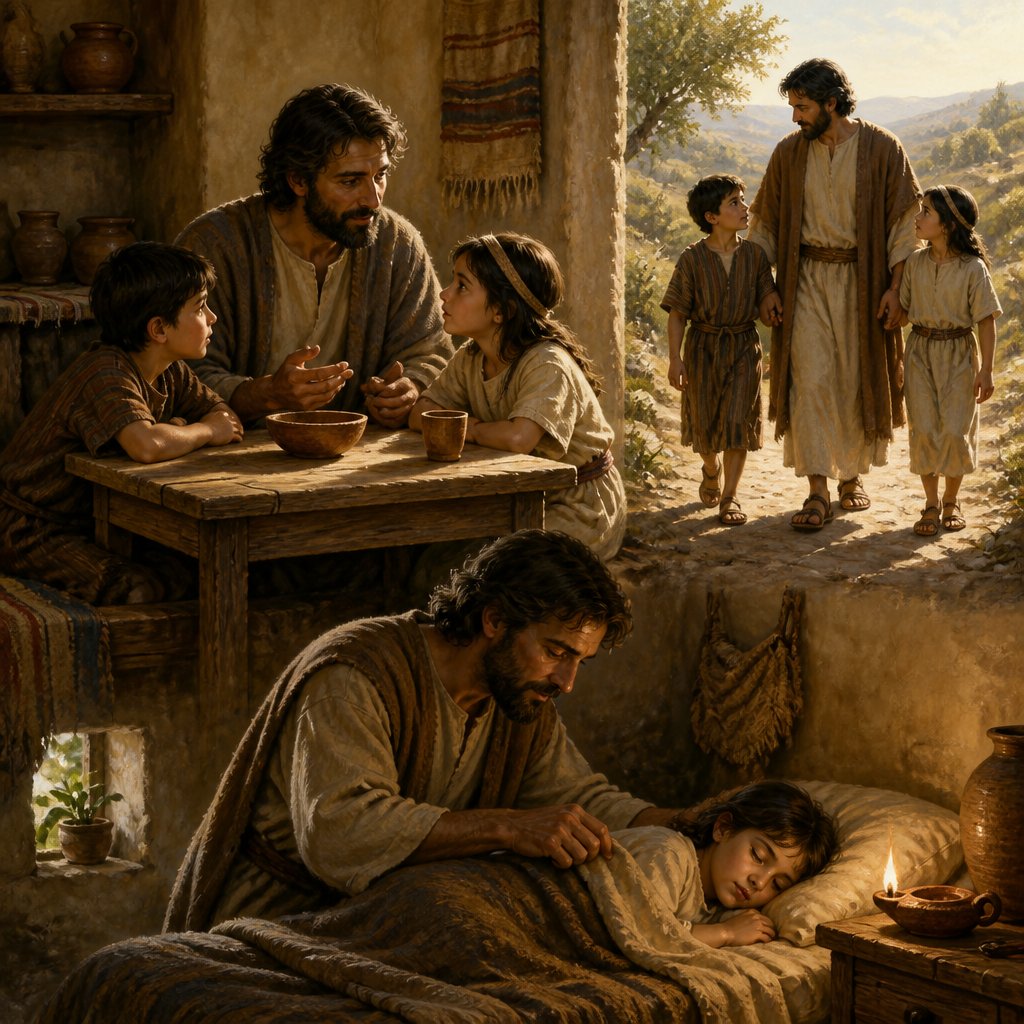
The Bible verse Deuteronomy 6:7 reads, "And thou shalt teach them diligently unto thy children, and shalt talk of them when thou sittest in thine house, and when thou walkest by the way, and when thou liest down, and when thou risest up." This verse is part of a passage known as the Shema, which is a central prayer in the Jewish tradition. The Shema is a declaration of faith and commitment to God, and it is recited twice daily by observant Jews.
The context of this verse is important for understanding its significance. In the broader context of the book of Deuteronomy, the Israelites are preparing to enter the Promised Land under the leadership of Moses. Before they enter, Moses delivers a series of speeches that recap the Israelites' journey from Egypt, the giving of the Ten Commandments, and various laws and commandments that the people are to follow once they enter the land. The Shema, including the verse in question, is a key element of Moses' teaching to the Israelites, emphasizing the importance of passing down God's commandments to future generations.
The verse's message is clear: the Israelites are instructed to diligently teach God's commandments to their children. The Hebrew word for "diligently" in this passage can also be translated as "repeat," emphasizing the need for continuous and persistent instruction. This teaching is not limited to formal education settings, but rather is intended to be woven into the fabric of daily life. The Israelites are to talk about God's commandments at home, as they travel, and as they go about their daily routines of resting and rising.
The themes of this verse include the transmission of religious and ethical values from one generation to the next. The verse reflects the importance of oral tradition and the passing down of wisdom and knowledge. It also underscores the idea that faith and religious practice should not be confined to specific times or places, but should permeate every aspect of life.
The verse also carries a symbolic significance. The act of passing down God's commandments to future generations represents the continuity and endurance of the Israelite faith. It reflects the idea that God's covenant with the Israelites is not just a one-time event, but an ongoing relationship that must be sustained and nurtured over time. The verse also conveys the belief that living in accordance with God's commandments is essential for the well-being and prosperity of the Israelite community.
In the broader context of the Christian tradition, this verse is often understood as a call to parents to raise their children in the faith and to actively incorporate religious teachings into family life. It emphasizes the responsibility of parents and elders in the faith community to pass down the teachings of the Bible to the next generation. This verse has been influential in shaping the understanding of education, child-rearing, and the role of religion in family life within the Christian tradition.
Overall, Deuteronomy 6:7 is a powerful and enduring message about the importance of passing down religious teachings and values to future generations. It emphasizes the centrality of God's commandments in the life of the Israelite community and underscores the ongoing nature of the covenant between God and his people. The verse continues to resonate with believers today as a reminder of the vital role of parents and elders in nurturing the faith of the next generation.
Have questions about Deuteronomy 6:7?
Dive deeper into this scripture with Bible Chat — an AI-powered tool for exploring God's Word through conversation. Ask questions, get context, and grow in your understanding of the Bible.
Get Our Apps


Deuteronomy 6:7 Artwork
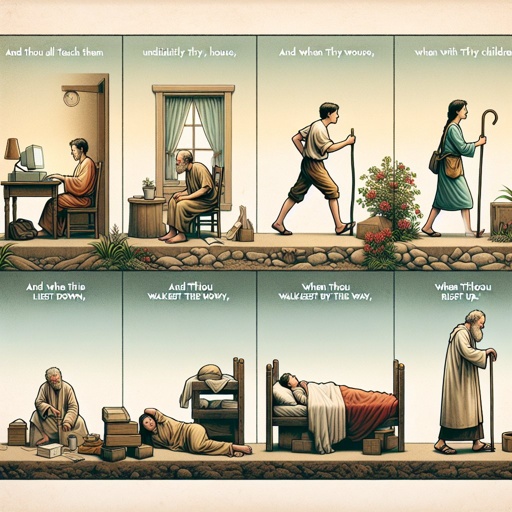
Deuteronomy 6:7 - "And thou shalt teach them diligently unto thy children, and shalt talk of them when thou sittest in thine house, and when thou walkest by the way, and when thou liest down, and when thou risest up."
"And thou shalt teach them diligently unto thy children, and shalt talk of them when thou sittest in thine house, and when thou walkest by the way, and when thou liest down, and when thou risest up." - Deuteronomy 6:7

Deuteronomy 7:6 - "For thou art an holy people unto the LORD thy God: the LORD thy God hath chosen thee to be a special people unto himself, above all people that are upon the face of the earth."

Deuteronomy 6:6-7 - "And these words, which I command thee this day, shall be in thine heart: And thou shalt teach them diligently unto thy children, and shalt talk of them when thou sittest in thine house, and when thou walkest by the way, and when thou liest down, and when thou risest up."

Deuteronomy 6:6 - "And these words, which I command thee this day, shall be in thine heart:"

Deuteronomy 34:5-6

Deuteronomy 6:4 - "Hear, O Israel: The LORD our God is one LORD:"

Deuteronomy 3:7 - "But all the cattle, and the spoil of the cities, we took for a prey to ourselves."

Deuteronomy 33:6 - "¶ Let Reuben live, and not die; and let not his men be few."

Deuteronomy 5:7 - "Thou shalt have none other gods before me."

Deuteronomy 23:6 - "Thou shalt not seek their peace nor their prosperity all thy days for ever."

Deuteronomy 6:16 - "¶ Ye shall not tempt the LORD your God, as ye tempted him in Massah."

Deuteronomy 6:9 - "And thou shalt write them upon the posts of thy house, and on thy gates."

Deuteronomy 6:19 - "To cast out all thine enemies from before thee, as the LORD hath spoken."

Deuteronomy 26:6 - "And the Egyptians evil entreated us, and afflicted us, and laid upon us hard bondage:"

Deuteronomy 19:7 - "Wherefore I command thee, saying, Thou shalt separate three cities for thee."

Deuteronomy 10:7 - "From thence they journeyed unto Gudgodah; and from Gudgodah to Jotbath, a land of rivers of waters."

Deuteronomy 11:7 - "But your eyes have seen all the great acts of the LORD which he did."

"And these words, which I command thee this day, shall be in thine heart:" - Deuteronomy 6:6

Deuteronomy 24:6 - "¶ No man shall take the nether or the upper millstone to pledge: for he taketh a man's life to pledge."

Deuteronomy 6:13 - "Thou shalt fear the LORD thy God, and serve him, and shalt swear by his name."

Deuteronomy 6:14 - "Ye shall not go after other gods, of the gods of the people which are round about you;"

Deuteronomy 27:7 - "And thou shalt offer peace offerings, and shalt eat there, and rejoice before the LORD thy God."

Deuteronomy 7:21 - "Thou shalt not be affrighted at them: for the LORD thy God is among you, a mighty God and terrible."

Deuteronomy 8:6 - "Therefore thou shalt keep the commandments of the LORD thy God, to walk in his ways, and to fear him."

Deuteronomy 21:7 - "And they shall answer and say, Our hands have not shed this blood, neither have our eyes seen it."

Deuteronomy 7:7 - "The LORD did not set his love upon you, nor choose you, because ye were more in number than any people; for ye were the fewest of all people:"

Acts 3:6-7

Acts 3:6-7

Acts 3:6-7