What does Deuteronomy 6:1 mean?
"Now these are the commandments, the statutes, and the judgments, which the LORD your God commanded to teach you, that ye might do them in the land whither ye go to possess it:" - Deuteronomy 6:1
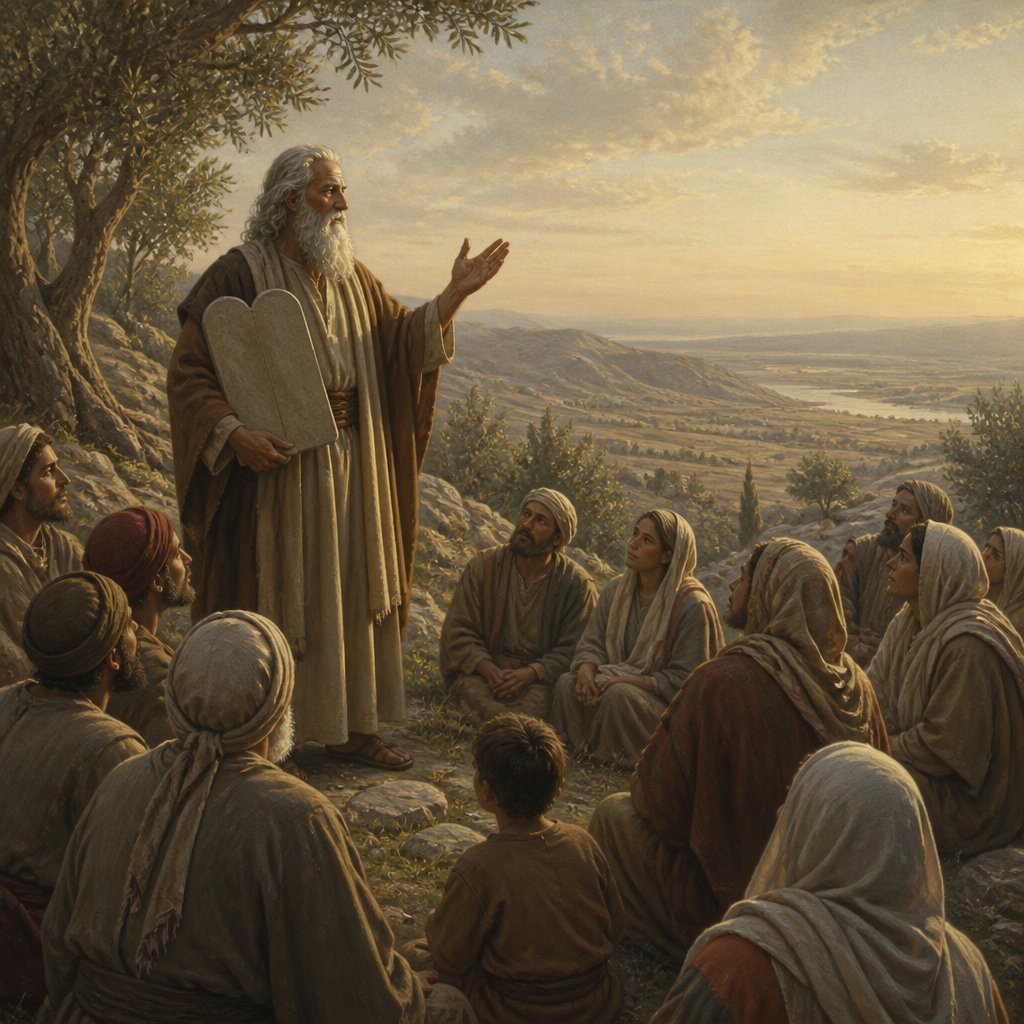
Deuteronomy 6:1 in the King James Version of the Bible reads, "Now these are the commandments, the statutes, and the judgments, which the Lord your God commanded to teach you, that ye might do them in the land whither ye go to possess it." This verse comes from the book of Deuteronomy, which is the fifth book of the Old Testament and is attributed to Moses.
The book of Deuteronomy is a collection of sermons given by Moses to the Israelites. In these sermons, Moses reminds the Israelites of the laws and commandments that God had given them and emphasizes the importance of following them. The verse from chapter 6 also serves as a reminder to the Israelites of their covenant with God and their responsibilities as his chosen people.
The verse begins by stating, "Now these are the commandments, the statutes, and the judgments." This is a reference to the laws and regulations that God had given to the Israelites, which were meant to guide them in their daily lives and govern their behavior. These commandments, statutes, and judgments were not arbitrary rules but were given by God to teach the Israelites how to live in a way that was pleasing to Him and beneficial for their own well-being.
The verse goes on to say that these commandments were given "to teach you, that ye might do them in the land whither ye go to possess it." This highlights the practical nature of the laws and commandments. They were not just theoretical principles but were meant to be put into practice in the Promised Land. The Israelites were to follow these commandments as they settled in the land that God had promised to give them.
The underlying theme of this verse is obedience to God's commandments. The Israelites were called to obey the laws and statutes that had been given to them by God. This obedience was not just a matter of outward conformity but was meant to be a reflection of their love and reverence for God. The book of Deuteronomy repeatedly emphasizes the importance of wholehearted devotion to God and adherence to His commandments.
This verse also highlights the relationship between the Israelites and God. The commandments, statutes, and judgments were given to the Israelites by God as a way to guide them and to set them apart as His chosen people. By obeying these laws, the Israelites were demonstrating their faithfulness and commitment to God. In return, God promised to bless and protect them as they entered and settled in the Promised Land.
The context of this verse is also important to consider. The book of Deuteronomy was written during a critical time in the history of the Israelites. They were on the cusp of entering the Promised Land after wandering in the wilderness for forty years. As they prepared to enter this new phase of their journey, Moses delivered these sermons to remind them of the covenant that they had with God and the importance of following His commandments.
Symbolism can also be found in this verse, particularly in the reference to the Promised Land. The Promised Land symbolizes the fulfillment of God's promises and the abundant blessings that He had in store for the Israelites. It represents a place of rest, security, and prosperity. As such, the commandments given in this verse were not just meant for survival in the land, but also for the flourishing and well-being of the Israelites.
Overall, Deuteronomy 6:1 serves as a reminder to the Israelites of the laws and commandments that God had given them and the importance of obeying them. It emphasizes the practical application of these commandments and the significance of their relationship with God. The verse also carries a message of hope and blessing as the Israelites prepared to enter the Promised Land.
Have questions about Deuteronomy 6:1?
Dive deeper into this scripture with Bible Chat — an AI-powered tool for exploring God's Word through conversation. Ask questions, get context, and grow in your understanding of the Bible.
Get Our Apps


Deuteronomy 6:1 Artwork

Deuteronomy 6:1 - "Now these are the commandments, the statutes, and the judgments, which the LORD your God commanded to teach you, that ye might do them in the land whither ye go to possess it:"
"Now these are the commandments, the statutes, and the judgments, which the LORD your God commanded to teach you, that ye might do them in the land whither ye go to possess it:" - Deuteronomy 6:1

Deuteronomy 1:6 - "The LORD our God spake unto us in Horeb, saying, Ye have dwelt long enough in this mount:"

Deuteronomy 6:6 - "And these words, which I command thee this day, shall be in thine heart:"

Deuteronomy 34:5-6

Deuteronomy 6:4 - "Hear, O Israel: The LORD our God is one LORD:"

Deuteronomy 33:6 - "¶ Let Reuben live, and not die; and let not his men be few."

Deuteronomy 23:6 - "Thou shalt not seek their peace nor their prosperity all thy days for ever."

Deuteronomy 6:16 - "¶ Ye shall not tempt the LORD your God, as ye tempted him in Massah."

Deuteronomy 6:9 - "And thou shalt write them upon the posts of thy house, and on thy gates."
"The LORD our God spake unto us in Horeb, saying, Ye have dwelt long enough in this mount:" - Deuteronomy 1:6

Deuteronomy 6:19 - "To cast out all thine enemies from before thee, as the LORD hath spoken."

Deuteronomy 26:6 - "And the Egyptians evil entreated us, and afflicted us, and laid upon us hard bondage:"

"And these words, which I command thee this day, shall be in thine heart:" - Deuteronomy 6:6

Deuteronomy 24:6 - "¶ No man shall take the nether or the upper millstone to pledge: for he taketh a man's life to pledge."

Deuteronomy 6:13 - "Thou shalt fear the LORD thy God, and serve him, and shalt swear by his name."

Deuteronomy 6:14 - "Ye shall not go after other gods, of the gods of the people which are round about you;"

Deuteronomy 8:6 - "Therefore thou shalt keep the commandments of the LORD thy God, to walk in his ways, and to fear him."

Deuteronomy 32:41

Deuteronomy 6:8 - "And thou shalt bind them for a sign upon thine hand, and they shall be as frontlets between thine eyes."

Deuteronomy 28:6 - "Blessed shalt thou be when thou comest in, and blessed shalt thou be when thou goest out."

Deuteronomy 21:6 - "And all the elders of that city, that are next unto the slain man, shall wash their hands over the heifer that is beheaded in the valley:"

Deuteronomy 32:43

Deuteronomy 5:6 - "¶ I am the LORD thy God, which brought thee out of the land of Egypt, from the house of bondage."

Deuteronomy 14:6 - "And every beast that parteth the hoof, and cleaveth the cleft into two claws, and cheweth the cud among the beasts, that ye shall eat."

Deuteronomy 6:12 - "Then beware lest thou forget the LORD, which brought thee forth out of the land of Egypt, from the house of bondage."

Deuteronomy 6:5 - "And thou shalt love the LORD thy God with all thine heart, and with all thy soul, and with all thy might."

Deuteronomy 9:6 - "Understand therefore, that the LORD thy God giveth thee not this good land to possess it for thy righteousness; for thou art a stiffnecked people."

Deuteronomy 6:25 - "And it shall be our righteousness, if we observe to do all these commandments before the LORD our God, as he hath commanded us."

Deuteronomy 34:6 - "And he buried him in a valley in the land of Moab, over against Beth-peor: but no man knoweth of his sepulchre unto this day."