What does Deuteronomy 4:1 mean?
"Now therefore hearken, O Israel, unto the statutes and unto the judgments, which I teach you, for to do them, that ye may live, and go in and possess the land which the LORD God of your fathers giveth you." - Deuteronomy 4:1
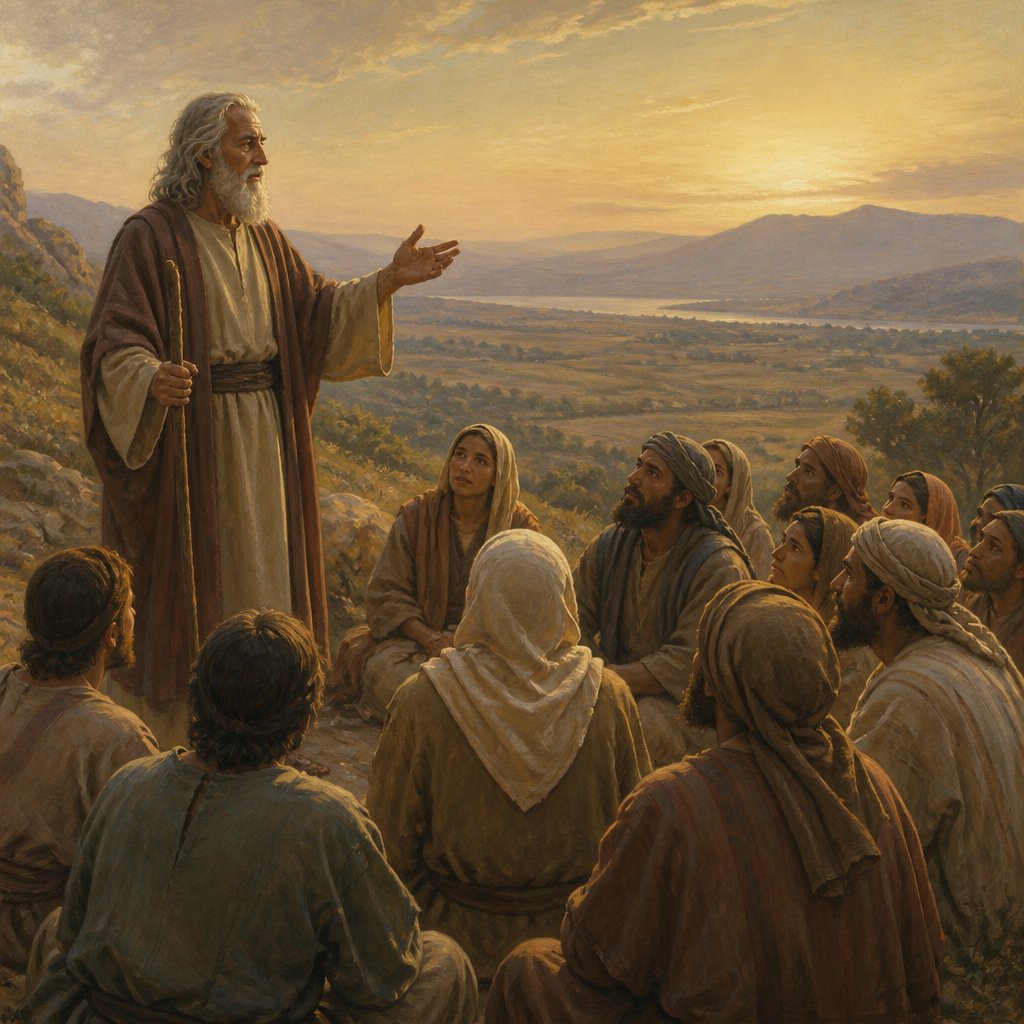
Deuteronomy 4:1 (KJV): "Now therefore hearken, O Israel, unto the statutes and unto the judgments, which I teach you, for to do them, that ye may live, and go in and possess the land which the Lord God of your fathers giveth you."
The book of Deuteronomy is often referred to as the "Second Law" or "Repeated Law," as it contains a restatement of the laws and commandments that were given to the Israelites at Mount Sinai. It is essentially Moses' farewell address to the people of Israel before they enter the Promised Land. In this verse, Moses implores the people to listen to and follow the statutes and judgments that God has given them, with the promise that by doing so, they will live and inherit the land that God has promised to their ancestors.
The verse begins with the word "hearken," which means to listen carefully and obey. This sets the tone for the rest of the verse, highlighting the importance of obedience to God's commands. It is a call to attentiveness and a reminder that the Israelites' future success and well-being are contingent upon their willingness to adhere to God's instructions.
The phrase "unto the statutes and unto the judgments" refers to the entirety of God's laws and decrees, including moral, civil, and ceremonial regulations. These laws were given to the Israelites as a means of establishing order, justice, and holiness within their society. By obeying these laws, the Israelites would be set apart as God's chosen people, reflecting His character and values to the surrounding nations.
The reason for following these statutes and judgments is made clear in the latter part of the verse: "that ye may live, and go in and possess the land." Obedience to God's commands was not merely a matter of religious duty; it was directly linked to the Israelites' physical and spiritual well-being. By obeying God, they would experience the fullness of life that He intended for them, including the inheritance of the land that was promised to them.
The land itself serves as a significant symbol throughout the Bible, particularly in the Old Testament. It represents God's faithfulness and provision for His people, as well as His promises of rest, abundance, and blessing. Possessing the land was a tangible expression of God's covenant with the Israelites, a fulfillment of His promise to them as their God.
In a broader sense, the verse also speaks to the universal principle of cause and effect. Obedience to God's commands leads to flourishing and fulfillment, while disobedience leads to destruction and death. This principle is consistent throughout the Bible, reflecting God's just and loving nature.
The context of this verse is crucial to understanding its significance. The Israelites were on the brink of entering the Promised Land after decades of wandering in the wilderness. They had witnessed God's faithfulness and provision throughout their journey, yet they still faced the choice of whether to trust and obey Him as they entered the new territory. Through Moses' exhortation, they were reminded of the importance of remaining faithful to God in order to fully experience the blessings that He had in store for them.
In summary, Deuteronomy 4:1 serves as a powerful reminder of the importance of obedience to God's commands. It emphasizes the connection between obedience and blessing, and it highlights the significance of the Promised Land as a symbol of God's faithfulness and provision. This verse continues to hold relevance for believers today, serving as a call to attentiveness and obedience to God's Word in order to experience His fullness and abundance in our lives.
Have questions about Deuteronomy 4:1?
Dive deeper into this scripture with Bible Chat — an AI-powered tool for exploring God's Word through conversation. Ask questions, get context, and grow in your understanding of the Bible.
Get Our Apps


Deuteronomy 4:1 Artwork

Deuteronomy 4:1 - "Now therefore hearken, O Israel, unto the statutes and unto the judgments, which I teach you, for to do them, that ye may live, and go in and possess the land which the LORD God of your fathers giveth you."
"Now therefore hearken, O Israel, unto the statutes and unto the judgments, which I teach you, for to do them, that ye may live, and go in and possess the land which the LORD God of your fathers giveth you." - Deuteronomy 4:1

Deuteronomy 34:1-4 – Moses views the Promised Land from Mount Nebo.

Deuteronomy 34:1-4 – Moses views the Promised Land from Mount Nebo.

Deuteronomy 34:1-4 – Moses views the Promised Land from Mount Nebo.

Deuteronomy 34:1-4 – Moses views the Promised Land from Mount Nebo.

Deuteronomy 34:1-4 – Moses views the Promised Land from Mount Nebo.

Deuteronomy 34:1-4 – Moses views the Promised Land from Mount Nebo.

Deuteronomy 34:1-4 – Moses views the Promised Land from Mount Nebo.

Deuteronomy 1:4 - "After he had slain Sihon the king of the Amorites, which dwelt in Heshbon, and Og the king of Bashan, which dwelt at Astaroth in Edrei:"

Deuteronomy 26:4-10

Deuteronomy 26:4-10

Deuteronomy 4:4 - "But ye that did cleave unto the LORD your God are alive every one of you this day."

Deuteronomy 4:44 - "¶ And this is the law which Moses set before the children of Israel:"

Deuteronomy 33:4 - "Moses commanded us a law, even the inheritance of the congregation of Jacob."

Deuteronomy 12:4 - "Ye shall not do so unto the LORD your God."

Deuteronomy 6:4 - "Hear, O Israel: The LORD our God is one LORD:"

Deuteronomy 4:24 - "For the LORD thy God is a consuming fire, even a jealous God."

Deuteronomy 4:41 - "¶ Then Moses severed three cities on this side Jordan toward the sunrising;"

Deuteronomy 14:4 - "These are the beasts which ye shall eat: the ox, the sheep, and the goat,"

Deuteronomy 25:4 - "¶ Thou shalt not muzzle the ox when he treadeth out the corn."

Deuteronomy 5:4 - "The LORD talked with you face to face in the mount out of the midst of the fire,"

Deuteronomy 4:17 - "The likeness of any beast that is on the earth, the likeness of any winged fowl that flieth in the air,"

Deuteronomy 32:41

Deuteronomy 4:18 - "The likeness of any thing that creepeth on the ground, the likeness of any fish that is in the waters beneath the earth:"

Deuteronomy 4:48 - "From Aroer, which is by the bank of the river Arnon, even unto mount Sion, which is Hermon,"

Deuteronomy 32:43

Deuteronomy 4:49 - "And all the plain on this side Jordan eastward, even unto the sea of the plain, under the springs of Pisgah."

Deuteronomy 4:43 - "Namely, Bezer in the wilderness, in the plain country, of the Reubenites; and Ramoth in Gilead, of the Gadites; and Golan in Bashan, of the Manassites."

Deuteronomy 20:4 - "For the LORD your God is he that goeth with you, to fight for you against your enemies, to save you."