What does Deuteronomy 32:34 mean?
"Is not this laid up in store with me, and sealed up among my treasures?" - Deuteronomy 32:34
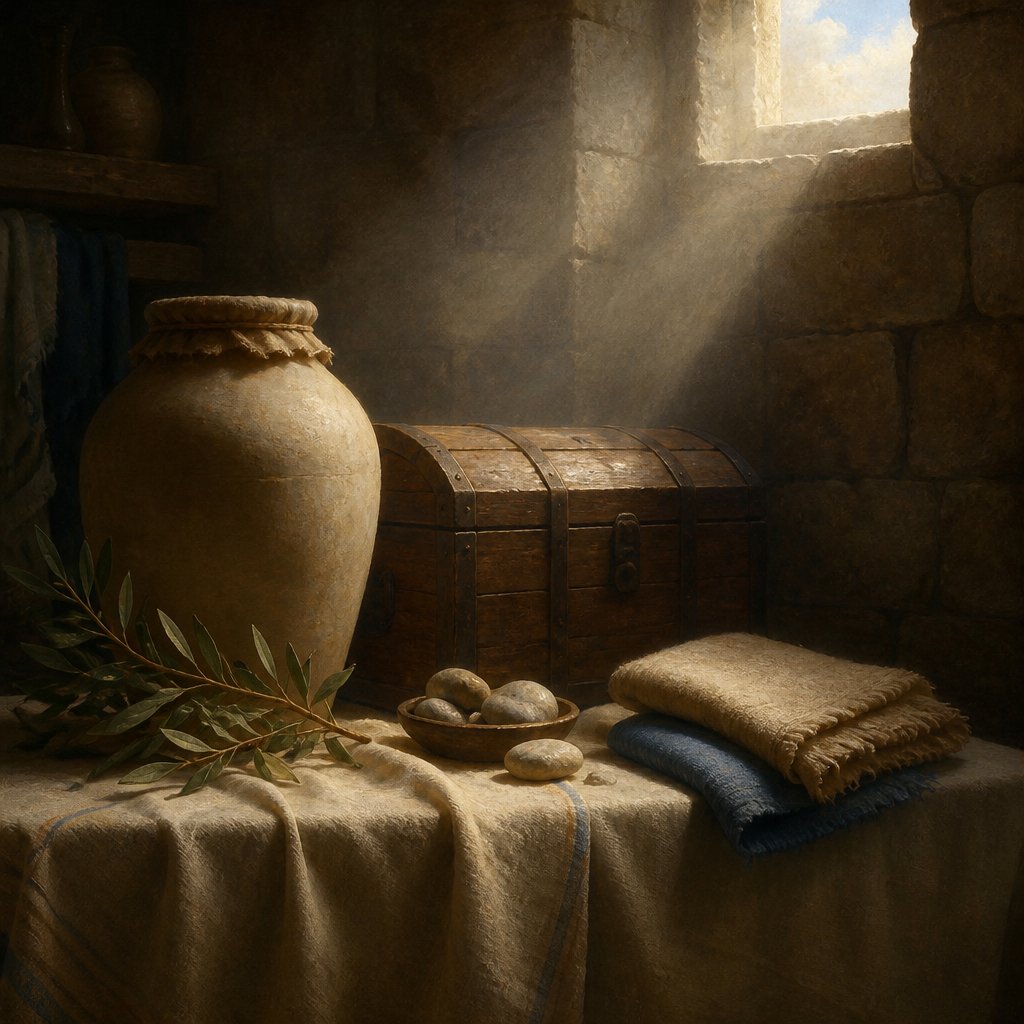
The verse Deuteronomy 32:34 in the King James Version (KJV) states, "Is not this laid up in store with me, and sealed up among my treasures?"
This verse is part of a song that Moses delivered to the Israelites just before his death. The song itself is a reflection on the faithfulness of God and a warning to the people of Israel about the consequences of turning away from Him. Deuteronomy 32:34 serves as a reminder that God is aware of all things and that He will ensure justice is served in keeping with His plan.
This particular verse draws attention to the sovereignty of God. The phrase "Is not this laid up in store with me" suggests that God is aware of everything that happens in the world. This includes the actions and intentions of individuals, both in the past and in the present. It highlights the belief that nothing escapes God's notice and that He keeps a record of everything.
The following phrase, "and sealed up among my treasures," further emphasizes the idea of God’s knowledge and oversight. In ancient times, important documents or items of value would be sealed and stored among a person's treasures to keep them safe. In a similar manner, the verse implies that God holds all things securely within His knowledge and that nothing is hidden from Him.
The context of this verse is important for understanding its implications. The song of Moses in Deuteronomy 32 is a powerful reminder of God's faithfulness and the consequences of forsaking Him. The preceding verses depict a God who is deeply involved in the lives of His people, providing for them and guiding them, only to be rejected by a faithless and perverse generation.
The imagery used in this verse reflects the themes of God's sovereignty, justice, and faithfulness. The idea that God stores up and seals things among His treasures suggests that nothing is beyond His reach or understanding. This speaks to the concept of divine omniscience—God's infinite knowledge and understanding of all things.
The verse also contains a sense of anticipation. The notion of something being "laid up in store" and "sealed up among my treasures" conveys the idea of awaiting a future time when these things will be brought forth and addressed. In this way, the verse hints at the certainty of God's judgment and justice, underscoring the belief that all will be held accountable for their actions.
Symbolically, the idea of God storing things among His treasures can be seen as a representation of His love and care for His people. It suggests that God values and holds close to His heart all that concerns His creation. At the same time, it serves as a reminder that nothing escapes His attention, and that ultimately, justice will be served according to His divine plan.
In conclusion, Deuteronomy 32:34 from the King James Version provides a profound insight into the nature of God and His interactions with His people. It serves as a reminder of God's sovereignty, justice, and faithfulness, and highlights the belief that nothing escapes His knowledge. The imagery used in the verse conveys a sense of anticipation and underscores the certainty of God's ultimate judgment. It is a powerful statement that affirms the belief in a God who is intimately involved in the lives of His people and who holds all things securely within His care and knowledge.
Have questions about Deuteronomy 32:34?
Dive deeper into this scripture with Bible Chat — an AI-powered tool for exploring God's Word through conversation. Ask questions, get context, and grow in your understanding of the Bible.
Get Our Apps


Deuteronomy 32:34 Artwork

Deuteronomy 32:34 - "Is not this laid up in store with me, and sealed up among my treasures?"
"Is not this laid up in store with me, and sealed up among my treasures?" - Deuteronomy 32:34

Deuteronomy 32:42

Deuteronomy 32:41

Deuteronomy 32:43

Deuteronomy 32:43

Deuteronomy 32:32 - "For their vine is of the vine of Sodom, and of the fields of Gomorrah: their grapes are grapes of gall, their clusters are bitter:"

Numbers 32:34 - "¶ And the children of Gad built Dibon, and Ataroth, and Aroer,"

Deuteronomy 34:5-6

Jeremiah 32:34 - "But they set their abominations in the house, which is called by my name, to defile it."

Deuteronomy 34:1-4 – Moses views the Promised Land from Mount Nebo.

Deuteronomy 34:1-4 – Moses views the Promised Land from Mount Nebo.

Deuteronomy 34:1-4 – Moses views the Promised Land from Mount Nebo.

Deuteronomy 1:34 - "And the LORD heard the voice of your words, and was wroth, and sware, saying,"

Deuteronomy 34:1-4 – Moses views the Promised Land from Mount Nebo.

Deuteronomy 34:1-4 – Moses views the Promised Land from Mount Nebo.

Deuteronomy 32:33 - "Their wine is the poison of dragons, and the cruel venom of asps."

Deuteronomy 34:3 - "And the south, and the plain of the valley of Jericho, the city of palm trees, unto Zoar."

Deuteronomy 32:48 - "And the LORD spake unto Moses that selfsame day, saying,"

Deuteronomy 32:28 - "For they are a nation void of counsel, neither is there any understanding in them."

Deuteronomy 34:1-4 – Moses views the Promised Land from Mount Nebo.

Deuteronomy 34:1-4 – Moses views the Promised Land from Mount Nebo.

Deuteronomy 32:9 - "For the LORD'S portion is his people; Jacob is the lot of his inheritance."

Deuteronomy 32:45 - "And Moses made an end of speaking all these words to all Israel:"

Deuteronomy 1:32 - "Yet in this thing ye did not believe the LORD your God,"

Deuteronomy 32:37 - "And he shall say, Where are their gods, their rock in whom they trusted,"

Deuteronomy 32:29 - "O that they were wise, that they understood this, that they would consider their latter end!"

Deuteronomy 32:31 - "For their rock is not as our Rock, even our enemies themselves being judges."

Deuteronomy 32:12 - "So the LORD alone did lead him, and there was no strange god with him."

Deuteronomy 32:16 - "They provoked him to jealousy with strange gods, with abominations provoked they him to anger."