What does Deuteronomy 27:17 mean?
"Cursed be he that removeth his neighbour's landmark. And all the people shall say, Amen." - Deuteronomy 27:17
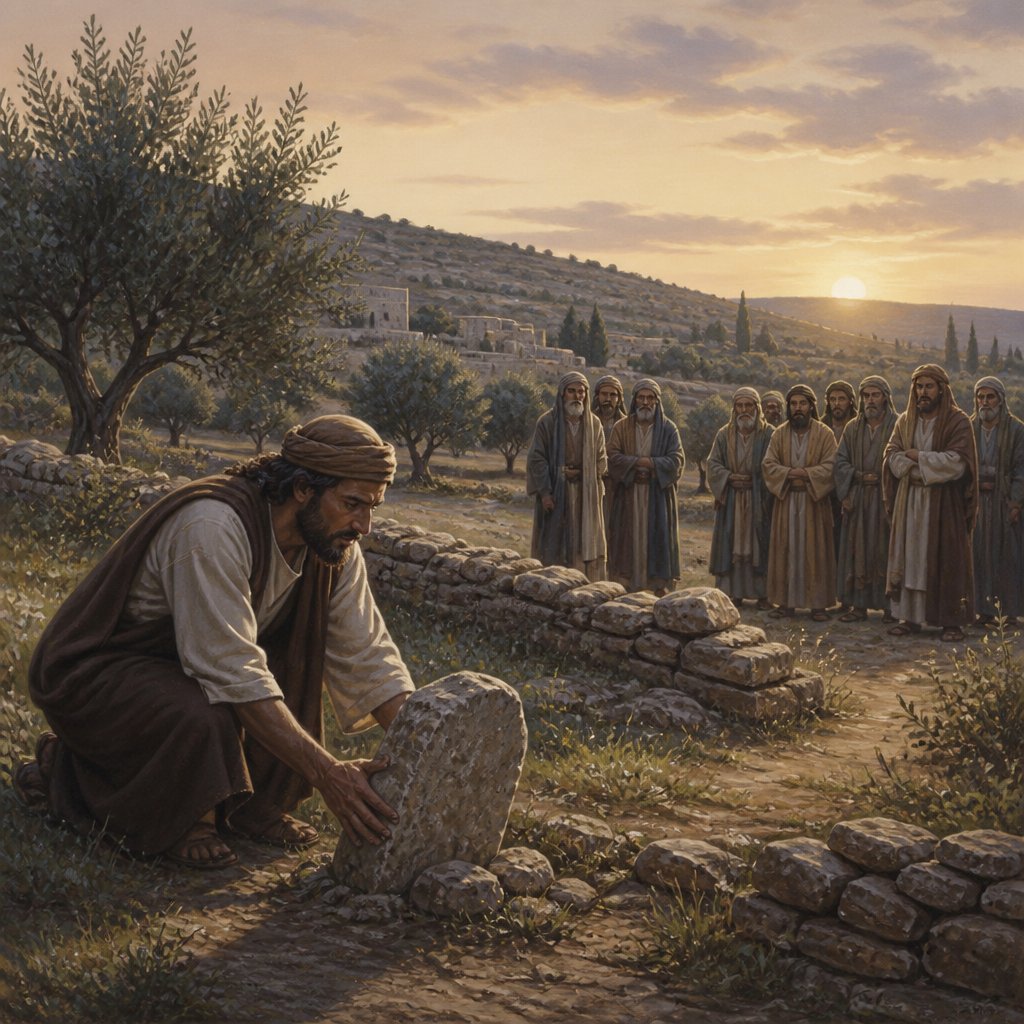
Deuteronomy 27:17 (KJV) says, "Cursed be he that removeth his neighbour's landmark. And all the people shall say, Amen." This verse is a part of the laws and commands given to the Israelites by Moses before they entered the Promised Land. It reflects the importance of respecting boundaries and property rights, and carries a moral lesson about the consequences of dishonesty and injustice.
In the context of the broader passage, Deuteronomy 27 records the instructions for the Israelites to gather on Mount Ebal and Mount Gerizim after entering the Promised Land. There, they were to build an altar, offer sacrifices to the Lord, and inscribe the Law on large stones. The people were also to recite blessings and curses for obedience and disobedience to the commandments. It was a solemn and public declaration of their commitment to following God's laws and the consequences of failing to do so.
The specific verse, Deuteronomy 27:17, addresses the issue of moving a neighbor's landmark. Landmarks were used in ancient times to delineate property boundaries, and moving them was a form of dishonesty and theft. By cursing the one who removed their neighbor's landmark, God emphasized the importance of respecting property rights and the sanctity of personal boundaries. The act of moving a landmark was not just a physical violation of another person's property, but also a moral and ethical transgression against the neighbor and against God.
The verse concludes with the statement, "And all the people shall say, Amen." This served as an affirmation of agreement and support for the curses and blessings that were being pronounced. By saying "Amen," the people were acknowledging the justice and righteousness of God's laws and His authority to enforce them.
One of the key themes of this verse is the importance of honesty and integrity in dealing with others. It emphasizes the value of respecting others' property and boundaries, and the need to conduct oneself with fairness and righteousness. It also serves as a reminder that God cares about the actions and attitudes of His people, even in matters that might seem insignificant or inconsequential. The principle of respecting boundaries and property rights is a reflection of the broader concept of loving one's neighbor as oneself, a foundational principle in the Bible.
Another theme is the idea of accountability and consequences. The pronouncement of curses for those who violated their neighbor's property rights was a demonstration of the consequences of disobedience. It reinforced the idea that God's laws were not arbitrary, but rather had real and serious implications for those who disobeyed them. The public recitation of the blessings and curses at Mount Ebal and Mount Gerizim was intended to underscore the gravity of the covenant between God and His people and the serious implications of disobedience.
Moreover, there is a deeper spiritual and symbolic meaning to this verse. The concept of moving a neighbor's landmark can be seen as a metaphor for spiritual principles. In a spiritual sense, it can represent the temptation to compromise on moral and ethical boundaries, to take advantage of others, or to infringe on their rights for personal gain. The curse pronounced in this verse serves as a warning against such behavior and emphasizes the importance of upholding righteousness and justice in all aspects of life.
In conclusion, Deuteronomy 27:17 carries a timeless moral lesson about the value of honesty, integrity, and respect for others' property rights. It serves as a reminder of the importance of respecting boundaries, not just in a physical sense, but also in a moral and ethical sense. It underscores the principles of loving one's neighbor, accountability, and the consequences of disobedience. Ultimately, it highlights the significance of obedience to God's commandments and the moral and ethical standards that underpin them.
Have questions about Deuteronomy 27:17?
Dive deeper into this scripture with Bible Chat — an AI-powered tool for exploring God's Word through conversation. Ask questions, get context, and grow in your understanding of the Bible.
Get Our Apps


Deuteronomy 27:17 Artwork

Deuteronomy 27:17 - "Cursed be he that removeth his neighbour's landmark. And all the people shall say, Amen."
"Cursed be he that removeth his neighbour's landmark. And all the people shall say, Amen." - Deuteronomy 27:17

Deuteronomy 27:11 - "¶ And Moses charged the people the same day, saying,"

Acts 17:27

Proverbs 27:17

Proverbs 27:17

Deuteronomy 5:17 - "Thou shalt not kill."

Genesis 17-27

Deuteronomy 14:17 - "And the pelican, and the gier eagle, and the cormorant,"

Deuteronomy 27:14 - "¶ And the Levites shall speak, and say unto all the men of Israel with a loud voice,"

Deuteronomy 27:8 - "And thou shalt write upon the stones all the words of this law very plainly."

Deuteronomy 22:27 - "For he found her in the field, and the betrothed damsel cried, and there was none to save her."

Deuteronomy 2:17 - "That the LORD spake unto me, saying,"

Proverbs 17:27-28

Proverbs 17:27-28

Proverbs 17:27-28

Deuteronomy 29:27 - "And the anger of the LORD was kindled against this land, to bring upon it all the curses that are written in this book:"

Deuteronomy 27:21 - "Cursed be he that lieth with any manner of beast. And all the people shall say, Amen."

Deuteronomy 27:23 - "Cursed be he that lieth with his mother in law. And all the people shall say, Amen."

Deuteronomy 27:24 - "Cursed be he that smiteth his neighbour secretly. And all the people shall say, Amen."

Deuteronomy 28:17 - "Cursed shall be thy basket and thy store."

Deuteronomy 28:27 - "The LORD will smite thee with the botch of Egypt, and with the emerods, and with the scab, and with the itch, whereof thou canst not be healed."

Deuteronomy 27:19 - "Cursed be he that perverteth the judgment of the stranger, fatherless, and widow. And all the people shall say, Amen."

Deuteronomy 11:27 - "A blessing, if ye obey the commandments of the LORD your God, which I command you this day:"

Deuteronomy 27:18 - "Cursed be he that maketh the blind to wander out of the way. And all the people shall say, Amen."

2 Samuel 1. 17-27

Deuteronomy 27:26 - "Cursed be he that confirmeth not all the words of this law to do them. And all the people shall say, Amen."

Deuteronomy 27:16 - "Cursed be he that setteth light by his father or his mother. And all the people shall say, Amen."

Deuteronomy 27:7 - "And thou shalt offer peace offerings, and shalt eat there, and rejoice before the LORD thy God."

Deuteronomy 27:25 - "Cursed be he that taketh reward to slay an innocent person. And all the people shall say, Amen."