What does Deuteronomy 27:13 mean?
"And these shall stand upon mount Ebal to curse; Reuben, Gad, and Asher, and Zebulun, Dan, and Naphtali." - Deuteronomy 27:13
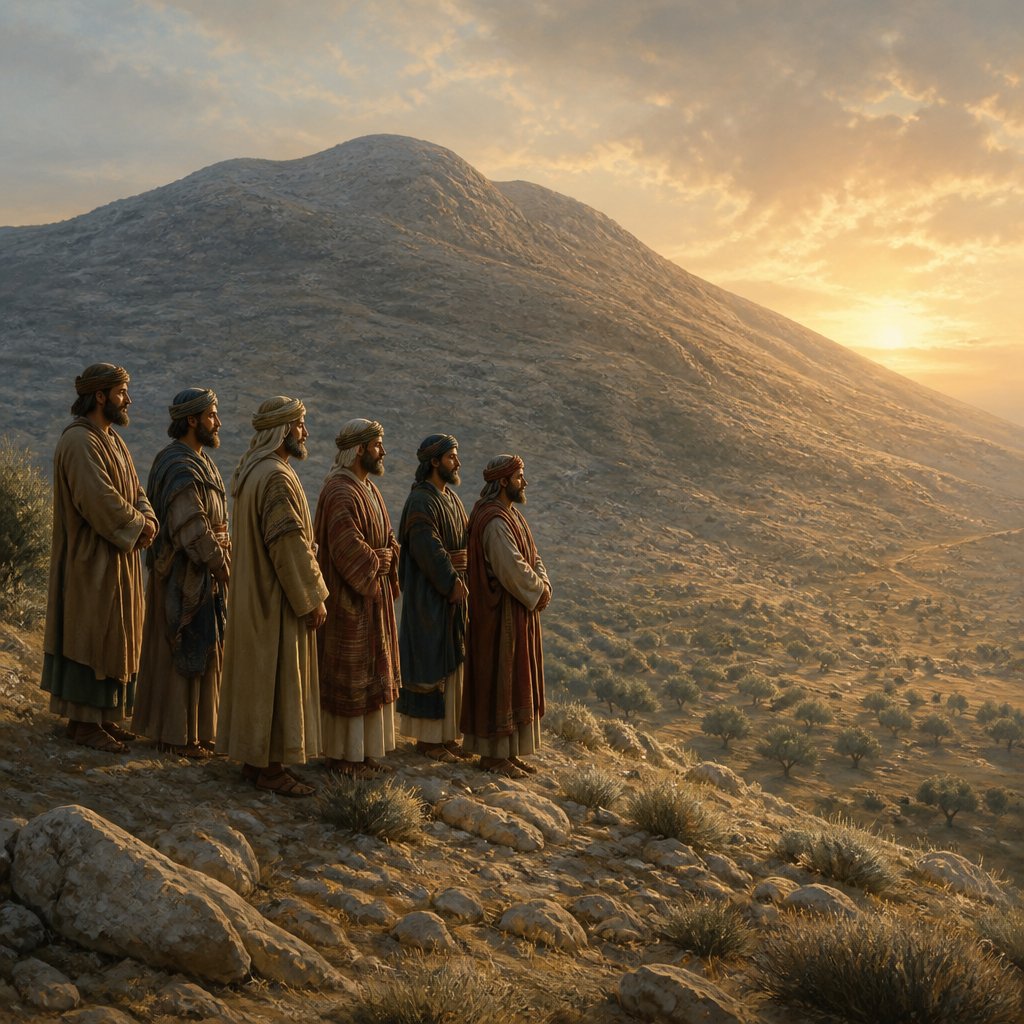
Deuteronomy 27:13 (KJV) says, "And these shall stand upon mount Ebal to curse; Reuben, Gad, and Asher, and Zebulun, Dan, and Naphtali."
The book of Deuteronomy is a significant part of the Old Testament, as it consists of the final speeches of Moses to the Israelites before they enter the Promised Land. In this verse, Moses is instructing the Israelites about the ritual of blessing and cursing that they are to perform upon entering the land. It is a crucial moment in the history of the Israelites, as they are about to inherit the land that God had promised to their ancestors.
The setting of the verse is significant, as it takes place on Mount Ebal, one of the two mountains upon which the Israelites were to perform this ritual. This ritual was meant as a reminder to the Israelites of the consequences of their obedience or disobedience to God's laws. The six tribes mentioned in the verse are to stand on Mount Ebal to pronounce curses. This act would emphasize the seriousness of obeying God's law and the consequences of disobedience. It serves as a warning to the Israelites of the dire outcomes of straying from God's commandments.
The symbolic significance of the six tribes standing on Mount Ebal to curse is profound. It signifies the entire nation of Israel acknowledging the consequences of disobedience and the necessity of walking in obedience to God. The specific tribes mentioned represent different aspects of the Israelite community. This serves to symbolize that all members of the society are equally accountable for their obedience to God's commands.
The act of cursing in this context is not meant as an act of malice or ill-will towards these tribes, but rather as a solemn reminder of the repercussions of turning away from God. It is a demonstration of the severity of the consequences of sin, ultimately driving home the point that obedience to God's law is crucial for the prosperity and well-being of the community.
The broader theme of the verse is the importance of obedience to God's commands. Throughout the Bible, the theme of obedience is a recurring one, as it underscores the relationship between God and His people. Obedience to God's laws is shown as the key to living a blessed and prosperous life, while disobedience leads to curses and hardship. This theme of obedience and its consequences is a central focus in the book of Deuteronomy, as Moses continually urges the Israelites to follow God's laws faithfully.
The verse also serves a historical context, as it marks a pivotal moment in the history of the Israelites. It is a reminder of the covenant between God and His people, and the significance of faithfully upholding that covenant.
In conclusion, Deuteronomy 27:13 (KJV) holds deep symbolism and meaning within its context. It serves as a reminder of the importance of obedience to God's commands and the consequences of straying from His path. The setting, the specific tribes mentioned, and the act of cursing all contribute to the profound significance of this verse. It stands as a testament to the enduring message of obedience and the covenant between God and His people.
Have questions about Deuteronomy 27:13?
Dive deeper into this scripture with Bible Chat — an AI-powered tool for exploring God's Word through conversation. Ask questions, get context, and grow in your understanding of the Bible.
Get Our Apps


Deuteronomy 27:13 Artwork

Deuteronomy 27:13 - "And these shall stand upon mount Ebal to curse; Reuben, Gad, and Asher, and Zebulun, Dan, and Naphtali."
"And these shall stand upon mount Ebal to curse; Reuben, Gad, and Asher, and Zebulun, Dan, and Naphtali." - Deuteronomy 27:13

Deuteronomy 27:11 - "¶ And Moses charged the people the same day, saying,"

Deuteronomy 27:14 - "¶ And the Levites shall speak, and say unto all the men of Israel with a loud voice,"

Deuteronomy 27:8 - "And thou shalt write upon the stones all the words of this law very plainly."

Deuteronomy 22:27 - "For he found her in the field, and the betrothed damsel cried, and there was none to save her."

Deuteronomy 29:27 - "And the anger of the LORD was kindled against this land, to bring upon it all the curses that are written in this book:"

Deuteronomy 27:21 - "Cursed be he that lieth with any manner of beast. And all the people shall say, Amen."

Deuteronomy 27:17 - "Cursed be he that removeth his neighbour's landmark. And all the people shall say, Amen."

Deuteronomy 27:23 - "Cursed be he that lieth with his mother in law. And all the people shall say, Amen."

Deuteronomy 27:24 - "Cursed be he that smiteth his neighbour secretly. And all the people shall say, Amen."

Deuteronomy 28:27 - "The LORD will smite thee with the botch of Egypt, and with the emerods, and with the scab, and with the itch, whereof thou canst not be healed."

Deuteronomy 27:19 - "Cursed be he that perverteth the judgment of the stranger, fatherless, and widow. And all the people shall say, Amen."

Deuteronomy 11:27 - "A blessing, if ye obey the commandments of the LORD your God, which I command you this day:"

Deuteronomy 27:18 - "Cursed be he that maketh the blind to wander out of the way. And all the people shall say, Amen."

Deuteronomy 27:26 - "Cursed be he that confirmeth not all the words of this law to do them. And all the people shall say, Amen."

Deuteronomy 27:16 - "Cursed be he that setteth light by his father or his mother. And all the people shall say, Amen."

Deuteronomy 27:7 - "And thou shalt offer peace offerings, and shalt eat there, and rejoice before the LORD thy God."

Deuteronomy 27:25 - "Cursed be he that taketh reward to slay an innocent person. And all the people shall say, Amen."

Luke 13:28-27

Luke 13:28-27

Psalm 27:13-14

Luke 13:28-27

Deuteronomy 27:1 - "And Moses with the elders of Israel commanded the people, saying, Keep all the commandments which I command you this day."

"¶ And Moses charged the people the same day, saying," - Deuteronomy 27:11

Deuteronomy 14:13 - "And the glede, and the kite, and the vulture after his kind,"

Deuteronomy 18:13 - "Thou shalt be perfect with the LORD thy God."

Deuteronomy 9:27 - "Remember thy servants, Abraham, Isaac, and Jacob; look not unto the stubbornness of this people, nor to their wickedness, nor to their sin:"
Deuteronomy 14:27 - "And the Levite that is within thy gates; thou shalt not forsake him; for he hath no part nor inheritance with thee."

Deuteronomy 17:13 - "And all the people shall hear, and fear, and do no more presumptuously."