What does Deuteronomy 24:6 mean?
"¶ No man shall take the nether or the upper millstone to pledge: for he taketh a man's life to pledge." - Deuteronomy 24:6
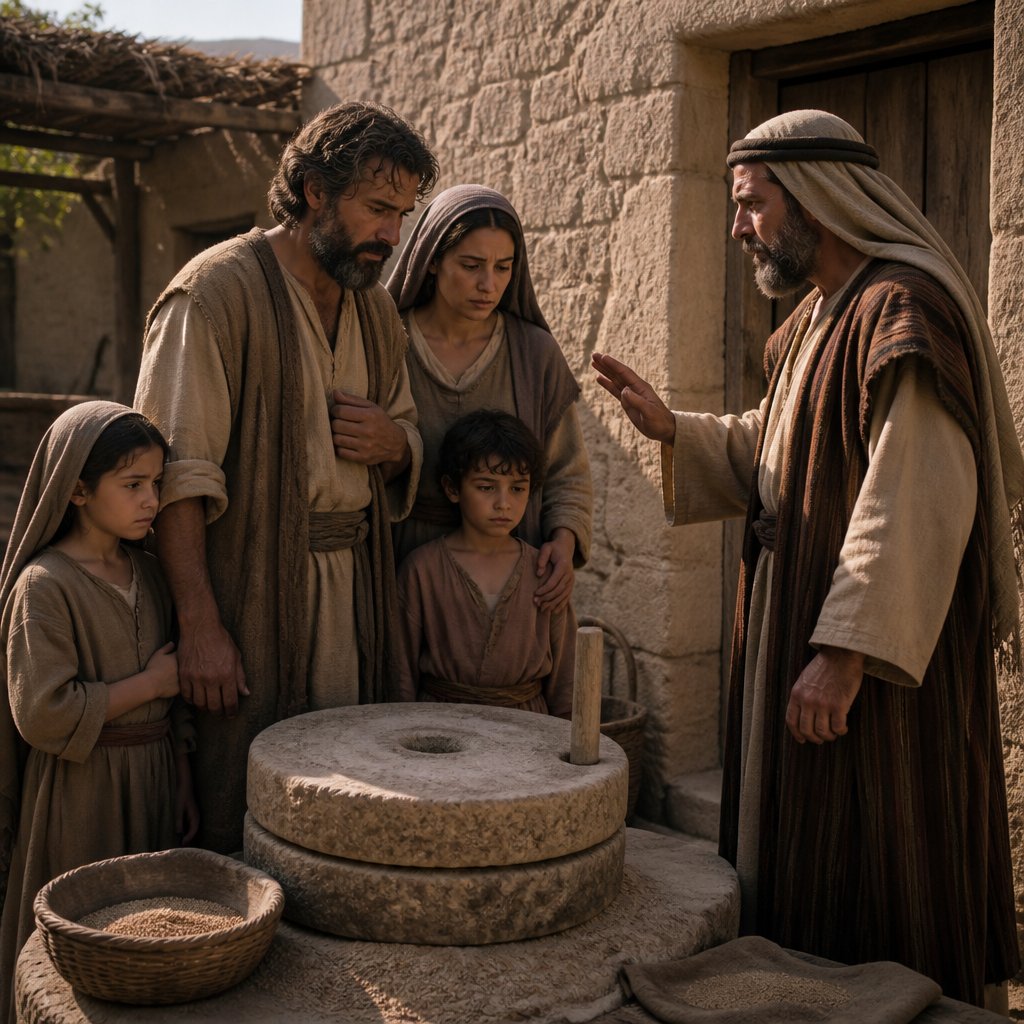
Deuteronomy 24:6 in the King James Version of the Bible reads, "No man shall take the nether or the upper millstone to pledge: for he taketh a man's life to pledge." This verse appears in a larger section of Deuteronomy that deals with various laws and regulations for the Israelites to follow in their everyday lives. This specific verse addresses the issue of taking a millstone as a pledge for a debt, and it carries with it a deeper meaning and significance that is worth exploring.
In order to fully understand the meaning and commentary of this verse, it is important to delve into the historical and cultural context in which it was written. During the time when Deuteronomy was written, the practice of taking items of value as collateral for debts was common. A millstone, in particular, was an essential tool for grinding grain and was thus valuable to a household. By taking someone's millstone as a pledge, their ability to provide food for their family would be severely compromised. Additionally, the act of taking a millstone as a pledge was seen as taking a person's life, as it would have significant consequences for their well-being and livelihood.
The verse emphasizes the sanctity of human life and the importance of compassion and empathy towards others, especially in the context of economic dealings. It serves as a reminder to the Israelites that they should not exploit their fellow brothers and sisters, but rather, treat them with dignity and respect. The act of taking a millstone as a pledge would have been a severe form of oppression and would have caused great hardship for the individual and their family. By prohibiting this practice, the verse reinforces the broader theme of justice and mercy that is prevalent throughout the Bible.
The symbolism present in this verse is also significant. The millstone can be seen as a representation of a person's means of sustenance and livelihood. By taking it as a pledge, it not only causes immediate hardship for the individual, but also jeopardizes their long-term well-being. This serves as a powerful metaphor for the broader message of the verse, which is to consider the impact of our actions on others and to act with compassion and understanding.
Furthermore, the verse also highlights the interconnectedness of the community and the responsibility that each individual has towards their neighbors. In taking a millstone as a pledge, the person effectively disrupts the communal fabric and jeopardizes the well-being of the entire community. The verse encourages individuals to consider the broader implications of their actions and to prioritize the welfare of others.
In a broader theological sense, this verse can also be viewed through the lens of the gospel and the message of Christ. Jesus taught about the importance of loving our neighbors as ourselves and caring for the vulnerable and marginalized in society. By prohibiting the practice of taking a millstone as a pledge, the verse aligns with the teachings of Jesus and emphasizes the value of human life and the importance of treating others with compassion and empathy.
In conclusion, Deuteronomy 24:6 carries with it a deep and profound meaning that extends beyond its literal context. It serves as a reminder to act with justice, mercy, and compassion towards others, and to consider the impact of our actions on the well-being of the community. The verse continues to resonate as a powerful ethical and moral teaching that remains pertinent in today's society.
Have questions about Deuteronomy 24:6?
Dive deeper into this scripture with Bible Chat — an AI-powered tool for exploring God's Word through conversation. Ask questions, get context, and grow in your understanding of the Bible.
Get Our Apps


Deuteronomy 24:6 Artwork

Deuteronomy 24:6 - "¶ No man shall take the nether or the upper millstone to pledge: for he taketh a man's life to pledge."
"¶ No man shall take the nether or the upper millstone to pledge: for he taketh a man's life to pledge." - Deuteronomy 24:6

Deuteronomy 6:24 - "And the LORD commanded us to do all these statutes, to fear the LORD our God, for our good always, that he might preserve us alive, as it is at this day."

Deuteronomy 24:12 - "And if the man be poor, thou shalt not sleep with his pledge:"

Deuteronomy 4:24 - "For the LORD thy God is a consuming fire, even a jealous God."

Deuteronomy 12:24 - "Thou shalt not eat it; thou shalt pour it upon the earth as water."

Deuteronomy 6:6 - "And these words, which I command thee this day, shall be in thine heart:"

Deuteronomy 1:24 - "And they turned and went up into the mountain, and came unto the valley of Eshcol, and searched it out."

Deuteronomy 9:24 - "Ye have been rebellious against the LORD from the day that I knew you."

Deuteronomy 27:24 - "Cursed be he that smiteth his neighbour secretly. And all the people shall say, Amen."

Deuteronomy 34:5-6

Deuteronomy 24:17 - "¶ Thou shalt not pervert the judgment of the stranger, nor of the fatherless; nor take a widow's raiment to pledge:"

Deuteronomy 24:2 - "And when she is departed out of his house, she may go and be another man's wife."
"And the LORD commanded us to do all these statutes, to fear the LORD our God, for our good always, that he might preserve us alive, as it is at this day." - Deuteronomy 6:24

Matthew 6:24

Matthew 6:24

Matthew 6:24

Matthew 6:24

Genesis 24-6

Deuteronomy 24:21 - "When thou gatherest the grapes of thy vineyard, thou shalt not glean it afterward: it shall be for the stranger, for the fatherless, and for the widow."

Deuteronomy 24:22 - "And thou shalt remember that thou wast a bondman in the land of Egypt: therefore I command thee to do this thing."

Deuteronomy 31:24 - "¶ And it came to pass, when Moses had made an end of writing the words of this law in a book, until they were finished,"

Deuteronomy 6:4 - "Hear, O Israel: The LORD our God is one LORD:"

2 kings 6:24

Deuteronomy 24:9 - "Remember what the LORD thy God did unto Miriam by the way, after that ye were come forth out of Egypt."

Deuteronomy 24:11 - "Thou shalt stand abroad, and the man to whom thou dost lend shall bring out the pledge abroad unto thee."

Deuteronomy 24:10 - "¶ When thou dost lend thy brother any thing, thou shalt not go into his house to fetch his pledge."

Deuteronomy 24:20 - "When thou beatest thine olive tree, thou shalt not go over the boughs again: it shall be for the stranger, for the fatherless, and for the widow."

Deuteronomy 33:6 - "¶ Let Reuben live, and not die; and let not his men be few."

"And if the man be poor, thou shalt not sleep with his pledge:" - Deuteronomy 24:12