What does Deuteronomy 22:30 mean?
"¶ A man shall not take his father's wife, nor discover his father's skirt." - Deuteronomy 22:30
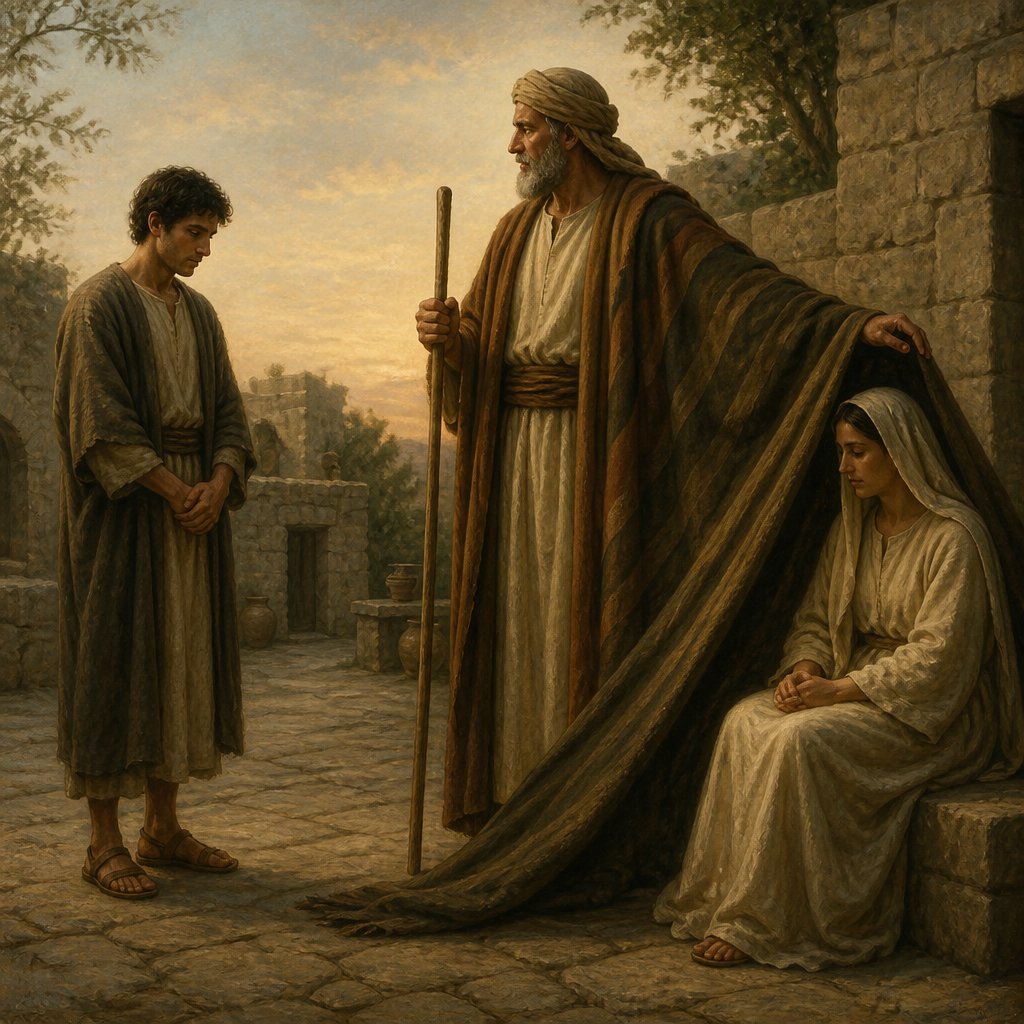
Deuteronomy 22:30 in the King James Version of the Bible states, "A man shall not take his father's wife, nor discover his father's skirt." This verse is a part of the wider context of laws and regulations found in the book of Deuteronomy. These laws were given by God to the Israelites through Moses as they were preparing to enter the Promised Land.
The verse addresses the taboo and forbidden act of a man taking his father's wife, which is considered a form of incest and is condemned in the strongest possible terms. The phrase "discover his father's skirt" is understood to mean to "uncover the nakedness" of one's father, which had a connotation of shameful exposure or violation.
The broader context of the chapter in which this verse is found deals with various laws and regulations regarding purity, sexual relations, and moral conduct. These laws were meant to establish and preserve the moral and social order within the community of Israel. Sexual immorality, incest, and adultery were seen as serious offenses against God's moral standards and were punishable by severe consequences.
The specific prohibition against a man taking his father's wife reflects the sanctity of the marital relationship and the family unit. It emphasizes the importance of upholding the integrity of the family and respecting the roles and boundaries within it. To violate this prohibition would be to undermine the foundational structure of the family and to dishonor one's father.
In a broader theological sense, this verse also reflects the concept of honoring one's parents, which is a recurring theme throughout the Bible. The command to honor one's father and mother is one of the Ten Commandments and is foundational to the ethical and moral framework of God's covenant community.
From a contextual perspective, the prohibition against a man taking his father's wife is situated within the framework of God's covenant with the people of Israel. The laws and regulations in the book of Deuteronomy were intended to set Israel apart as a holy nation, reflecting the character and values of their God. These laws were not merely arbitrary rules, but were rooted in God's nature and his desire for his people to live in righteousness and holiness.
Symbolically, this verse can be understood as a representation of the broader theme of faithfulness and loyalty within the covenant relationship between God and his people. The covenant between God and Israel is often depicted in terms of a marriage relationship, with God as the faithful husband and Israel as his bride. The prohibition against a man taking his father's wife can be seen as a parallel to the concept of spiritual adultery, or faithlessness, within the covenant relationship.
In summary, Deuteronomy 22:30 addresses the prohibition against a man taking his father's wife, emphasizing the sanctity of the family unit and the importance of upholding moral and sexual purity. It reflects the broader themes of honoring one's parents, maintaining the integrity of the family, and remaining faithful within the covenant relationship with God. As such, this verse is a reminder of the moral and ethical standards that God has established for his people and serves as a call to live in obedience to his commands.
Have questions about Deuteronomy 22:30?
Dive deeper into this scripture with Bible Chat — an AI-powered tool for exploring God's Word through conversation. Ask questions, get context, and grow in your understanding of the Bible.
Get Our Apps


Deuteronomy 22:30 Artwork

Deuteronomy 22:30 - "¶ A man shall not take his father's wife, nor discover his father's skirt."
"¶ A man shall not take his father's wife, nor discover his father's skirt." - Deuteronomy 22:30

Deuteronomy 30:19:

Jehoiachin in Jeremiah 22:22-30

Deuteronomy 5:30 - "Go say to them, Get you into your tents again."

Deuteronomy 30:15 - "¶ See, I have set before thee this day life and good, and death and evil;"

Deuteronomy 31:30 - "And Moses spake in the ears of all the congregation of Israel the words of this song, until they were ended."

Exodus 30:22 - "¶ Moreover the LORD spake unto Moses, saying,"

Deuteronomy 30:11 - "¶ For this commandment which I command thee this day, it is not hidden from thee, neither is it far off."

Deuteronomy 30:14 - "But the word is very nigh unto thee, in thy mouth, and in thy heart, that thou mayest do it."

Deuteronomy 22:20 - "But if this thing be true, and the tokens of virginity be not found for the damsel:"

Deuteronomy 22:10 - "¶ Thou shalt not plow with an ox and an ass together."

Jeremiah 30:22 - "And ye shall be my people, and I will be your God."

Psalms 22:30 - "A seed shall serve him; it shall be accounted to the Lord for a generation."

Deuteronomy 22:18 - "And the elders of that city shall take that man and chastise him;"

Deuteronomy 23:22 - "But if thou shalt forbear to vow, it shall be no sin in thee."

Proverbs 30:22 - "For a servant when he reigneth; and a fool when he is filled with meat;"

Job 22:30 - "He shall deliver the island of the innocent: and it is delivered by the pureness of thine hands."

Deuteronomy 30:8 - "And thou shalt return and obey the voice of the LORD, and do all his commandments which I command thee this day."

Deuteronomy 30:7 - "And the LORD thy God will put all these curses upon thine enemies, and on them that hate thee, which persecuted thee."

Deuteronomy 9:22 - "And at Taberah, and at Massah, and at Kibroth-hattaavah, ye provoked the LORD to wrath."

Matthew 22:30 - "For in the resurrection they neither marry, nor are given in marriage, but are as the angels of God in heaven."

Genesis 30:22 - "¶ And God remembered Rachel, and God hearkened to her, and opened her womb."

Deuteronomy 22:11 - "¶ Thou shalt not wear a garment of divers sorts, as of woollen and linen together."

Deuteronomy 22:13 - "¶ If any man take a wife, and go in unto her, and hate her,"

Deuteronomy 31:22 - "¶ Moses therefore wrote this song the same day, and taught it the children of Israel."

Deuteronomy 22:27 - "For he found her in the field, and the betrothed damsel cried, and there was none to save her."

Deuteronomy 30:17 - "But if thine heart turn away, so that thou wilt not hear, but shalt be drawn away, and worship other gods, and serve them;"

Deuteronomy 30:12 - "It is not in heaven, that thou shouldest say, Who shall go up for us to heaven, and bring it unto us, that we may hear it, and do it?"

Deuteronomy 22:23 - "¶ If a damsel that is a virgin be betrothed unto an husband, and a man find her in the city, and lie with her;"