What does Deuteronomy 21:3 mean?
"And it shall be, that the city which is next unto the slain man, even the elders of that city shall take an heifer, which hath not been wrought with, and which hath not drawn in the yoke;" - Deuteronomy 21:3
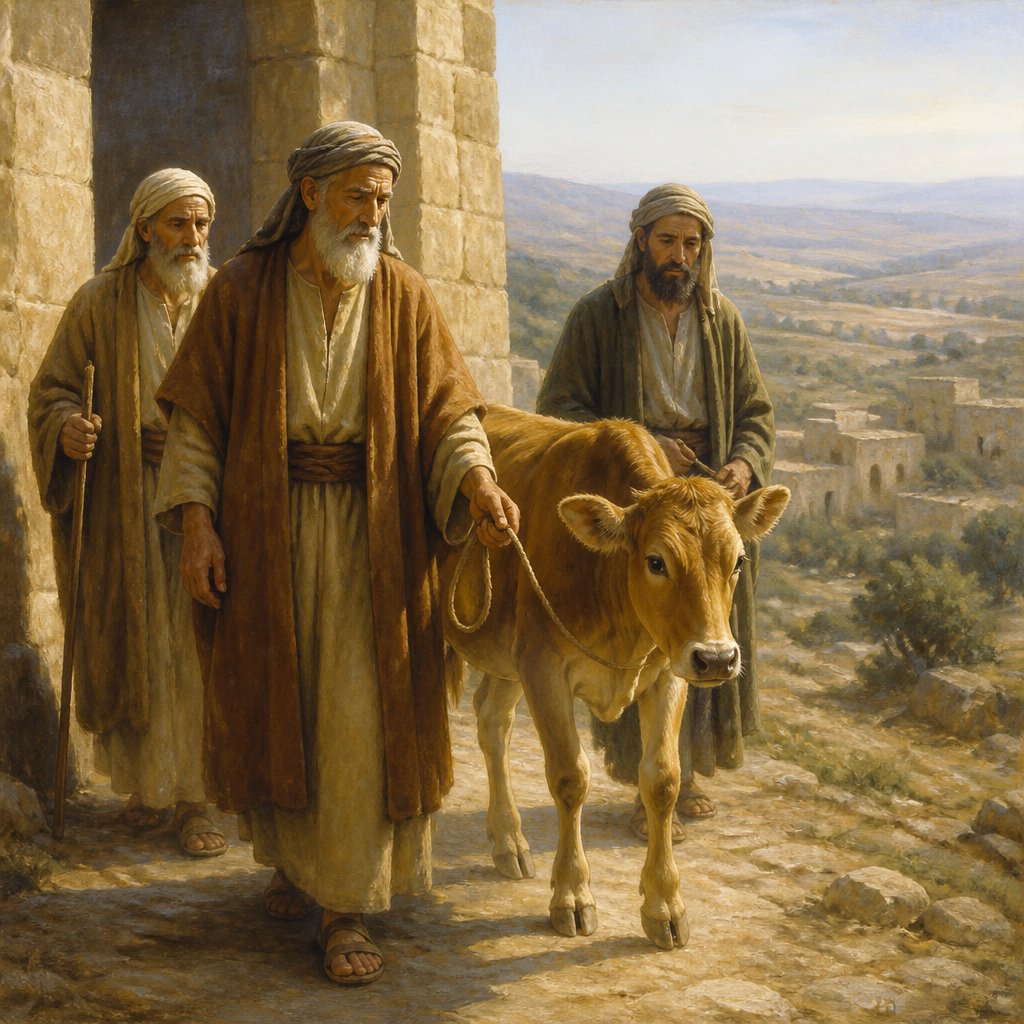
Deuteronomy 21:3 (KJV) states: "And it shall be, that the city which is next unto the slain man, even the elders of that city shall take an heifer, which hath not been wrought with, and which hath not drawn in the yoke." This verse is part of the Old Testament, specifically in the book of Deuteronomy, which is the fifth book of the Hebrew Bible. Deuteronomy is known for recording the laws and regulations that the Israelites were commanded to follow by God through Moses. This particular verse is within the context of the establishment of justice and atonement in the event of an unsolved murder, and it provides insight into the social and religious customs of ancient Israel.
The verse begins with the stipulation that if a slain man is found in a field and the culprit is unknown, the elders of the city closest to the location of the crime are to take a heifer that has not been used for labor and has not borne a yoke. This action is the first step in a ceremonial process to atone for the sin of the unknown murder and to bring purification to the land. The heifer is to be taken to a valley with running water that has not been plowed or sown and is to be killed by breaking its neck. The priests are then required to wash their hands over the heifer and pronounce solemnly that they did not shed the blood of the unknown victim.
The symbolic and religious significance of this ritual is profound. The heifer, an unblemished and untamed animal, represents purity and innocence. By using a heifer that has not been worked and is free from any kind of blemish, the ritual emphasizes the concept of atonement through a blameless sacrifice. The act of breaking the heifer's neck in a place with running water signifies the symbolic release of the sin into the flowing water, representing cleansing and purification. Additionally, the process of the priests washing their hands over the heifer, and declaring their innocence in the shedding of the blood, underscores the importance of personal responsibility and accountability in the eyes of God.
The underlying themes of justice, atonement, and communal responsibility are evident in this verse. The ritual described in Deuteronomy 21:3 underscores the importance of establishing justice for the innocent victim, even when the perpetrator is unknown. It also highlights the community's responsibility to address and rectify the presence of unatoned sin within their midst. The use of the heifer as an offering emphasizes the concept of substitution and atonement, pointing towards the future sacrificial system that would be established in Judaism and fulfilled in Christianity through Jesus Christ, the ultimate unblemished sacrificial Lamb.
In a broader context, this verse reflects the ancient Israelites' understanding of spirituality and justice. It demonstrates the importance of maintaining societal harmony and addressing wrongdoing through prescribed rituals and ceremonies. The complex nature of this ritual also serves as a reminder of the gravity of sin and the need for spiritual purification.
Furthermore, the symbolism of the heifer and the act of cleansing with running water also foreshadows the Christian concept of redemption and the cleansing of sin through the blood of Jesus. The ritual described in Deuteronomy 21:3 anticipates the ultimate atonement and the purification brought about by the sacrifice of Christ, as expressed in the New Testament.
In conclusion, Deuteronomy 21:3 offers a profound insight into the ancient Israelite customs and religious practices, emphasizing the importance of justice, atonement, and communal responsibility. This verse also carries significant symbolic and theological implications, pointing towards the ultimate fulfillment of atonement and redemption through the sacrifice of Jesus Christ.
Have questions about Deuteronomy 21:3?
Dive deeper into this scripture with Bible Chat — an AI-powered tool for exploring God's Word through conversation. Ask questions, get context, and grow in your understanding of the Bible.
Get Our Apps


Deuteronomy 21:3 Artwork
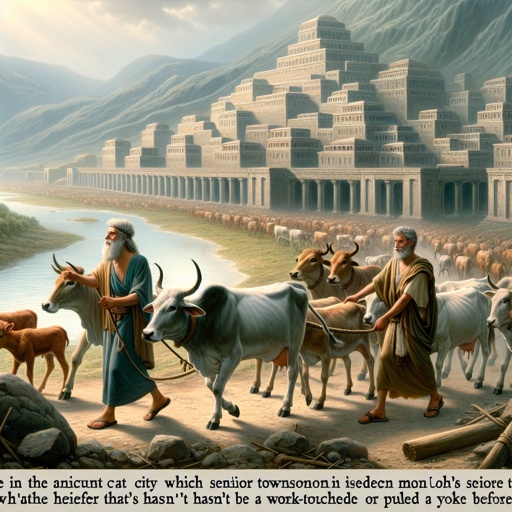
Deuteronomy 21:3 - "And it shall be, that the city which is next unto the slain man, even the elders of that city shall take an heifer, which hath not been wrought with, and which hath not drawn in the yoke;"
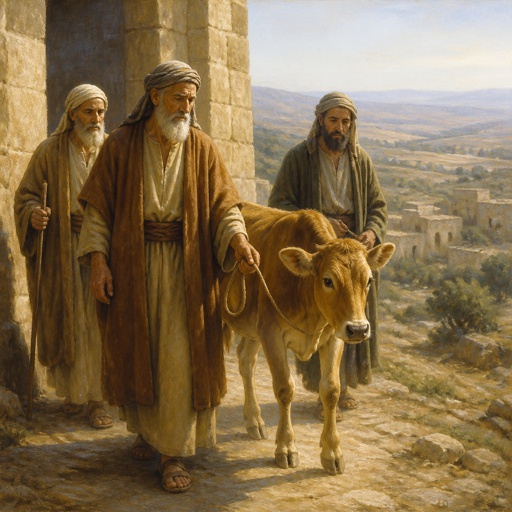
"And it shall be, that the city which is next unto the slain man, even the elders of that city shall take an heifer, which hath not been wrought with, and which hath not drawn in the yoke;" - Deuteronomy 21:3

Deuteronomy 1.1-21

Deuteronomy 3:21 - "¶ And I commanded Joshua at that time, saying, Thine eyes have seen all that the LORD your God hath done unto these two kings: so shall the LORD do unto all the kingdoms whither thou passest."

Deuteronomy 27:21 - "Cursed be he that lieth with any manner of beast. And all the people shall say, Amen."

Deuteronomy 21:21 - "And all the men of his city shall stone him with stones, that he die: so shalt thou put evil away from among you; and all Israel shall hear, and fear."

Deuteronomy 3:15 - "And I gave Gilead unto Machir."

Deuteronomy 7:21 - "Thou shalt not be affrighted at them: for the LORD thy God is among you, a mighty God and terrible."

Deuteronomy 21:7 - "And they shall answer and say, Our hands have not shed this blood, neither have our eyes seen it."

Deuteronomy 18:21 - "And if thou say in thine heart, How shall we know the word which the LORD hath not spoken?"

Deuteronomy 3:23 - "And I besought the LORD at that time, saying,"

Deuteronomy 14:3 - "¶ Thou shalt not eat any abominable thing."

Deuteronomy 21:22 - "¶ And if a man have committed a sin worthy of death, and he be to be put to death, and thou hang him on a tree:"

Deuteronomy 2:21 - "A people great, and many, and tall, as the Anakims; but the LORD destroyed them before them; and they succeeded them, and dwelt in their stead:"

Deuteronomy 21:6 - "And all the elders of that city, that are next unto the slain man, shall wash their hands over the heifer that is beheaded in the valley:"

Deuteronomy 24:21 - "When thou gatherest the grapes of thy vineyard, thou shalt not glean it afterward: it shall be for the stranger, for the fatherless, and for the widow."

Deuteronomy 21:12 - "Then thou shalt bring her home to thine house; and she shall shave her head, and pare her nails;"

Revelation 21:3

Rev 21:3

Revelation 21:3

Deuteronomy 21:11 - "And seest among the captives a beautiful woman, and hast a desire unto her, that thou wouldest have her to thy wife;"

Deuteronomy 3:29 - "So we abode in the valley over against Beth-peor."

Deuteronomy 3:7 - "But all the cattle, and the spoil of the cities, we took for a prey to ourselves."

Deuteronomy 28:3 - "Blessed shalt thou be in the city, and blessed shalt thou be in the field."

Deuteronomy 15:21 - "And if there be any blemish therein, as if it be lame, or blind, or have any ill blemish, thou shalt not sacrifice it unto the LORD thy God."

Deuteronomy 19:21 - "And thine eye shall not pity; but life shall go for life, eye for eye, tooth for tooth, hand for hand, foot for foot."

Deuteronomy 21:2 - "Then thy elders and thy judges shall come forth, and they shall measure unto the cities which are round about him that is slain:"

Deuteronomy 3:9 - "(Which Hermon the Sidonians call Sirion; and the Amorites call it Shenir;)"

Genesis 21-3

Deuteronomy 21:20 - "And they shall say unto the elders of his city, This our son is stubborn and rebellious, he will not obey our voice; he is a glutton, and a drunkard."