What does Deuteronomy 21:21 mean?
"And all the men of his city shall stone him with stones, that he die: so shalt thou put evil away from among you; and all Israel shall hear, and fear." - Deuteronomy 21:21
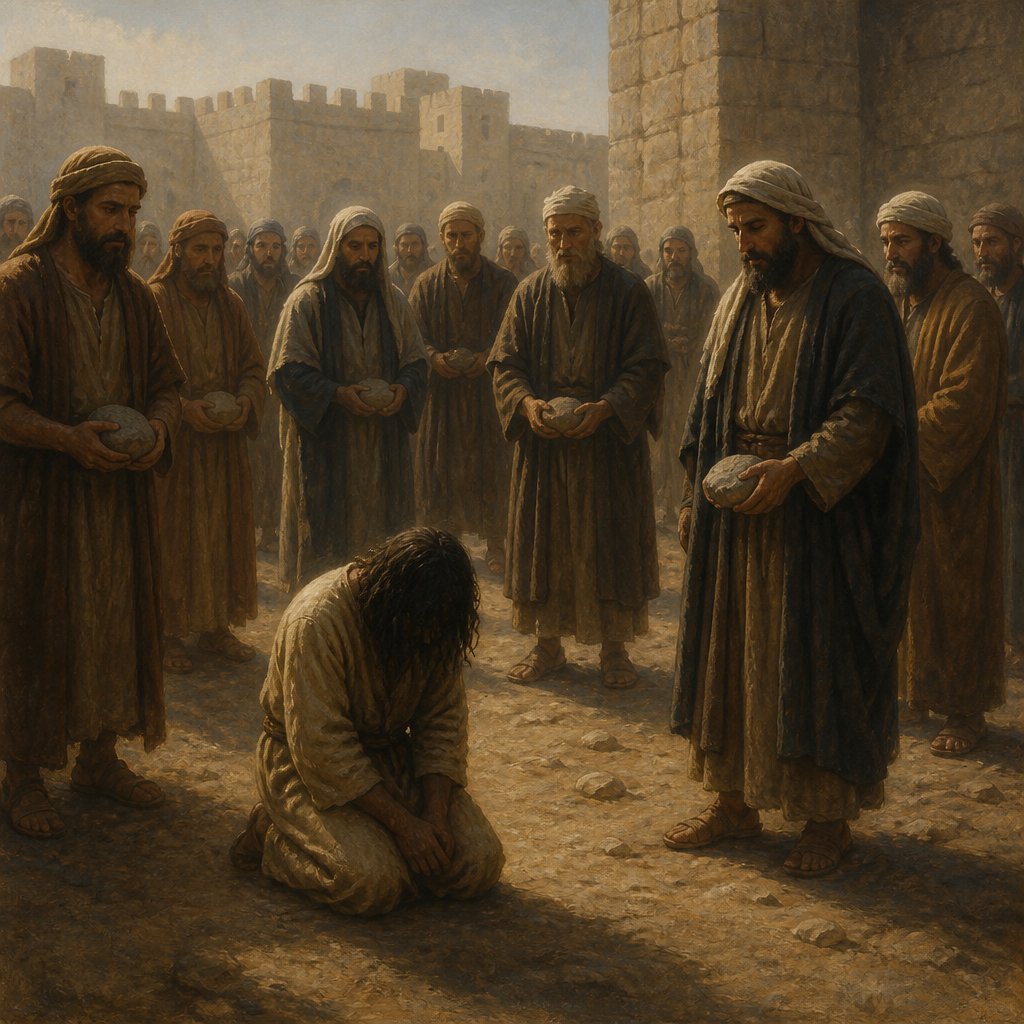
Deuteronomy 21:21 in the King James Version (KJV) of the Bible reads, "And all the men of his city shall stone him with stones, that he die: so shalt thou put evil away from among you; and all Israel shall hear, and fear."
This verse comes from the Book of Deuteronomy, which is the fifth book of the Christian Old Testament and of the Jewish Torah. Deuteronomy is a record of the words spoken by Moses to the Israelites as they prepared to enter the Promised Land. It contains a mixture of laws, ethical teachings, and historical narratives.
In the context of Deuteronomy 21, the verse addresses the punishment for a rebellious son. It specifies that if a man has a son who is stubborn, disobedient, and rebellious, who does not obey his parents, then they are to take him before the city elders. If the accusation is found to be true, the son is to be publicly stoned to death by all the men of the city. The purpose of this severe punishment is to "put evil away from among you," and to serve as a deterrent to others, so that "all Israel shall hear, and fear."
One of the key themes in this verse is the importance of obedience and respect for authority, particularly within the family structure. In the ancient Hebrew culture, obedience to one's parents was paramount, and this verse served as a reinforcement of the societal expectation for children to honor and obey their parents. The severity of the punishment highlights the seriousness with which the Israelites viewed disobedience and rebellion within the family unit.
Another theme present in this verse is the concept of justice and the need to maintain societal order. The idea of "putting evil away from among you" suggests that the punishment serves not only as a retribution for the individual's actions but also as a means of preserving the moral and ethical fabric of the community. By publicly carrying out the punishment, it was intended to send a message to the rest of the Israelites, causing them to "hear, and fear," and to think twice before engaging in similar behavior.
The symbolism in this verse is represented through the use of stoning as a method of execution. Stoning was a common form of punishment in ancient societies, and it carried significant symbolic weight. The act of throwing stones at a person until they die not only inflicts physical pain and suffering but also serves as a public display of condemnation and rejection. The stoning of the rebellious son was meant to signify the severing of the familial and societal ties, as well as to serve as a warning to others.
It is important to note that this verse reflects the cultural and historical context in which it was written. The ancient Israelites lived in a society with very different values and standards of justice than our own. As such, this verse should not be read as a universal prescription for contemporary attitudes and practices. Instead, it serves as a window into the beliefs and values of the ancient Israelites, and the ways in which they sought to maintain order and discipline within their community.
In conclusion, Deuteronomy 21:21 addresses the punishment for a rebellious son and underscores the importance of obedience and respect for authority within the family. It also highlights the need for maintaining societal order and justice. The verse utilizes the symbolism of stoning to convey its message and to serve as a deterrent to others. While the verse reflects the cultural and historical context of the ancient Israelites, it continues to provoke reflection and debate on the concepts of justice, punishment, and the role of parental authority in contemporary society.
Have questions about Deuteronomy 21:21?
Dive deeper into this scripture with Bible Chat — an AI-powered tool for exploring God's Word through conversation. Ask questions, get context, and grow in your understanding of the Bible.
Get Our Apps


Deuteronomy 21:21 Artwork

Deuteronomy 21:21 - "And all the men of his city shall stone him with stones, that he die: so shalt thou put evil away from among you; and all Israel shall hear, and fear."
"And all the men of his city shall stone him with stones, that he die: so shalt thou put evil away from among you; and all Israel shall hear, and fear." - Deuteronomy 21:21

Deuteronomy 1.1-21

Deuteronomy 27:21 - "Cursed be he that lieth with any manner of beast. And all the people shall say, Amen."

Deuteronomy 7:21 - "Thou shalt not be affrighted at them: for the LORD thy God is among you, a mighty God and terrible."

Deuteronomy 18:21 - "And if thou say in thine heart, How shall we know the word which the LORD hath not spoken?"

Deuteronomy 21:7 - "And they shall answer and say, Our hands have not shed this blood, neither have our eyes seen it."

Mark 2:1

Revelation 2:1

Lamentations 2:1

Mark 2:1

Lamentations 2:1

Lamentations 2:1

Genesis 2:1

Deuteronomy 21:22 - "¶ And if a man have committed a sin worthy of death, and he be to be put to death, and thou hang him on a tree:"

Deuteronomy 2:21 - "A people great, and many, and tall, as the Anakims; but the LORD destroyed them before them; and they succeeded them, and dwelt in their stead:"

Deuteronomy 21:6 - "And all the elders of that city, that are next unto the slain man, shall wash their hands over the heifer that is beheaded in the valley:"

Matthew 2:1-12

Mark 2:1-12

Matthew 2:1-2

Matthew 2:1-12

Matthew 2:1-12

Deuteronomy 24:21 - "When thou gatherest the grapes of thy vineyard, thou shalt not glean it afterward: it shall be for the stranger, for the fatherless, and for the widow."

Deuteronomy 21:12 - "Then thou shalt bring her home to thine house; and she shall shave her head, and pare her nails;"

Genesis 2:1-2

Matthew 2:1-12

mark 2:1-12

Luke 2:1-20

Habakkuk 2:1-3

Genesis 2:1-2