What does Deuteronomy 21:16 mean?
"Then it shall be, when he maketh his sons to inherit that which he hath, that he may not make the son of the beloved firstborn before the son of the hated, which is indeed the firstborn:" - Deuteronomy 21:16
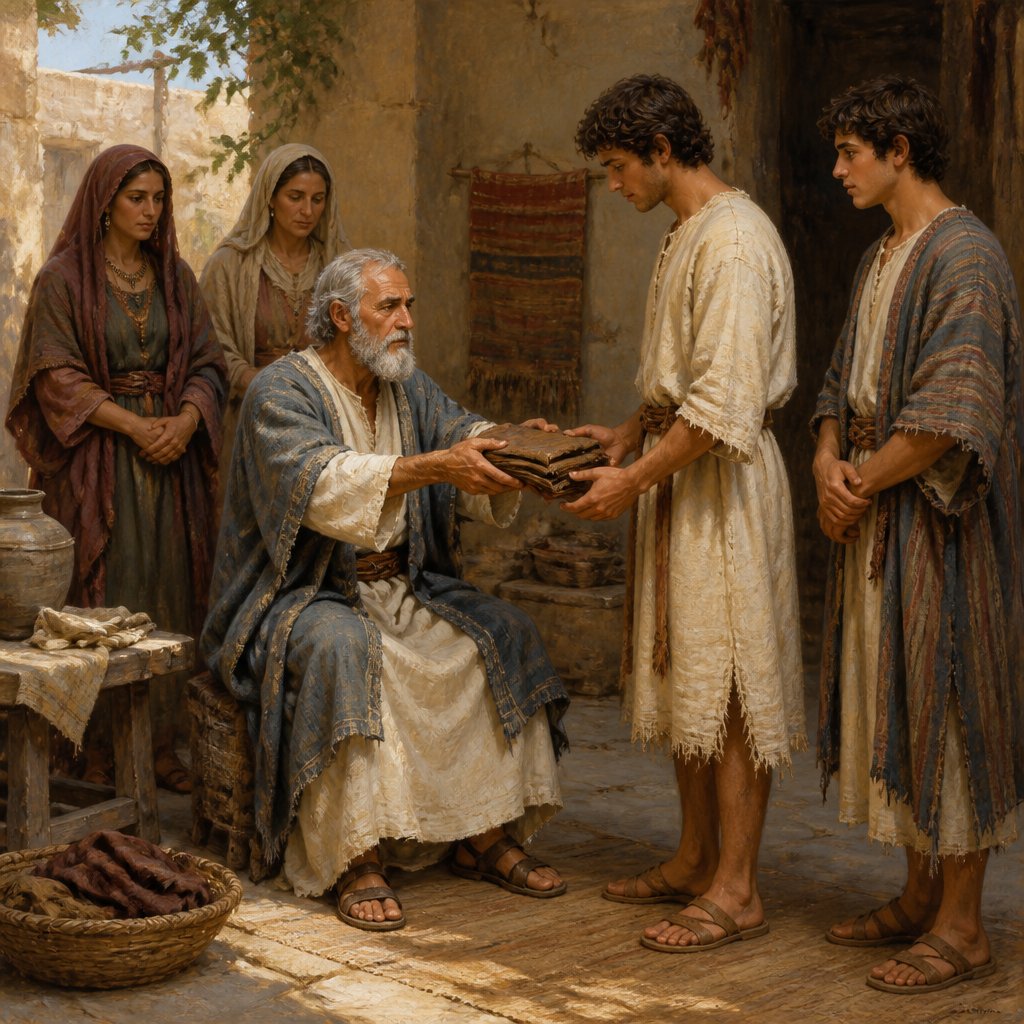
Deuteronomy 21:16 (KJV) states, "Then it shall be, when he maketh his sons to inherit that which he hath, that he may not make the son of the beloved firstborn before the son of the hated, which is indeed the firstborn."
This verse is part of the Book of Deuteronomy, which is the fifth book of the Hebrew Bible and the Christian Old Testament. It is attributed to Moses, who is considered the author of the first five books of the Bible, also known as the Torah. Deuteronomy is essentially a series of speeches that Moses delivers to the Israelites as they prepare to enter the Promised Land. The book contains various laws and regulations that were intended to govern the people of Israel and set them apart as a holy nation.
The specific verse in question deals with the issue of inheritance and the rights of firstborn sons. In ancient Near Eastern cultures, the firstborn son held a privileged position within the family and was typically entitled to a double portion of the inheritance. However, the verse addresses a scenario in which a man has two wives, one whom he loves and another whom he hates, and each wife has a firstborn son. The concern is that the man might favor the son of the beloved wife over the son of the hated wife when it comes to inheritance.
This verse reflects the patriarchal nature of ancient Israelite society, where men had significant power and authority over their households. It also reveals the complexities and tensions within polygamous family structures, which were not uncommon in the ancient world. The Bible does not explicitly condone or endorse polygamy, but it does acknowledge its existence and seeks to regulate it to some extent.
At a deeper level, this verse speaks to the issue of fairness and justice within the family unit. It emphasizes the principle that all children, regardless of their mother's status, should be treated fairly and equally when it comes to inheritance rights. This represents a concern for justice and equity that runs throughout the Mosaic law and reflects the broader biblical theme of caring for the marginalized and vulnerable members of society.
Furthermore, this verse can be interpreted symbolically as an allegory for the spiritual inheritance of God's people. In this reading, the firstborn sons represent those who are chosen or favored, while the beloved and hated wives can be seen as symbols of God's chosen people (Israel) and the Gentiles, respectively. The verse then becomes a metaphor for the inclusion of the Gentiles in God's redemptive plan, emphasizing that all who believe in him are heirs to his promises and blessings.
In the broader context of the Bible, this verse also ties into the theme of God's impartiality and fairness. Throughout the Old and New Testaments, God is portrayed as a just and righteous judge who does not show favoritism or partiality. This principle is echoed in passages such as Romans 2:11, which states, "For there is no respect of persons with God."
In conclusion, Deuteronomy 21:16 addresses issues of inheritance, justice, and fairness within the family structure and reflects the patriarchal social norms of ancient Israel. It also carries deeper symbolic and spiritual meanings, emphasizing the inclusivity of God's redemptive plan and his impartiality in dealing with his people. This verse ultimately underscores the importance of justice and equity, both in our human relationships and in our understanding of God's character.
Have questions about Deuteronomy 21:16?
Dive deeper into this scripture with Bible Chat — an AI-powered tool for exploring God's Word through conversation. Ask questions, get context, and grow in your understanding of the Bible.
Get Our Apps


Deuteronomy 21:16 Artwork

Deuteronomy 21:16 - "Then it shall be, when he maketh his sons to inherit that which he hath, that he may not make the son of the beloved firstborn before the son of the hated, which is indeed the firstborn:"
"Then it shall be, when he maketh his sons to inherit that which he hath, that he may not make the son of the beloved firstborn before the son of the hated, which is indeed the firstborn:" - Deuteronomy 21:16

Deuteronomy 16:21 - "¶ Thou shalt not plant thee a grove of any trees near unto the altar of the LORD thy God, which thou shalt make thee."

Deuteronomy 1.1-21

Deuteronomy 20:16

Deuteronomy 20:16

Deuteronomy 20:16

Deuteronomy 14:16 - "The little owl, and the great owl, and the swan,"
"¶ Thou shalt not plant thee a grove of any trees near unto the altar of the LORD thy God, which thou shalt make thee." - Deuteronomy 16:21

Deuteronomy 10:16 - "Circumcise therefore the foreskin of your heart, and be no more stiffnecked."

Deuteronomy 28:16 - "Cursed shalt thou be in the city, and cursed shalt thou be in the field."

Genesis 21-16

Deuteronomy 27:21 - "Cursed be he that lieth with any manner of beast. And all the people shall say, Amen."

Deuteronomy 32:16 - "They provoked him to jealousy with strange gods, with abominations provoked they him to anger."

Deuteronomy 21:21 - "And all the men of his city shall stone him with stones, that he die: so shalt thou put evil away from among you; and all Israel shall hear, and fear."

Deuteronomy 7:21 - "Thou shalt not be affrighted at them: for the LORD thy God is among you, a mighty God and terrible."

Deuteronomy 21:7 - "And they shall answer and say, Our hands have not shed this blood, neither have our eyes seen it."

Deuteronomy 18:21 - "And if thou say in thine heart, How shall we know the word which the LORD hath not spoken?"

Luke 2:16 - 21

Deuteronomy 6:16 - "¶ Ye shall not tempt the LORD your God, as ye tempted him in Massah."

Leviticus 21:16 - "¶ And the LORD spake unto Moses, saying,"

Deuteronomy 21:22 - "¶ And if a man have committed a sin worthy of death, and he be to be put to death, and thou hang him on a tree:"

Deuteronomy 2:21 - "A people great, and many, and tall, as the Anakims; but the LORD destroyed them before them; and they succeeded them, and dwelt in their stead:"

Deuteronomy 21:6 - "And all the elders of that city, that are next unto the slain man, shall wash their hands over the heifer that is beheaded in the valley:"

Deuteronomy 19:16 - "¶ If a false witness rise up against any man to testify against him that which is wrong;"

Deuteronomy 16:12 - "And thou shalt remember that thou wast a bondman in Egypt: and thou shalt observe and do these statutes."

Deuteronomy 12:16 - "Only ye shall not eat the blood; ye shall pour it upon the earth as water."

Deuteronomy 25:16 - "For all that do such things, and all that do unrighteously, are an abomination unto the LORD thy God."

Deuteronomy 24:21 - "When thou gatherest the grapes of thy vineyard, thou shalt not glean it afterward: it shall be for the stranger, for the fatherless, and for the widow."

Deuteronomy 21:12 - "Then thou shalt bring her home to thine house; and she shall shave her head, and pare her nails;"