What does Deuteronomy 20:17 mean?
"But thou shalt utterly destroy them; namely, the Hittites, and the Amorites, the Canaanites, and the Perizzites, the Hivites, and the Jebusites; as the LORD thy God hath commanded thee:" - Deuteronomy 20:17
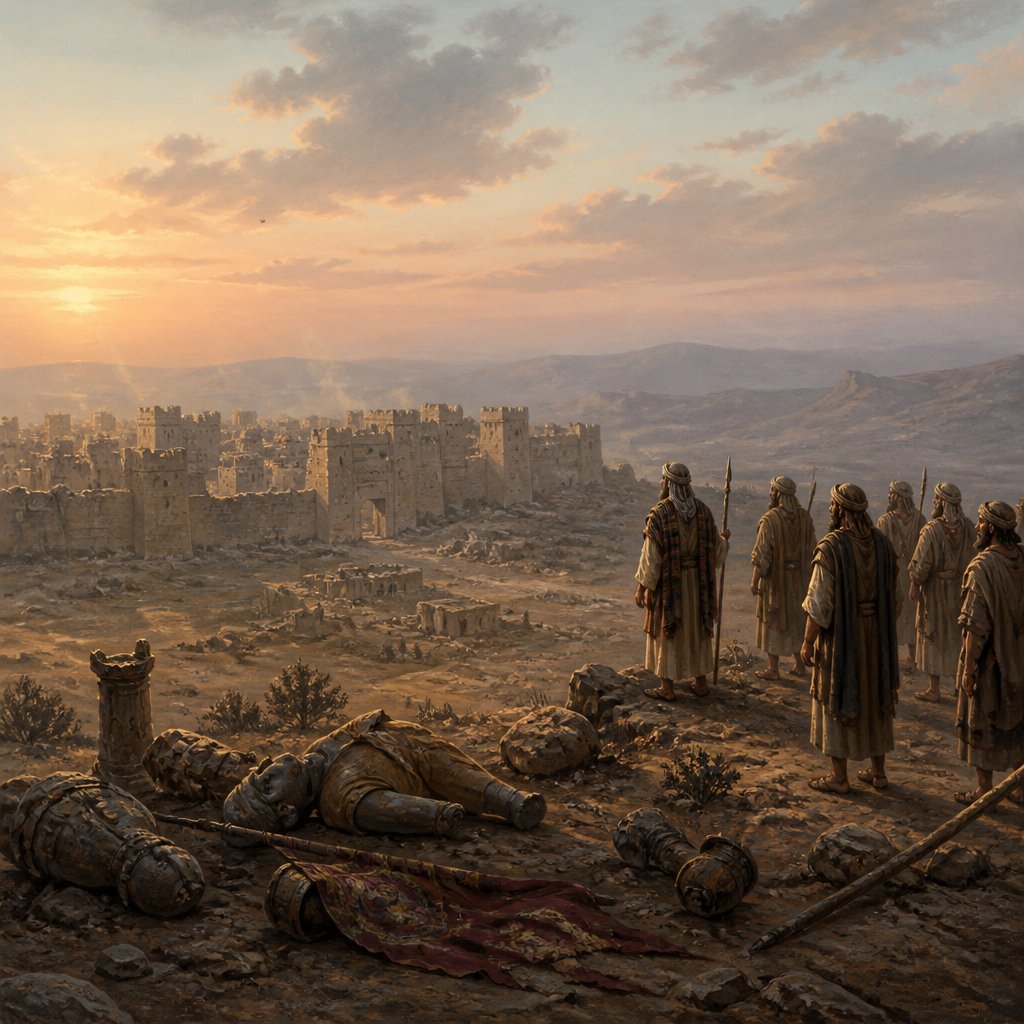
Deuteronomy 20:17 (KJV) says, "But thou shalt utterly destroy them; namely, the Hittites, and the Amorites, the Canaanites, and the Perizzites, the Hivites, and the Jebusites; as the Lord thy God hath commanded thee."
This verse is part of a larger passage in the book of Deuteronomy that outlines the rules of engagement for the Israelites as they enter the promised land. The specific command here is to completely destroy the indigenous peoples of the land. This directive seems harsh and unfathomable to us today, but it must be understood within the historical and theological context of the Bible.
The primary theme of this verse is the idea of the Israelites as the chosen people of God, with a clear and specific purpose for their existence. Throughout the Old Testament, God repeatedly reminds the Israelites of their special status and the responsibilities that come with it. In this case, the destruction of these specific people groups is seen as a necessary step in fulfilling the promise to Abraham (Genesis 15:18-21) and reclaiming the land that God had promised to the Israelites.
The context of this verse is the larger narrative of the Israelites' journey from slavery in Egypt to their eventual settlement in the land of Canaan. The book of Deuteronomy is essentially a series of speeches given by Moses to the Israelites, reminding them of the covenant with God and reiterating the laws and commandments they are to follow. The specific passage in which Deuteronomy 20:17 is found deals with the rules of engagement in warfare, and the requirements for the Israelites when they encounter various cities and nations in the land of Canaan.
Symbolically, the destruction of these specific peoples represents the idea of spiritual warfare and the need to eliminate the influences of idolatry and immorality from the land. The Hittites, Amorites, Canaanites, Perizzites, Hivites, and Jebusites were known for their pagan practices and their opposition to the worship of the one true God. As the Israelites' unique role as a holy nation set apart by God, the eradication of these people groups was a way of purifying the land and preserving the purity of the faith.
It is important to note that the Bible must be interpreted within the appropriate historical and cultural context, and not all of its directives are meant to be taken as literal commands for today. The violent conquest of the promised land is a unique and specific event in the history of the Israelites, and it should not be taken as a model for modern-day warfare or ethnic cleansing.
Finally, it is essential to understand the overarching message of the Bible, which is one of love, grace, and redemption. While there are passages like Deuteronomy 20:17 that may be difficult to understand or reconcile with our modern sensibilities, they must be viewed in the context of the entire biblical narrative. The Old Testament tells the story of God's chosen people and their journey to fulfill God's plan for them, while the New Testament reveals the ultimate fulfillment of that plan through Jesus Christ and the message of salvation for all people. As we grapple with challenging verses like this one, we must always keep in mind the overarching message of the Bible and the love and grace of God.
Have questions about Deuteronomy 20:17?
Dive deeper into this scripture with Bible Chat — an AI-powered tool for exploring God's Word through conversation. Ask questions, get context, and grow in your understanding of the Bible.
Get Our Apps


Deuteronomy 20:17 Artwork

Deuteronomy 20:17 - "But thou shalt utterly destroy them; namely, the Hittites, and the Amorites, the Canaanites, and the Perizzites, the Hivites, and the Jebusites; as the LORD thy God hath commanded thee:"
"But thou shalt utterly destroy them; namely, the Hittites, and the Amorites, the Canaanites, and the Perizzites, the Hivites, and the Jebusites; as the LORD thy God hath commanded thee:" - Deuteronomy 20:17

Deuteronomy 17:20 - "That his heart be not lifted up above his brethren, and that he turn not aside from the commandment, to the right hand, or to the left: to the end that he may prolong his days in his kingdom, he, and his children, in the midst of Israel."

Deuteronomy 20:16

Deuteronomy 20:16

Deuteronomy 20:16

Deuteronomy 5:17 - "Thou shalt not kill."

Deuteronomy 14:17 - "And the pelican, and the gier eagle, and the cormorant,"

Deuteronomy 2:17 - "That the LORD spake unto me, saying,"

Create a picture of Deuteronomy 11:20

Deuteronomy 22:20 - "But if this thing be true, and the tokens of virginity be not found for the damsel:"

Deuteronomy 14:20 - "But of all clean fowls ye may eat."

Deuteronomy 28:17 - "Cursed shall be thy basket and thy store."

Genesis 20-17

Matthew 17:20

"Thou shalt not kill." - Deuteronomy 5:17

Deuteronomy 23:17 - "¶ There shall be no whore of the daughters of Israel, nor a sodomite of the sons of Israel."

Deuteronomy 17:13 - "And all the people shall hear, and fear, and do no more presumptuously."

Matthew 17:20

Genesis 17-20

Deuteronomy 17:17 - "Neither shall he multiply wives to himself, that his heart turn not away: neither shall he greatly multiply to himself silver and gold."

Deuteronomy 5:20 - "Neither shalt thou bear false witness against thy neighbour."

Deuteronomy 20:12 - "And if it will make no peace with thee, but will make war against thee, then thou shalt besiege it:"

Deuteronomy 4:17 - "The likeness of any beast that is on the earth, the likeness of any winged fowl that flieth in the air,"

"And the pelican, and the gier eagle, and the cormorant," - Deuteronomy 14:17

Deuteronomy 18:17 - "And the LORD said unto me, They have well spoken that which they have spoken."

Deuteronomy 20:10 - "¶ When thou comest nigh unto a city to fight against it, then proclaim peace unto it."

Deuteronomy 27:17 - "Cursed be he that removeth his neighbour's landmark. And all the people shall say, Amen."

Deuteronomy 11:20 - "And thou shalt write them upon the door posts of thine house, and upon thy gates:"

Deuteronomy 20:20 - "Only the trees which thou knowest that they be not trees for meat, thou shalt destroy and cut them down; and thou shalt build bulwarks against the city that maketh war with thee, until it be subdued."