What does Deuteronomy 1:2 mean?
"(There are eleven days' journey from Horeb by the way of mount Seir unto Kadesh-barnea.)" - Deuteronomy 1:2

Deuteronomy 1:2 KJV:
"There are eleven days' journey from Horeb by the way of mount Seir unto Kadeshbarnea."
The book of Deuteronomy is the fifth book of the Torah, or the Pentateuch, and is traditionally ascribed to Moses. The name "Deuteronomy" comes from the Greek word "deuteronomion", meaning "second law", which is derived from the Hebrew phrase "Mishneh Torah" meaning "repetition of the law." The book is essentially a recapitulation and reaffirmation of the laws given to the Israelites by God at Mount Sinai.
Deuteronomy 1:2 is part of the introductory verses of the book, which sets the stage for Moses' farewell address to the Israelites. In this verse, Moses reminds the people of their journey from Mount Horeb to Kadesh-barnea, which should have taken only eleven days, but actually took forty years due to their disobedience and lack of faith in God.
The context of this verse is important for understanding its full meaning. The Israelites had been led out of slavery in Egypt by Moses, and after their deliverance, they arrived at Mount Sinai where they received the Ten Commandments and other laws from God. Their journey from Mount Horeb to Kadesh-barnea was meant to be relatively short, but due to their rebellion and lack of faith in God's promises, they wandered in the wilderness for forty years before finally entering the Promised Land.
One of the key themes of Deuteronomy is the importance of obedience and faithfulness to God. The verse serves as a poignant reminder of the consequences of disobedience and the faithfulness of God despite the unfaithfulness of the people. It also highlights the significance of the journey itself, as it represents the Israelites' journey from slavery in Egypt to the fulfillment of God's promise of a homeland.
Symbolically, the journey from Horeb to Kadesh-barnea can be seen as a representation of the Christian journey or the spiritual journey of any believer. The "eleven days' journey" could symbolize the relatively short distance between salvation and the abundant life promised by God, but the Israelites' disobedience and lack of faith extended their journey exponentially. This can be paralleled with the idea that the Christian life should be one of growth, sanctification, and obedience to God's will, yet the failure to do so can result in a prolonged and difficult spiritual journey.
In a broader sense, the verse also serves as a cautionary tale for all believers about the consequences of disobedience and the importance of trust and obedience in God's plan. The Israelites' lack of faith led to them missing out on the abundance and blessings that God had in store for them. This serves as a warning to believers to remain faithful and obedient to God's commands in order to fully experience His promises and blessings.
In conclusion, Deuteronomy 1:2 serves as a powerful reminder of the consequences of disobedience and the significance of faith and obedience in the journey of faith. It underscores the importance of trusting in God's promises and obeying His commands in order to experience the fullness of His blessings. The verse is not just a historical account but also a timeless lesson for all believers about the dangers of unbelief and the importance of steadfast faith in God.
Have questions about Deuteronomy 1:2?
Dive deeper into this scripture with Bible Chat — an AI-powered tool for exploring God's Word through conversation. Ask questions, get context, and grow in your understanding of the Bible.
Get Our Apps


Deuteronomy 1:2 Artwork

Deuteronomy 1:2 - "(There are eleven days' journey from Horeb by the way of mount Seir unto Kadesh-barnea.)"
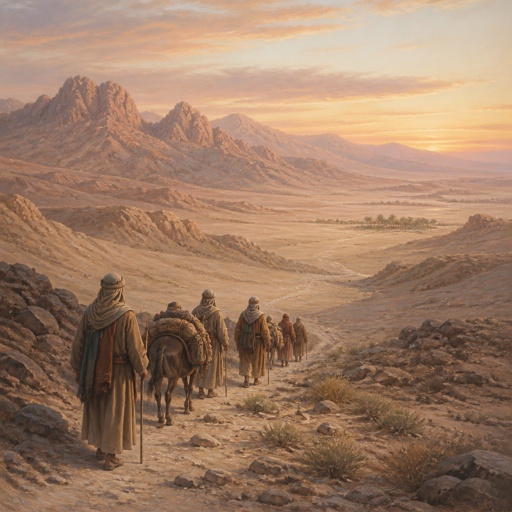
"(There are eleven days' journey from Horeb by the way of mount Seir unto Kadesh-barnea.)" - Deuteronomy 1:2

Deuteronomy 2:1 - "Then we turned, and took our journey into the wilderness by the way of the Red sea, as the LORD spake unto me: and we compassed mount Seir many days."

Deuteronomy 2:2 - "And the LORD spake unto me, saying,"

Deuteronomy 32:41

Deuteronomy 32:43

Deuteronomy 2:17 - "That the LORD spake unto me, saying,"

"And the LORD spake unto me, saying," - Deuteronomy 2:2

Deuteronomy 5:2 - "The LORD our God made a covenant with us in Horeb."

Deuteronomy 2:18 - "Thou art to pass over through Ar, the coast of Moab, this day:"

Deuteronomy 2:3 - "Ye have compassed this mountain long enough: turn you northward."

Deuteronomy 34:1-4 – Moses views the Promised Land from Mount Nebo.

Deuteronomy 34:1-4 – Moses views the Promised Land from Mount Nebo.

Deuteronomy 34:1-4 – Moses views the Promised Land from Mount Nebo.

Deuteronomy 2:10 - "The Emims dwelt therein in times past, a people great, and many, and tall, as the Anakims;"

Deuteronomy 2:11 - "Which also were accounted giants, as the Anakims; but the Moabites call them Emims."

Deuteronomy 31:1 - "And Moses went and spake these words unto all Israel."

Deuteronomy 1:34 - "And the LORD heard the voice of your words, and was wroth, and sware, saying,"

Deuteronomy 1:29 - "Then I said unto you, Dread not, neither be afraid of them."

Deuteronomy 34:1-4 – Moses views the Promised Land from Mount Nebo.

Deuteronomy 34:1-4 – Moses views the Promised Land from Mount Nebo.

Deuteronomy 15:1 - "At the end of every seven years thou shalt make a release."

Deuteronomy 1:32 - "Yet in this thing ye did not believe the LORD your God,"

Deuteronomy 34:1-4 – Moses views the Promised Land from Mount Nebo.

Deuteronomy 34:1-4 – Moses views the Promised Land from Mount Nebo.

Deuteronomy 34:2 - "And all Naphtali, and the land of Ephraim, and Manasseh, and all the land of Judah, unto the utmost sea,"

Deuteronomy 2:32 - "Then Sihon came out against us, he and all his people, to fight at Jahaz."

Deuteronomy 1:5 - "On this side Jordan, in the land of Moab, began Moses to declare this law, saying,"

Deuteronomy 2:35 - "Only the cattle we took for a prey unto ourselves, and the spoil of the cities which we took."

"That the LORD spake unto me, saying," - Deuteronomy 2:17