What does Deuteronomy 1:15 mean?
"So I took the chief of your tribes, wise men, and known, and made them heads over you, captains over thousands, and captains over hundreds, and captains over fifties, and captains over tens, and officers among your tribes." - Deuteronomy 1:15
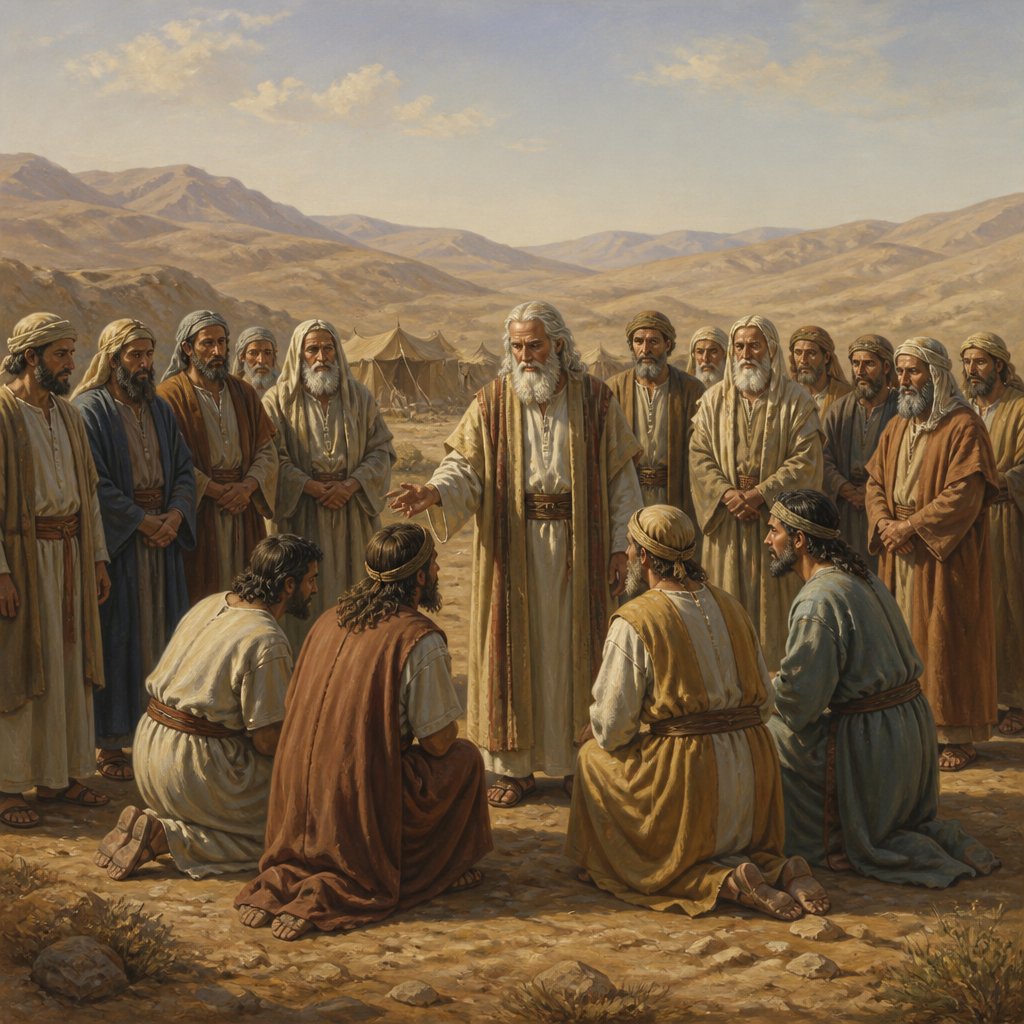
Deuteronomy 1:15 in the King James Version of the Bible states: "So I took the chief of your tribes, wise men, and known, and made them heads over you, captains over thousands, and captains over hundreds, and captains over fifties, and captains over tens, and officers among your tribes."
This verse comes from the book of Deuteronomy, which is the fifth book of the Hebrew Bible and the Christian Old Testament. It is attributed to Moses, who is believed to have written it as a series of speeches he gave to the Israelites as they prepared to enter the Promised Land. In this particular verse, Moses is recalling the early days of the Israelites' journey and the organizational structure he established among their leaders.
The verse speaks to the establishment of a hierarchical system of leadership within the Israelite community. The "chief of your tribes" refers to the leaders chosen from each of the twelve tribes of Israel. These leaders were not only wise and known within their respective tribes, but they were also appointed by Moses to be heads over the people. This shows a deliberate and thoughtful selection process, indicating that leadership was not arbitrary, but carefully chosen based on certain qualifications.
The verse goes on to specify the various levels of leadership that were established, from captains over thousands down to officers among the tribes. This demonstrates a clear chain of command, with leaders at each level responsible for a specific number of people. This structured approach to leadership was likely meant to ensure order and organization within the community, as well as to facilitate effective communication and coordination.
One of the key themes in this verse is the importance of wise and capable leadership. The leaders chosen by Moses were not only known within their tribes, but they were also wise. This suggests that leadership qualities such as wisdom, integrity, and knowledge were highly valued and sought after. Through the careful selection of capable leaders, Moses aimed to establish a community that was well-led and well-organized, able to navigate the challenges they would face as they entered the Promised Land.
Another theme that can be gleaned from this verse is the concept of authority and delegation. Moses, as the leader of the Israelites, recognized the need to delegate authority and responsibility in order to effectively govern and lead the people. By appointing leaders at various levels, he was able to share the burden of leadership and ensure that the needs of the people were met at every level of the community.
Furthermore, this verse can be seen as a reflection of the divine order and structure that God intended for his people. The appointment of leaders and the establishment of a clear chain of command reflect the idea that God values order and organization within his community. By following the leadership structure set out by Moses, the Israelites were not only obeying human authority, but also aligning themselves with the divine plan for their community.
Symbolically, the hierarchical structure of leadership outlined in this verse can be seen as a reflection of the larger purpose and mission of the Israelite community. By organizing themselves in this way, the Israelites were preparing themselves to enter the Promised Land and fulfill their destiny as a chosen people. The careful selection of leaders and the establishment of clear leadership roles were essential in ensuring that the Israelites could fulfill their collective purpose and live in accordance with God's plan for them.
In conclusion, Deuteronomy 1:15 serves as a reminder of the importance of wise and capable leadership, as well as the need for order and organization within a community. Through the careful selection and delegation of leaders, Moses sought to establish a community that was well-led and well-equipped to fulfill their purpose as the chosen people of God. This verse also reflects the divine order and structure intended for the Israelite community, emphasizing the significance of aligning with God's plan and following his guidance.
Have questions about Deuteronomy 1:15?
Dive deeper into this scripture with Bible Chat — an AI-powered tool for exploring God's Word through conversation. Ask questions, get context, and grow in your understanding of the Bible.
Get Our Apps


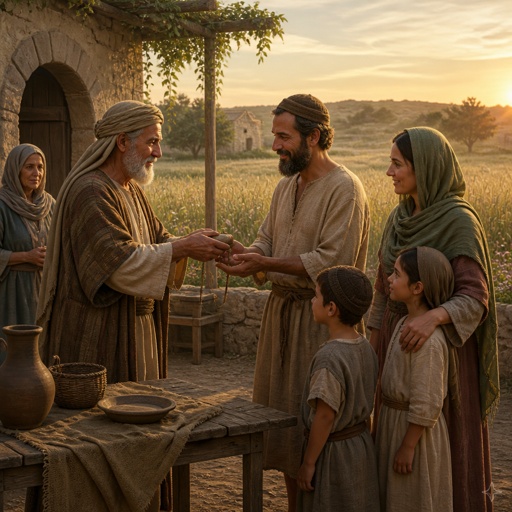
Deuteronomy 1:15 Artwork
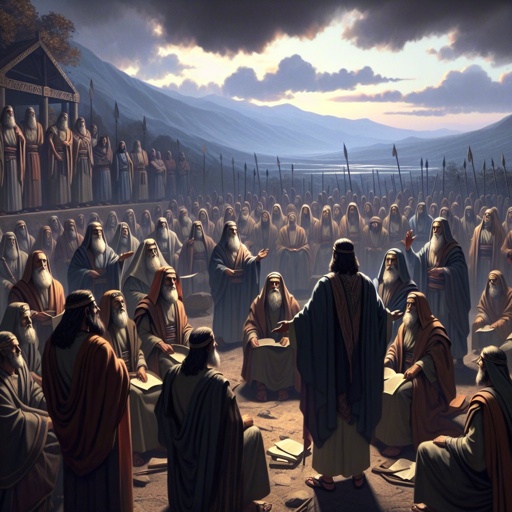
Deuteronomy 1:15 - "So I took the chief of your tribes, wise men, and known, and made them heads over you, captains over thousands, and captains over hundreds, and captains over fifties, and captains over tens, and officers among your tribes."
"So I took the chief of your tribes, wise men, and known, and made them heads over you, captains over thousands, and captains over hundreds, and captains over fifties, and captains over tens, and officers among your tribes." - Deuteronomy 1:15

Deuteronomy 1:5 - "On this side Jordan, in the land of Moab, began Moses to declare this law, saying,"

Deuteronomy 15:1 - "At the end of every seven years thou shalt make a release."
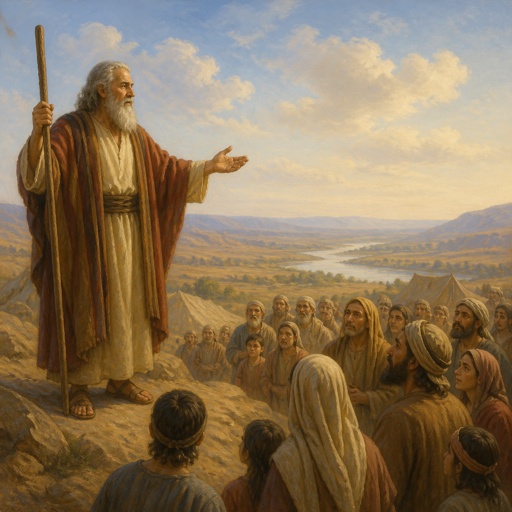
"On this side Jordan, in the land of Moab, began Moses to declare this law, saying," - Deuteronomy 1:5
"At the end of every seven years thou shalt make a release." - Deuteronomy 15:1

Deuteronomy 3:15 - "And I gave Gilead unto Machir."

Deuteronomy 14:15 - "And the owl, and the night hawk, and the cuckow, and the hawk after his kind,"

Deuteronomy 33:15 - "And for the chief things of the ancient mountains, and for the precious things of the lasting hills,"

Deuteronomy 15:15 - "And thou shalt remember that thou wast a bondman in the land of Egypt, and the LORD thy God redeemed thee: therefore I command thee this thing to day."

Deuteronomy 31:15 - "And the LORD appeared in the tabernacle in a pillar of a cloud: and the pillar of the cloud stood over the door of the tabernacle."

Deuteronomy 11:15 - "And I will send grass in thy fields for thy cattle, that thou mayest eat and be full."

Deuteronomy 30:15 - "¶ See, I have set before thee this day life and good, and death and evil;"

Deuteronomy 15:23 - "Only thou shalt not eat the blood thereof; thou shalt pour it upon the ground as water."

"And I gave Gilead unto Machir." - Deuteronomy 3:15

Deuteronomy 15:3 - "Of a foreigner thou mayest exact it again: but that which is thine with thy brother thine hand shall release;"

Deuteronomy 2:15 - "For indeed the hand of the LORD was against them, to destroy them from among the host, until they were consumed."

Deuteronomy 23:15 - "¶ Thou shalt not deliver unto his master the servant which is escaped from his master unto thee:"

Deuteronomy 29:15 - "But with him that standeth here with us this day before the LORD our God, and also with him that is not here with us this day:"

Deuteronomy 15:22 - "Thou shalt eat it within thy gates: the unclean and the clean person shall eat it alike, as the roebuck, and as the hart."

Deuteronomy 15:13 - "And when thou sendest him out free from thee, thou shalt not let him go away empty:"

Deuteronomy 22:15 - "Then shall the father of the damsel, and her mother, take and bring forth the tokens of the damsel's virginity unto the elders of the city in the gate:"

Deuteronomy 20:15 - "Thus shalt thou do unto all the cities which are very far off from thee, which are not of the cities of these nations."

Deuteronomy 15:21 - "And if there be any blemish therein, as if it be lame, or blind, or have any ill blemish, thou shalt not sacrifice it unto the LORD thy God."

Deuteronomy 32:41

Deuteronomy 9:15 - "So I turned and came down from the mount, and the mount burned with fire: and the two tables of the covenant were in my two hands."

Deuteronomy 15:20 - "Thou shalt eat it before the LORD thy God year by year in the place which the LORD shall choose, thou and thy household."

Deuteronomy 32:43

Deuteronomy 15:8 - "But thou shalt open thine hand wide unto him, and shalt surely lend him sufficient for his need, in that which he wanteth."

Deuteronomy 15:5 - "Only if thou carefully hearken unto the voice of the LORD thy God, to observe to do all these commandments which I command thee this day."