What does Deuteronomy 19:14 mean?
"¶ Thou shalt not remove thy neighbour's landmark, which they of old time have set in thine inheritance, which thou shalt inherit in the land that the LORD thy God giveth thee to possess it." - Deuteronomy 19:14
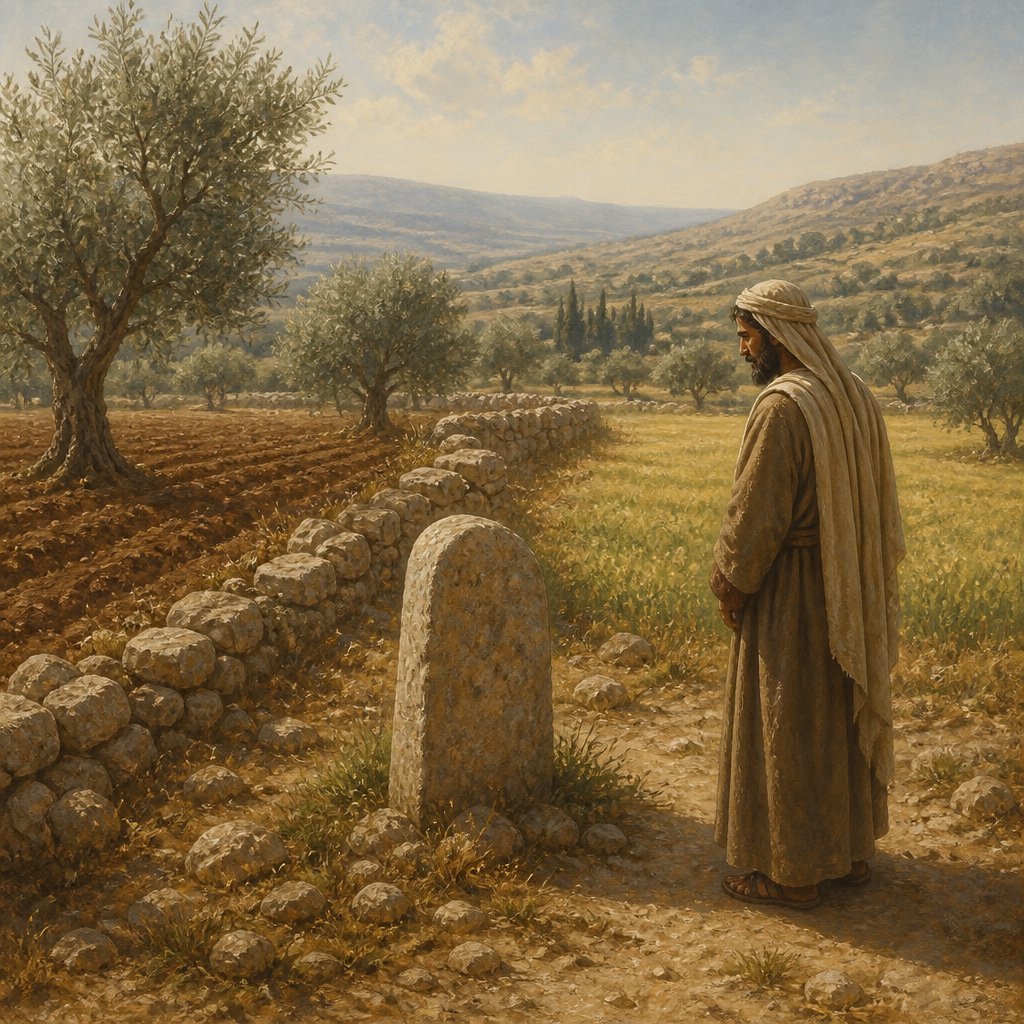
Deuteronomy 19:14 in the King James Version of the Bible states, "Thou shalt not remove thy neighbour's landmark, which they of old time have set in thine inheritance, which thou shalt inherit in the land that the Lord thy God giveth thee to possess it." This verse is found within the Book of Deuteronomy, which is the fifth book of the Old Testament and contains a series of speeches given by Moses to the Israelites just before they enter the Promised Land.
The verse speaks to the importance of respecting the boundaries and property rights of others. In ancient times, land was a crucial resource and possession, and disputes over property boundaries could lead to conflict and injustice. The "landmark" mentioned in the verse refers to a physical boundary marker, such as a stone or a post, that delineated the extent of a person's property.
The verse emphasizes the importance of upholding these boundaries and not infringing upon the property of one's neighbor. It is a commandment that seeks to prevent the unjust expansion of one's own land at the expense of others.
One of the key themes in this verse is the concept of justice and fairness. By prohibiting the removal of a neighbor's landmark, the verse promotes the idea of respecting the rights of others and treating them with equity. It emphasizes the importance of maintaining the integrity of property boundaries and not taking advantage of others for personal gain. This aligns with broader biblical teachings on justice, compassion, and ethical behavior.
Furthermore, this verse also speaks to the idea of stewardship. God gave the Israelites the land as an inheritance, and they were to occupy and cultivate it. In this context, respecting the landmarks set by their predecessors demonstrates a sense of reverence for the land, as well as a recognition of the rights and stewardship of those who came before them. It reminds the Israelites that they are not the ultimate owners of the land, but rather temporary caretakers entrusted with its preservation and rightful use.
The verse also carries symbolic significance beyond its literal meaning. The concept of boundaries and respecting property rights can be extended to broader principles of respecting personal boundaries, honoring the rights of others, and living in harmony with one's neighbors. This extends to the moral, ethical, and spiritual boundaries that define one's relationships with others, and the need to uphold these boundaries to maintain healthy and just interactions.
In a broader theological context, the verse can be understood as an expression of God's concern for justice and righteousness. It reflects God's desire for his people to live in harmony with each other, respecting the rights and possessions of others, and upholding principles of fairness and equity. It is a reflection of God's character as a just and righteous deity, and an expression of his will for his people to embody these same qualities in their interactions with others.
In conclusion, Deuteronomy 19:14 is a verse that carries important ethical, moral, and spiritual implications. It emphasizes the values of justice, fairness, stewardship, and respect for others, while also carrying symbolic significance for broader principles of human relationships and living in harmony with one another. It is a reminder of the importance of upholding ethical boundaries and treating others with fairness and respect, reflecting God's will for his people to live in accordance with these principles.
Have questions about Deuteronomy 19:14?
Dive deeper into this scripture with Bible Chat — an AI-powered tool for exploring God's Word through conversation. Ask questions, get context, and grow in your understanding of the Bible.
Get Our Apps


Deuteronomy 19:14 Artwork

Deuteronomy 19:14 - "¶ Thou shalt not remove thy neighbour's landmark, which they of old time have set in thine inheritance, which thou shalt inherit in the land that the LORD thy God giveth thee to possess it."
"¶ Thou shalt not remove thy neighbour's landmark, which they of old time have set in thine inheritance, which thou shalt inherit in the land that the LORD thy God giveth thee to possess it." - Deuteronomy 19:14

Deuteronomy 14:19 - "And every creeping thing that flieth is unclean unto you: they shall not be eaten."
"And every creeping thing that flieth is unclean unto you: they shall not be eaten." - Deuteronomy 14:19

Deuteronomy 14:14 - "And every raven after his kind,"

Deuteronomy 30:19:

Deuteronomy 5:19 - "Neither shalt thou steal."

Deuteronomy 14:17 - "And the pelican, and the gier eagle, and the cormorant,"

"And every raven after his kind," - Deuteronomy 14:14

Deuteronomy 14:16 - "The little owl, and the great owl, and the swan,"

Deuteronomy 14:3 - "¶ Thou shalt not eat any abominable thing."

Deuteronomy 14:11 - "¶ Of all clean birds ye shall eat."

Deuteronomy 14:20 - "But of all clean fowls ye may eat."

Deuteronomy 14:13 - "And the glede, and the kite, and the vulture after his kind,"

Deuteronomy 10:19 - "Love ye therefore the stranger: for ye were strangers in the land of Egypt."

Deuteronomy 14:18 - "And the stork, and the heron after her kind, and the lapwing, and the bat."

Deuteronomy 14:12 - "But these are they of which ye shall not eat: the eagle, and the ossifrage, and the ospray,"

Deuteronomy 14:15 - "And the owl, and the night hawk, and the cuckow, and the hawk after his kind,"

Deuteronomy 29:14 - "Neither with you only do I make this covenant and this oath;"

Deuteronomy 19:7 - "Wherefore I command thee, saying, Thou shalt separate three cities for thee."

Deuteronomy 6:19 - "To cast out all thine enemies from before thee, as the LORD hath spoken."

"Neither shalt thou steal." - Deuteronomy 5:19

Deuteronomy 14:4 - "These are the beasts which ye shall eat: the ox, the sheep, and the goat,"

Numbers 19:14-19 Touching a dead is unclean

Genesis 19-14

Psalm 19:14

Deuteronomy 19:16 - "¶ If a false witness rise up against any man to testify against him that which is wrong;"

Deuteronomy 27:19 - "Cursed be he that perverteth the judgment of the stranger, fatherless, and widow. And all the people shall say, Amen."

Deuteronomy 19:19 - "Then shall ye do unto him, as he had thought to have done unto his brother: so shalt thou put the evil away from among you."

Deuteronomy 12:19 - "Take heed to thyself that thou forsake not the Levite as long as thou livest upon the earth."