What does Deuteronomy 18:3 mean?
"¶ And this shall be the priest's due from the people, from them that offer a sacrifice, whether it be ox or sheep; and they shall give unto the priest the shoulder, and the two cheeks, and the maw." - Deuteronomy 18:3
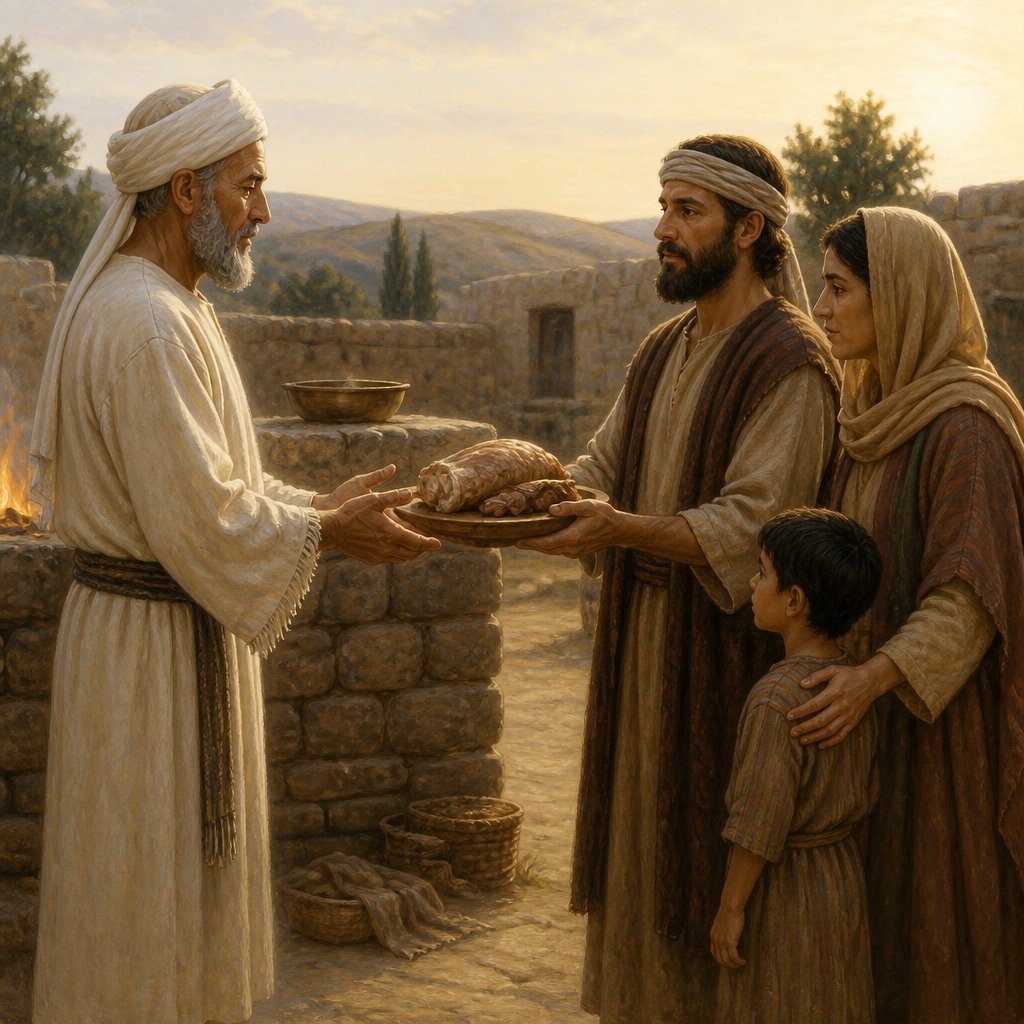
Deuteronomy 18:3 (KJV) states, "And this shall be the priest's due from the people, from them that offer a sacrifice, whether it be ox or sheep, and they shall give unto the priest the shoulder, and the two cheeks, and the maw." This verse is part of a larger passage in the book of Deuteronomy, which serves as a reminder and reiteration of the laws and regulations that the Israelites were to follow as they prepared to enter the Promised Land.
In order to fully understand the meaning and significance of Deuteronomy 18:3, it is essential to consider the context in which it appears. The book of Deuteronomy was written by Moses as a series of farewell addresses to the Israelites before they crossed the Jordan River. The purpose of these addresses was to remind the people of God's covenant with them, and to instruct them in the laws and statutes that they were to follow in order to remain faithful to this covenant. Deuteronomy 18:3 specifically pertains to the regulations regarding the offerings and sacrifices that were to be made to the Lord.
In this verse, the priest's due from the people is outlined. When the people made sacrifices of either ox or sheep, they were to give the priest certain portions of the animal, including the shoulder, the two cheeks, and the maw. This allocation was to be given from each sacrificial offering, and it was to be given exclusively to the priests as their portion.
One of the central themes of Deuteronomy 18:3 is the concept of stewardship and provision. The passage emphasizes the importance of recognizing and honoring the role of the priest as the mediator between the people and God. By giving the priest a portion of their sacrifices, the people were not only fulfilling a religious duty, but also acknowledging the priest's dependence on these offerings for sustenance. This practice is a demonstration of the Israelites' commitment to supporting the religious institutions and the individuals who served in them.
Furthermore, the passage reflects the idea of shared responsibility and community support. The priest's due from the people was not simply a transactional exchange, but rather a communal act of provision for those who were devoted to serving the Lord and the people of Israel. By providing for the priests in this manner, the people were displaying their commitment to maintaining the religious practices and upholding the priesthood as an integral part of their society.
Symbolically, the portions of the sacrifice that were designated for the priest can be interpreted as a representation of the necessity of acknowledging and honoring the authority and guidance of spiritual leaders. The shoulder, the two cheeks, and the maw are physical parts of the animal that were set apart for the priests, and they serve as a tangible symbol of the priests' consecration and separation for the service of the Lord.
In conclusion, Deuteronomy 18:3 carries significant meaning within the larger context of the book of Deuteronomy. It reinforces the importance of stewardship, provision, and community support within the religious practices of the Israelites. The passage serves as a reminder of the roles and responsibilities of the priesthood, and it emphasizes the need for the people to honor and support those who served in these capacities. Ultimately, Deuteronomy 18:3 invites readers to consider the significance of recognizing and providing for the spiritual leaders in their community, and to appreciate the ways in which they contribute to the well-being of the society as a whole.
Have questions about Deuteronomy 18:3?
Dive deeper into this scripture with Bible Chat — an AI-powered tool for exploring God's Word through conversation. Ask questions, get context, and grow in your understanding of the Bible.
Get Our Apps


Deuteronomy 18:3 Artwork

Deuteronomy 18:3 - "¶ And this shall be the priest's due from the people, from them that offer a sacrifice, whether it be ox or sheep; and they shall give unto the priest the shoulder, and the two cheeks, and the maw."

"¶ And this shall be the priest's due from the people, from them that offer a sacrifice, whether it be ox or sheep; and they shall give unto the priest the shoulder, and the two cheeks, and the maw." - Deuteronomy 18:3

Deuteronomy 3:18 - "¶ And I commanded you at that time, saying, The LORD your God hath given you this land to possess it: ye shall pass over armed before your brethren the children of Israel, all that are meet for the war."

Deuteronomy 5:18 - "Neither shalt thou commit adultery."

Deuteronomy 18:11 - "Or a charmer, or a consulter with familiar spirits, or a wizard, or a necromancer."

Deuteronomy 18:13 - "Thou shalt be perfect with the LORD thy God."

Deuteronomy 22:18 - "And the elders of that city shall take that man and chastise him;"

Deuteronomy 14:18 - "And the stork, and the heron after her kind, and the lapwing, and the bat."

Deuteronomy 2:18 - "Thou art to pass over through Ar, the coast of Moab, this day:"

Deuteronomy 18:17 - "And the LORD said unto me, They have well spoken that which they have spoken."

Deuteronomy 1:18 - "And I commanded you at that time all the things which ye should do."

Deuteronomy 18:8 - "They shall have like portions to eat, beside that which cometh of the sale of his patrimony."

Deuteronomy 3:15 - "And I gave Gilead unto Machir."

Deuteronomy 32:18 - "Of the Rock that begat thee thou art unmindful, and hast forgotten God that formed thee."

Deuteronomy 4:18 - "The likeness of any thing that creepeth on the ground, the likeness of any fish that is in the waters beneath the earth:"

Deuteronomy 33:18 - "¶ And of Zebulun he said, Rejoice, Zebulun, in thy going out; and, Issachar, in thy tents."

Deuteronomy 3:23 - "And I besought the LORD at that time, saying,"

Deuteronomy 10:18 - "He doth execute the judgment of the fatherless and widow, and loveth the stranger, in giving him food and raiment."

Deuteronomy 27:18 - "Cursed be he that maketh the blind to wander out of the way. And all the people shall say, Amen."

"Neither shalt thou commit adultery." - Deuteronomy 5:18

Deuteronomy 14:3 - "¶ Thou shalt not eat any abominable thing."

Deuteronomy 18:21 - "And if thou say in thine heart, How shall we know the word which the LORD hath not spoken?"

Create picture of a Jewish man wearing items in Deuteronomy 11:18

Deuteronomy 18:2 - "Therefore shall they have no inheritance among their brethren: the LORD is their inheritance, as he hath said unto them."

Deuteronomy 28:18 - "Cursed shall be the fruit of thy body, and the fruit of thy land, the increase of thy kine, and the flocks of thy sheep."

"Or a charmer, or a consulter with familiar spirits, or a wizard, or a necromancer." - Deuteronomy 18:11

"Thou shalt be perfect with the LORD thy God." - Deuteronomy 18:13

Deuteronomy 3:29 - "So we abode in the valley over against Beth-peor."

Deuteronomy 3:7 - "But all the cattle, and the spoil of the cities, we took for a prey to ourselves."

Deuteronomy 28:3 - "Blessed shalt thou be in the city, and blessed shalt thou be in the field."