What does Deuteronomy 16:16 mean?
"¶ Three times in a year shall all thy males appear before the LORD thy God in the place which he shall choose; in the feast of unleavened bread, and in the feast of weeks, and in the feast of tabernacles: and they shall not appear before the LORD empty:" - Deuteronomy 16:16
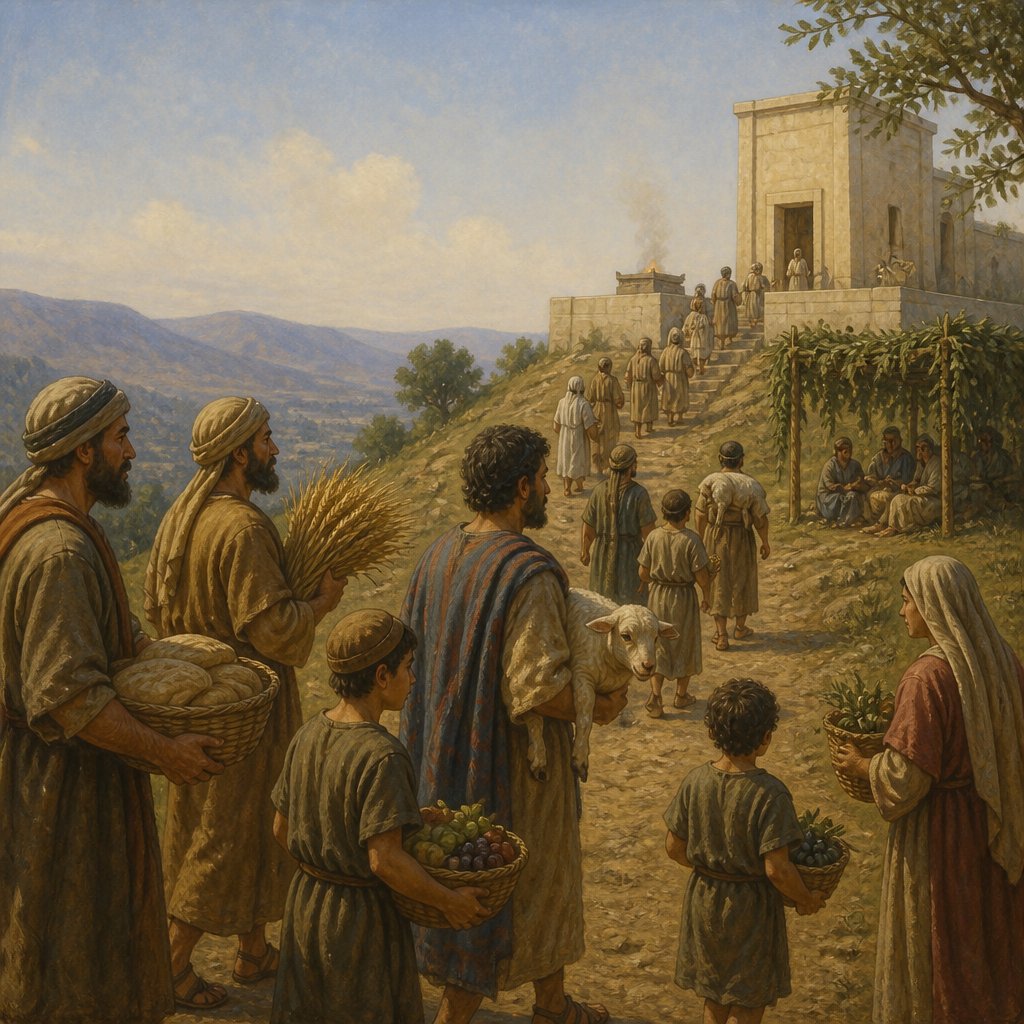
Deuteronomy 16:16 in the King James Version of the Bible reads, "Three times in a year shall all thy males appear before the Lord thy God in the place which he shall choose; in the feast of unleavened bread, and in the feast of weeks, and in the feast of tabernacles: and they shall not appear before the Lord empty."
This verse is part of the Old Testament, within the book of Deuteronomy, which is the fifth book of the Bible. In this particular passage, Moses is instructing the Israelites about the feasts and festivals they are to honor as a part of their religious observances. The three feasts mentioned here are the Feast of Unleavened Bread, the Feast of Weeks, and the Feast of Tabernacles.
The Feast of Unleavened Bread, also known as Passover, commemorates the Israelites' exodus from slavery in Egypt. It is a time of remembrance and celebration, during which the Israelites are to eat only unleavened bread for seven days as a symbol of their haste in leaving Egypt.
The Feast of Weeks, also known as Pentecost, takes place fifty days after Passover and celebrates the giving of the law to Moses on Mount Sinai. It is a time of thanksgiving and offering of the first fruits of the harvest.
The Feast of Tabernacles, also known as Sukkot, is a time of rejoicing and commemorates the Israelites' journey through the wilderness. During this feast, the Israelites are to live in temporary shelters or booths for seven days, to remind them of their dependence on God during their time in the wilderness.
The overarching theme of these three feasts is that of remembrance, thanksgiving, and dependence on God. The feasts serve as a way for the Israelites to express their gratitude to God for His faithfulness and provision throughout their history.
The context of this verse is important to note, as it is a specific instruction given to the Israelites at a particular point in their history. The feasts and festivals mentioned were to be observed in a specific location, the place which God would choose, and were to be attended by all male Israelites. The directive that they should not appear before the Lord empty-handed emphasizes the idea of giving back to God from the abundance He has provided.
Symbolically, these feasts point to the larger themes of redemption, covenant, and community that are central to the biblical narrative. The observance of these feasts served to remind the Israelites of God's faithfulness, His deliverance from slavery, His provision of the law, and His presence with them in the wilderness.
In a broader sense, this verse invites us to consider the importance of regular times of remembrance and celebration in our own lives. It serves as a reminder to express gratitude for God's faithfulness and provision and to recognize our dependence on Him. Additionally, the instruction not to appear before the Lord empty-handed encourages us to give from the abundance of our blessings and to approach God with a spirit of generosity.
Overall, Deuteronomy 16:16 and the feasts it mentions provide valuable insight into the Israelites' religious and cultural practices, as well as the timeless themes of remembrance, thanksgiving, and dependence on God. They offer us an opportunity to reflect on our own spiritual practices and the ways in which we can express gratitude for God's faithfulness in our lives.
Have questions about Deuteronomy 16:16?
Dive deeper into this scripture with Bible Chat — an AI-powered tool for exploring God's Word through conversation. Ask questions, get context, and grow in your understanding of the Bible.
Get Our Apps


Deuteronomy 16:16 Artwork

Deuteronomy 16:16 - "¶ Three times in a year shall all thy males appear before the LORD thy God in the place which he shall choose; in the feast of unleavened bread, and in the feast of weeks, and in the feast of tabernacles: and they shall not appear before the LORD empty:"
"¶ Three times in a year shall all thy males appear before the LORD thy God in the place which he shall choose; in the feast of unleavened bread, and in the feast of weeks, and in the feast of tabernacles: and they shall not appear before the LORD empty:" - Deuteronomy 16:16

Deuteronomy 20:16

Deuteronomy 20:16

Deuteronomy 20:16

Deuteronomy 14:16 - "The little owl, and the great owl, and the swan,"

Deuteronomy 10:16 - "Circumcise therefore the foreskin of your heart, and be no more stiffnecked."

Deuteronomy 28:16 - "Cursed shalt thou be in the city, and cursed shalt thou be in the field."

Psalm 1:6

Psalm 1:6
Titus 1:6

Proverbs 1:6

Titus 1:6

Proverbs 1:6

Proverbs 1:6

Deuteronomy 32:16 - "They provoked him to jealousy with strange gods, with abominations provoked they him to anger."

Titus 1:6

Proverbs 1:6

Proverbs 1:6

Esther 1:6

Nahum 1:6

Psalm 1:6

Proverbs 1:6

Proverbs 1:6
Titus 1:6

Deuteronomy 6:16 - "¶ Ye shall not tempt the LORD your God, as ye tempted him in Massah."

Mark 6:1-6

Zechariah 1:1-6

luke 3:1-6

Deuteronomy 19:16 - "¶ If a false witness rise up against any man to testify against him that which is wrong;"