What does Deuteronomy 12:5-7 mean?
"But unto the place which the Lord your God shall choose out of all your tribes to put his name there, even unto his habitation shall ye seek, and thither thou shalt come: And thither ye shall bring your burnt offerings, and your sacrifices, and your tithes, and heave offerings of your hand, and your vows, and your freewill offerings, and the firstlings of your herds and of your flocks: And there ye shall eat before the Lord your God, and ye shall rejoice in all that ye put your hand unto, ye and your households, wherein the Lord thy God hath blessed thee." - Deuteronomy 12:5-7
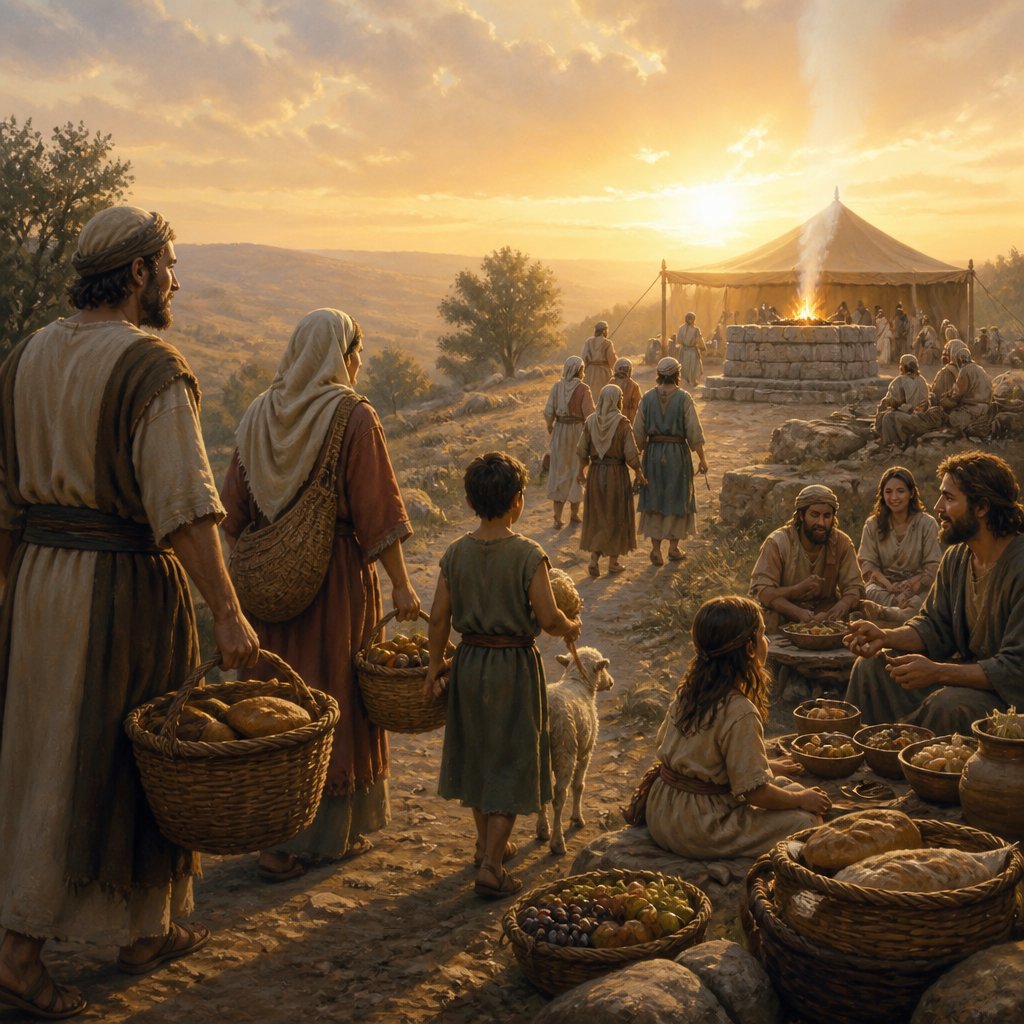
Deuteronomy 12:5-7 (KJV) states, "5 But unto the place which the Lord your God shall choose out of all your tribes to put his name there, even unto his habitation shall ye seek, and thither thou shalt come: 6 And thither ye shall bring your burnt offerings, and your sacrifices, and your tithes, and heave offerings of your hand, and your vows, and your freewill offerings, and the firstlings of your herds and of your flocks: 7 And there ye shall eat before the Lord your God, and ye shall rejoice in all that ye put your hand unto, ye and your households, wherein the Lord thy God hath blessed thee."
In these verses, Moses instructs the Israelites to seek and worship God in the specific place that He chooses, where they are to offer their sacrifices, tithes, and offerings. Additionally, they are commanded to eat in the presence of the Lord and rejoice in His blessings. This passage is rich with themes of worship, obedience, and gratitude, and it provides valuable insights into the religious practices of the Israelites in the Old Testament.
The context of Deuteronomy 12:5-7 is significant in understanding the significance of these verses. These instructions were given by Moses to the Israelites as they prepared to enter the Promised Land. The Israelites had been wandering in the wilderness for forty years, and they were about to establish a new way of life in a land that God had promised to give them. The establishment of a central place of worship was crucial for the Israelites, as it would serve as a unifying factor in their religious practices and provide a focal point for their worship of the one true God.
The theme of seeking and worshiping God in the place He chooses is central to Deuteronomy 12:5-7. This concept underscores the importance of obedience and reverence in the worship of God. The Israelites were not to worship God in just any place, but they were commanded to seek Him in the specific location that He designated. This reflects the belief that God's presence is not confined to any specific location, but that there are places where His presence is manifest in a special way. It also emphasizes the need for the Israelites to recognize and honor God's sovereignty and authority in their worship.
The verses also highlight the significance of sacrifices, tithes, and offerings in the worship of God. The Israelites were instructed to bring their burnt offerings, sacrifices, tithes, and other offerings to the designated place of worship. These offerings were an essential part of the Israelites' religious practices, serving as tangible expressions of their devotion and gratitude to God. Additionally, the act of eating before the Lord and rejoicing in His blessings reflects the importance of communal worship and shared experiences of God's provision and goodness. This communal aspect of worship was crucial in fostering a sense of unity and shared purpose among the Israelites.
Moreover, the passage communicates the idea of recognizing and celebrating God's blessings. The Israelites were commanded to rejoice in all that they put their hand to, acknowledging that every good thing they had came from God. This serves as a reminder for the Israelites, and for us today, to cultivate a spirit of gratitude and thanksgiving, recognizing that all blessings ultimately come from God. It also encourages a mindset of joy and celebration in worship, as the Israelites were urged to rejoice before the Lord in all things.
Symbolically, this passage represents the centralization and unity of worship under the authority of God. The designated place of worship symbolizes the unifying factor of the Israelites' religious practices, emphasizing the importance of a collective approach to worship. The offerings and sacrifices symbolize the Israelites' commitment and dedication to God, as well as their acknowledgment of His provision and sovereignty. Additionally, the act of eating together before the Lord symbolizes communal worship and fellowship, highlighting the shared experiences of God's presence and provision among the Israelites.
In conclusion, Deuteronomy 12:5-7 conveys important principles of seeking and worshiping God in obedience and reverence, as well as the significance of sacrifices, tithes, and offerings in the Israelites' religious practices. It emphasizes the communal aspect of worship and the celebration of God's blessings. This passage serves as a valuable reminder for believers today to approach God in obedience and gratitude, recognizing His sovereignty, provision, and goodness in our lives.
Have questions about Deuteronomy 12:5-7?
Dive deeper into this scripture with Bible Chat — an AI-powered tool for exploring God's Word through conversation. Ask questions, get context, and grow in your understanding of the Bible.
Get Our Apps


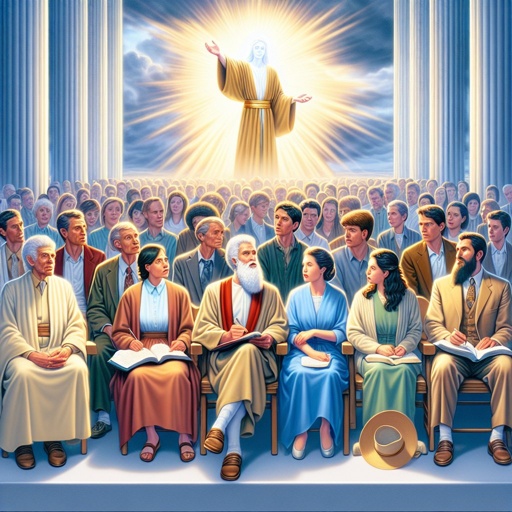
Deuteronomy 12:5-7 Artwork

Deuteronomy 12:5-7 - "But unto the place which the Lord your God shall choose out of all your tribes to put his name there, even unto his habitation shall ye seek, and thither thou shalt come: And thither ye shall bring your burnt offerings, and your sacrifices, and your tithes, and heave offerings of your hand, and your vows, and your freewill offerings, and the firstlings of your herds and of your flocks: And there ye shall eat before the Lord your God, and ye shall rejoice in all that ye put your hand unto, ye and your households, wherein the Lord thy God hath blessed thee."
"But unto the place which the Lord your God shall choose out of all your tribes to put his name there, even unto his habitation shall ye seek, and thither thou shalt come: And thither ye shall bring your burnt offerings, and your sacrifices, and your tithes, and heave offerings of your hand, and your vows, and your freewill offerings, and the firstlings of your herds and of your flocks: And there ye shall eat before the Lord your God, and ye shall rejoice in all that ye put your hand unto, ye and your households, wherein the Lord thy God hath blessed thee." - Deuteronomy 12:5-7

Deuteronomy 5:7 - "Thou shalt have none other gods before me."

Deuteronomy 5:12 - "Keep the sabbath day to sanctify it, as the LORD thy God hath commanded thee."
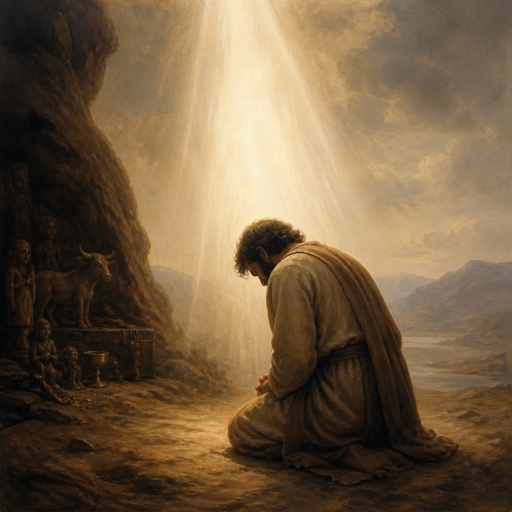
"Thou shalt have none other gods before me." - Deuteronomy 5:7

Deuteronomy 7:5 - "But thus shall ye deal with them; ye shall destroy their altars, and break down their images, and cut down their groves, and burn their graven images with fire."
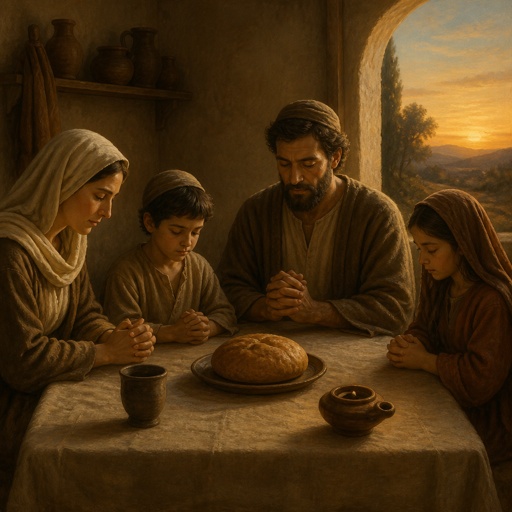
"Keep the sabbath day to sanctify it, as the LORD thy God hath commanded thee." - Deuteronomy 5:12

Deuteronomy 12:5 - "But unto the place which the LORD your God shall choose out of all your tribes to put his name there, even unto his habitation shall ye seek, and thither thou shalt come:"
Deuteronomy 7:12 - "¶ Wherefore it shall come to pass, if ye hearken to these judgments, and keep, and do them, that the LORD thy God shall keep unto thee the covenant and the mercy which he sware unto thy fathers:"

Deuteronomy 12:7 - "And there ye shall eat before the LORD your God, and ye shall rejoice in all that ye put your hand unto, ye and your households, wherein the LORD thy God hath blessed thee."

Deuteronomy 5:17 - "Thou shalt not kill."

Deuteronomy 34:5-6

Deuteronomy 5:19 - "Neither shalt thou steal."

Deuteronomy 5:18 - "Neither shalt thou commit adultery."

Deuteronomy 28:5 - "Blessed shall be thy basket and thy store."

Deuteronomy 14:12 - "But these are they of which ye shall not eat: the eagle, and the ossifrage, and the ospray,"

Deuteronomy 24:12 - "And if the man be poor, thou shalt not sleep with his pledge:"

Deuteronomy 12:4 - "Ye shall not do so unto the LORD your God."

Deuteronomy 5:2 - "The LORD our God made a covenant with us in Horeb."

Deuteronomy 12:24 - "Thou shalt not eat it; thou shalt pour it upon the earth as water."

Deuteronomy 32:12 - "So the LORD alone did lead him, and there was no strange god with him."

Deuteronomy 5:30 - "Go say to them, Get you into your tents again."

Deuteronomy 3:7 - "But all the cattle, and the spoil of the cities, we took for a prey to ourselves."

"Thou shalt not kill." - Deuteronomy 5:17

Deuteronomy 5:13 - "Six days thou shalt labour, and do all thy work:"

Deuteronomy 1:5 - "On this side Jordan, in the land of Moab, began Moses to declare this law, saying,"

Deuteronomy 20:12 - "And if it will make no peace with thee, but will make war against thee, then thou shalt besiege it:"

Deuteronomy 5:5 - "(I stood between the LORD and you at that time, to shew you the word of the LORD: for ye were afraid by reason of the fire, and went not up into the mount;) saying,"

Deuteronomy 12:9 - "For ye are not as yet come to the rest and to the inheritance, which the LORD your God giveth you."

Deuteronomy 5:20 - "Neither shalt thou bear false witness against thy neighbour."