What does Daniel 4:36 mean?
"At the same time my reason returned unto me; and for the glory of my kingdom, mine honour and brightness returned unto me; and my counsellors and my lords sought unto me; and I was established in my kingdom, and excellent majesty was added unto me." - Daniel 4:36
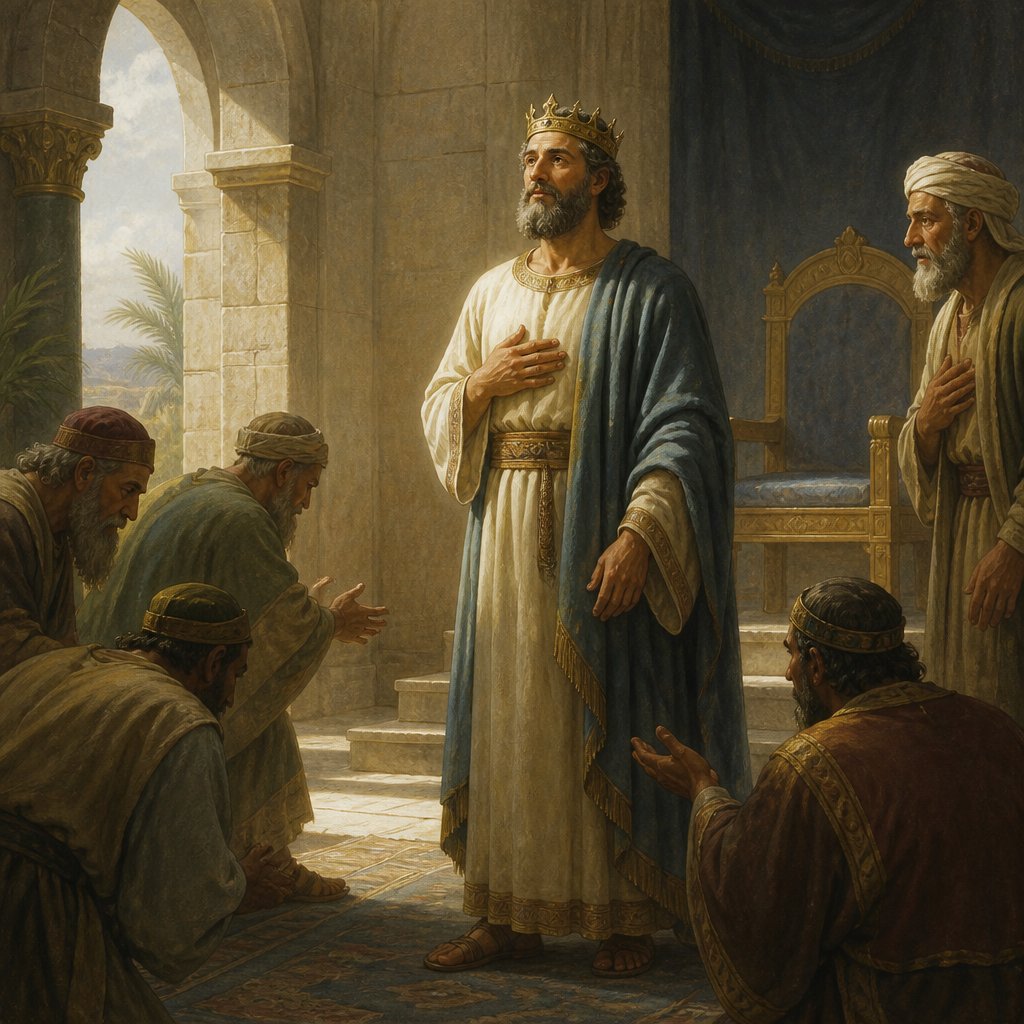
The Bible verse Daniel 4:36 from the King James Version (KJV) states, "At the same time my reason returned unto me; and for the glory of my kingdom, mine honour and brightness returned unto me; and my counsellors and my lords sought unto me; and I was established in my kingdom, and excellent majesty was added unto me."
This verse comes at the end of a chapter in the Book of Daniel that recounts the story of King Nebuchadnezzar's humbling and subsequent restoration. In the preceding verses, Nebuchadnezzar, the powerful and proud king of Babylon, has a terrifying dream that Daniel interprets as a warning from God. The dream foretells Nebuchadnezzar's fall from greatness and subsequent restoration, should he acknowledge the sovereignty of God. The verses that follow describe the fulfillment of this dream, as Nebuchadnezzar is driven from his kingdom, lives as a beast in the field, and ultimately regains his kingdom and sanity, acknowledging the power and authority of God.
The verse in question, Daniel 4:36, reflects Nebuchadnezzar's acknowledgment of God's sovereignty and his own restoration. It speaks to the restoration of reason, honor, and brightness to the king, as well as the reestablishment of his kingdom and the addition of "excellent majesty" to his reign. This verse encapsulates the transformation that Nebuchadnezzar undergoes as a result of his humbling and subsequent recognition of God's authority.
The themes present in this verse are numerous and profound. One theme is the sovereignty of God over all earthly kings and kingdoms. Nebuchadnezzar, who once considered himself the greatest of all rulers, is forced to acknowledge that his power and authority are ultimately subject to the will of God. This theme emphasizes the idea that no earthly ruler is above God's authority and that all must ultimately submit to His will.
Another theme is the concept of humility. Nebuchadnezzar's pride and arrogance led to his downfall, but his subsequent restoration and acknowledgment of God's authority demonstrate the transformative power of humility. This theme serves as a reminder that true strength and greatness come from recognizing and submitting to a higher power, rather than from relying solely on one's own abilities and accomplishments.
The verse also highlights the idea of restoration and redemption. Despite Nebuchadnezzar's hubris and subsequent punishment, he is ultimately restored to his former glory and even experiences an increase in his majesty. This underscores the notion that God is merciful and forgiving, willing to restore those who humbly acknowledge their faults and seek His guidance.
The context of this verse is essential to understanding its significance. In the preceding verses, Nebuchadnezzar's pride and arrogance lead to his humbling, as he is driven from his kingdom and forced to live as a beast in the field. This drastic transformation serves as a powerful example of the consequences of pride and the need for humility before God. The verse in question, Daniel 4:36, then reflects Nebuchadnezzar's acknowledgment of God's sovereignty and his subsequent restoration, serving as a culmination of the narrative and a powerful testament to the transformative power of humility and God's mercy.
Symbolism is also present in this verse, with Nebuchadnezzar's restoration serving as a powerful symbol of redemption and the transformative power of faith. His return to reason, honor, and brightness symbolizes the restoration of his sanity and dignity, while the reestablishment of his kingdom and the addition of "excellent majesty" represent the restoration of his earthly power and authority. These symbols serve as a powerful testament to the ways in which faith and humility can lead to restoration and redemption, even in the face of overwhelming pride and arrogance.
In conclusion, Daniel 4:36 from the King James Version is a verse that reflects the transformative power of humility and the sovereignty of God. Its themes of humility, redemption, and the sovereignty of God are powerful and enduring, serving as a reminder of the consequences of pride and the importance of acknowledging and submitting to a higher power. The verse's context and symbolism further emphasize its profound significance, making it a testament to the transformative power of faith and the merciful nature of God.
Have questions about Daniel 4:36?
Dive deeper into this scripture with Bible Chat — an AI-powered tool for exploring God's Word through conversation. Ask questions, get context, and grow in your understanding of the Bible.
Get Our Apps


Daniel 4:36 Artwork

Daniel 4:36 - "At the same time my reason returned unto me; and for the glory of my kingdom, mine honour and brightness returned unto me; and my counsellors and my lords sought unto me; and I was established in my kingdom, and excellent majesty was added unto me."
"At the same time my reason returned unto me; and for the glory of my kingdom, mine honour and brightness returned unto me; and my counsellors and my lords sought unto me; and I was established in my kingdom, and excellent majesty was added unto me." - Daniel 4:36

Daniel 2:36 - "¶ This is the dream; and we will tell the interpretation thereof before the king."
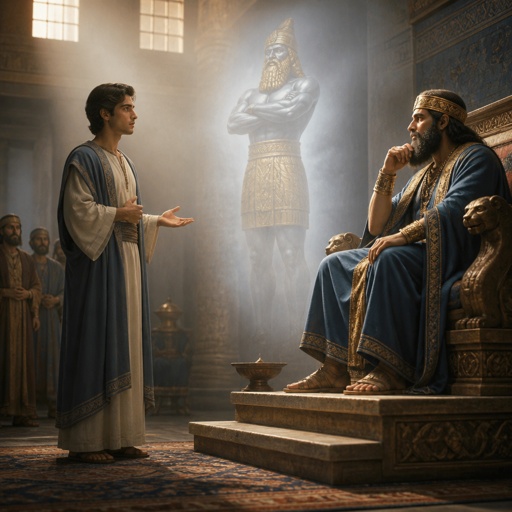
"¶ This is the dream; and we will tell the interpretation thereof before the king." - Daniel 2:36

Daniel 4:15

Daniel 7:4

Daniel 5:4

Daniel 6:3-4 - "Daniel 6:3-4: Then this Daniel was preferred above the presidents and princes, because an excellent spirit was in him; and the king thought to set him over the whole realm. So the presidents and princes sought to find occasion against Daniel concerning the kingdom; but they could find none occasion nor fault; forasmuch as he was faithful, neither was there any error or fault found in him."

Daniel 4:4 - "¶ I Nebuchadnezzar was at rest in mine house, and flourishing in my palace:"

Daniel 4:13-14

Daniel 4:10-14

Daniel 4:13-14

Daniel 4:1-3

Daniel 12:4 - "But thou, O Daniel, shut up the words, and seal the book, even to the time of the end: many shall run to and fro, and knowledge shall be increased."

Daniel 4:28 - "¶ All this came upon the king Nebuchadnezzar."

Mark 4:36-37

Mark 4:36-37

Daniel 4:8 - "¶ But at the last Daniel came in before me, whose name was Belteshazzar, according to the name of my god, and in whom is the spirit of the holy gods: and before him I told the dream, saying,"

Daniel 4:29 - "At the end of twelve months he walked in the palace of the kingdom of Babylon."

Daniel 6:4 - "¶ Then the presidents and princes sought to find occasion against Daniel concerning the kingdom; but they could find none occasion nor fault; forasmuch as he was faithful, neither was there any error or fault found in him."
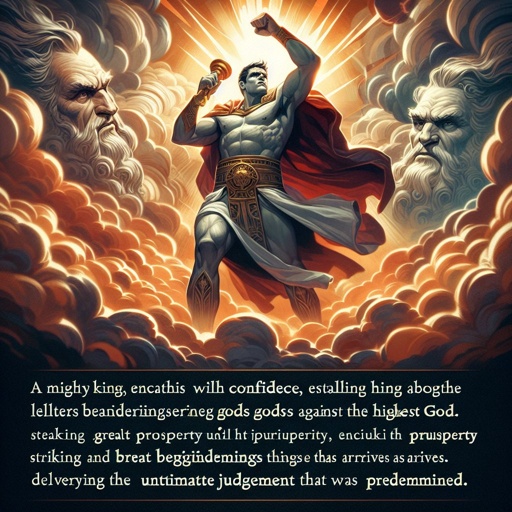
Daniel 11:36 - "And the king shall do according to his will; and he shall exalt himself, and magnify himself above every god, and shall speak marvellous things against the God of gods, and shall prosper till the indignation be accomplished: for that that is determined shall be done."

Daniel 3:4 - "Then an herald cried aloud, To you it is commanded, O people, nations, and languages,"

Genesis 36:4 - "And Adah bare to Esau Eliphaz; and Bashemath bare Reuel;"

Daniel 4:10-12 – Nebuchadnezzar’s dream of a tree.

Daniel 5:4 - "They drank wine, and praised the gods of gold, and of silver, of brass, of iron, of wood, and of stone."

1 Chronicles 4:36 - "And Elioenai, and Jaakobah, and Jeshohaiah, and Asaiah, and Adiel, and Jesimiel, and Benaiah,"
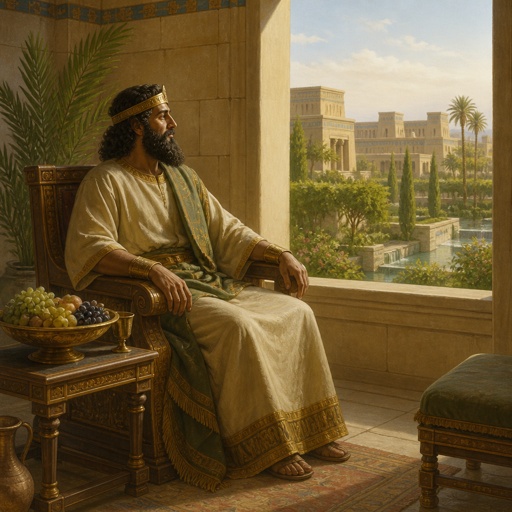
"¶ I Nebuchadnezzar was at rest in mine house, and flourishing in my palace:" - Daniel 4:4

Daniel 10:4 - "And in the four and twentieth day of the first month, as I was by the side of the great river, which is Hiddekel;"

Job 36:4 - "For truly my words shall not be false: he that is perfect in knowledge is with thee."

"¶ All this came upon the king Nebuchadnezzar." - Daniel 4:28