What does Acts 9:8 mean?
"And Saul arose from the earth; and when his eyes were opened, he saw no man: but they led him by the hand, and brought him into Damascus." - Acts 9:8
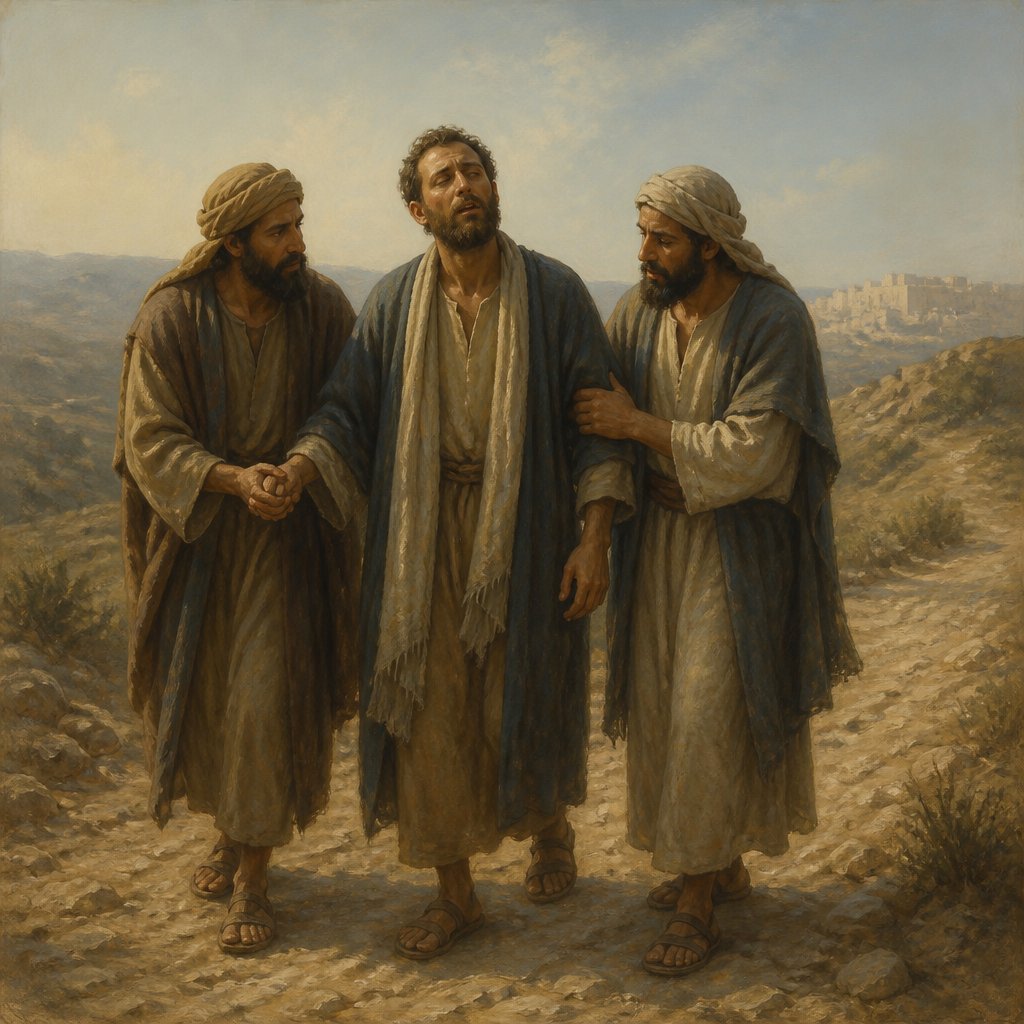
The Bible verse Acts 9:8 in the King James Version (KJV) reads: "And Saul arose from the earth; and when his eyes were opened, he saw no man: but they led him by the hand, and brought him into Damascus."
This verse comes from the New Testament and is part of the account of the conversion of the apostle Paul (formerly known as Saul). In this passage, we see a dramatic shift in the life of Saul as he encounters Jesus Christ on the road to Damascus.
The context of this verse is incredibly important in understanding its significance. Prior to this moment, Saul was known for his intense persecution of Christians. He was zealously persecuting the followers of Jesus, even going so far as to obtain letters from the high priest in order to arrest any believers he found in Damascus. However, on his way to Damascus, he encounters a blinding light and hears the voice of Jesus Christ, who asks him why he is persecuting Him. This encounter leads to Saul's conversion and his transformation into one of the most influential figures in the early Christian church.
The verse acts as a pivotal moment in the story of Saul's conversion. After being knocked to the ground by the light and hearing the voice of Jesus, Saul rises from the earth. This action can be seen as symbolizing a physical and spiritual shift in Saul's life. The fact that he "saw no man" when he opened his eyes could be interpreted as a symbol of his spiritual blindness being lifted, as he was now able to see and understand the truth of who Jesus was. It is a powerful image of Saul's transformation from a persecutor of the church to a follower of Christ.
The mention of being led by the hand and brought into Damascus also holds significance. This act of being led by the hand can be seen as symbolic of Saul's complete dependence on others as he deals with the physical and spiritual blindness inflicted upon him. It also reflects the guidance and support that God provides to those who choose to follow Him, even in the face of great adversity.
This verse also speaks to the theme of divine intervention and the sovereignty of God. Saul's encounter with Jesus Christ was not something he sought out or expected, but rather it was a powerful, life-changing event that was initiated by God. It underscores the belief that God is active in the world, and that He has the power to transform even the most hardened of sinners into devoted followers of Christ.
Additionally, the verse emphasizes the theme of forgiveness and redemption. Despite Saul's previous persecution of the church, he is not met with condemnation or judgement by Jesus, but rather with a call to repentance and transformation. This serves as a powerful reminder of God's boundless love and his willingness to forgive even the most grievous of sins.
In conclusion, Acts 9:8 from the KJV holds deep meaning and significance within the context of the conversion of Saul. It serves as a powerful symbol of transformation, divine intervention, and the redemptive power of God. The verse provides a profound insight into the radical change that can occur in a person's life when they encounter the grace and truth of Jesus Christ. It stands as a testament to the hope and possibility of transformation that is available to all who choose to follow Christ.
Have questions about Acts 9:8?
Dive deeper into this scripture with Bible Chat — an AI-powered tool for exploring God's Word through conversation. Ask questions, get context, and grow in your understanding of the Bible.
Get Our Apps


Acts 9:8 Artwork

Acts 9:8 - "And Saul arose from the earth; and when his eyes were opened, he saw no man: but they led him by the hand, and brought him into Damascus."
"And Saul arose from the earth; and when his eyes were opened, he saw no man: but they led him by the hand, and brought him into Damascus." - Acts 9:8

Acts 8:9 - "But there was a certain man, called Simon, which beforetime in the same city used sorcery, and bewitched the people of Samaria, giving out that himself was some great one:"

Acts 15:8-9 - "And God, who knows the heart, bore witness to them, by giving them the Holy Spirit just as he did to us, and he made no distinction between us and them, having cleansed their hearts by faith."

Acts 8:8 - "And there was great joy in that city."

"And there was great joy in that city." - Acts 8:8

Acts 1:8

Acts 8:33

Acts 9:9 - "And he was three days without sight, and neither did eat nor drink."

Acts 9:1-20

Acts 9:1-20

Acts 4:8-12

Acts 16:8 - "And they passing by Mysia came down to Troas."

ACTS 8:30 Philip and the Ethiopian

Acts 9:28 - "And he was with them coming in and going out at Jerusalem."

Acts 8:17 - "Then laid they their hands on them, and they received the Holy Ghost."

Acts 3:9 - "And all the people saw him walking and praising God:"

Acts 24:9 - "And the Jews also assented, saying that these things were so."

Acts 9:42 - "And it was known throughout all Joppa; and many believed in the Lord."

Acts 17:8 - "And they troubled the people and the rulers of the city, when they heard these things."

Acts 8:28 - "Was returning, and sitting in his chariot read Esaias the prophet."

Acts 9:35 - "And all that dwelt at Lydda and Saron saw him, and turned to the Lord."

Acts 15:9 - "And put no difference between us and them, purifying their hearts by faith."

Acts 9:20 - "And straightway he preached Christ in the synagogues, that he is the Son of God."

Acts 7:9 - "And the patriarchs, moved with envy, sold Joseph into Egypt: but God was with him,"

Acts 8:23 - "For I perceive that thou art in the gall of bitterness, and in the bond of iniquity."
"But there was a certain man, called Simon, which beforetime in the same city used sorcery, and bewitched the people of Samaria, giving out that himself was some great one:" - Acts 8:9

Acts 21:9 - "And the same man had four daughters, virgins, which did prophesy."

Acts 17:9 - "And when they had taken security of Jason, and of the other, they let them go."

Acts 9:25 - "Then the disciples took him by night, and let him down by the wall in a basket."