What does Acts 9:30 mean?
"Which when the brethren knew, they brought him down to Caesarea, and sent him forth to Tarsus." - Acts 9:30
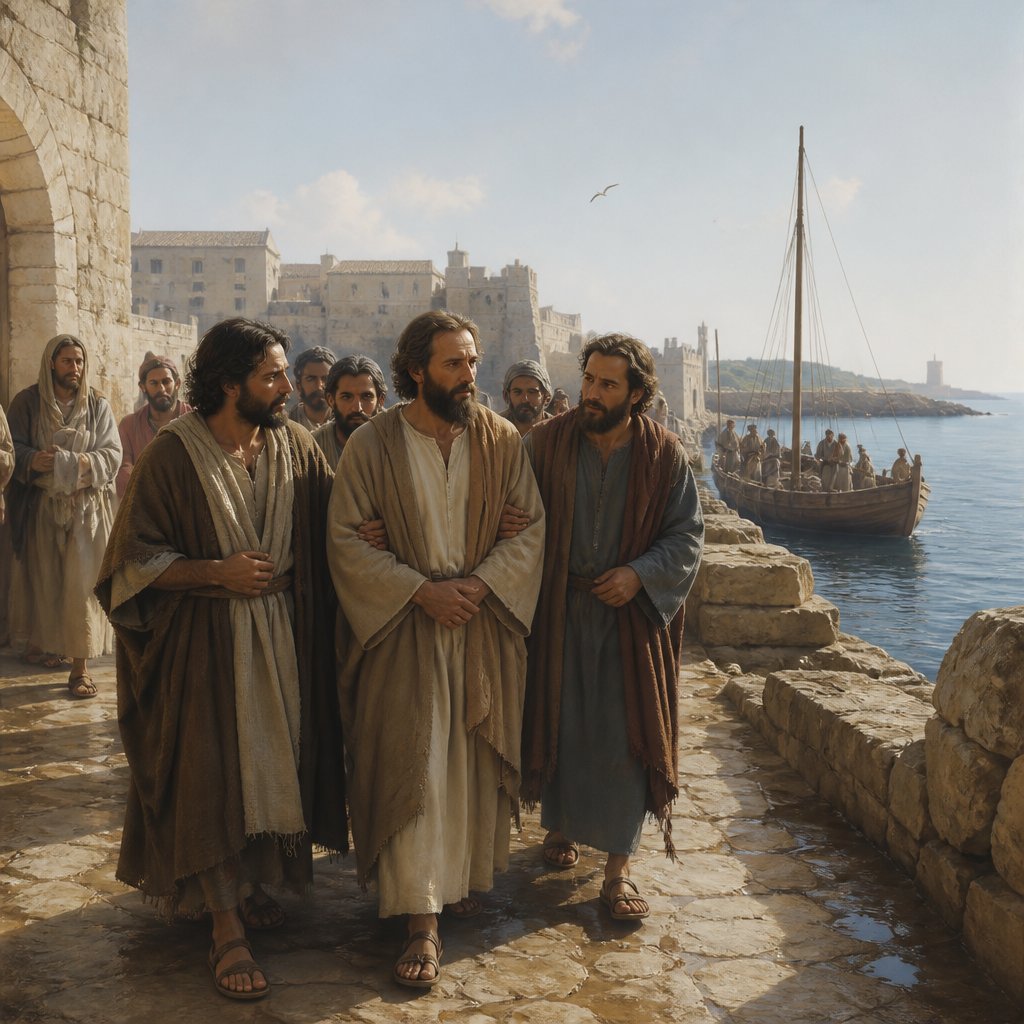
In Acts 9:30, the King James Version of the Bible states, "Which when the brethren knew, they brought him down to Caesarea, and sent him forth to Tarsus." This verse comes from the ninth chapter of the Book of Acts, which focuses on the conversion of Saul, who later becomes known as the apostle Paul. This specific verse occurs after Paul's escape from Damascus, where he had been preaching the Gospel and had to flee due to opposition from the Jews.
The verse highlights the support and protection that the early believers provided for Paul, demonstrating the importance of community and fellowship in the Christian faith. It also shows the strategic planning and organization of the early church as they sought to ensure Paul's safety and facilitate his future in ministry.
The theme of community and support is central to this verse. The "brethren" mentioned here are fellow believers who actively care for and assist one another. This verse reminds us of the importance of standing by our brothers and sisters in Christ, especially during times of difficulty or persecution. It also serves as a model for how the church should function – as a united body that works together to advance the Gospel and support each other in their faith journeys.
Furthermore, the verse speaks to the concept of divine providence. The believers in Damascus were aware of the danger that Paul faced, and they took action to ensure his safety. This demonstrates a recognition of God's sovereignty and the belief that He is actively involved in the affairs of His people. By bringing Paul to Caesarea and sending him to Tarsus, the believers were participating in God's plan for Paul's ministry, showing their trust in His guidance and provision.
The geographical locations mentioned in the verse also hold symbolic significance. Caesarea and Tarsus were both significant cities in the ancient world, and they serve as markers of Paul's journey and the spread of the Gospel. Caesarea, a Roman stronghold, represents the broader Gentile world and the mission to take the message of Jesus beyond the Jewish community. Tarsus, Paul's hometown, symbolizes his roots and the foundation of his ministry. This verse thus foreshadows Paul's future missionary endeavors and the expansion of the Gospel to the Gentiles.
In addition, the verse underscores the idea of divine calling and purpose. Paul's journey to Tarsus was not merely a retreat from danger; it was a strategic move to prepare him for the ministry that lay ahead. This verse is a reminder that God often places His servants in strategic positions, equipping them for the roles He has called them to fulfill. It also serves as a testament to the faithfulness of God in leading His people and orchestrating the events of their lives for His purposes.
Overall, Acts 9:30 captures the solidarity and support of the early church, the providence and sovereignty of God, and the strategic planning of His work. It also foreshadows Paul's future ministry and the spread of the Gospel to the Gentiles. This verse serves as a powerful reminder of the importance of community in the Christian faith, the trustworthiness of God's guidance, and the fulfillment of His purposes in the lives of His people.
Have questions about Acts 9:30?
Dive deeper into this scripture with Bible Chat — an AI-powered tool for exploring God's Word through conversation. Ask questions, get context, and grow in your understanding of the Bible.
Get Our Apps


Acts 9:30 Artwork

Acts 9:30 - "Which when the brethren knew, they brought him down to Caesarea, and sent him forth to Tarsus."
"Which when the brethren knew, they brought him down to Caesarea, and sent him forth to Tarsus." - Acts 9:30

Acts 4:30

Acts 4:30

Acts 4:30

Acts 4:30

Acts 13:30 - "But God raised him from the dead:"

ACTS 8:30 Philip and the Ethiopian

Acts 11:30 - "Which also they did, and sent it to the elders by the hands of Barnabas and Saul."

luke 9:30

Acts 19:30 - "And when Paul would have entered in unto the people, the disciples suffered him not."

Acts 16:30 - "And brought them out, and said, Sirs, what must I do to be saved?"

Acts 17:30 - "And the times of this ignorance God winked at; but now commandeth all men every where to repent:"

Acts 5:30 - "The God of our fathers raised up Jesus, whom ye slew and hanged on a tree."

luke 9:29- 30

"But God raised him from the dead:" - Acts 13:30

Acts 26:30 - "And when he had thus spoken, the king rose up, and the governor, and Bernice, and they that sat with them:"

Acts 15:30 - "So when they were dismissed, they came to Antioch: and when they had gathered the multitude together, they delivered the epistle:"

Acts 9:9 - "And he was three days without sight, and neither did eat nor drink."

Acts 4:30 - "By stretching forth thine hand to heal; and that signs and wonders may be done by the name of thy holy child Jesus."

Acts 28:30 - "And Paul dwelt two whole years in his own hired house, and received all that came in unto him,"

Acts 20:30 - "Also of your own selves shall men arise, speaking perverse things, to draw away disciples after them."

Acts 9:1-20

Acts 9:1-20

Acts 8:30 - "And Philip ran thither to him, and heard him read the prophet Esaias, and said, Understandest thou what thou readest?"

Acts 7:30 - "And when forty years were expired, there appeared to him in the wilderness of mount Sina an angel of the Lord in a flame of fire in a bush."

1 Chronicles 9:30 - "And some of the sons of the priests made the ointment of the spices."

Job 30:9 - "And now am I their song, yea, I am their byword."

Acts 21:30 - "And all the city was moved, and the people ran together: and they took Paul, and drew him out of the temple: and forthwith the doors were shut."

Isaiah 30:9 - "That this is a rebellious people, lying children, children that will not hear the law of the LORD:"