What does Acts 9:26 mean?
"And when Saul was come to Jerusalem, he assayed to join himself to the disciples: but they were all afraid of him, and believed not that he was a disciple." - Acts 9:26
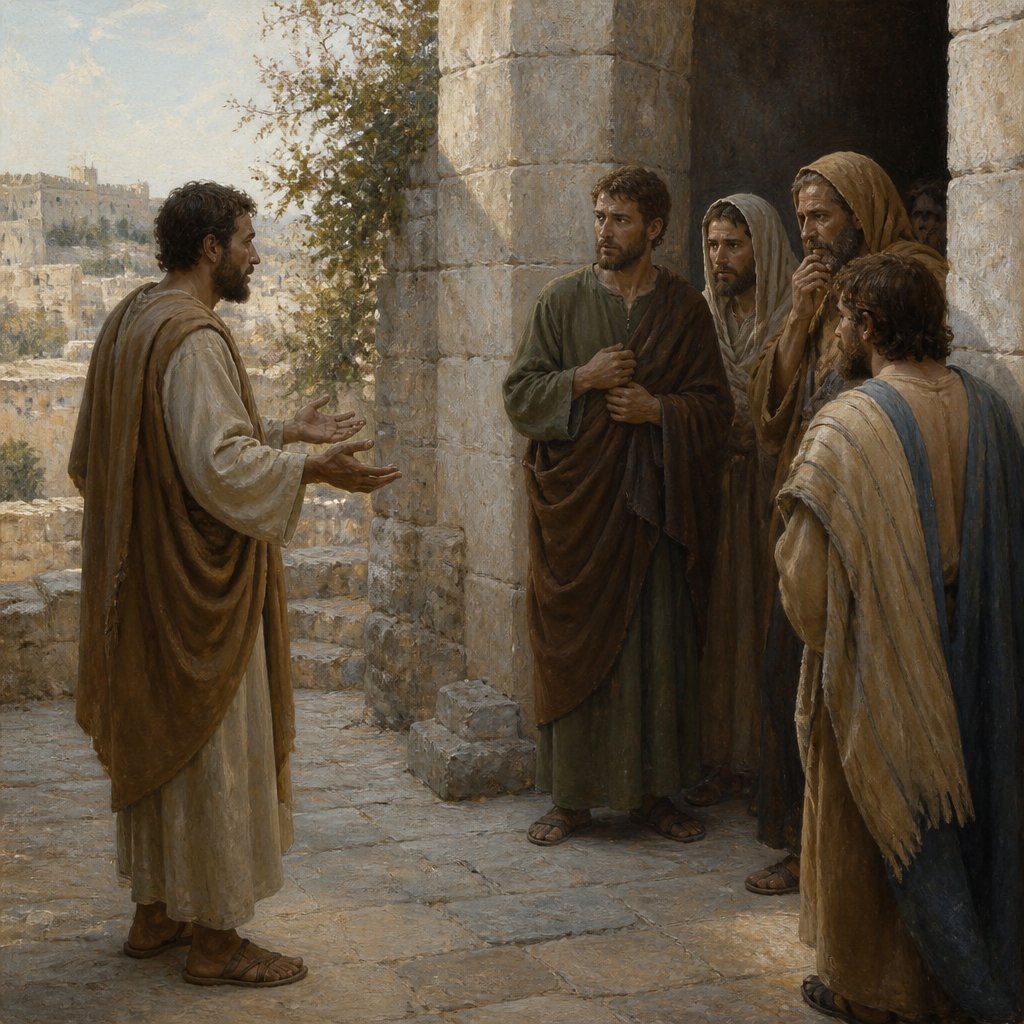
The Bible verse Acts 9:26 from the King James Version (KJV) states, "And when Saul was come to Jerusalem, he essayed to join himself to the disciples: but they were all afraid of him, and believed not that he was a disciple." This verse is a significant moment in the story of Saul, who later becomes the apostle Paul, and his journey of conversion and acceptance within the early Christian community.
The context of this verse is important to understand its full meaning. Prior to this verse, Saul was known for persecuting Christians and overseeing the killing of Stephen, the first Christian martyr. He was a fervent opponent of the Christian faith, and he had been on a mission to Damascus to arrest followers of Jesus when he experienced a dramatic conversion on the road. As a result of a divine intervention, Saul was blinded and subsequently healed by a disciple named Ananias, who also baptized him. Following his conversion, Saul was eager to join the disciples in Jerusalem and become part of their community.
The theme of this verse is the transformation and acceptance of Saul within the Christian community. The disciples in Jerusalem were understandably skeptical and afraid of Saul, who had previously been their enemy. They struggled to believe that Saul, who had been an instrument of persecution and violence against them, could genuinely have become a disciple of Jesus. This reluctance to accept Saul highlights the human tendency to hold onto past grievances and to struggle with forgiveness and reconciliation. It also demonstrates the fear and suspicion that can arise when faced with a radical change in someone's character or beliefs.
The symbolism in this verse is powerful and multilayered. Saul's attempt to join the disciples symbolizes his desire for acceptance and integration into the Christian community. It also symbolizes the universal human longing for forgiveness and redemption, as well as the difficulty of earning trust after a history of harmful actions.
Additionally, the disciples' fear and disbelief symbolize the struggle to extend grace and reconciliation to those with a history of enmity or wrongdoing. Their initial reaction serves as a reminder of the challenges and complexities of forgiveness and the need to overcome fear and suspicion in order to embrace the transformative power of grace.
Further symbolism can be found in the broader context of Saul's journey. His conversion on the road to Damascus, his healing and baptism by Ananias, and his subsequent attempts to integrate into the Christian community all symbolize the radical and transformative nature of God's grace. Saul's conversion serves as a powerful symbol of the possibility of redemption and the capacity for even the most hardened opponents to be transformed by the love and mercy of God.
In conclusion, Acts 9:26 from the King James Version encapsulates the themes of transformation, acceptance, forgiveness, and reconciliation. It offers a profound message about the radical nature of grace and the challenges of embracing and extending forgiveness. The symbolism in this verse reflects the universal human longing for redemption and the transformative power of God's love. It serves as a powerful reminder of the potential for change and reconciliation, even in the most unlikely of circumstances.
Have questions about Acts 9:26?
Dive deeper into this scripture with Bible Chat — an AI-powered tool for exploring God's Word through conversation. Ask questions, get context, and grow in your understanding of the Bible.
Get Our Apps


Acts 9:26 Artwork

Acts 9:26 - "And when Saul was come to Jerusalem, he assayed to join himself to the disciples: but they were all afraid of him, and believed not that he was a disciple."
"And when Saul was come to Jerusalem, he assayed to join himself to the disciples: but they were all afraid of him, and believed not that he was a disciple." - Acts 9:26

Acts 26:9 - "I verily thought with myself, that I ought to do many things contrary to the name of Jesus of Nazareth."
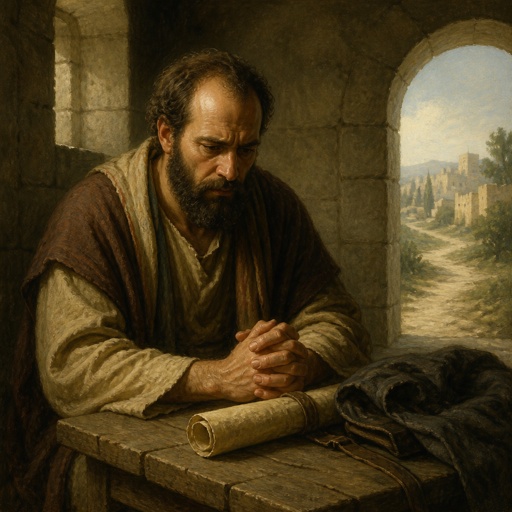
"I verily thought with myself, that I ought to do many things contrary to the name of Jesus of Nazareth." - Acts 26:9

Acts 27:26 - "Howbeit we must be cast upon a certain island."

Acts 26:26 - "For the king knoweth of these things, before whom also I speak freely: for I am persuaded that none of these things are hidden from him; for this thing was not done in a corner."

Acts 26:19 - "Whereupon, O king Agrippa, I was not disobedient unto the heavenly vision:"

Acts 26:27 - "King Agrippa, believest thou the prophets? I know that thou believest."

Acts 15:26 - "Men that have hazarded their lives for the name of our Lord Jesus Christ."

Acts 23:26 - "Claudius Lysias unto the most excellent governor Felix sendeth greeting."
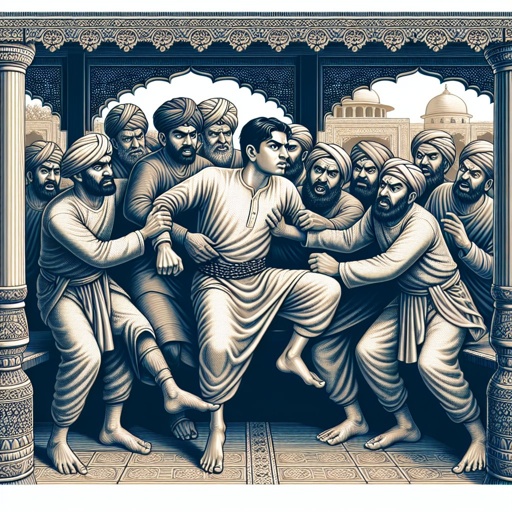
Acts 26:21 - "For these causes the Jews caught me in the temple, and went about to kill me."

Acts 26:28 - "Then Agrippa said unto Paul, Almost thou persuadest me to be a Christian."

Acts 26:12 - "Whereupon as I went to Damascus with authority and commission from the chief priests,"

Genesis 26:9

Acts 26:8 - "Why should it be thought a thing incredible with you, that God should raise the dead?"

Acts 9:9 - "And he was three days without sight, and neither did eat nor drink."

Acts 1:26 - "And they gave forth their lots; and the lot fell upon Matthias; and he was numbered with the eleven apostles."

Acts 9:1-20

Acts 9:1-20

Acts 26:6 - "And now I stand and am judged for the hope of the promise made of God unto our fathers:"

Acts 26:30 - "And when he had thus spoken, the king rose up, and the governor, and Bernice, and they that sat with them:"

Acts 10:26 - "But Peter took him up, saying, Stand up; I myself also am a man."

2 Chronicles 35:26 - "Now the rest of the acts of Josiah, and his goodness, according to that which was written in the law of the LORD,"

Acts 26:17 - "Delivering thee from the people, and from the Gentiles, unto whom now I send thee,"

2 Chronicles 25:26 - "Now the rest of the acts of Amaziah, first and last, behold, are they not written in the book of the kings of Judah and Israel?"

Acts 4:26 - "The kings of the earth stood up, and the rulers were gathered together against the Lord, and against his Christ."

Acts 26:25 - "But he said, I am not mad, most noble Festus; but speak forth the words of truth and soberness."

Acts 20:26 - "Wherefore I take you to record this day, that I am pure from the blood of all men."

2 Chronicles 26:22 - "¶ Now the rest of the acts of Uzziah, first and last, did Isaiah the prophet, the son of Amoz, write."

Acts 14:26 - "And thence sailed to Antioch, from whence they had been recommended to the grace of God for the work which they fulfilled."