What does Acts 8:20 mean?
"But Peter said unto him, Thy money perish with thee, because thou hast thought that the gift of God may be purchased with money." - Acts 8:20
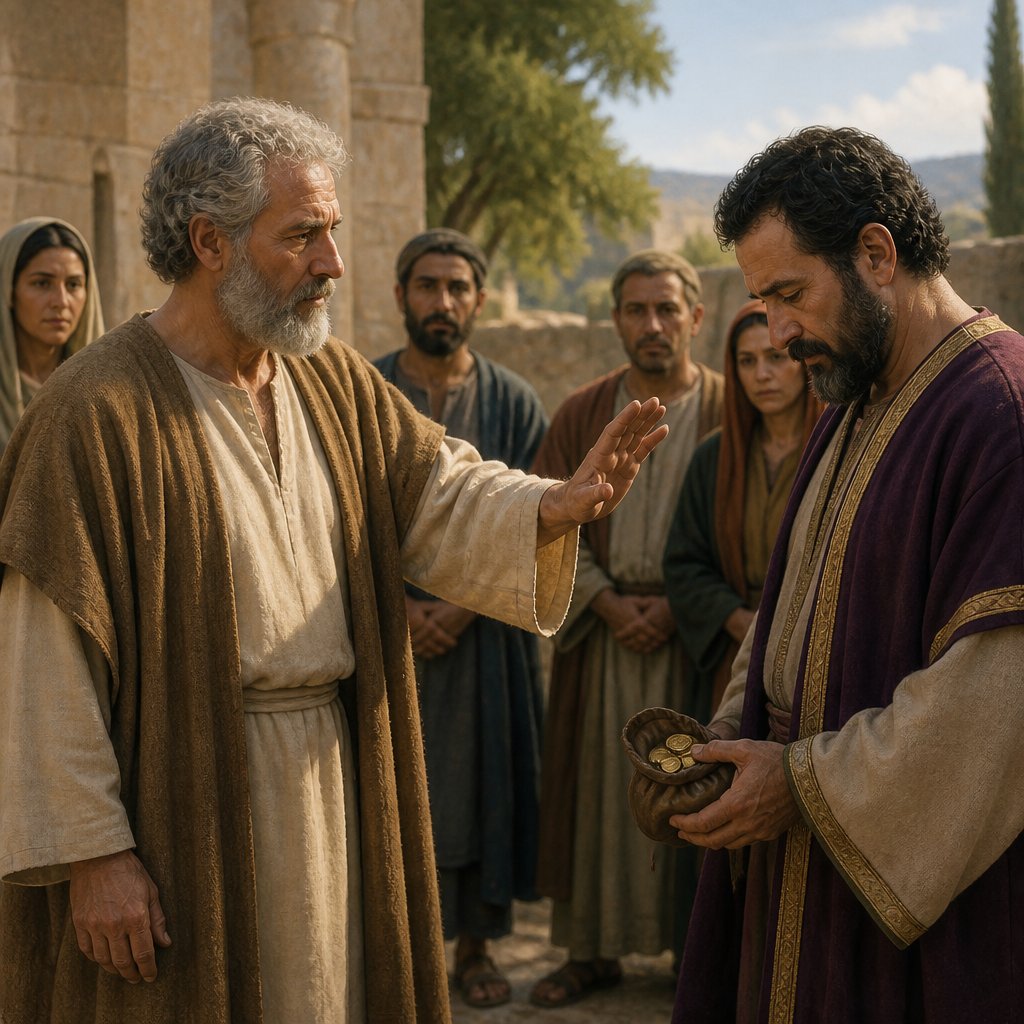
In Acts 8:20, the King James Version (KJV) of the Bible states, "But Peter said unto him, Thy money perish with thee, because thou hast thought that the gift of God may be purchased with money." This verse is part of the story of Simon the Sorcerer, found in Acts 8:9-24, which recounts an encounter between Simon and the apostles Peter and John.
The context of this verse is important in understanding its meaning. Simon the Sorcerer was a magician in the city of Samaria who had gained a following by practicing sorcery and claiming to be someone great. However, when Philip the evangelist came to Samaria and began preaching the gospel and performing miracles in the name of Jesus, many of the Samaritans believed and were baptized, including Simon himself.
In verse 18, it is said that Simon witnessed the miraculous signs and great miracles performed by Philip, and he was amazed. He himself believed and was baptized. After his baptism, Simon continued to follow Philip, astonished by the signs and miracles he saw. When the apostles Peter and John came to Samaria to pray for the new believers to receive the Holy Spirit, Simon was among those who witnessed the impartation of the Holy Spirit through the laying on of hands.
It is in this context that Simon offers money to the apostles, asking for the ability to impart the Holy Spirit through the laying on of hands. This leads to Peter's response in verse 20, in which he rebukes Simon for his misguided belief that spiritual gifts could be bought with money.
The theme of this verse revolves around the misuse of spiritual gifts and the true nature of God's gifts. Peter's response to Simon reflects the principle that God's gifts, particularly the gift of the Holy Spirit, cannot be bought or sold. This verse emphasizes that spiritual gifts are not commodities that can be obtained through material means, but rather are freely given by God according to His will.
The verse also highlights the issue of false motives and the danger of seeking to manipulate or control spiritual gifts for personal gain. Simon's offer of money to obtain the ability to impart the Holy Spirit reveals his misunderstanding of the nature of God's gifts and his desire to wield spiritual power for his own purposes. Peter's response serves as a stern warning against attempting to manipulate or commercialize spiritual gifts, emphasizing the purity and integrity of God's divine grace.
Symbolism can be found in the verse as well. Money in this context represents worldly wealth and material possessions, which are contrasted with the spiritual gifts of God. Peter's declaration that "Thy money perish with thee" signifies the futility and emptiness of seeking to obtain spiritual blessings through material means. It underscores the inherent value and unattainability of God's gifts through human efforts.
In conclusion, Acts 8:20 conveys a powerful message about the nature of God's gifts and the importance of pure motives in seeking spiritual blessings. It cautions against the temptation to manipulate or exploit spiritual gifts for personal gain and emphasizes the sanctity of God's grace. This verse serves as a reminder of the sovereignty of God in bestowing spiritual gifts and the need for humility and reverence in receiving and utilizing them.
Have questions about Acts 8:20?
Dive deeper into this scripture with Bible Chat — an AI-powered tool for exploring God's Word through conversation. Ask questions, get context, and grow in your understanding of the Bible.
Get Our Apps


Acts 8:20 Artwork

Acts 8:20 - "But Peter said unto him, Thy money perish with thee, because thou hast thought that the gift of God may be purchased with money."
"But Peter said unto him, Thy money perish with thee, because thou hast thought that the gift of God may be purchased with money." - Acts 8:20

Acts 20:8 - "And there were many lights in the upper chamber, where they were gathered together."
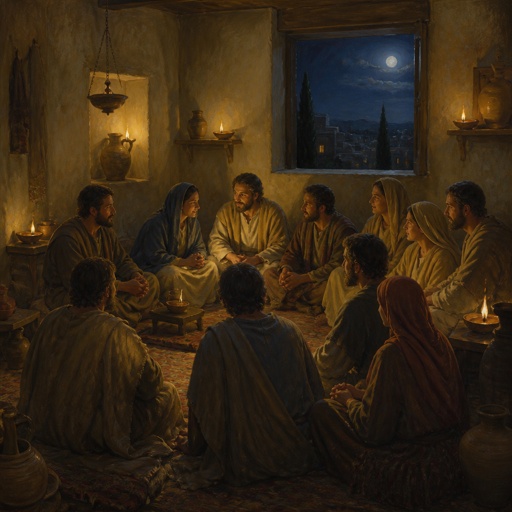
"And there were many lights in the upper chamber, where they were gathered together." - Acts 20:8

Acts 20:11

Acts 8:8 - "And there was great joy in that city."

acts 20:7-12

Acts 9:1-20

Acts 9:1-20

Acts 20:5 - "These going before tarried for us at Troas."

"And there was great joy in that city." - Acts 8:8

Acts 1:8

Acts 8:33

Acts 19:20 - "So mightily grew the word of God and prevailed."

Acts 20:33 - "I have coveted no man's silver, or gold, or apparel."

Acts 20:12 - "And they brought the young man alive, and were not a little comforted."

Acts 4:8-12

Acts 20:17 - "¶ And from Miletus he sent to Ephesus, and called the elders of the church."

Acts 20:20 - "And how I kept back nothing that was profitable unto you, but have shewed you, and have taught you publickly, and from house to house,"

Acts 9:20 - "And straightway he preached Christ in the synagogues, that he is the Son of God."

Acts 5:20 - "Go, stand and speak in the temple to the people all the words of this life."

Acts 20:37 - "And they all wept sore, and fell on Paul's neck, and kissed him,"

Acts 20:27 - "For I have not shunned to declare unto you all the counsel of God."

Acts 18:20 - "When they desired him to tarry longer time with them, he consented not;"

2 Kings 20:20 - "¶ And the rest of the acts of Hezekiah, and all his might, and how he made a pool, and a conduit, and brought water into the city, are they not written in the book of the chronicles of the kings of Judah?"

Acts 4:20 - "For we cannot but speak the things which we have seen and heard."

Acts 16:8 - "And they passing by Mysia came down to Troas."

Genesis 20-8

Acts 3:20 - "And he shall send Jesus Christ, which before was preached unto you:"

ACTS 8:30 Philip and the Ethiopian